
Short answer
Cat6 and Cat6a differ in 10GBASE-T reach. Cat6 is specified to 250 MHz and carries 10G only over a shortened channel — about 37 m, and up to roughly 55 m in a quiet pathway — while Cat6a is specified to 500 MHz and holds 10G to the full 100 m. Both terminate to the same 8P8C jack and both run 1G to 100 m, so the choice is channel length at 10G, not compatibility.
Key facts
- Cat6 is rated to 250 MHz and Cat6a to 500 MHz; the extra bandwidth is what a full-length 10GBASE-T channel needs.
- CommScope's supported-distance table puts 10G at 37 m over Cat6 and 100 m over Cat6a — nearly three times the reach.
- The limit is alien crosstalk, noise coupled between adjacent cables. Cat6a specifies and controls it at 500 MHz; Cat6 never did.
- TIA issued TSB-155, additional guidelines for 100-ohm Category 6 cabling at 10GBASE-T, and models a 55 m Category 6 channel in it.
- 10GBASE-T itself is IEEE Std 802.3an-2006, approved by the IEEE-SA Standards Board on 8 June 2006.
Buyers rarely ask this question in the abstract — they ask it while pricing a horizontal cabling run and deciding whether to pay more per drop for headroom they may or may not use. Both grades terminate to the same 8P8C jacks, run 1G today, and look nearly identical in the tray, so the real decision hinges on one thing: whether those runs need to carry 10GBASE-T to a full 100 meters, and whether the pathways and cooling can accommodate the heavier cable if they do.
The dividing line is alien crosstalk — interference coupled between adjacent cables, not within a single cable. Cat6 can carry 10G, but only over a shortened channel (roughly 37 to 55 meters depending on how tightly bundled and noisy the surrounding cables are), because it was never specified to suppress that inter-cable noise. Cat6a is engineered specifically to control alien crosstalk, which is what lets it hold 10G to the full 100 m — at the cost of a physically larger, stiffer, more expensive cable that fills conduit faster. Note that 2.5G and 5GBASE-T already run to 100 m on Cat6, so the distance gap only opens up at 10G. The right answer depends on your channel lengths, your 10G roadmap, and your pathway and PoE constraints, not on which spec is 'newer.'
At a glance
Side by side
| Factor | Cat6 | Cat6a |
|---|---|---|
| Rated bandwidth | 250 MHz | 500 MHz |
| 10GBASE-T reach | ~37-55 m (limited by alien crosstalk) | Full 100 m channel |
| 1G / 2.5G / 5GBASE-T reach | Full 100 m | Full 100 m |
| Alien crosstalk (ANEXT) | Not specified/controlled | Specified and mitigated by design |
| Cable outer diameter | ~5.5-6 mm typical | ~7.5-8.5 mm typical (larger) |
| Pathway fill & bend radius | Lower fill, tighter bends | Higher fill, larger bend radius |
| PoE heat in dense bundles | Adequate; less mass to sink heat | More thermal margin; greater cable mass |
| Relative installed cost | Lower material; easier, faster pulls | Higher material; bulkier pulls, more pathway |
Choose Cat6 when
- Endpoints are 1G (or 2.5G/5G) with no funded 10G-to-the-desk roadmap for this cable's service life
- Runs are short — roughly under 37 m, or up to ~55 m in low-alien-crosstalk conditions — so Cat6 can still carry 10G if a segment ever needs it
- Conduit or tray fill and tight bend radii favor the smaller-diameter cable
- Budget per drop matters at scale and the extra 10G headroom would go unused
Choose Cat6a when
- You need 10GBASE-T to the full 100 m channel, not a shortened reach
- Runs share dense bundles or trays where alien crosstalk would otherwise limit Cat6 at 10G
- You are cabling for a 10+ year horizon and want 10G headroom baked into the plant
- High-wattage PoE (Type 3/Type 4, up to ~90 W at the source) runs in tight bundles where cooling margin matters
Bottom line
Run Cat6a for any permanent link that might carry 10G past 37 metres; Cat6 is fine for the rest. Cat6 is the pragmatic, lower-cost, easier-to-route choice when the plant runs 1G to 5G, or only needs 10G over short segments. Cat6a is the future-proofing choice when 10GBASE-T must reach the full 100 m through dense, noisy pathways, and it accepts a larger, costlier, harder-to-route cable to get there. Match the spec to your actual channel lengths, 10G roadmap, and pathway/PoE constraints rather than defaulting to one everywhere.
Products for this decision
Cat6a horizontal run
4XEM
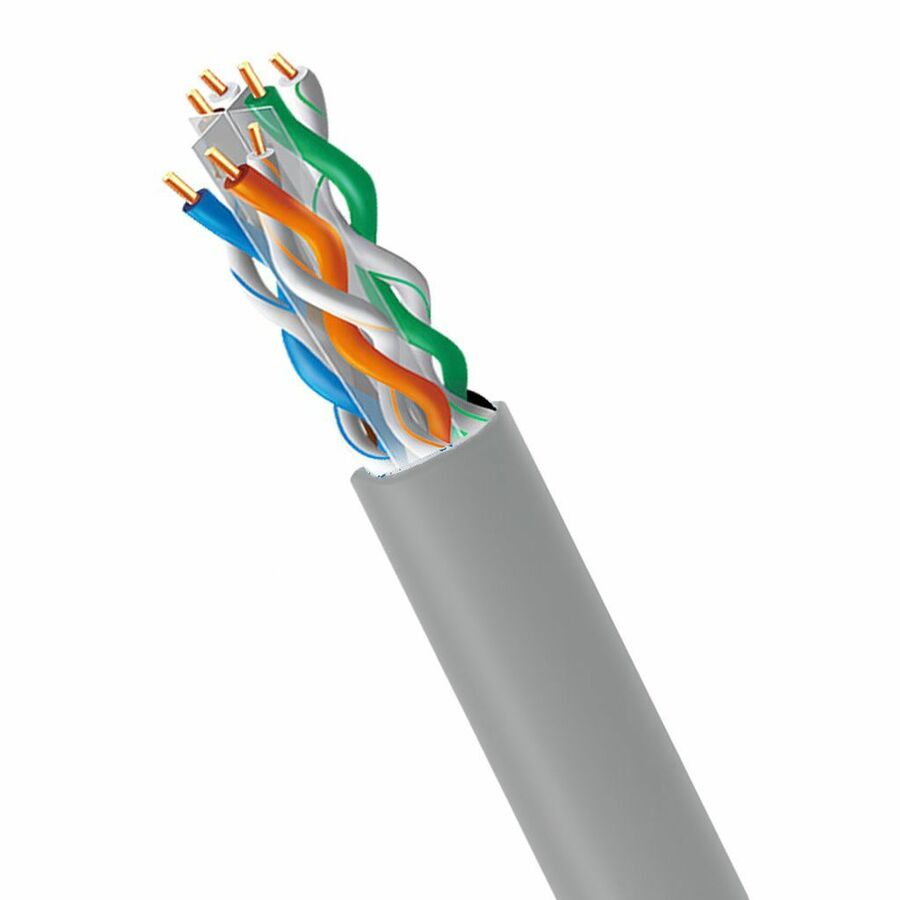
4XEM 1000ft CAT6A Pure Copper Riser Bulk Ethernet Cable
4XCAT6A1000RGR
A 1,000 ft riser-rated Cat6a spool, 23 AWG solid copper, swept to 500 MHz — the grade that holds 10GBASE-T across a full 100 m channel.
Riser (CMR) is for vertical shafts and general building spaces; a plenum air-handling space needs a CMP-rated cable instead.
$381.16In stockCat6 horizontal run
4XEM
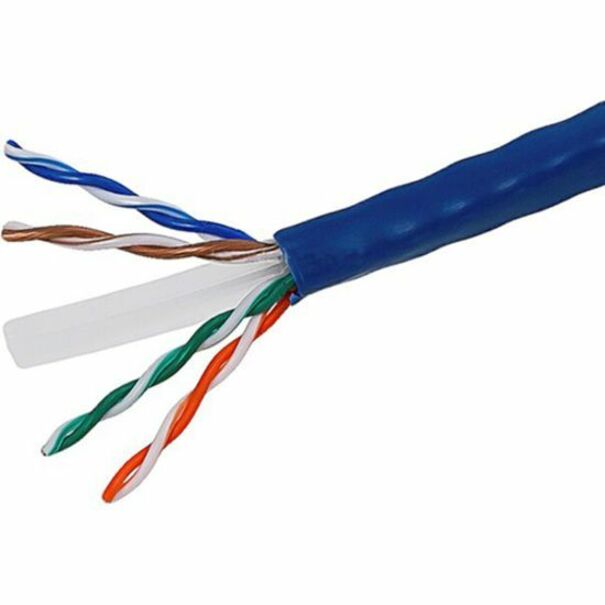
4XEM Cat6 UTP Bulk Cable - 1000 ft
4XCAT61000BL
A 1,000 ft Cat6 UTP spool for drops that stay at 1G, or where any 10G segment is short enough to qualify under the Category 6 guidelines.
$162.08In stockRack and desk patching
StarTech.com
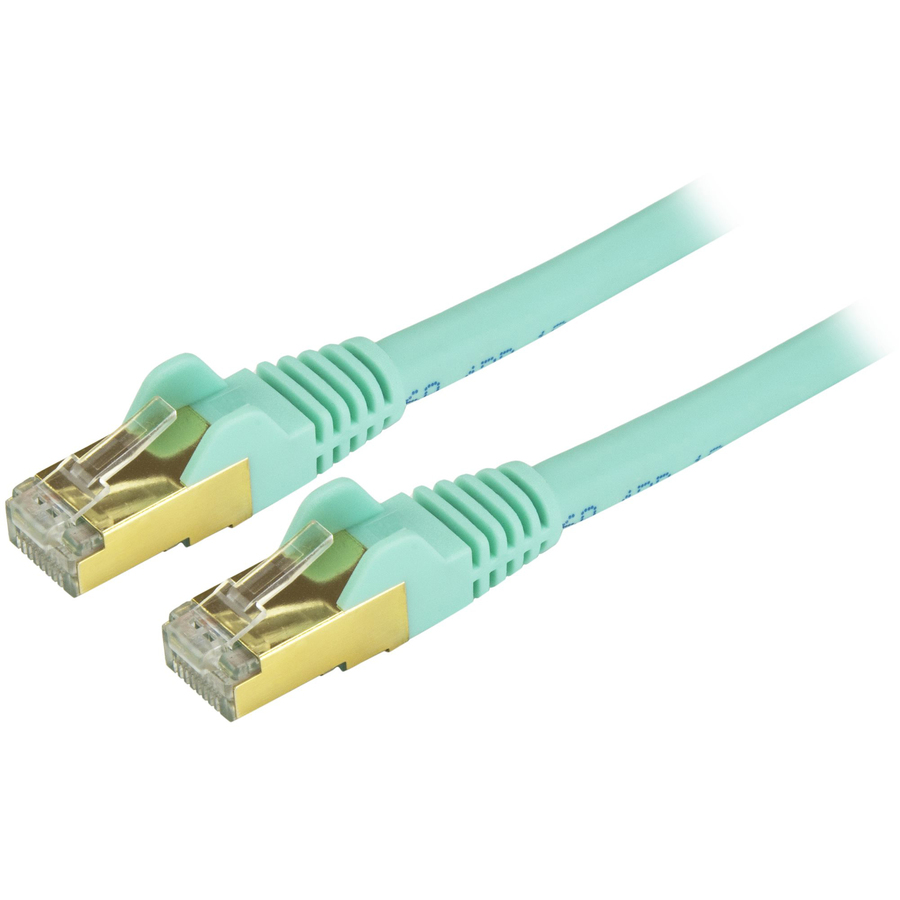
StarTech 9ft CAT6a Ethernet Cable
C6ASPAT9AQ
A 9 ft shielded Cat6a patch cord rated for 10GbE and 100 W PoE — the short end of the channel, where a lower-grade cord would cap the whole run.
$11.03In stockFAQ
Common questions
- Can Cat6 run 10-Gigabit Ethernet at all?
- Yes, but only over a reduced distance. 10GBASE-T on Cat6 is supported to about 37 m in any configuration and up to roughly 55 m in favorable, low-alien-crosstalk conditions — a tightly packed bundle pushes it toward the shorter end and may require field qualification. For a guaranteed 10G run to the full 100 m, Cat6a is the rated choice.
- What actually makes Cat6a different from Cat6?
- Two things: double the rated bandwidth (500 MHz vs 250 MHz) and, more importantly, a design that specifies and controls alien crosstalk — noise coupled between adjacent cables. That alien-crosstalk control is what lets Cat6a hold 10G to 100 m where Cat6 falls short in dense bundles. Below 10G (1G, 2.5G, 5G), both reach the full 100 m.
- Does Cat6a's larger diameter affect installation?
- Yes. Cat6a is typically noticeably thicker (~7.5-8.5 mm vs ~5.5-6 mm) and stiffer, with a larger minimum bend radius. That means fewer cables per conduit or tray at a given fill ratio, and more care around corners and bundling. Plan pathway capacity around the larger cable if you standardize on Cat6a.
- Which handles high-wattage PoE better?
- Both grades carry PoE, including higher-power Type 3 and Type 4 (up to about 90 W at the source). The concern with high-wattage PoE is heat buildup inside large bundles. Cat6a's greater cable mass and diameter give it more thermal margin in dense bundles, which is a secondary reason data centers and high-PoE deployments often standardize on it. Either way, follow bundle-size and derating guidance for the current you actually run.
- Is CAT6a worth it over Cat6?
- It is worth it when you need 10GBASE-T past roughly 37 m, and usually not otherwise. Cat6a costs more per foot, fills pathways faster and takes a larger bend radius; what you buy for that is 500 MHz of bandwidth and a 10G channel that reaches the full 100 m instead of a shortened one. If the endpoints on this cable will run 1G for its service life, the headroom is money spent on a capability nothing will use.
- Is Cat6 overkill for home use?
- For most homes, yes — Cat5e already carries 1000BASE-T to 100 m, which is more than a residential internet circuit delivers. Cat6 is still a reasonable default for new in-wall runs because the labour, not the cable, is the expensive part of a pull you will not repeat. The overkill line sits at Cat6a, not Cat6.
- What are the disadvantages of CAT6a?
- Size, stiffness and cost. Cat6a cable is noticeably thicker and heavier than Cat6, which means fewer cables per conduit at the same fill ratio, a larger minimum bend radius, more careful bundling, and a higher price per drop. Shielded variants add a bonding and grounding requirement that unshielded cable does not have.
- Do Cat6 and CAT6a use the same connector?
- Yes — both terminate to the same 8P8C modular jack, commonly called RJ45, so the plugs and outlets look identical. The components must be rated for the category you are certifying, though: a Cat6a channel needs Cat6a-rated jacks, patch panels and cords, because the channel is only as good as its lowest-rated component.
Sources
- 1.CommScope — What is Cat 6A? (bandwidth and supported distances)commscope.com
- 2.CommScope — Cat 6A structured cabling: the fact filecommscope.com
- 3.TIA PN-3-0134, published as TSB-155 — guidelines for Category 6 cabling at 10GBASE-T (IEEE 802.3an archive)ieee802.org
- 4.IEEE P802.3an 10GBASE-T Task Forceieee802.org