
Short answer
Plenum and riser name the jacket's fire listing, not the cable's category. Plenum cable is listed CMP and tested to NFPA 262, the test for cables in spaces used to move environmental air; riser cable is listed CMR and tested to UL 1666, for cables run vertically between floors. The substitution runs one way: plenum may be used in a riser, riser may never be used in a plenum.
Key facts
- Plenum cable carries the NEC listing letters CMP and is tested to NFPA 262; riser cable carries CMR and is tested to UL 1666.
- UL 1666 measures flame propagation height for cables installed vertically in shafts or in vertical runs that penetrate one or more floors.
- A plenum-listed cable may be substituted for riser or general-purpose cable; a riser cable may never be installed in a plenum space.
- The listing letters are printed along the cable jacket, so an installed run can be verified after the ceiling is closed.
- Jacket rating is independent of category: Cat5e, Cat6 and Cat6a are each sold in both CMP and CMR.
- The requirement comes from NFPA 70, the National Electrical Code, and is enforced by the local authority having jurisdiction.
Plenum and riser are not cable grades. They describe the jacket's fire listing, and they say nothing about whether the cable inside is Cat5e, Cat6 or Cat6a — every category is sold in both. What they do decide is where the National Electrical Code permits the cable to be installed, which makes this a compliance question first and a purchasing question second.
The two listings come from two different tests. Plenum-listed cable — marked CMP — is tested to NFPA 262, the horizontal test for cables installed in spaces used to move environmental air. Riser-listed cable — marked CMR — is tested to UL 1666, which measures flame propagation height for cables installed vertically in shafts or in vertical runs that penetrate one or more floors. Different fire scenario, different test, different jacket compound.
The rule that matters on site is the substitution hierarchy, and it is asymmetric. A plenum cable may be used where riser or general-purpose cable is permitted, because it has passed the more demanding test. A riser cable may never be used in a plenum space. Get that backwards and the run comes out, which is why the listing letters printed along the jacket are worth reading before the spool is opened, not after.
At a glance
Side by side
| Factor | Plenum (CMP) | Riser (CMR) |
|---|---|---|
| Flame test | NFPA 262, the test for cables installed in air-handling spaces | UL 1666, flame propagation height for cables installed vertically |
| What the test measures | Flame spread and smoke development in a horizontal duct | Flame propagation height in a multi-storey vertical shaft |
| NEC listing letters | CMP, and CMP-LP where a limited-power marking applies | CMR |
| Where the code puts it | Spaces used for environmental air — a ceiling void or underfloor space used as a return | Vertical runs in shafts, and runs that penetrate one or more floors |
| Substitution | May be used anywhere riser or general-purpose cable is permitted | May not be used in a plenum space |
| Independent of category | Cat5e, Cat6 and Cat6a are all sold with a CMP jacket | The same categories are all sold with a CMR jacket |
| How to verify it on site | Read the listing letters printed along the jacket, not the box label | Same — the jacket print is the record after the ceiling closes |
| Relative cost per foot | Higher than the same category in riser | Lower than plenum of the same category |
| Who enforces it | The authority having jurisdiction, against NFPA 70 | The same authority, against the same code |
Specify plenum (CMP) when
- The run passes through a ceiling void or underfloor space that is used to move return air
- The building's mechanical drawings show the space above the tile as a plenum rather than a duct
- You want one part number to cover mixed pathways without sorting spools on site
- The authority having jurisdiction has already called the pathway a plenum on a previous phase
Riser (CMR) is enough when
- The run is vertical between floors, in a shaft or a sleeve, and passes no air-handling space
- The horizontal pathway is in conduit or in a ceiling that is ducted rather than open-plenum
- You are pulling long horizontal runs where no plenum applies and cost per foot matters
- The design has already been reviewed and the pathway classification is settled in writing
Bottom line
Let the pathway pick the jacket, and read the mechanical drawings before the cable schedule. If any part of the run crosses a space used to move environmental air, that segment needs plenum-listed CMP cable tested to NFPA 262; if the run is vertical between floors and nothing else, riser-listed CMR tested to UL 1666 is what the code asks for. Plenum cable is permitted anywhere riser is, so a single CMP part number is the low-risk choice on a mixed job and buys back the sorting time it costs at the till. What you must never do is run riser in a plenum: the jacket print is permanent, the inspection finds it, and the remedy is a re-pull.
Products for this decision
Plenum spool
4XEM
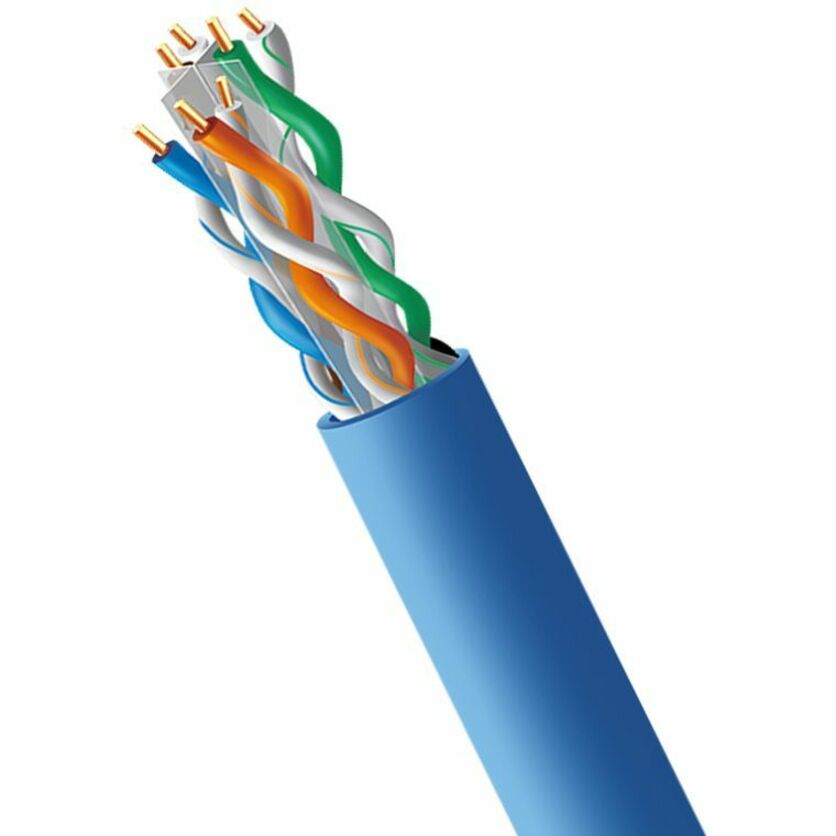
4XEM Cat 6 1000ft (305 m) Plenum Bulk cable (Blue)
4XCAT61000PBL
A 1,000 ft spool of Cat6 UTP in a plenum jacket — the part number for runs crossing a ceiling void or underfloor space used as return air.
$560.76In stockRiser spool
4XEM
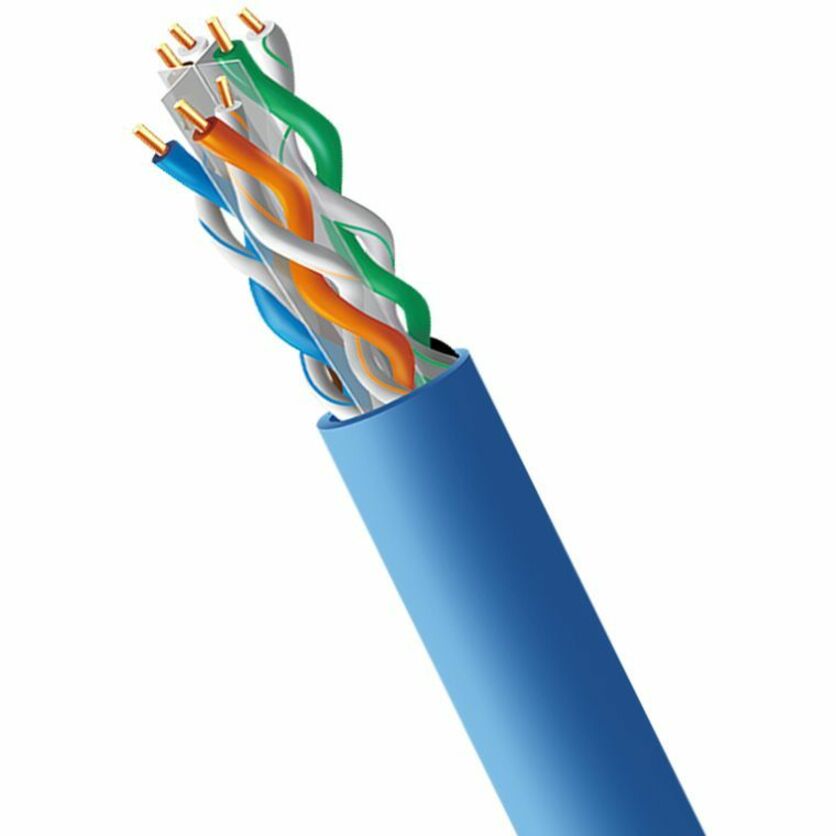
4XEM Cat 6 1000ft (305 m) Riser Bulk cable (Blue)
4XCAT61000RBL
The same 1,000 ft Cat6 UTP in a CMR riser jacket, for vertical runs between floors and horizontal pathways where no plenum applies.
$300.00In stockAlso plenum
Ubiquiti
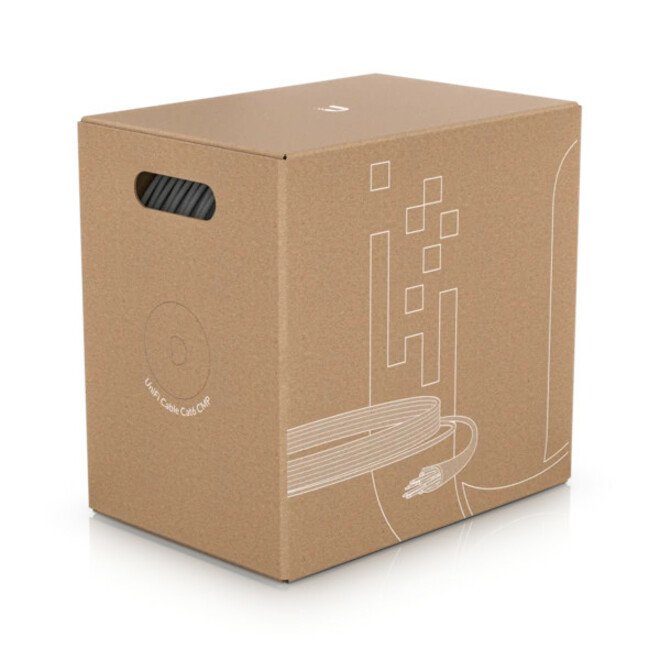
Ubiquiti UniFi Cable Cat6 CMP Rating - 1000 ft
U-Cable-C6-CMP
A 1,000 ft Cat6 run in a CMP-rated jacket, an alternative plenum spool where the rest of the estate is already on this vendor's cabling.
Confirm the pathway classification on the mechanical drawings before ordering either jacket.
$400.56Back-orderedRelated reading
FAQ
Common questions
- When should I use plenum cable?
- Whenever any part of the run passes through a space used to move environmental air — most commonly the void above a suspended ceiling or under a raised floor when that space is used as a return. The mechanical drawings, not the ceiling type, are what tell you; if the space is ducted rather than open, it is not a plenum.
- Is Cat6 riser cable plenum-rated?
- No. Riser cable is listed CMR and tested to UL 1666, which is a vertical-shaft test; plenum cable is listed CMP and tested to NFPA 262. The category and the jacket listing are separate specifications, so Cat6 exists in both and a Cat6 riser cable may not be installed in a plenum space.
- How to tell if a cable is plenum?
- Read the print along the jacket. Communications cable is marked with its listing type, so a plenum cable shows CMP (or CMP-LP where a limited-power marking applies) alongside the type and length markings. Do not rely on jacket colour or the box, and check the print on the cable already installed rather than the spool it came from.
- When to use riser cable?
- Use riser where the run is vertical between floors — in a shaft or a sleeve — and where horizontal pathways are in conduit or in a ceiling that is not used to move return air. It is the correct listing for those pathways and costs less per foot than plenum in the same category.
- What is the difference between CMP and CMR cable?
- CMP and CMR are the NEC listing letters for the two jacket ratings. CMP is plenum-listed, tested to NFPA 262 for use in air-handling spaces; CMR is riser-listed, tested to UL 1666 for vertical runs between floors. CMP may be used wherever CMR is permitted, but not the reverse.