
Short answer
The main difference between Cat5e and Cat6 is bandwidth and 10G reach: Cat5e is rated to 100 MHz and specified for gigabit Ethernet over a 100 m channel, while Cat6 is rated to 250 MHz and also carries 10GBASE-T over a shortened run of roughly 37 to 55 m. Both use the same 8P8C jack and both do 1G to 100 m, so Cat6 drops straight in — choose it for permanent in-wall runs, Cat5e for patch cords.
Key facts
- Cat5e is rated to 100 MHz and Cat6 to 250 MHz; both carry 1000BASE-T over the full 100 m channel.
- CommScope's supported-distance table lists no 10G figure for Cat5e and 37 m for Cat6 — the practical dividing line.
- Gigabit over twisted pair is IEEE Std 802.3ab; 2.5GBASE-T and 5GBASE-T arrived later as IEEE Std 802.3bz-2016.
- Leviton's datasheets put its Cat 5e at 24 AWG and its Cat 6 at 23 AWG with a pair separator: heavier copper, in a 6.1 mm Cat 6 jacket.
- Leviton rates both its Cat 5e and its Cat 6 U/UTP cable for IEEE 802.3 PoE Types 1-4; CommScope still recommends Cat 6A above 25.5 W.
Buyers rarely ask this question in the abstract. It comes up when someone is pulling cable into a new floor, a data closet, or a building they expect to keep for a decade or more — and the real question underneath is whether to spend more now to avoid re-pulling copper later. Both grades terminate on the same RJ45 jacks, run over the same 100-meter channel model, and carry gigabit Ethernet without complaint, so the choice is not about whether a link will work today. It is about headroom: how much bandwidth margin, 10G reach, and PoE thermal capacity you want baked into the walls.
The honest driver is the gap between the price of the cable and the cost of the labor to install it. Copper is a small fraction of a cabling project; hands, conduit, and downtime are the rest. That asymmetry is why many teams reach for the higher grade on permanent horizontal runs even when 1G is all they need this year, and why Cat5e still holds up perfectly well for endpoints, short patch runs, and refreshes where the network will never exceed a gigabit. The right answer depends on the run's lifespan, the speed you expect to reach, and how hard you plan to push power over it.
At a glance
Side by side
| Factor | Cat5e | Cat6 |
|---|---|---|
| Rated bandwidth | 100 MHz | 250 MHz |
| Gigabit (1000BASE-T) | Full 100 m channel | Full 100 m channel |
| 10 Gigabit (10GBASE-T) | Not specified / not supported | Supported only to ~37-55 m, not full 100 m |
| Crosstalk & noise margin | Lower headroom | Tighter internal-crosstalk specs, more margin |
| Construction | Thinner conductors, no spline typically | Often thicker gauge and a pair separator (spline) |
| PoE under high wattage | Works to 802.3bt, but heats more when bundled | Larger copper dissipates heat better in dense bundles |
| Cable diameter / fill | Slimmer, easier in tight conduit | Larger OD, fills conduit faster |
| Relative cost | Lower material cost | Higher material cost, similar labor |
Choose Cat5e when
- The link will stay at 1 Gbps or below for its whole service life — most desktops, phones, printers, and access points
- You are patching short runs inside a rack or replacing a failed endpoint cable, not re-cabling a building
- Conduit or pathways are tight and the slimmer diameter eases the pull
- Budget is constrained and the run is easy to replace later if speeds ever climb
Choose Cat6 when
- You are installing permanent in-wall horizontal runs you expect to keep 10+ years
- You want 10G headroom on shorter links (up to roughly 37-55 m) without jumping to Cat6A
- Runs will carry high-wattage PoE (802.3bt) in dense bundles where heat matters
- You want extra noise and crosstalk margin near motors, fluorescent ballasts, or parallel power
Bottom line
Pull Cat6 for anything going in a wall or ceiling; keep Cat5e for patch cords and runs you will replace anyway. Cat5e is the pragmatic choice for gigabit endpoints, patch runs, and refreshes where the link is cheap to replace — it carries 1G cleanly and even supports full 802.3bt PoE. Cat6 earns its premium on permanent infrastructure: it adds bandwidth margin, limited 10G reach on shorter runs, and better heat dissipation under heavy PoE. The deciding factor is almost always the run's lifespan versus the labor cost to pull it twice. For anything going into walls and staying there, the modest cable upcharge usually wins; for everything downstream of the jack, Cat5e is often plenty.
Products for this decision
Permanent horizontal runs
Axiom Memory Solutions
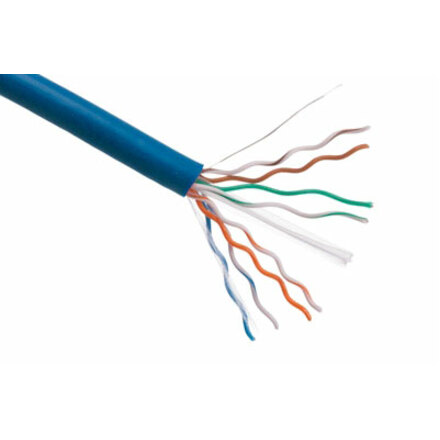
Axiom CAT6 23AWG 4-Pair Solid 550MHz Plenum Bulk Cable Spool 1000FT…
C6BCS-B1000P-AX
A 1,000 ft plenum-rated Cat6 spool, 23 AWG solid — the grade to put in walls and ceilings you do not intend to open again.
Plenum (CMP) jacket is what a shared air-handling space requires; a riser shaft takes CMR instead.
$544.14In stockGigabit drops
4XEM
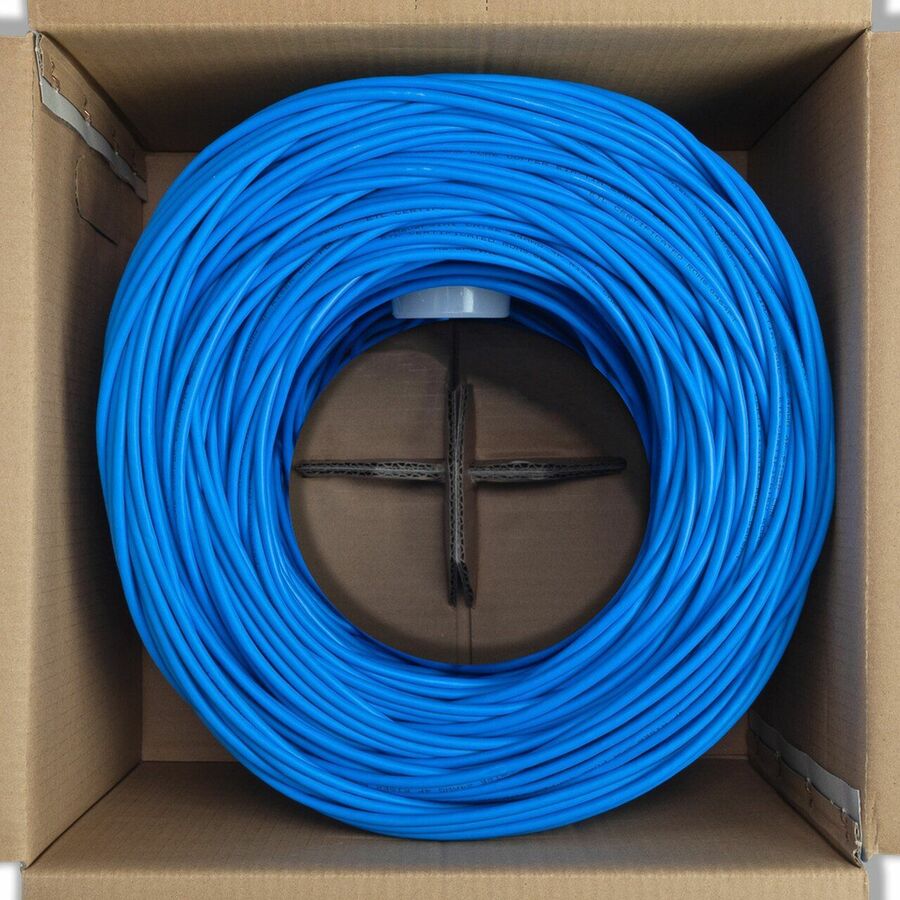
4XEM 1000FT Cat5e UTP Network Patch Cable Roll (Blue)
4XCAT5E1000BL
A 1,000 ft Cat5e UTP roll for links that will stay at 1G — phones, printers, cameras and desktops on runs that are cheap to redo.
$119.61In stockPatch cords
StarTech.com
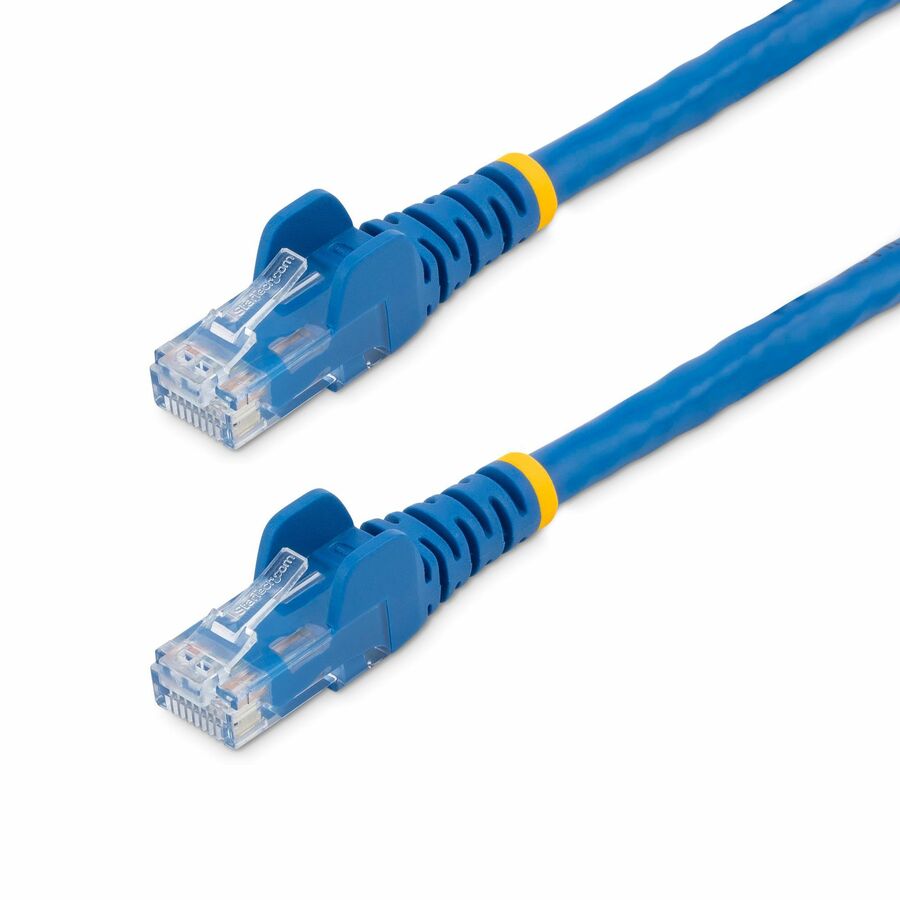
StarTech 10ft CAT6 Ethernet Cable
N6PATCH10BL
A 10 ft snagless Cat6 patch cord swept to 250 MHz and rated for 100 W PoE, for the rack and desk ends of a channel.
$8.47In stockFAQ
Common questions
- Can Cat5e really run 10 Gigabit Ethernet?
- Not per its specification. Cat5e is rated to 100 MHz and defined for 1000BASE-T (1 Gbps). Short Cat5e links may pass 10G in favorable conditions, but it is not a supported or guaranteed configuration. For dependable 10G, use Cat6 on shorter runs or Cat6A for the full 100 meters.
- How far can Cat6 carry 10 Gigabit?
- Cat6 supports 10GBASE-T only over shorter distances — roughly 37 to 55 meters depending on how much alien crosstalk the surrounding cable bundle introduces — rather than the full 100-meter channel. If you need guaranteed 10G to 100 meters, that is Cat6A territory, not Cat6.
- Does Cat6 handle PoE better than Cat5e?
- Both grades support the current PoE standards, including 802.3bt (PoE++). The practical difference is heat: Cat6's typically larger conductors dissipate the heat from high-wattage PoE more effectively in tightly packed bundles, which helps keep conductor temperatures within spec on dense, fully loaded runs.
- Is it worth paying for Cat6 if we only need gigabit today?
- Often yes for permanent in-wall runs, because the cable is a small part of total installed cost and re-pulling later is expensive. For short patch cords, endpoint drops, and anything easy to swap, Cat5e is usually the economical and entirely adequate choice.
- Is Cat6 overkill for home use?
- For the link itself, usually yes — Cat5e already carries 1000BASE-T to 100 m, which is beyond what a residential circuit delivers. It is still the sensible default for anything going inside a wall, because the pull is the expensive part and you only want to do it once. Overkill starts at Cat6a in a house, not at Cat6.
- Should I run Cat5e or Cat6 in my house?
- Run Cat6 for anything permanent and Cat5e for anything you can swap in a minute. The cable is a small share of what a run costs once labour, wall repair and time are counted, so the extra bandwidth margin on an in-wall drop is cheap insurance; a patch cord between a switch and a desk is not worth the upgrade because replacing it later costs nothing.
- Is Cat5e outdated?
- No. Cat5e is still a current, specified grade rated to 100 MHz and defined for gigabit Ethernet over a 100 m channel, and it carries PoE up to Type 4. What it is not is a 10-gigabit cable — CommScope's supported-distance table lists no 10G reach for it at all — so it is outdated only for links that will actually move past 1G.
- Can I use a Cat6 Ethernet cable instead of a Cat5?
- Yes. The categories are backward compatible: Cat6 terminates to the same 8P8C jack, runs every speed Cat5 and Cat5e run, and drops straight into an existing port. A mixed channel performs to its lowest-rated component, so a Cat6 cord on a Cat5e outlet gives you Cat5e performance — no harm, just no gain.
Sources
- 1.CommScope — bandwidth and supported distances by cable categorycommscope.com
- 2.IEEE P802.3bz — 2.5GBASE-T and 5GBASE-T Task Forceieee802.org
- 3.IEEE P802.3an — 10GBASE-T Task Forceieee802.org
- 4.TIA PN-3-0134, published as TSB-155 — Category 6 cabling at 10GBASE-T (IEEE 802.3an archive)ieee802.org
- 5.Leviton — Cat 6 U/UTP cable product specification (23 AWG, pair separator, PoE Types 1-4)leviton.com
- 6.Leviton — Cat 5e U/UTP plenum cable product specification (24 AWG, PoE Types 1-4)leviton.com