
Short answer
Wi-Fi 7 is the Wi-Fi Alliance's name for IEEE 802.11be, published as IEEE Std 802.11be-2024 on 22 July 2025. It works in the 2.4, 5 and 6 GHz bands and adds 320 MHz channels, 4K QAM and Multi-Link Operation. The amendment's stated scope is at least one mode capable of at least 30 Gbit/s measured at the MAC data service access point.
Key facts
- Wi-Fi 7 is IEEE Std 802.11be-2024, Amendment 2: Enhancements for Extremely High Throughput (EHT), published on 22 July 2025.
- The amendment's scope is at least one mode capable of at least 30 Gbit/s at the MAC data service access point, between 1 and 7.250 GHz.
- Wi-Fi Alliance states 320 MHz channels are available in the 6 GHz band and provide twice the throughput of Wi-Fi 6.
- Wi-Fi Alliance states 4K QAM achieves 20 percent higher transmission rates than Wi-Fi 6's 1024 QAM.
- Multi-Link Operation balances traffic across more than one link at once, for throughput and reliability rather than peak rate alone.
- Wi-Fi 7 enhances performance in 2.4, 5 and 6 GHz — but a dual-band Wi-Fi 7 access point carries no 6 GHz radio.
By Uniqcli Team
Wi-Fi 7 is the Wi-Fi Alliance's marketing name for IEEE 802.11be, the amendment titled Enhancements for Extremely High Throughput. It was published as IEEE Std 802.11be-2024 on 22 July 2025, and its stated scope is at least one mode of operation capable of at least 30 Gbit/s of throughput measured at the MAC data service access point, with carrier frequencies between 1 and 7.250 GHz.
Three features carry most of the change. Channels double in width to 320 MHz in the 6 GHz band. Modulation moves up to 4K QAM. And Multi-Link Operation lets a client use more than one band or channel at the same time instead of associating with one and living with whatever happens there.
For a buyer the important consequence is that Wi-Fi 7 is a family of capabilities, not a single performance number. A dual-band Wi-Fi 7 access point has no 6 GHz radio, so it cannot use a 320 MHz channel at all — which is why the band list on the datasheet matters more than the generation on the box.
What do 320 MHz, 4K QAM and Multi-Link Operation actually do?
Channel width is raw capacity. Wi-Fi Alliance states that the 320 MHz channels available in the 6 GHz band provide twice the throughput of Wi-Fi 6. They exist only in 6 GHz, because that is the only band with enough contiguous spectrum to hold them; in 2.4 and 5 GHz the practical widths are unchanged.
Modulation is efficiency within a channel. Wi-Fi Alliance states that 4K QAM achieves 20 percent higher transmission rates than the 1024 QAM of Wi-Fi 6. It needs a clean, strong signal to work, so it is a close-range gain — a device at the edge of a cell falls back to a lower modulation exactly as it always did.
Multi-Link Operation is the structural change and the one that matters most in a busy building. Wi-Fi Alliance describes it as supporting more efficient load balancing of traffic among links, giving both throughput and reliability. A client can move traffic between links instead of waiting on a single congested channel, which is why the benefit shows up as steadier latency rather than as a bigger number in a speed test.
Wi-Fi 7 against Wi-Fi 6 and Wi-Fi 6E
Wi-Fi 6 (802.11ax) works in 2.4 and 5 GHz and made its gains in efficiency — OFDMA and better scheduling for many clients at once. Wi-Fi 6E is the same generation with the 6 GHz band added, which is what made wide, clean channels available in the first place.
Wi-Fi 7 keeps all of that, works in 2.4, 5 and 6 GHz, and adds width, modulation and Multi-Link Operation on top. In a network that is already dense with Wi-Fi 6 clients, the practical upgrade is usually not the peak rate but the ability to spread traffic across links and to use 6 GHz for the devices that support it.
That also sets the honest upgrade test. If the client fleet is 2.4 and 5 GHz only, a Wi-Fi 7 access point mostly buys headroom for later. If there are 6 GHz-capable devices and dense coverage, the gain is available on day one.
What to check on a Wi-Fi 7 access point
Start with the band list. Tri-band models carry 2.4, 5 and 6 GHz radios; dual-band Wi-Fi 7 models carry 2.4 and 5 GHz only and cannot use 320 MHz channels or the 6 GHz spectrum. Both are legitimately Wi-Fi 7; they are not the same product.
Then check the uplink. An access point capable of multi-gigabit aggregate throughput behind a 1 Gigabit Ethernet port is limited by the port, so confirm whether the model has 2.5G or higher, and whether the switch it plugs into can match it.
Then power. Higher-radio-count access points draw more, and the relevant number is the PoE class the model requires against the per-port and total budget of the switch. And finally, check regulatory availability of 6 GHz and indoor or outdoor power rules for the country of installation, because the 6 GHz allocation is what the whole 320 MHz story depends on.
Key takeaways
- Wi-Fi 7 is the Wi-Fi Alliance name for IEEE 802.11be, published as IEEE Std 802.11be-2024 on 22 July 2025.
- The amendment's scope is at least one mode capable of at least 30 Gbit/s measured at the MAC data service access point.
- 320 MHz channels exist only in the 6 GHz band; Wi-Fi Alliance states they give twice the throughput of Wi-Fi 6.
- 4K QAM adds efficiency within a channel — Wi-Fi Alliance puts it at 20 percent above Wi-Fi 6's 1024 QAM — and needs a strong signal.
- Multi-Link Operation lets a client use more than one link at once, which shows up as steadier latency rather than a bigger peak rate.
- A dual-band Wi-Fi 7 access point has no 6 GHz radio; read the band list on the datasheet, not the generation on the box.
Shop it at Uniqcli
Parts for this job
Tri-band, 6 GHz
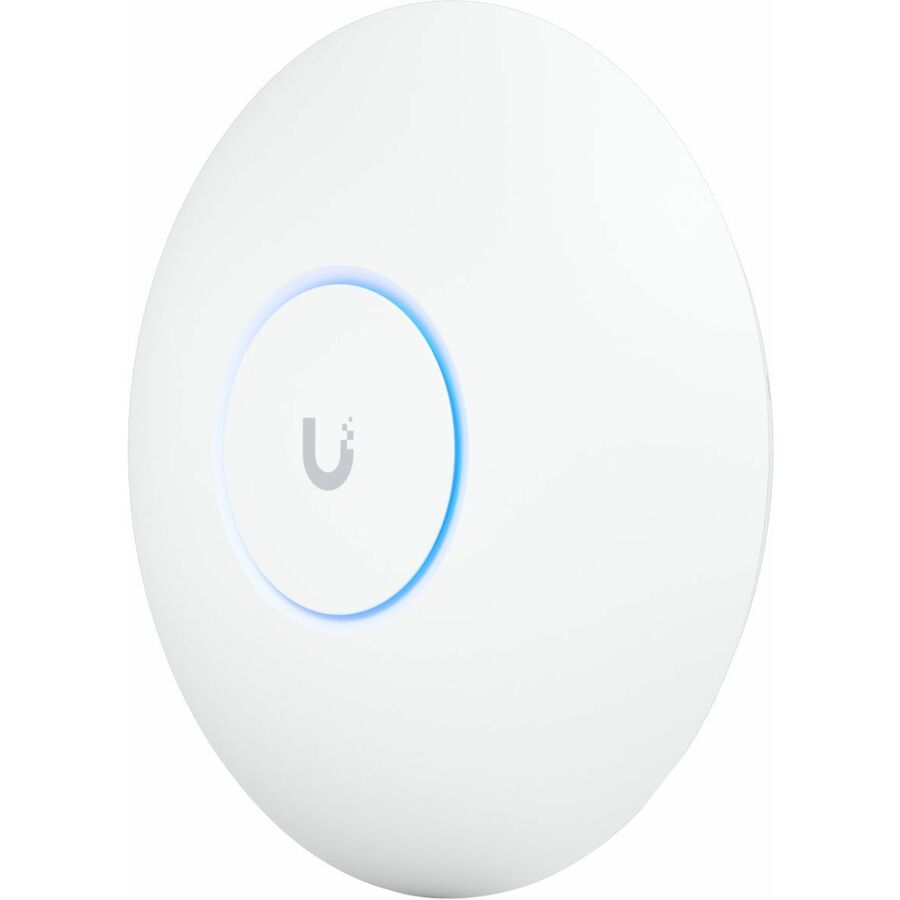
Ubiquiti
Ubiquiti U7 Pro Tri Band Wi-Fi 7 IEEE 802.11a/b/g/n/ac/ax/be/k/r/v 5.80…
U7-PRO-US
A tri-band Wi-Fi 7 access point with 2.4, 5 and 6 GHz radios, so 6 GHz-capable clients can reach the wide channels the generation is built around.
$238.70In stockHigher aggregate rate
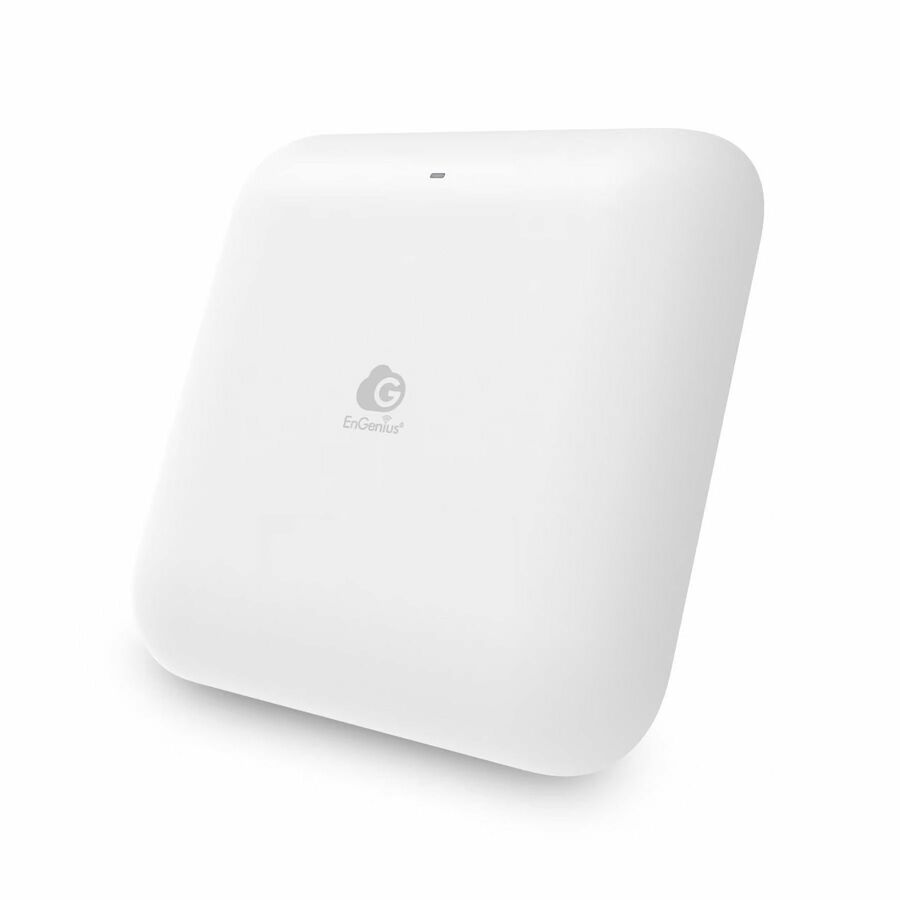
EnGenius Technologies
EnGenius ECW520 Tri Band Wi-Fi 7 IEEE 802.11 a/b/g/n/ac/ax/be 10.55…
ECW520
A tri-band indoor access point listed at 10.55 Gbit/s aggregate across its radios, for dense areas where the uplink and switch port can keep up.
Aggregate rate is the sum of all radios, not the throughput one client can see.
$259.86Back-orderedDual-band
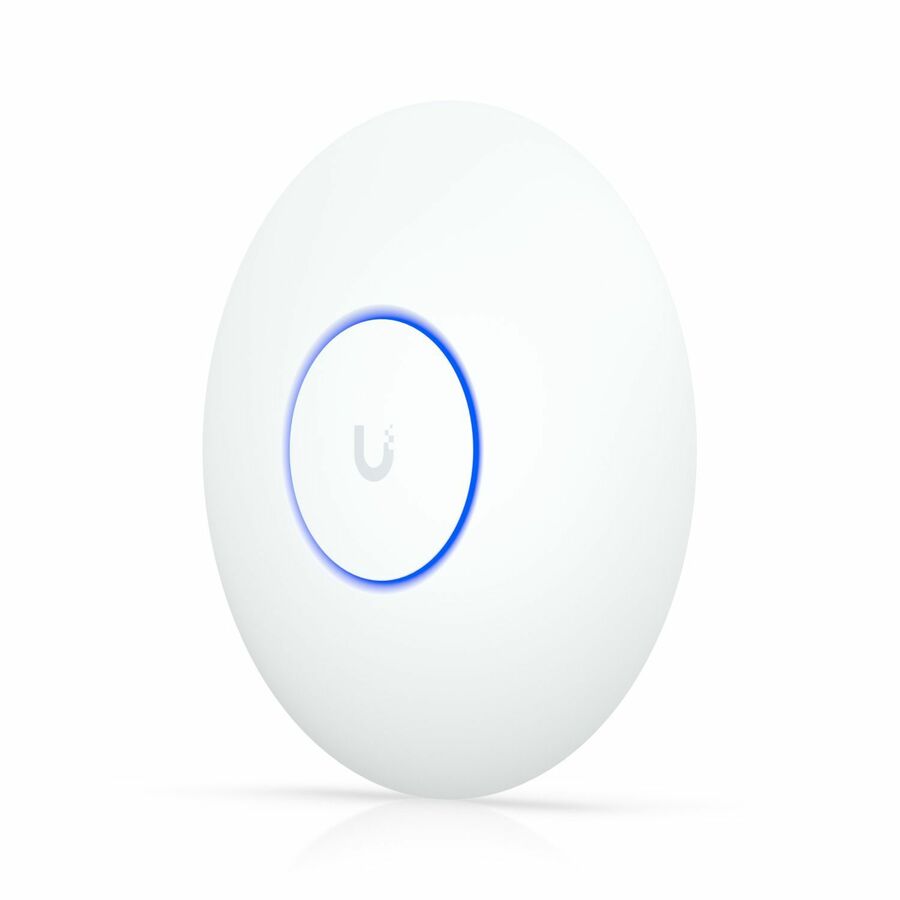
Ubiquiti
Ubiquiti U7 Lite Dual Band Wi-Fi 7 IEEE 802.11n/ac/ax/be/v/r/k 4.30…
U7-LITE-US
A dual-band Wi-Fi 7 access point on 2.4 and 5 GHz — the generation's efficiency gains without a 6 GHz radio, for fleets that have no 6 GHz clients yet.
$123.51In stockFrequently asked
- What is Wi-Fi 7?
- Wi-Fi 7 is the Wi-Fi Alliance's name for IEEE 802.11be, an amendment to the 802.11 wireless LAN standard published as IEEE Std 802.11be-2024. It operates in the 2.4, 5 and 6 GHz bands and adds 320 MHz channels, 4K QAM modulation and Multi-Link Operation. Its scope statement targets at least one mode capable of at least 30 Gbit/s measured at the MAC data service access point.
- Is Wi-Fi 7 backward compatible with Wi-Fi 6 and Wi-Fi 5?
- Yes. 802.11be is an amendment to the same 802.11 standard, and the scope requires backward compatibility with legacy devices in the 2.4, 5 and 6 GHz bands. Older clients associate to a Wi-Fi 7 access point and run at their own generation's capability; they do not gain 320 MHz channels or Multi-Link Operation, and they do not prevent newer clients from using them.
- Do I need 6 GHz to benefit from Wi-Fi 7?
- For the headline features, yes. The 320 MHz channels exist only in the 6 GHz band, so a dual-band Wi-Fi 7 access point cannot use them. Multi-Link Operation and 4K QAM still apply in 2.4 and 5 GHz, so a dual-band model is not pointless — but if the plan is wide channels, the access point and the clients both need 6 GHz radios.
- Will Wi-Fi 7 replace wired Ethernet?
- No. A wireless link is shared, contended and variable; a switch port is not. Wi-Fi 7 raises what wireless can carry, but every access point still terminates on a cable, and the practical effect of a Wi-Fi 7 rollout is usually pressure on the wired side — multi-gigabit switch ports and a bigger PoE budget rather than fewer cables.
Sources
- 1.IEEE Std 802.11be-2024 — Enhancements for Extremely High Throughput (EHT)standards.ieee.org
- 2.Wi-Fi Alliance — Wi-Fi CERTIFIED 7wi-fi.org
Keep reading