
Short answer
The balanced twisted-pair categories in current use are Cat5e, Cat6, Cat6a and Cat8, defined by TIA in ANSI/TIA-568.2-E. All of them share the same 100 m channel — 90 m of horizontal cable plus about 5 m of patch cord at each end — so a higher category buys bandwidth rather than distance. Cat6a carries 10GBASE-T to the full 100 m; Cat8 exists for 25 and 40 Gigabit runs of up to 30 m.
Key facts
- ANSI/TIA-568.2-E, the Balanced Twisted-Pair Telecommunications Cabling and Components Standard, was announced 5 November 2024 as the revision of 568.2-D.
- The structured cabling channel is 100 m: a 90 m trunk plus about 5 m of patch cord at either end, across a four-connector channel.
- CommScope states the 100 m limit applies to all cable categories, because the constraint is insertion loss rather than the category.
- Cat 6A is specified to a maximum channel frequency of 500 MHz and supports 10GBASE-T to 100 meters.
- IEEE 802.3bq defines 25GBASE-T and 40GBASE-T over up to 30 m of balanced twisted-pair cabling — the Category 8 use case.
- Addendum ANSI/TIA-568.2-D-2 introduced DC resistance unbalance limits for Cat5e, Cat6 and Cat6A — previously Category 8 only — and 568.2-E carries them.
By Uniqcli Team
The balanced twisted-pair categories in current use are Cat5e, Cat6, Cat6a and Cat8. They are defined by TIA in ANSI/TIA-568.2-E, the Balanced Twisted-Pair Telecommunications Cabling and Components Standard, which TIA announced on 5 November 2024 as the revision of ANSI/TIA-568.2-D.
The first thing to fix in your head is what a higher category does not buy. Every copper category shares the same 100 m channel: a 90 m permanent link of solid horizontal cable plus roughly 5 m of patch cord at each end. CommScope states the limit plainly — it applies to all cable categories, because the constraint is insertion loss at the cable's maximum frequency, not the category label.
What changes with category is bandwidth, and therefore which Ethernet applications the channel can carry over that same distance. Cat6a is the category that carries 10GBASE-T to the full 100 m. Cat8 is the exception in the other direction: it exists for a 30 m run in a data center, not for a building.
What separates the categories?
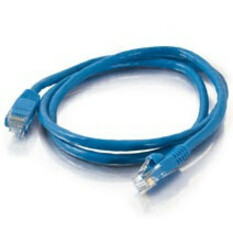
Cat5e is the baseline that survived. It carries Gigabit Ethernet on a full 100 m channel and remains recognized in ANSI/TIA-568.2-E, which carries forward the DC resistance unbalance specifications that addendum ANSI/TIA-568.2-D-2 introduced for Cat5e, Cat6 and Cat6A cables, permanent links and channels — a requirement that had previously applied only to Category 8.
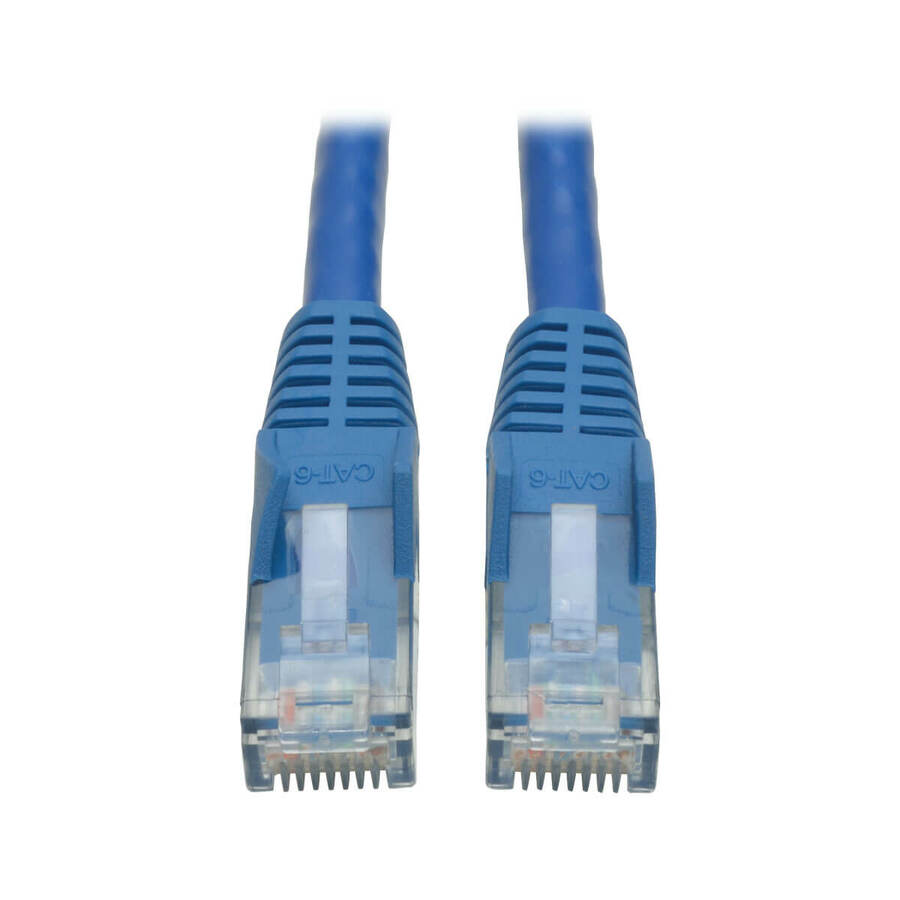
Cat6 sits above it with more bandwidth. It carries Gigabit Ethernet comfortably and can carry 10GBASE-T, but not across a full 100 m channel — 10 Gigabit over Cat6 is a shortened, qualified run whose length depends on the installation and the noise around it, which is why it is specified case by case rather than assumed.
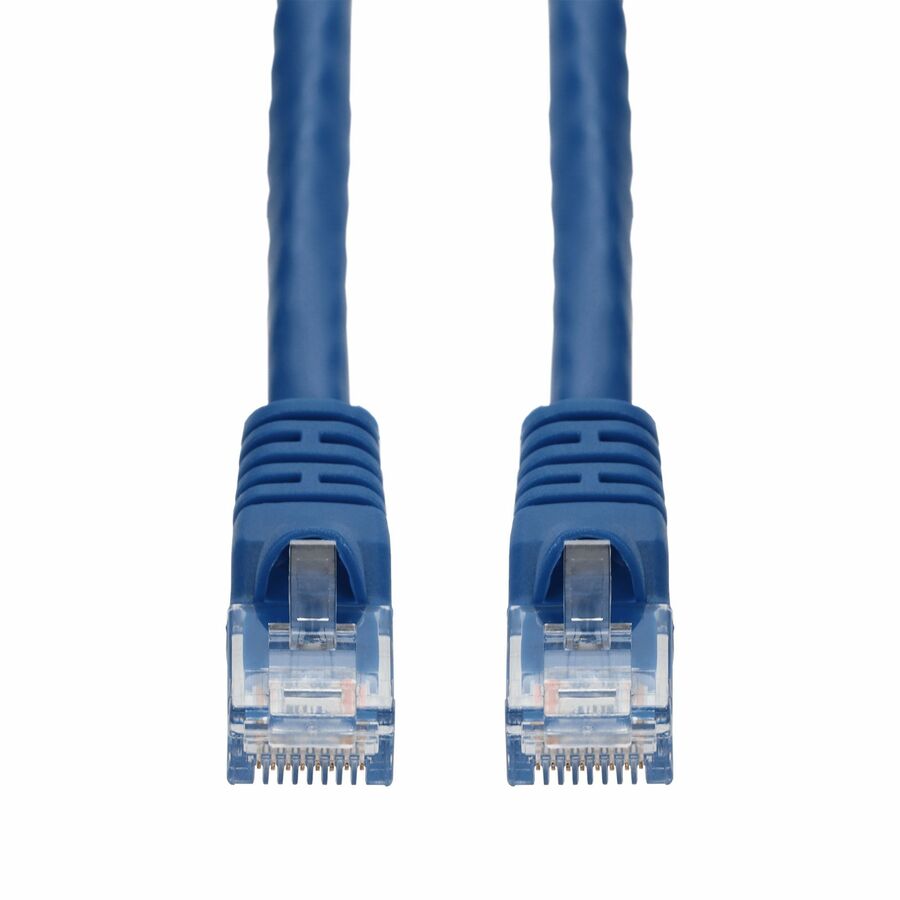
Cat6a is the category that removes that caveat. CommScope specifies a maximum channel frequency of 500 MHz and states that Cat 6A's support of 10GBASE-T to 100 meters covers the fastest Ethernet over twisted pair to the full channel length in the standards. That single sentence is why Cat6a is the default for new horizontal cabling in most enterprise designs.
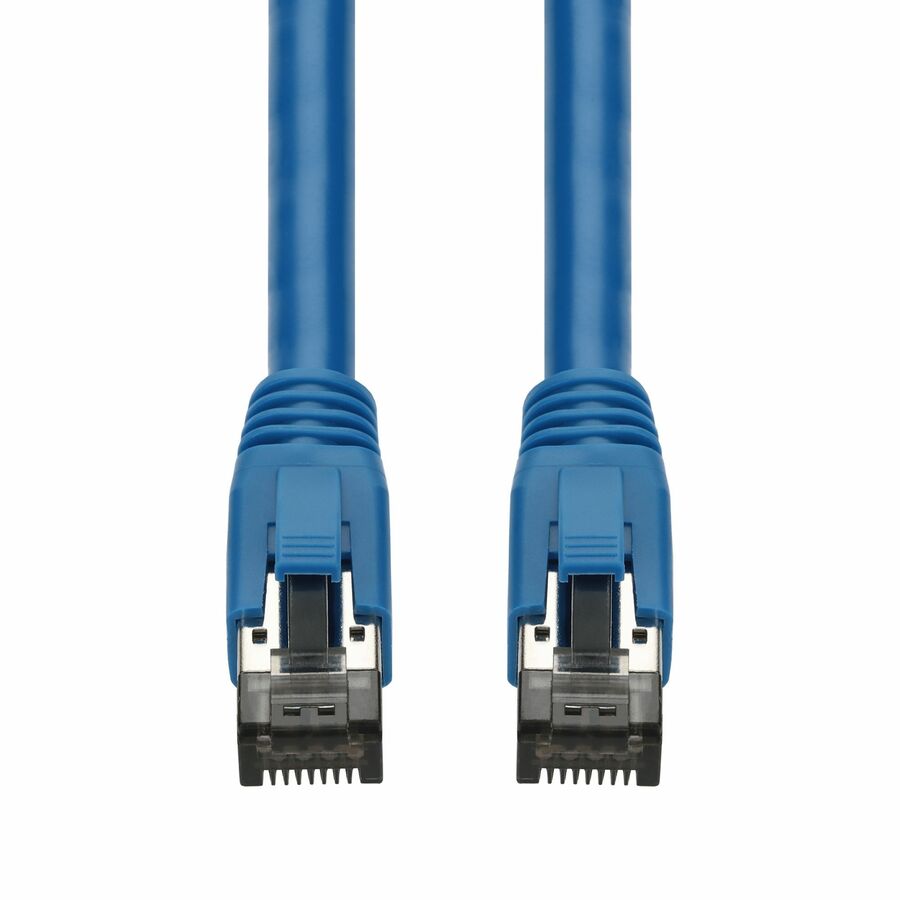
Cat8 is a different animal. IEEE 802.3bq defines 25GBASE-T and 40GBASE-T over up to 30 m of balanced twisted-pair cabling, and Cat8 is the cabling that meets it. It terminates on the familiar RJ-45 interface, so it patches into ordinary equipment, but a 30 m reach makes it a switch-to-server cable inside a data center row rather than a horizontal cable to a work area.
Shielding, solid and stranded
Category is one axis; construction is another. Unshielded (U/UTP) cable is the default in most offices. Shielded constructions — F/UTP with an overall foil, S/FTP with foil around each pair and a braid over all of them — add protection against external noise and against crosstalk between adjacent cables in a dense bundle, at the cost of a bonded, grounded pathway that has to be installed correctly to do anything at all. Category 8 is shielded by design; below that, shielding is a decision about the environment.
Solid and stranded is the second construction split. Solid conductor cable is for the permanent link — the horizontal run pulled through the building and terminated on jacks and patch panels. Stranded conductor cable is for patch cords, because it survives repeated flexing at the ends. Using a patch cord as a horizontal run, or terminating solid cable on a plug that expects stranded, is a reliable way to fail a certification test.
Then there is jacket rating, which is a building-code question rather than a performance one: plenum-rated cable where the pathway shares air-handling space, riser-rated between floors, and the appropriate rating for outdoor or direct-burial pathways. The category tells you nothing about the jacket, and the jacket is what the inspector reads.
Which category should you specify?
For new horizontal cabling, Cat6a is the ordinary answer: it carries 10GBASE-T to the full 100 m channel, so the cabling stops being the thing that limits the next switch refresh. Installed cable is the longest-lived part of the network and the most disruptive to replace, which is the argument for buying bandwidth ahead of need in the wall and not in the patch panel.
Cat6 remains reasonable where the run is short, the environment is quiet and 10 Gigabit at that outlet is genuinely not in the plan. Cat5e is a patch-cord and legacy-repair category rather than something to specify for a new installation.
Cat8 belongs in a rack. If the design is a top-of-rack switch to servers within 30 m, it is the copper answer for 25 and 40 Gigabit; over longer data-center distances the honest comparison is against direct attach copper and fiber rather than against another twisted-pair category.
Key takeaways
- ANSI/TIA-568.2-E, announced 5 November 2024, revises 568.2-D and covers Cat5e, Cat6, Cat6A and Cat8.
- Every copper category shares the same 100 m channel — 90 m of permanent link plus about 5 m of patch cord at each end.
- A higher category buys bandwidth, not distance: CommScope states the 100 m limit applies to all cable categories.
- Cat6a is specified to a 500 MHz channel frequency and carries 10GBASE-T to the full 100 m.
- Cat8 is the data-center category: IEEE 802.3bq defines 25GBASE-T and 40GBASE-T over up to 30 m.
- Construction is a separate decision — shielded or unshielded, solid for the permanent link and stranded for patch cords, plus the jacket rating the pathway requires.
Shop it at Uniqcli
Parts for this job
Cat5e
Legrand
Quiktron Q Cat.5e Patch Network Cable - 25 ft
570-110-025
A 25 ft Category 5e patch cord — the category to keep on hand for legacy repairs and Gigabit links, not the one to specify for new horizontal cabling.
$21.18Back-orderedCat6
Eaton
Tripp Lite by Eaton Cat6 Gigabit Snagless Molded (UTP) Ethernet Cable…
N201-025-BL
A 25 ft Category 6 UTP patch cord with a snagless molded boot, rated by the manufacturer for Power over Ethernet as well as data.
$22.55Back-orderedCat6a
AddOn
AddOn 25ft Blue CAT6A PVC Ethernet Cable Snagless Bubble Boot RJ-45 M/M…
ADD-25FCAT6A-BE
A 25 ft Category 6a patch cord — the category that carries 10GBASE-T over a full-length channel, and the usual default for new work.
$21.85In stockCat8
AddOn
AddOn 10ft Blue CAT8 Shielded (S/FTP) PVC Ethernet Cable Snagless Easy…
ADD-10FCAT8-BE
A 10 ft shielded S/FTP Category 8 cord on RJ-45, for the short switch-to-server runs that 25GBASE-T and 40GBASE-T are specified over.
Category 8 is a 30 m application; it is not a longer or better horizontal cable.
$27.60Back-orderedFrequently asked
- What are the Ethernet cable categories?
- Cat5e, Cat6, Cat6a and Cat8 are the balanced twisted-pair categories in current use, defined by TIA in ANSI/TIA-568.2-E. Cat5e carries Gigabit Ethernet over a 100 m channel, Cat6 adds bandwidth, Cat6a carries 10GBASE-T to the full 100 m, and Cat8 is a shielded data-center category for 25 and 40 Gigabit over runs of up to 30 m.
- Is Cat6a worth it over Cat6?
- For new horizontal cabling, usually yes. Cat6a is specified to a 500 MHz channel and carries 10GBASE-T to the full 100 m, while 10 Gigabit over Cat6 is a shortened, qualified run rather than a guaranteed channel. Installed cable is the longest-lived and most disruptive part of the network to replace, so the extra bandwidth in the wall is normally worth more than the same money spent elsewhere.
- Does a higher category cable make my network faster?
- Not by itself. The category sets the bandwidth of the channel, which determines which Ethernet applications it can carry; the actual speed is set by the equipment at both ends. Replacing Cat5e patch cords with Cat6a between two Gigabit switch ports changes nothing. The category matters when you are moving to 10 Gigabit or beyond, or when the run is long enough that margin is thin.
- What is the difference between shielded and unshielded cable?
- Unshielded (U/UTP) cable relies on the twist of each pair to reject noise and is the default in ordinary office environments. Shielded constructions add foil around the pairs, or foil plus a braid, to reject external interference and crosstalk between cables in a dense bundle. Shielding only works if the pathway is properly bonded and grounded end to end, so it is an installation decision as much as a cable choice.
Sources
- 1.TIA — ANSI/TIA-568.2-E announced (revises 568.2-D)tiaonline.org
- 2.CommScope — Cat 6A fact file (500 MHz, 10GBASE-T to 100 m)commscope.com
- 3.CommScope — extended reach fact file (the 100 m channel and why it exists)commscope.com
- 4.IEEE 802.3bq-2016 — 25GBASE-T and 40GBASE-T over 30 mstandards.ieee.org
- 5.Siemon — what changed in ANSI/TIA-568.2-Esiemon.com
Keep reading