
Short answer
The maximum length of a balanced twisted-pair Ethernet channel is 100 m, or 328 ft: a 90 m permanent link of solid horizontal cable plus about 5 m of patch cord at each end. The limit comes from insertion loss, not from the connector, and it is the same for Cat5e through Cat6a — a higher category buys bandwidth over the same distance, not a longer run.
Key facts
- The structured cabling channel is 100 m — a four-connector channel using a 90 m trunk with a 5 m patch cable at either end.
- 100 m is 328 ft, so a 300 ft run is inside the limit and a 500 ft run is not.
- The limit exists because insertion loss rises with length; 100 m is the worst case that still passes at the cable's maximum frequency.
- CommScope states the 100 m limit applies to all cable categories, so Cat6a buys bandwidth rather than distance.
- Category 8 is the short exception: IEEE 802.3bq specifies 25GBASE-T and 40GBASE-T over up to 30 m.
- Beyond 100 m the options are an intermediate switch, fiber, or an Ethernet extender that trades speed for distance.
By Uniqcli Team
The maximum length of a balanced twisted-pair Ethernet channel is 100 m, which is 328 ft. That figure is not one cable: CommScope describes the structured cabling channel as a four-connector channel using a 90 m trunk with a 5 m patch cable at either end. The 90 m is the permanent link — the solid horizontal cable pulled through the building — and the remaining 10 m is the total patch-cord budget across both ends.
The limit exists because of insertion loss. Signal strength falls as the cable gets longer, and 100 m is where the worst case still passes at the cable's maximum frequency. It is a physics limit expressed as a planning rule, not an arbitrary round number, and it has stood since the 1990s.
The most useful consequence for a buyer is the one that surprises people: a higher cable category does not extend the distance. CommScope states that the 100 m limit applies to all cable categories. Cat6a buys bandwidth over the same 100 m; it does not buy a longer run.
How the 100 m is divided
The channel is what the equipment sees end to end: switch port, patch cord, patch panel, horizontal cable, work-area outlet, patch cord, device. The permanent link is the fixed portion in between — the horizontal cable and its terminations — and it is capped at 90 m. The patch cords at the two ends share the remaining 10 m, typically as about 5 m at each end.
That split matters because the two halves use different cable. Horizontal cable is solid-conductor, pulled once and terminated on jacks and panels. Patch cords are stranded, so they survive being flexed, and stranded conductor has higher attenuation per meter than solid — which is exactly why the standard's budget gives it a smaller share of the total.
It also explains a common field failure. A run measured at 95 m of horizontal cable is already over the permanent-link limit before a single patch cord is added, and adding generous 10 m cords at each end to a 90 m run puts the channel over 100 m. Certification testers report the channel and the permanent link separately for this reason.
Does a better cable go further?
No. The categories differ in bandwidth, not in reach: Cat5e, Cat6 and Cat6a all plan to the same 100 m channel, and CommScope is explicit that the limit applies across categories because higher-category cable extends supportable distance only marginally.
Category 8 is the exception, and it runs in the opposite direction. IEEE 802.3bq defines 25GBASE-T and 40GBASE-T over up to 30 m of balanced twisted-pair cabling. Cat8 buys speed at short distance for a data-center row, not distance.
Power over Ethernet follows the same 100 m planning rule for the data channel, but voltage drop over the run is its own budget: the power delivered at the far end is lower than the power sourced at the switch, and the PoE standards account for that loss. A device at 95 m has less headroom than one at 20 m, so a long run plus a high-power device is worth checking rather than assuming.
What to do when the run is longer than 100 m
The first and usually best answer is an intermediate active device: put a switch in the middle. Each 100 m segment is then a proper channel with its own certification, and the switch regenerates the signal rather than passing along a degraded one. The cost is a location with power and somewhere to mount it.
The second is fiber. Multimode fiber carries a link hundreds of meters and single-mode far beyond that, so a media converter or an SFP-equipped switch at each end turns a distance problem into an ordinary fiber run. Where the pathway is between buildings, fiber also removes the ground-potential and lightning concerns that come with copper leaving a structure.
The third is an Ethernet extender, which trades speed for distance over a copper pair beyond 100 m. That is a legitimate answer for a camera, a door controller or a remote sensor, and a poor one for a work-area outlet. What is never the answer is simply making the patch cord longer: past 100 m the channel is out of specification, and the failure is intermittent rather than obvious.
Key takeaways
- The maximum channel is 100 m (328 ft): a 90 m permanent link plus about 5 m of patch cord at each end.
- The limit is set by insertion loss at the cable's maximum frequency, not by the connector or the category.
- A higher category does not extend the run — CommScope states the 100 m limit applies to all cable categories.
- Category 8 is the short exception: IEEE 802.3bq specifies 25GBASE-T and 40GBASE-T over up to 30 m.
- Solid horizontal cable and stranded patch cords have different attenuation, which is why the 90/10 split exists.
- Past 100 m the answers are an intermediate switch, fiber, or an Ethernet extender — never a longer patch cord.
Shop it at Uniqcli
Parts for this job
Long patch run
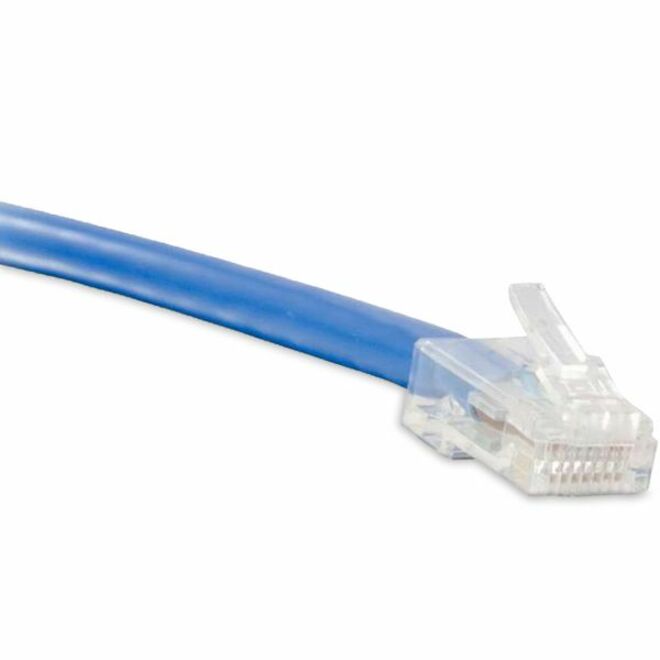
NSI Industries
ENET Cat.6 Patch Network Cable - 100 ft
C6-BL-NB-100-ENC
A 100 ft Category 6 cord for a single long link between rooms — well inside the 328 ft channel, and easier to certify than a joined pair of shorter cords.
A patch cord is stranded; the 90 m permanent-link budget is for solid horizontal cable.
$35.14Back-ordered50 ft Cat6a
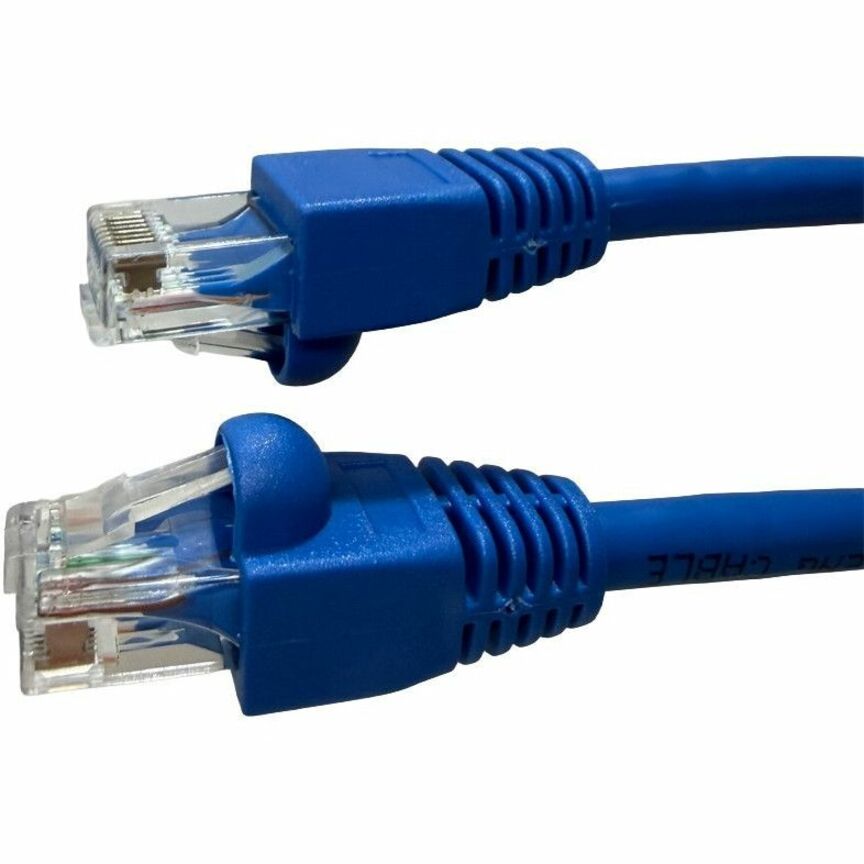
4XEM
4XEM 50FT Cat6A Snagless RJ45 Ethernet Patch Cable…
4XC6APATCH50BL
A 50 ft Category 6a cord for a run that has to carry 10 Gigabit, since Cat6a is the category specified to do so across a full-length channel.
$18.62In stockMeasure the run
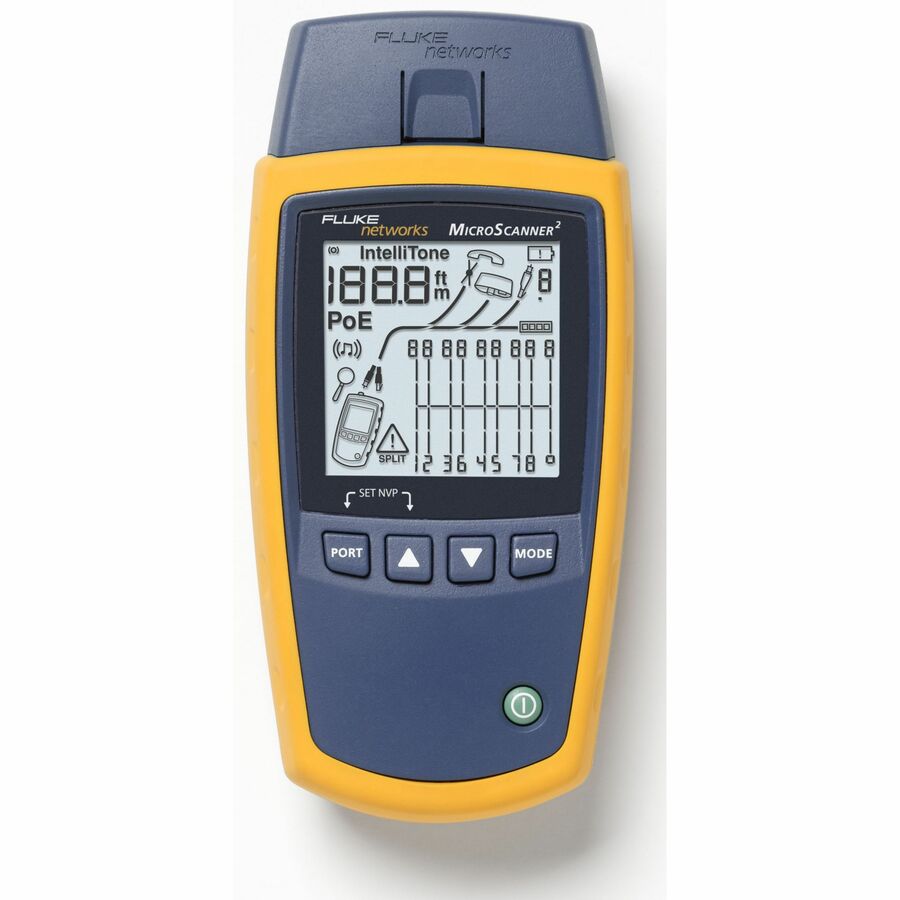
Fluke Networks
Fluke Networks MicroScanner2 Cable Verifier
MS2-100
A handheld MicroScanner2 cable verifier whose record lists a maximum length measurement of 1,509 ft on twisted pair — enough range to read a run against the 328 ft channel.
$808.81In stockFrequently asked
- Can I run an Ethernet cable 500 feet?
- Not as one twisted-pair channel. The limit is 100 m, which is 328 ft, so 500 ft is well past specification and the failure is usually intermittent rather than a clean no-link. Cover the distance with a switch in the middle, with fiber and a media converter or SFP at each end, or with an Ethernet extender if the device at the far end tolerates lower speed.
- How long can an Ethernet cable be before signal loss?
- Signal loss starts at the first meter — it is continuous, not a cliff. The 100 m channel is the point at which the worst-case insertion loss still leaves enough signal for the equipment to decode reliably at the cable's maximum frequency. Below 100 m you have margin; above it you are relying on luck, the specific cable and the specific equipment.
- Is a 30 ft Ethernet cable too long?
- No. Thirty feet is about 9 m, well inside both the 100 m channel and the roughly 5 m normally allowed per patch cord at each end when the horizontal cable is near its own 90 m limit. On a short horizontal run there is plenty of budget for a 30 ft cord; on a 90 m run, keep the cords near 5 m so the total channel stays under 100 m.
- Can Ethernet be extended over 300 feet?
- Yes — 300 ft is about 91 m, which is inside the 100 m channel, though it leaves little room for patch cords if the whole 300 ft is horizontal cable. Measure the routed path rather than the straight line, keep the permanent link at or under 90 m, and certify the channel. Past 328 ft you need a switch, fiber or an extender.
Sources
- 1.CommScope — extended reach fact file (the 100 m channel, 90 m trunk, 5 m cords)commscope.com
- 2.CommScope — Cat 6A fact file (500 MHz, 10GBASE-T to 100 m)commscope.com
- 3.TIA — ANSI/TIA-568.2-E, Balanced Twisted-Pair Cabling and Components Standardtiaonline.org
- 4.IEEE 802.3bq-2016 — 25GBASE-T and 40GBASE-T over 30 mstandards.ieee.org
Keep reading