
Short answer
A direct attach copper (DAC) cable is a fixed-length twinaxial copper assembly with SFP+, SFP28 or QSFP transceiver bodies permanently attached at both ends. It replaces two pluggable optics and a patch cord on a short switch-to-server link, and because the ends are molded on, the length is chosen at purchase. Reach is a rack row, not a building.
Key facts
- A DAC is a single assembly: the transceiver bodies are molded onto twinaxial copper and cannot be removed, so length is fixed at purchase.
- IEEE 802.3by-2016 specifies 25 Gb/s Ethernet over twinaxial copper cabling as 25GBASE-CR and 25GBASE-CR-S.
- IEEE 802.3bj-2014 added 100 Gb/s Physical Layer specifications for electrical backplanes and twinaxial copper cables.
- Passive assemblies carry the signal unconditioned; active assemblies add equalisation in the connector body and draw more port power.
- Twinaxial reach is short by design, which is why DAC is a rack and adjacent-rack link rather than a building cable.
- Each connector body carries an EEPROM the switch reads, so a DAC joining two platforms must be coded acceptably for both.
By Uniqcli Team
A direct attach copper (DAC) cable is a single assembly: a twinaxial copper cable with SFP+, SFP28, QSFP or QSFP28 transceiver bodies molded permanently onto both ends. It plugs into the same cages a pluggable optic would, and it replaces two transceivers and a fiber patch cord for one short link.
Because the ends are attached, the length is chosen at purchase and cannot be changed later. That is the whole trade. A DAC removes two components, two mating surfaces and the optical power budget from a link, at the cost of a fixed length and a reach measured in meters rather than hundreds of meters.
That reach is why the category exists where it does. Twinaxial copper links are specified for the inside of a rack and the row around it — IEEE 802.3by specifies 25 Gb/s Ethernet over twinaxial copper as 25GBASE-CR and 25GBASE-CR-S, and IEEE 802.3bj added 100 Gb/s Physical Layer specifications for electrical backplanes and twinaxial copper cables. Anything longer moves to an active optical cable or to optics and fiber.
Passive and active DAC
A passive DAC contains no electronics. The transceiver body holds the connector, the latch and an EEPROM that identifies the assembly to the switch; the signal passes through the copper unconditioned. Passive assemblies draw no power beyond what the port supplies for identification, add no processing delay of their own, and are the shortest and cheapest option.
An active DAC adds signal conditioning in the connector body — equalisation and re-driving — so the assembly can reach further than a passive one of the same gauge. It draws more power from the port and is used where the physical run is at the edge of what a passive assembly will carry cleanly.
Cable gauge is the third variable and it is on the label for a reason. A thinner conductor bends into a dense rack more easily and impedes airflow less; a thicker one carries the signal further. On a rack full of high-speed links, the bundle behind the switch is a real thermal consideration, not a cosmetic one.
DAC against AOC and optics
An active optical cable (AOC) is the same idea in glass: transceivers permanently attached to a fiber assembly, fixed length, no field termination. It reaches much further than copper and weighs less in a bundle, at a higher cost per link, so the boundary between DAC and AOC is essentially where copper stops being reliable.
Pluggable optics plus a fiber patch cord are the flexible option: any length the plant supports, transceivers that can be replaced independently, and cords that can be re-used. They cost more per link and add two more failure points and an optical power budget to manage. For a top-of-rack switch to servers in the same rack, that flexibility buys nothing.
So the ordinary rule is: inside the rack and to the rack next door, DAC. Down the row or between rows, AOC. Between rooms or where the length is not yet decided, optics and structured fiber.
What to check before ordering
Confirm the form factor at both ends first — SFP+ at 10 Gigabit, SFP28 at 25, QSFP+ at 40 and QSFP28 at 100 — and whether the link is a straight assembly or a breakout that fans one QSFP into four SFP ports. A breakout is a different part number and a different switch configuration.
Then confirm coding. Switches read the EEPROM in the connector body and many will refuse, or log a warning about, an assembly whose identification does not match what the platform expects. Since a DAC has a body at each end, an assembly joining two different platforms has to satisfy both.
Then measure. The length is fixed at purchase, so measure the routed path — up the rack, through the manager, down the other side — rather than the straight-line distance, and leave enough slack for the cable to be dressed without violating its bend radius. A DAC that is 200 mm short is scrap.
Key takeaways
- A DAC is one assembly: twinaxial copper with transceiver bodies molded on at both ends, so the length is fixed at purchase.
- It replaces two pluggable optics and a patch cord for a short link, removing the optical power budget from the equation.
- Passive DAC carries the signal unconditioned; active DAC adds equalisation in the connector body to reach further, at more power.
- IEEE 802.3by specifies 25 Gb/s over twinaxial copper as 25GBASE-CR and 25GBASE-CR-S; IEEE 802.3bj covers 100 Gb/s over copper cables.
- Reach is short by design — DAC is a rack and adjacent-rack link, with AOC or optics beyond it.
- Switches read the EEPROM in each connector body, so confirm the assembly is coded for the platform at both ends.
Shop it at Uniqcli
Parts for this job
10 Gigabit
AddOn
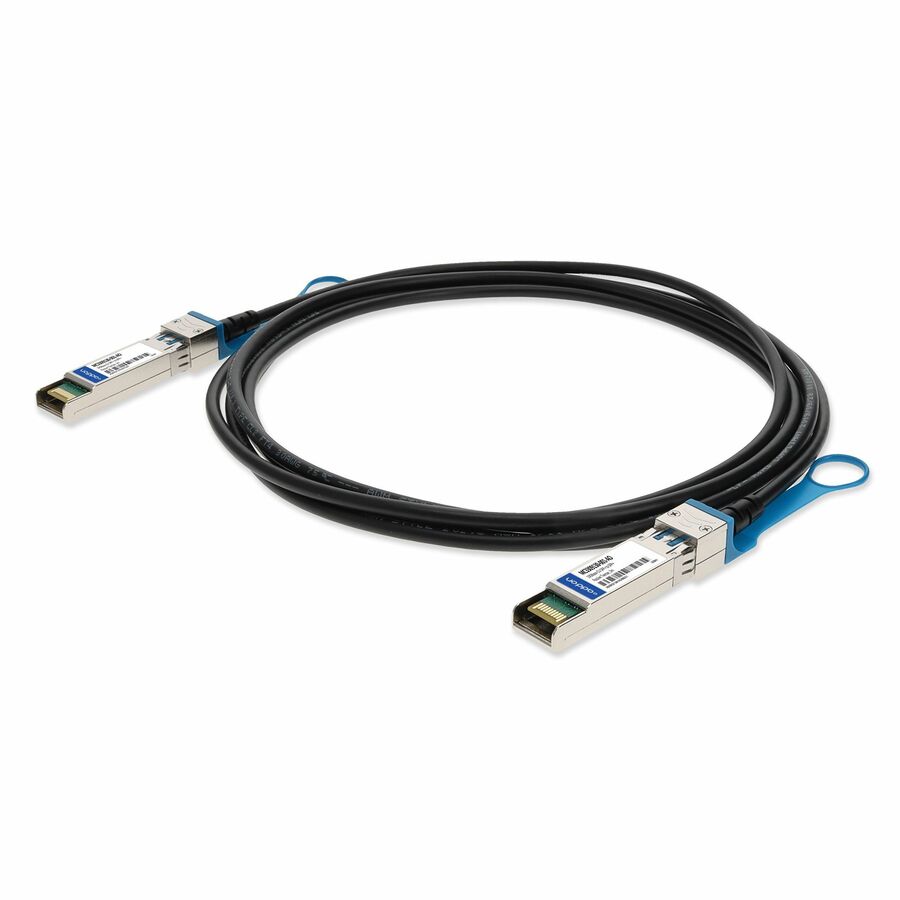
AddOn Mellanox MC3309130-001 Compatible TAA Compliant 10GBase-CU SFP+…
MC3309130-001-AO
A 1 m passive twinax assembly with SFP+ bodies at both ends for 10GBase-CU — the ordinary top-of-rack switch to server link at 10 Gigabit.
$27.60*In stock25 Gigabit
AddOn
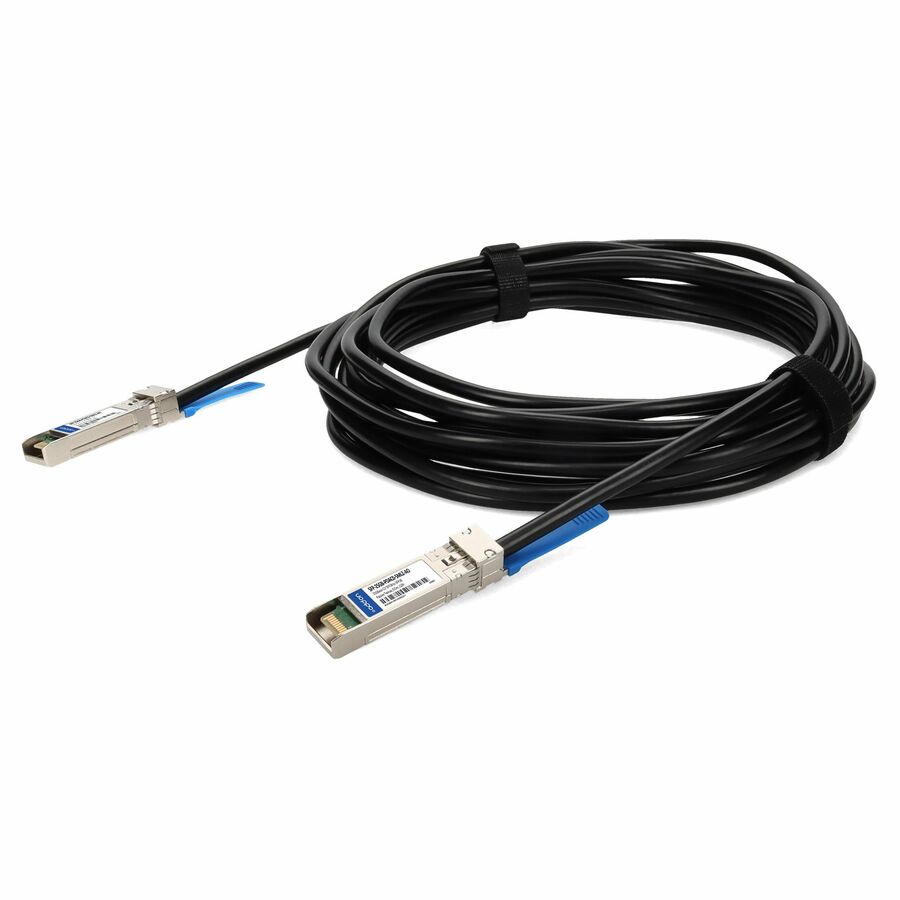
AddOn MSA and TAA 25GBase-CU SFP28 to SFP28 Direct Attach Cable…
SFP-25GB-PDAC0-5MLZ-AO
A 0.5 m passive SFP28 assembly in 30 AWG with an LSZH jacket, for 25GBase-CU links inside a single rack where bundle bulk matters.
$82.80*Back-ordered100 Gigabit
AddOn
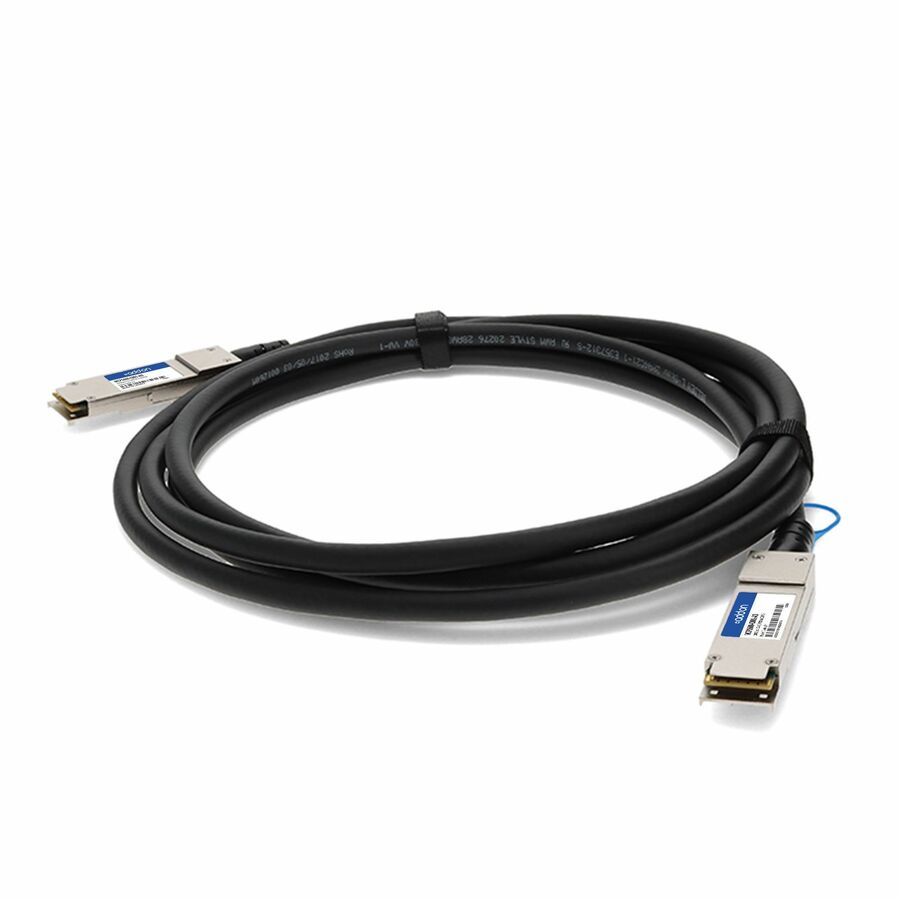
AddOn Mellanox MCP1600-C001 Compatible TAA Compliant 100GBase-CU QSFP28…
MCP1600-C001-AO
A 1 m passive QSFP28-to-QSFP28 assembly for 100GBase-CU, the copper option for a short spine-to-leaf or switch-to-server run.
Confirm the assembly's coding is accepted by the platform at both ends before ordering.
$119.60*In stockFrequently asked
- What is a DAC cable?
- A direct attach copper cable — a twinaxial copper assembly with transceiver bodies permanently molded onto both ends. It plugs into the same SFP or QSFP cages as a pluggable optic and replaces two transceivers plus a patch cord on a short link. Because the ends are attached, the length is fixed when you buy it.
- What is the difference between a DAC and a direct attach copper cable?
- They are the same thing — DAC is the abbreviation. You will also see the assemblies described by the Ethernet interface they implement, such as 10GBase-CU, 25GBASE-CR or 100GBase-CU, where the -CU or -CR suffix indicates copper. The part number usually states form factor, speed, length and whether the assembly is passive or active.
- What is the difference between a DAC and an AOC?
- The medium. A DAC carries the signal over twinaxial copper and is limited to a short reach; an active optical cable (AOC) carries it over fiber with electronics in the ends, reaching much further and weighing less in a bundle, at a higher cost per link. Both are fixed-length assemblies with attached ends, so the choice is essentially distance and cable-management weight against price.
- Will a DAC work in any switch?
- Not always. The connector body carries an EEPROM identifying the assembly, and many switch platforms check it — refusing the link or logging a warning if the coding is not one they expect. A DAC has a body at each end, so an assembly joining two different platforms has to be acceptable to both. Confirm the coding before ordering rather than after.
Sources
- 1.IEEE 802.3by-2016 — 25 Gb/s Ethernet over twinaxial copper (25GBASE-CR)standards.ieee.org
- 2.IEEE 802.3bj-2014 — 100 Gb/s operation over backplanes and copper cablesstandards.ieee.org
Keep reading