
Short answer
The main difference between a PoE injector and a PoE switch is scale and placement: an injector is a midspan that adds power to one Ethernet run from a non-PoE switch, while a PoE switch is an endspan that powers every port from one shared power budget. Use an injector for a single device or a retrofit onto switching you keep; use a switch once you are powering several endpoints from one place.
Key facts
- The IEEE standards are identical either way: 802.3af gives about 15.4 W at the port, 802.3at (PoE+) 30 W, and 802.3bt Types 3 and 4 up to 60 W and 90 W.
- Endspan is the IEEE term for a switch that sources power on its data port; midspan is the injector inserted between a non-PoE switch and the device.
- 802.3bt powered devices draw up to 51 W on Type 3 and 71.3 W on Type 4 — the gap from the port figure is cable loss.
- A switch's total PoE budget is usually less than the sum of its per-port maxima, so size it against the combined device load, not the per-port rating.
- The 100 m twisted-pair channel limit covers the whole run — switch to injector plus injector to device — so an injector adds no distance.
- A PoE splitter is the opposite device: it takes a powered run and separates it back into data plus a DC jack for equipment with no PoE input.
Both a PoE injector and a PoE switch deliver DC power and data over the same twisted-pair cabling, so the choice is rarely about capability and almost always about scale, topology, and budget. An injector (a midspan) adds power to a single link between an existing non-PoE switch and one device; a PoE switch (an endspan) builds a power source into every port. The underlying IEEE standards are identical either way: 802.3af (up to ~15.4 W at the port, ~12.95 W at the device), 802.3at / PoE+ (30 W / ~25.5 W), and 802.3bt Types 3 and 4 (up to 60-90 W at the port). What sources the power does not change what the standard can deliver.
The real trade-off is per-device economics versus centralized capacity and control. One or two endpoints are cheapest and simplest to power with injectors bolted onto gear you already own, with no rack upgrade required. A cluster of cameras, access points, or phones is cheaper per port, tidier to cable, and far easier to monitor and power-cycle from a single managed switch. Two constraints decide the edge cases: a switch's total power budget is often less than the sum of every port running at maximum, and the 100-meter channel limit applies to the whole run, injector included.
At a glance
Side by side
| Factor | PoE injector (midspan) | PoE switch |
|---|---|---|
| Role in topology | Midspan — inserts power between a non-PoE switch and the device | Endspan — power built into each RJ45 port |
| Devices per unit | Usually one; multi-port midspans exist | 8, 24, 48+ ports in a single chassis |
| Power delivery | Dedicated feed to its one device; no contention | Per-port draw from a shared total power budget |
| Standards / wattage | Per-port unit in 802.3af/at/bt flavors (~15.4-90 W at PSE) | Same standards, but the budget caps how many ports run at max |
| Upfront cost | Low per device; total climbs as device count grows | Higher upfront; lower per-port cost at scale |
| Cabling & distance | 100 m total: switch to injector to device; keep injector near the switch | 100 m from the switch port to the device |
| Failure domain | One injector failing drops only its single device; swap it in minutes | A switch or its PSU failing cuts PoE to every attached device (redundant PSUs mitigate) |
| Management | Typically unmanaged passthrough; no per-port control | Managed models add per-port PoE control, metering, VLANs |
Choose a PoE injector (midspan) when
- You need to power one or a few PoE devices (a single access point, camera, or phone) and already run a working non-PoE switch.
- You want to add PoE to an existing network without replacing switching gear or spending a switch-refresh budget.
- A remote or isolated device sits away from the wiring closet and only that one drop needs power.
- You need a specific high-power 802.3bt / Type 4 feed for a single device without upgrading a whole switch.
Choose a PoE switch when
- You are powering many endpoints from one location and want them on a shared, managed backbone.
- You need per-port PoE monitoring, scheduling, priority, and remote power-cycle.
- It is a new deployment or refresh where per-port cost and clean cabling matter at scale.
- You want centralized UPS or generator backup covering all powered devices at once.
Bottom line
Count the powered devices — one or two, an injector; more than that, a PoE switch. For one to a few PoE endpoints, or to retrofit power onto switching gear you do not want to replace, an injector is cheaper, faster, and avoids consuming a switch upgrade. Once you are powering many endpoints from one location, a PoE switch lowers per-port cost, cleans up cabling, and — in managed form — adds per-port budgeting, monitoring, priority, and remote power-cycle that injectors cannot. Size any switch by its total PoE watt budget against your combined device load, not by its per-port rating alone.
Products for this decision
One device
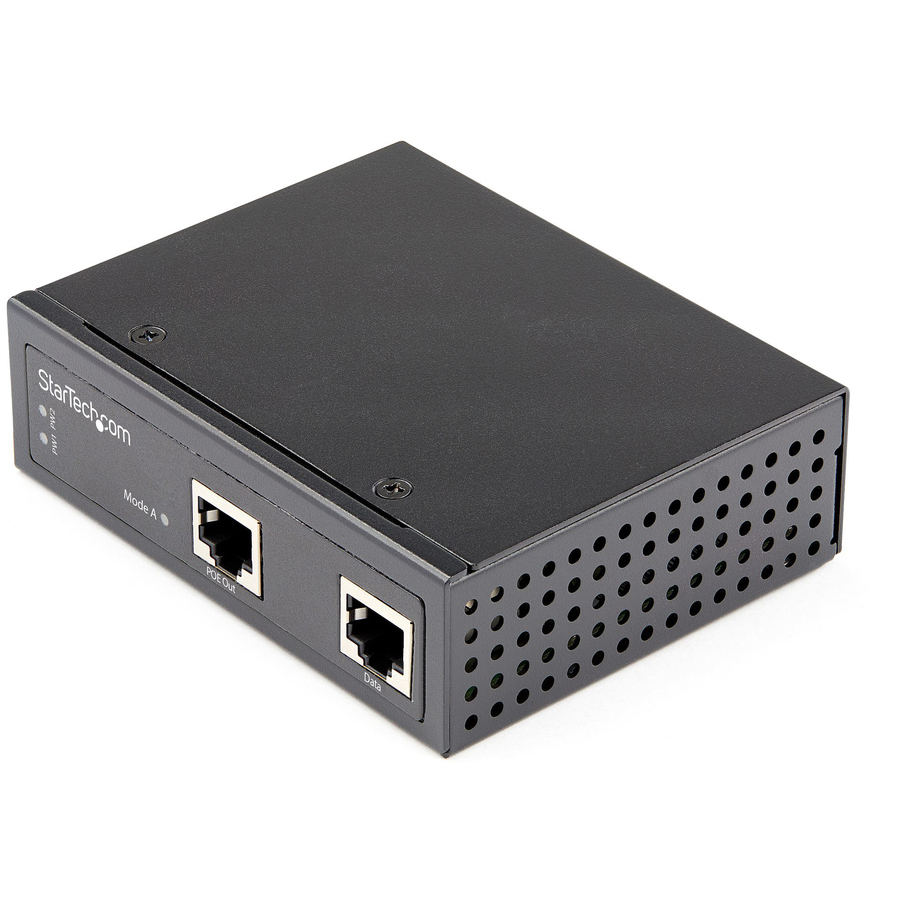
StarTech.com
StarTech Industrial Gigabit Ethernet PoE Injector, 30W 802.3at PoE+…
POEINJ30W
A 30 W 802.3at PoE+ midspan injector — standards-compliant so it detects and negotiates before energising the line, unlike a passive 24 V unit.
$115.91In stockOne high-power device
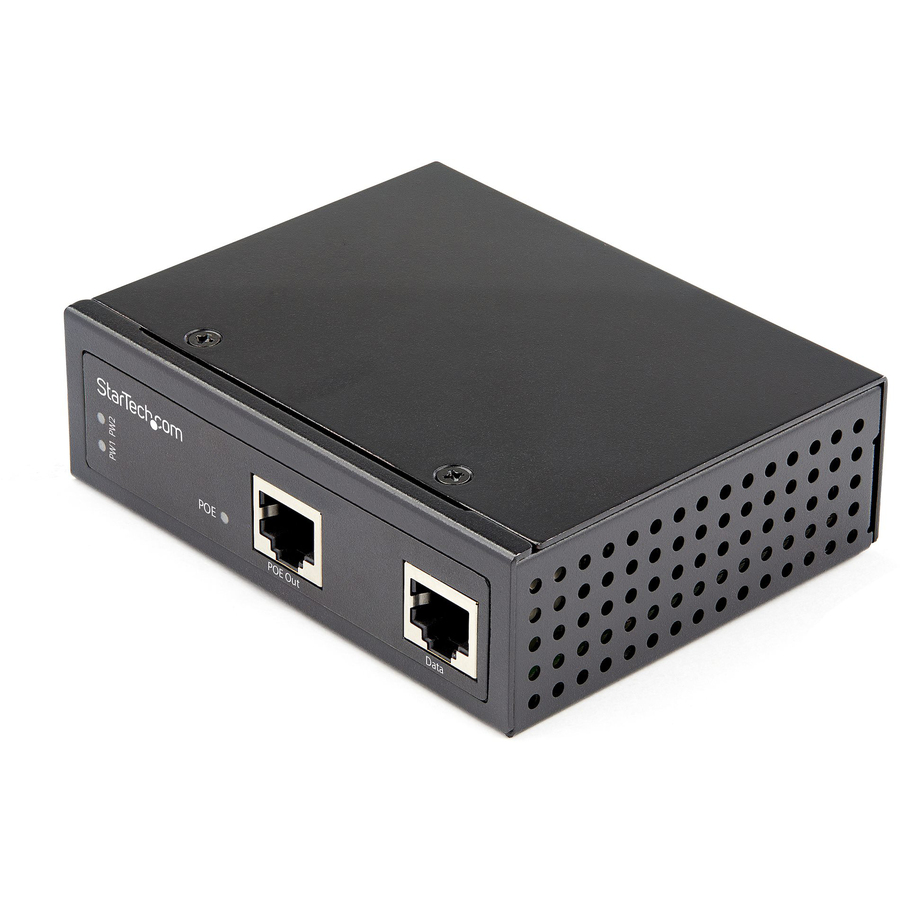
StarTech.com
StarTech Industrial Gigabit PoE Injector, 90W 802.3bt PoE++ 52V-56VDC…
POEINJ1G90W
A 90 W 802.3bt Type 3/4 injector, for the case where a single camera, display or high-power access point needs more than the switch can give it.
$215.93In stockMany devices
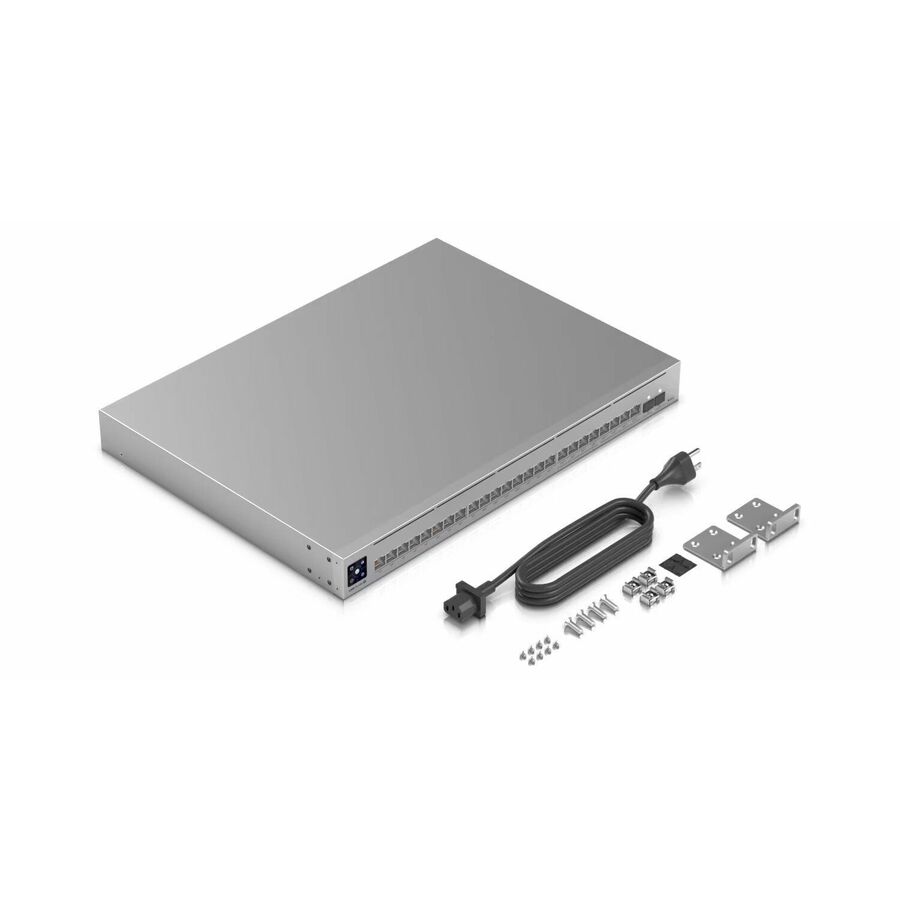
Ubiquiti
Ubiquiti Pro Max Layer 3 Switch
USW-PRO-MAX-24-POE
A 24-port managed PoE switch with a 400 W budget — the crossover point where per-port cost, cabling and remote power-cycle all favour the switch.
Compare the 400 W budget against the sum of your device draw, not against the per-port maximum.
$1,017.93Back-orderedThe opposite direction
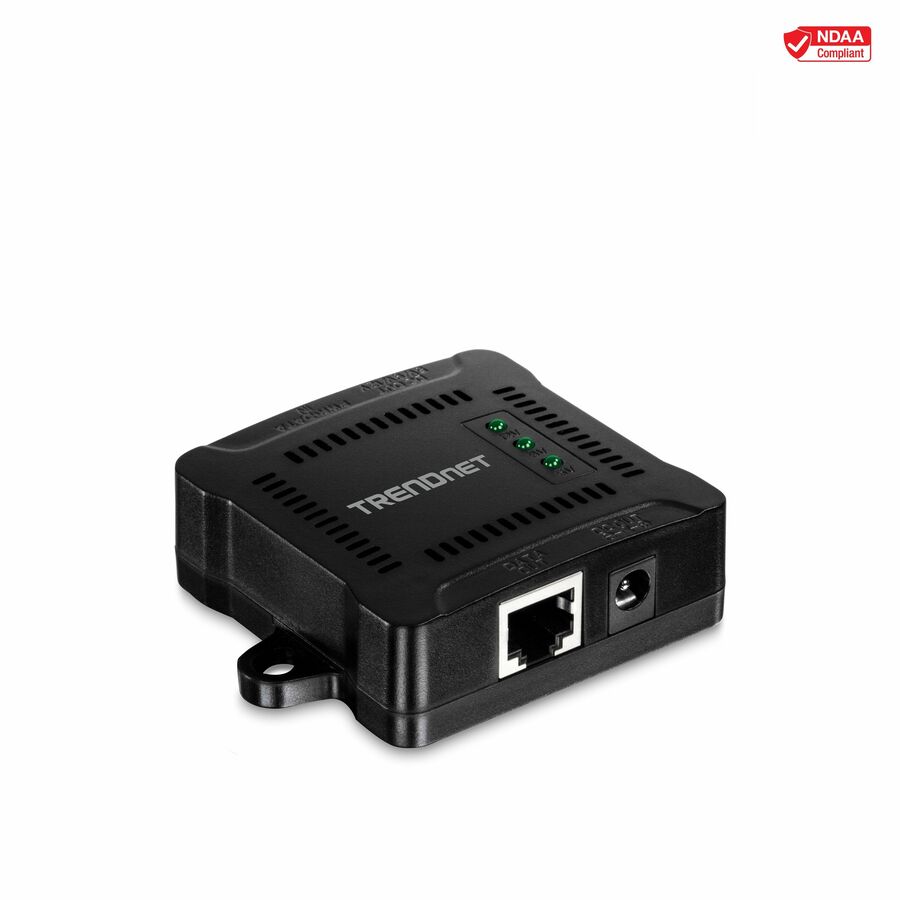
TRENDnet
TRENDnet Gigabit PoE Splitter, 1 x Gigabit PoE Input Port, 1 x Gigabit…
TPE-104GS
A gigabit PoE splitter that turns a powered run back into data plus a DC output, for a device that has no PoE input at all.
$27.22*Back-orderedShop it at Uniqcli
FAQ
Common questions
- Does a PoE injector extend the 100-meter Ethernet limit?
- No. The 100 m channel limit applies to the entire run — switch to injector plus injector to device — so place the injector close to the switch. To reach farther, use a purpose-built PoE extender or convert to fiber; a plain injector does not add distance.
- Do the injector's PoE standard and the device have to match?
- Match or exceed the device's power class. An 802.3af (15.4 W) injector cannot fully power an 802.3at or bt device, whereas a higher-standard source is backward compatible and negotiates down to what the device requests.
- Why can't my 24-port PoE switch run every port at full power?
- Switches share one total PoE power budget across all ports, and that budget is often less than the sum of the per-port maxima. Compare the switch's budget in watts to your combined device load, not just the per-port rating.
- Is a passive PoE injector the same as an 802.3 injector?
- No. A passive injector sends a fixed voltage with no negotiation and can damage standards-based devices if the voltage or pinout is wrong. Prefer 802.3af/at/bt-compliant injectors, which detect and negotiate power before energizing the line.
- Can I plug a PoE injector into a PoE switch?
- Don't. Feeding a midspan injector from a port that is already sourcing power puts two power sourcing devices on one run, which standards-compliant gear is not designed for and which can damage the endpoint. If the switch port already supplies enough power, use it directly. If you need more than that port gives, disable PoE on the port first, or take the injector's uplink from a non-PoE port.
- Do you need a PoE injector?
- Only if the device needs power over its Ethernet run and the switch it plugs into cannot supply it. One or two endpoints behind an existing non-PoE switch is exactly the injector case. Three or more, or anywhere you want per-port monitoring and remote power-cycle, is the case for a PoE switch instead — the crossover is device count, not capability.
- Does a PoE injector slow down internet speed?
- No, provided the injector is rated for the link speed. A gigabit injector passes gigabit; the failure people notice is fitting a 10/100 injector into a gigabit run, which caps the whole link at 100 Mbps. Check the injector's rated port speed against the switch and the device, and keep the total run inside the 100 m channel limit.
- Should a PoE injector be installed before or after the switch?
- After the switch and before the device — that is what midspan means. Run the cable from the switch port into the injector's data input, and from the injector's powered output to the device. Keep the injector close to the switch, because the 100 m limit covers both cable segments together, not each one separately.
Sources
- 1.IEEE 802.3-2022 — IEEE Standard for Ethernet (power delivery over twisted pair)standards.ieee.org
- 2.Ethernet Alliance — Overview of the 802.3bt Power over Ethernet standardethernetalliance.org