
Short answer
MPLS is a carrier-run private WAN that forwards on labels and sells a contracted class of service per circuit; SD-WAN is a software overlay that steers each application across whatever links a site has. Choose MPLS where a carrier SLA is a contractual need; choose SD-WAN for cloud-bound branches and resilience across cheaper internet links. They also run together, with MPLS as one underlay.
Key facts
- MPLS backhauls internet-bound traffic to a central site or a carrier cloud on-ramp; SD-WAN policy can break an application out at the branch.
- Three class bits mark at most 8 classes of service on one label-switched path (RFC 3270); SD-WAN policy attaches to each application flow instead (MEF 70.2).
- A BGP/MPLS IP VPN keeps customers apart by VRF but does not encrypt their traffic (RFC 4364); an SD-WAN overlay encrypts each tunnel, IPsec in practice.
- MEF 70.2 defines an SD-WAN service as an overlay over one or more underlay connectivity services from any provider, so an MPLS circuit can be one of them.
- An SD-WAN edge measures its own paths: WatchGuard's documented defaults move flows off an MPLS link at 5% loss, 400 ms latency or 100 ms jitter.
- MPLS and SD-WAN are not exclusive: a hybrid WAN keeps the circuit as one underlay and pins the flows that need its class of service to it by policy.
MPLS is a private wide-area network that a carrier operates for you: one circuit into each site, packets forwarded inside the carrier's core on short fixed-length labels rather than on IP lookups (RFC 3031), and a contracted class of service that states what loss, latency and jitter each class of traffic will see. SD-WAN is a software overlay the organization runs itself: an edge appliance at each site builds encrypted tunnels across whatever links that site has, measures each path continuously, and places every application on a path according to a policy written once in a central controller. One is a transport with a guarantee attached; the other is a control layer that decides how to use transports it does not own.
The choice is rarely all of one or all of the other. MEF 70.2, the industry service definition for SD-WAN, treats the overlay as something that runs over one or more underlay connectivity services from any provider, and an MPLS circuit qualifies as one of them. Many networks therefore land on a hybrid: the circuit stays where a contract or an application needs the carrier's class of service, dedicated internet or broadband goes in beside it, and the overlay decides what rides which. What settles the design is where the applications live, how many sites there are, how long a new circuit takes to reach each address, and whether a carrier's SLA or the organization's own measurement is the guarantee an auditor will accept.
At a glance
Side by side
| Factor | MPLS | SD-WAN |
|---|---|---|
| What it is | A carrier-operated private WAN that forwards on labels (RFC 3031), sold to the customer as a BGP/MPLS IP VPN with one circuit per site (RFC 4364) | An overlay service over one or more underlay connectivity services (MEF 70.2): an edge appliance at each site and a controller that holds the policy |
| Transport | One carrier's private circuit at each site; the carrier owns the path from edge to edge | Any IP transport: dedicated internet, broadband, LTE or 5G, satellite, or an MPLS circuit itself; underlays can come from different providers |
| Cost model | Priced by the carrier per circuit and per committed bandwidth; a bandwidth change is a carrier order and a contract term | Commodity transport per site, an appliance per site, and a per-site or per-bandwidth subscription that is normally the largest line over the term |
| Provisioning lead time | A new private circuit is a carrier build to the address, and it is usually the longest line on a rollout plan | Broadband or cellular can be turned up first and the appliance staged before it reaches the site; the slowest site still sets the migration date |
| Performance guarantees | Contracted: classes of service marked in the 3-bit Traffic Class field of the label, with a carrier SLA on loss, latency and jitter per class | Measured: the edge probes each tunnel for loss, latency and jitter and moves flows to a path that meets policy; each underlay keeps only the SLA it was sold with |
| Security | Traffic separation by VRF and label, comparable to a private Layer 2 network; the service does not encrypt data by itself (RFC 4364) | Encrypted tunnels between edges, IPsec in practice; local internet breakout needs a firewall at the edge or a cloud security service behind it |
| Cloud and SaaS path | Internet-bound traffic is backhauled to a central site, or to a carrier cloud on-ramp, before it leaves the private network | Policy can break an application out to the internet at the branch or steer it through a hub; the decision is per application flow |
| Redundancy | A second circuit, often from a second carrier, with failover driven by the routing protocol | Several tunnels over different underlays at once; flows move when a path degrades, before it fails outright |
| Management | The carrier runs the core; the customer configures a CE router at each site, device by device | One controller pushes policy to every edge and shows performance per application and per path from a single console |
| Migration path | Keep the circuit as one underlay beneath the overlay and retire it site by site as contracts expire | Open new sites on internet underlays from day one; add or keep MPLS only where a contracted transport is required |
How MPLS forwards traffic, and what the SLA covers
An MPLS network forwards on a label, not on the destination address. The ingress provider-edge router classifies a packet and pushes a label; every core router swaps the label from a table and forwards; the egress router pops it. RFC 3032 fixes the label stack entry at 32 bits: a 20-bit label, a 3-bit field for class of service (the Exp field, since renamed Traffic Class), a 1-bit bottom-of-stack flag and an 8-bit time-to-live. The customer never touches any of this. What the customer buys is the service on top, almost always a BGP/MPLS IP VPN under RFC 4364, in which the provider keeps a separate routing table (a VRF) for each customer so that one customer's sites cannot reach another's.
The class of service is where the commercial value sits. Three bits give at most eight markings, and RFC 3270 defines how a single label-switched path (an E-LSP) carries up to eight behavior aggregates; a carrier typically sells a handful of them: a real-time class for voice and video, one or two priority data classes, and best effort. Each class comes with a contracted target for loss, latency and jitter measured across the carrier's network, and that contract is what an application owner points to when a call-quality complaint arrives. The limits are just as concrete. The SLA covers the carrier's cloud up to the demarcation point, not the customer's equipment beyond it, and RFC 4364 is explicit that the VPN does not by itself encrypt data: separation is by routing, not cryptography, so confidentiality across the circuit is a separate IPsec decision.
How SD-WAN chooses a path, and what it measures instead
MEF 70.2 describes an SD-WAN service as an overlay over one or more underlay connectivity services, which may be supplied by other providers. Between two edges the service builds tunnels, each with its own performance and security characteristics, and encryption is applied per tunnel. Packets arriving at a site are classified into application flows, and a policy attached to each flow states its performance targets, whether it may break out to the internet locally, and which paths it may use. That policy is written once, in the controller, and pushed to every edge; adding a site becomes installing an appliance that fetches its configuration rather than a router that someone configures by hand.
What replaces the carrier SLA is measurement. Each edge probes every tunnel for loss, latency and jitter and moves a flow when its current path falls outside the thresholds its policy allows. WatchGuard's documented example for exactly this case, a site with voice on an MPLS link and a VPN tunnel over the internet behind it, uses the default failover thresholds of Fireware 12.5.4 and later, 5% loss, 400 ms latency and 100 ms jitter, with failback to the circuit once it recovers. Other platforms use their own probes and defaults. The point that matters to a buyer is where the guarantee lives: the overlay can only choose among the paths it has, so a site whose underlays are one broadband line and a cellular modem has no guaranteed path at all, only the better of two measured ones.
Hybrid WAN: MPLS as the underlay, not the alternative
The two are not exclusive, and the head-to-head framing hides the design many migrations pass through. An MPLS circuit is a good underlay: the overlay builds a tunnel across it exactly as it does across a dedicated internet circuit, and policy pins the flows that need the contracted class of service to that tunnel while everything else rides the cheaper links. That keeps the carrier's SLA for the traffic with a contractual reason to want it, and stops paying premium transport for backups, software updates and SaaS sessions that never needed it.
Migration then becomes a sequence rather than a cutover. New sites open on dedicated internet or broadband plus cellular, with the overlay from day one. Existing sites get the appliance in front of the MPLS router and start steering non-critical flows off the circuit; by the time the circuit contract comes up for renewal, the organization holds months of measured data on whether the internet paths met the application targets, and the renewal becomes a decision on evidence. Where the answer is no, the circuit stays, with the overlay on top of it.
What changes on the bill of materials
An MPLS network is bought as circuits: one carrier order per site, a customer-edge router per site, and a central firewall that every internet-bound packet passes through. An SD-WAN network is bought three times: an appliance per site, sometimes two for redundancy; a subscription per site or per bandwidth tier that renews on its own schedule; and the transports underneath, which now come from more than one provider. The security line moves as well. Once a branch breaks out to the internet locally, the central firewall no longer sees that traffic, so the edge needs a next-generation firewall built in, a separate one beside it, or a cloud security service that inspects the breakout (the overlay bundled with that cloud service is what the market sells as SASE), and each of those is a separate line with its own term. Size the appliance on throughput with encryption and inspection turned on, not on port count.
Choose MPLS (or keep it) when
- A contract, an audit or a regulator requires a carrier-backed SLA on loss, latency and jitter for specific traffic such as voice, video or transaction systems
- The applications still live in a data center the circuit already reaches, and little branch traffic is bound for cloud or SaaS destinations
- A site cannot get two independent internet underlays of usable quality, so a measured overlay would have nothing to choose between
- The circuit contract has time to run and the traffic on it is the traffic the class of service was bought for
Choose SD-WAN when
- Most branch traffic is bound for cloud or SaaS destinations and local internet breakout removes a backhaul hop
- New sites must open faster than a private circuit can be built to the address, on dedicated internet, broadband or cellular
- You want one policy for every site and per-application visibility from one console, rather than a router configuration per site
- Sites need resilience across two or more links from different providers, with flows moved before a link fails outright
Bottom line
Buy MPLS where a carrier SLA is a contractual requirement; run SD-WAN everywhere the branches are cloud-bound. MPLS sells a contracted transport with a class of service and puts the guarantee on the carrier; SD-WAN sells a control layer that measures whatever transports a site has and puts the choice of path under central policy. Where a contract or an application needs the carrier's SLA, keep the circuit. Where the traffic is cloud-bound, the sites are many, or new locations must open faster than a circuit can be built, the overlay earns its subscription. Many networks run both for years, with the MPLS circuit as one underlay beneath the overlay, and retire circuits site by site on measured evidence rather than on a cutover date.
Products for this decision
Branch appliance on a central controller
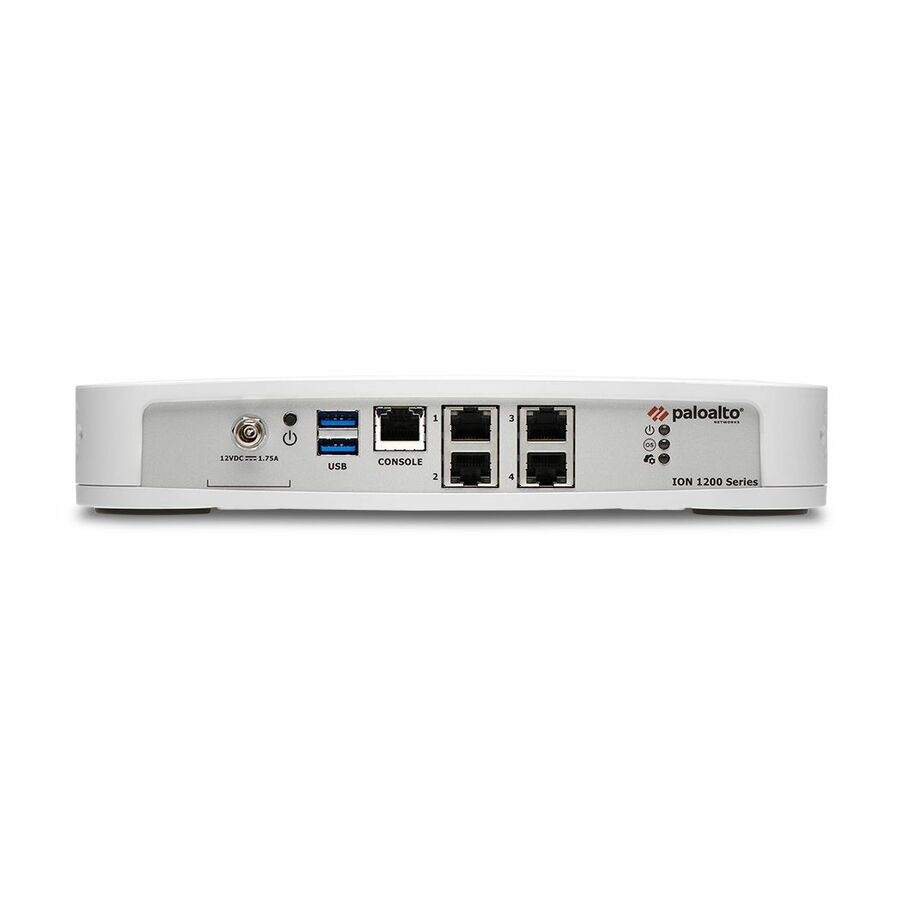
Palo Alto Networks
Palo Alto Prisma ION 1200 Network Security/Firewall Appliance
PAN-ION-1200
Palo Alto's Prisma SD-WAN ION 1200, the four-port gigabit branch appliance that terminates a site's links and takes its policy from the Prisma controller. This is the wired model; the same family has variants with an LTE or 5G modem built in for a site that needs a cellular path without a second box.
The appliance is one line; the ION branch subscription that licenses it is quoted with its bandwidth tier and term.
$738.30Back-orderedSmall branch, cloud-managed
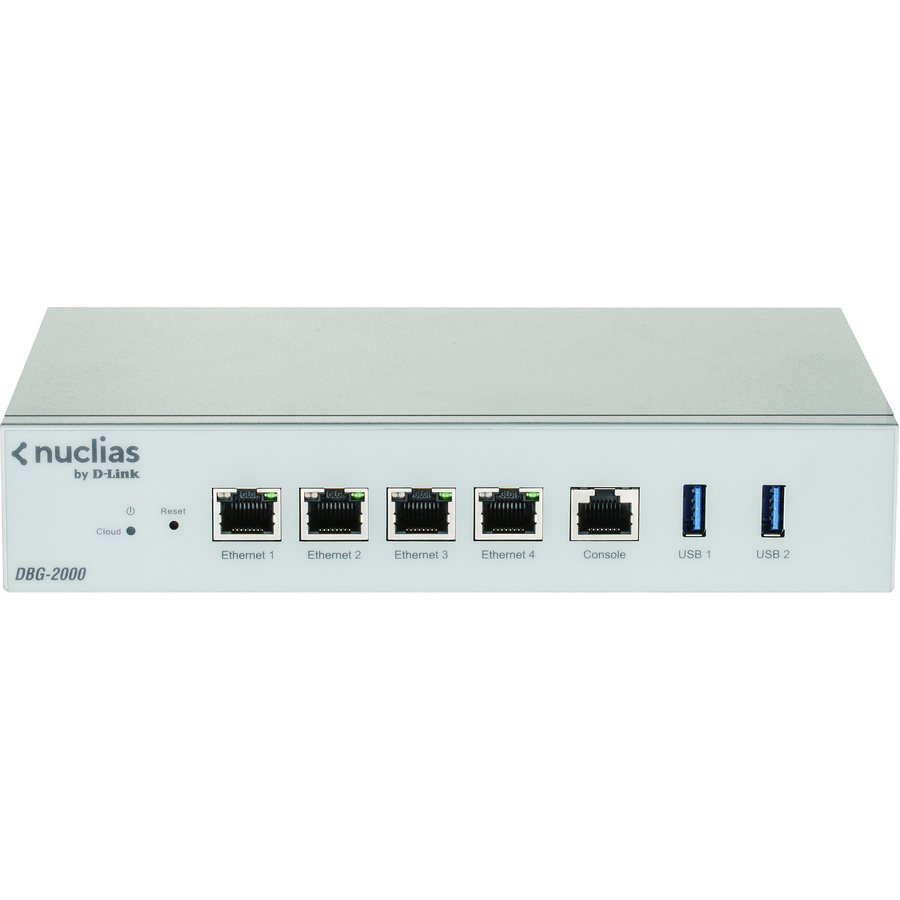
D-Link Systems
Nuclias Cloud SD-WAN Security Gateway
DBG-2000
D-Link's Nuclias Cloud SD-WAN Security Gateway: one gigabit WAN port, one gigabit LAN port and two more that can be set as WAN, LAN or DMZ, load balancing across the WAN links, IPsec site-to-site tunnels, and a firewall with intrusion prevention, all configured from the Nuclias console rather than on the box.
$539.62Back-orderedCellular underlay for a hybrid site
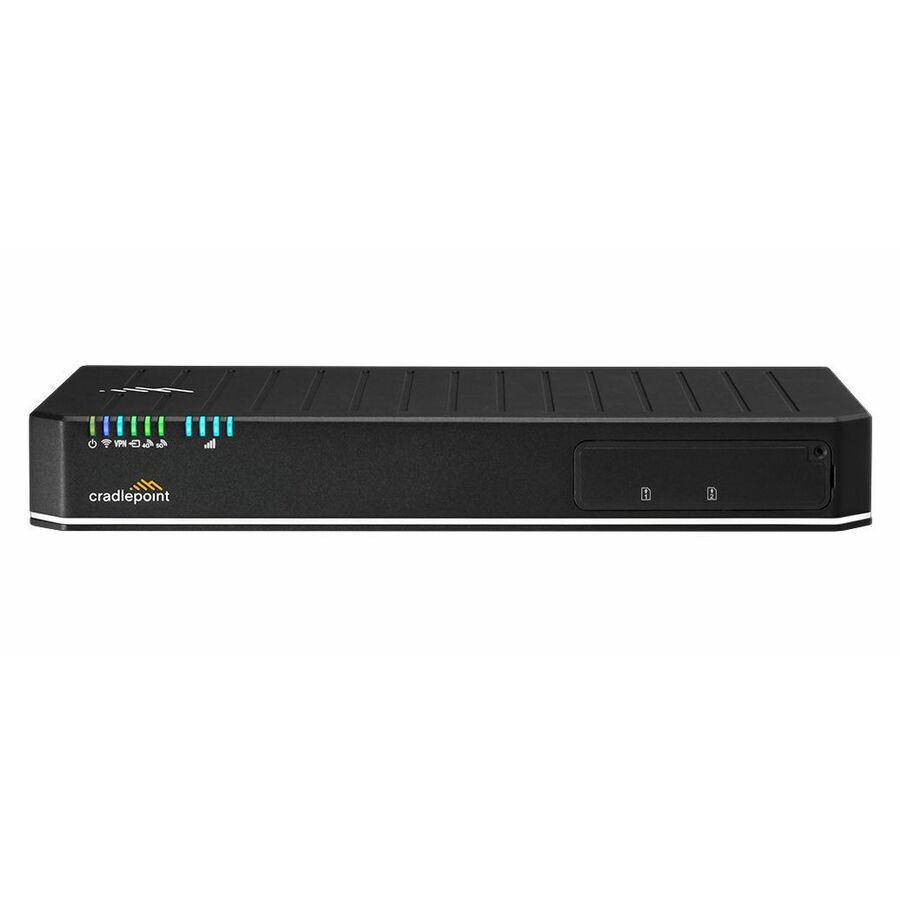
ERICSSON
CradlePoint E3000-5GB Wi-Fi 6 IEEE 802.11a/b/g/n/ac/ax/k/v/r 2 SIM…
BF01-30005GB-GN
A Cradlepoint E3000-5GB, a dual-SIM 5G and LTE branch router with Wi-Fi 6 that gives an SD-WAN edge a wireless path beside the wired circuit, or, under NetCloud, carries the site's own SD-WAN and security policy.
The E3000 is sold with a NetCloud subscription on a one-, three- or five-year term, and this part number is one of those bundles; the sibling part numbers carry the other terms and plan tiers, so the subscription is not a second line to quote.
$2,486.70Back-orderedFAQ
Common questions
- Which is better, SD-WAN or MPLS?
- Neither is better in general; they solve different halves of the problem. MPLS is a transport with a contracted class of service, so it is the right answer where a carrier SLA on loss, latency and jitter is a requirement. SD-WAN is a control layer that steers applications across whatever transports a site has, so it is the right answer where traffic is cloud-bound, sites are many, or links from several providers must work together. Many networks run both, with the MPLS circuit as one underlay.
- Is MPLS outdated?
- No. Label switching as defined in RFC 3031 is still how carrier cores forward traffic, and BGP/MPLS IP VPNs are still sold as a service. What has changed is where the applications live: a private WAN built to reach one data center is a poor fit for branches whose traffic goes to cloud regions and SaaS tenants, which is the gap SD-WAN fills. MPLS remains current as a transport; it is no longer the default answer for every branch.
- Is MPLS a LAN or WAN?
- MPLS is a WAN technology. It is a forwarding method used inside carrier and large enterprise core networks to move traffic between sites on labels rather than on IP lookups, and it is sold to organizations as a wide-area private network with one circuit per location. It is not used to connect devices inside a building; that is the job of Ethernet switching on the LAN.
- What are the disadvantages of MPLS?
- Cost per megabit, lead time and cloud reach. A private circuit is priced by the carrier per site and per committed bandwidth, a new circuit is a build to the address rather than a service that turns up, and traffic bound for the internet or a SaaS service is usually backhauled to a central site before it gets there. The service also does not encrypt data by itself under RFC 4364, so confidentiality needs IPsec on top, and the SLA stops at the carrier's demarcation point.
- Can SD-WAN run over MPLS?
- Yes. MEF 70.2 defines an SD-WAN service as an overlay over one or more underlay connectivity services, and an MPLS circuit is one of them; the edge builds a tunnel across it exactly as it does across a dedicated internet line. Policy can then pin the flows that need the carrier's class of service to that tunnel and send everything else over cheaper links, which is the hybrid WAN many migrations pass through.
- What is the difference between SD-WAN, MPLS and a VPN?
- A VPN is an encrypted tunnel between two points over a network you do not control; MPLS is a private network a carrier builds for you, which isolates your traffic by VRF but does not encrypt it; SD-WAN is a control layer that builds many encrypted tunnels across several transports and chooses among them per application. An SD-WAN overlay is, in effect, a managed mesh of VPN tunnels with measurement and policy on top, and it can use MPLS as one of the transports underneath.
- Does SD-WAN replace the firewall at a branch?
- Not by itself. The overlay encrypts site-to-site traffic between edges, but once a branch breaks out to the internet locally, the central firewall no longer inspects that traffic. Some SD-WAN appliances include a next-generation firewall, some expect a separate one beside them, and some steer internet-bound flows into a cloud security service that is licensed separately; confirm which model a proposal uses before the bill of materials is set.
Sources
- 1.RFC 3031 — Multiprotocol Label Switching Architecture (IETF, January 2001)rfc-editor.org
- 2.RFC 3032 — MPLS Label Stack Encoding (IETF, January 2001; its Exp field renamed Traffic Class by RFC 5462)rfc-editor.org
- 3.RFC 3270 — MPLS Support of Differentiated Services (IETF, May 2002)rfc-editor.org
- 4.RFC 4364 — BGP/MPLS IP Virtual Private Networks, including its security considerations (IETF, February 2006)rfc-editor.org
- 5.MEF 70.2 — SD-WAN Service Attributes and Service Framework (MEF, now Mplify, October 2023; supersedes MEF 70.1)mplify.net
- 6.WatchGuard Fireware help — SD-WAN failover from an MPLS link to a BOVPN virtual interface tunnelwatchguard.com