
Short answer
Network access control (NAC) decides whether a device may join a network before it reaches anything on it: the switch port authenticates the device, a policy server checks its posture, and the session lands in the VLAN its role allows. Use 802.1X where the endpoint can run a supplicant; use MAC Authentication Bypass for printers and cameras that cannot.
Key facts
- 802.1X is the IEEE port-based network access control standard. The current revision is IEEE 802.1X-2020.
- 802.1X has three roles: the supplicant on the device, the authenticator on the switch port or access point, and a RADIUS authentication server.
- Until authentication succeeds the port carries EAP frames only. EAP is defined in RFC 3748 as a framework that carries many authentication methods.
- RADIUS Change-of-Authorization, RFC 5176, is what moves a live session to a different VLAN mid-session. It uses UDP port 3799.
- NIST SP 800-207 (August 2020) treats device identity and device health as inputs to every access decision, not a one-time onboarding check.
- CISA's Zero Trust Maturity Model version 2.0 organises that work into five pillars plus three cross-cutting capabilities.
By Uniqcli Team
Network access control (NAC) is the set of technologies that decide whether a device may join a network, what it may reach once it has joined, and what happens when its condition changes. Rather than treating a physical port or a wireless association as implicit permission, NAC makes admission a policy decision: identify the device and the user behind it, check that the endpoint meets a defined standard, place it in the segment its role allows, and re-evaluate that decision while the session is live.
The idea is older than the zero-trust vocabulary now attached to it, but the two align closely. Both replace location-based trust with an explicit decision, and NAC is the control that implements it at the point where a device physically or wirelessly attaches. NIST's zero-trust architecture guidance and CISA's maturity model both treat device identity and device health as prerequisites for access rather than attributes checked once at onboarding, which is exactly what NAC enforces.
For a buyer, the reason this page matters is that NAC is only partly a software purchase. The policy engine is one product; the ability to enforce its decisions belongs to the switches, access points and controllers already in the building. A NAC project that discovers halfway through that a third of the access layer cannot perform dynamic VLAN assignment has just become a network refresh, and the order in which those two things are discovered is worth controlling.
How does network access control work?
The standard mechanism is IEEE 802.1X, which defines three roles. The supplicant is software on the endpoint that presents credentials. The authenticator is the switch port or access point the device connects to, which blocks all traffic except the authentication exchange until a decision is made. The authentication server — in practice almost always a RADIUS server, which is what the NAC platform presents itself as — evaluates the credentials and returns a verdict. Until that verdict arrives, the port passes nothing else, which is what makes 802.1X an admission control rather than a monitoring tool.
Credentials travel inside EAP, the Extensible Authentication Protocol, and the method chosen matters more than most other decisions in the deployment. EAP-TLS uses a certificate on the device and is the strongest common option, because there is no password to phish or reuse; it also requires a certificate lifecycle, which is the real cost. Password-based methods such as PEAP with MSCHAPv2 are easier to roll out and inherit every weakness of the passwords behind them. Organizations with an existing certificate authority and device management generally standardize on EAP-TLS for managed endpoints and reserve password methods for cases they cannot avoid.
The verdict is more than yes or no. A RADIUS response can carry attributes that tell the switch which VLAN to place the port in, which downloadable access list to apply, or which security-group tag to attach to the traffic. This is the part that turns authentication into segmentation: the same physical port becomes a corporate segment for an employee laptop, a restricted segment for a contractor, and an isolated segment for an unrecognized device, decided per session rather than per cable.
What about devices that cannot authenticate?
Most networks are full of endpoints with no supplicant and no way to hold a credential — printers, badge readers, cameras, building-management controllers, medical devices, industrial sensors, older phones. The standard fallback is MAC Authentication Bypass, in which the switch reports the device's hardware address to the policy server and the server decides based on that address alone. It works, it is unavoidable, and it is weak by construction: a MAC address is broadcast in the clear and trivial to copy, so MAB authorizes anything that claims the right address.
Profiling is what makes MAB tolerable. The NAC platform builds a fingerprint of each device from the traffic and metadata it already emits — DHCP options, HTTP user-agent strings, mDNS and other discovery chatter, open ports, organizationally unique identifier lookups on the hardware address — and compares behavior against the profile it expects. A device that authenticated as a label printer and then began scanning the subnet has failed its profile even though its address is still correct. Profiling is a detection layer over a weak credential rather than a replacement for one, and it should be described that way in any design document.
Guest and unmanaged devices usually get a third path: web authentication, where the endpoint is placed in a restricted segment and redirected to a captive portal to accept terms, enter a sponsored credential or register. Two developments complicate all of this. Randomized hardware addresses, now the default on mainstream mobile operating systems, break MAC-based recognition of personal devices and force either per-network address stability settings or a shift to certificate-based enrollment. And the sheer growth in non-authenticating equipment means the MAB population is rising in most estates, not falling, which is an argument for segmenting those devices tightly rather than for trusting the address more.
Posture assessment: the health check before access
Authentication answers who; posture assessment answers what condition. A posture check evaluates the endpoint against a policy before granting full access: operating system version and patch level, disk encryption enabled, host firewall on, an endpoint protection agent installed and actually running with current definitions, required configuration present, prohibited software absent. A device that fails is not simply refused — it is placed in a remediation segment with access to whatever it needs to fix itself, re-checked, and admitted when it passes.
There are two ways to collect that evidence and the choice shapes the whole deployment. An agent on the endpoint gives detailed, reliable answers and requires that the agent be deployed, maintained and kept compatible across every operating system in the estate. Agentless assessment infers condition from the outside using scanning, management-protocol queries and integration with existing device-management or endpoint-protection platforms; it covers devices that will never accept an agent and sees less. Most real deployments run both, agent-based for corporate-managed endpoints and agentless for everything else.
The failure mode to design against is a posture policy strict enough to lock out the people who need to fix things. A remediation segment that cannot reach the patch server, an encryption check that fires during a scheduled reboot, or a definitions-age threshold shorter than the update interval will all generate support load rather than security. Pilot the policy in a reporting-only mode long enough to see what a normal week looks like before it starts denying access.
Change of Authorization: enforcement that continues after login
An admission decision made at connection time goes stale immediately. The mechanism that fixes this is RADIUS Change of Authorization, defined in RFC 5176, which lets the policy server push a new decision into a session already in progress without waiting for the device to reconnect. The server can move the port to a different VLAN, apply a new access list, force re-authentication, or terminate the session outright — in seconds, from a central point, across the whole access layer.
That capability is what makes NAC useful to the rest of the security stack rather than only at onboarding. When an endpoint detection platform flags a host as compromised, or a SIEM correlates activity into an incident, the response action can be a Change of Authorization that drops that device into an isolation segment while it is still connected. The equivalent without CoA is somebody walking to a wiring closet, which is not a response time anybody wants to publish. It also runs in the benign direction: a device that has finished remediation gets moved out of quarantine automatically rather than waiting for a support call.
Continuous re-evaluation is the same idea on a timer — periodic posture re-checks, session timeouts that force re-authentication, and policy changes that take effect on live sessions rather than at next connect. This is the specific point at which NAC stops being a gate and starts being the device-side enforcement of a zero-trust design, and it is worth confirming during evaluation that the access-layer hardware genuinely honors CoA, because support quality varies more than datasheets suggest.
What NAC requires from the network hardware
The policy engine is only as capable as the equipment executing its decisions, and the requirements are concrete. Access switches need 802.1X authenticator support, MAC Authentication Bypass for devices without supplicants, dynamic VLAN assignment from RADIUS attributes, and honored Change of Authorization. Downloadable access lists per session are highly desirable, because they allow enforcement finer than a VLAN boundary. Wireless needs WPA2-Enterprise or WPA3-Enterprise with the controller or access points acting as authenticators against the same policy server, so a device gets the same treatment wired or wireless.
Unmanaged switches are the structural problem. They cannot be authenticators, so anything behind one is invisible to the policy — and a small unmanaged switch under a desk turns one authenticated port into an unknown number of unauthenticated devices. Multi-host and multi-domain authentication modes on the upstream port mitigate this partially by authenticating more than one endpoint per port, but the durable fix is to eliminate unmanaged switches from the access layer. Any NAC scoping exercise should begin with an honest inventory of them, including the ones nobody documented.
Two more practical constraints. IP telephony creates the classic multi-domain case, where a phone and a PC share one port and belong in different segments — a supported pattern on business-class switches and one to verify explicitly rather than assume. And the policy server becomes infrastructure the network now depends on, which means redundancy, and a documented decision about what a switch should do when no policy server answers: fail open and admit everything, or fail closed and admit nothing. Neither answer is universally right, and discovering that your default is the wrong one during an outage is the expensive way to find out.
Where NAC deployments go wrong
The dominant failure is enforcing too early. A NAC rollout that switches ports into closed mode before the estate is understood will lock out equipment nobody knew existed, and the resulting outage usually ends the project rather than the misconfiguration. The disciplined sequence is monitor mode first — authenticate and log, enforce nothing — for long enough to see a full business cycle including month-end and any seasonal equipment; then a low-impact mode in which failures land in a restricted segment rather than being denied; then closed enforcement, one site or one building at a time.
Discovery is where the real work sits. Every deployment finds devices that were never inventoried, devices whose owner left the organization years ago, and devices that turn out to be load-bearing for something important. The monitoring phase is what surfaces them, which is why shortening it to hit a date is the most reliably regretted decision in this category of project.
Finally, treat exceptions as debt rather than as design. Every device permitted by hardware address alone, every port excluded from authentication, and every posture rule waived for a specific team is a hole with a name attached. Recording them with an owner and a review date keeps the exception list finite; leaving them undocumented produces, within a couple of years, a NAC deployment that authenticates only the devices that were easy.
Key takeaways
- Network access control (NAC) makes joining the network a policy decision — identify the device and user, check endpoint condition, assign a segment, and re-evaluate while the session is live.
- IEEE 802.1X is the mechanism: a supplicant on the endpoint, the switch or access point as authenticator, and a RADIUS server as the policy decision point; EAP-TLS with certificates is the strongest common credential.
- Devices without supplicants — printers, cameras, badge readers, building controls — fall back to MAC Authentication Bypass, which is trivially spoofable and needs behavioral profiling and tight segmentation around it.
- Posture assessment checks patch level, disk encryption, host firewall and endpoint protection before granting access, and routes failures to a remediation segment instead of refusing them outright.
- RADIUS Change of Authorization (RFC 5176) is what allows a compromised device to be quarantined mid-session in seconds, and it is what connects NAC to endpoint detection and SIEM response.
- Access-layer hardware must support 802.1X, MAB, dynamic VLAN assignment and CoA — unmanaged switches cannot participate at all, so inventory them before scoping the project.
Shop it at Uniqcli
Parts for this job
24-port access switch
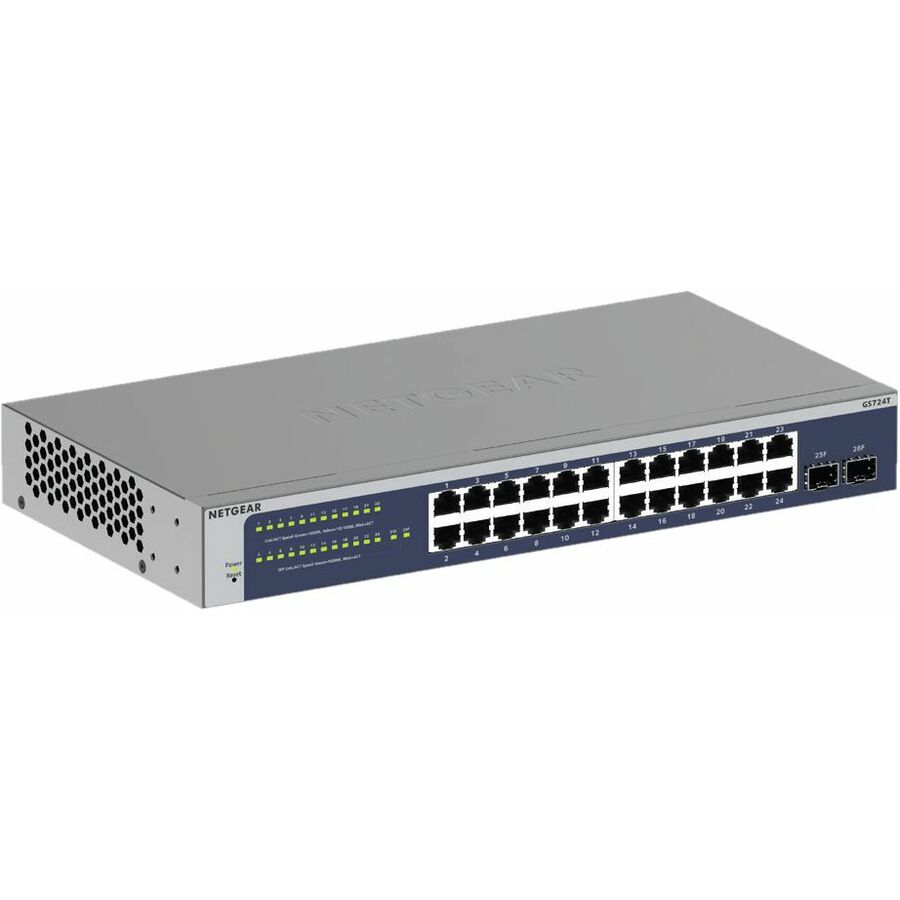
Netgear
Netgear Gigabit Smart Switches
GS724T-600NAS
A 24-port gigabit smart-managed switch with two SFP slots, rack-mountable. The size most wiring closets need when the access layer has to authenticate ports rather than just forward frames.
$306.72Back-ordered24-port with PoE budget
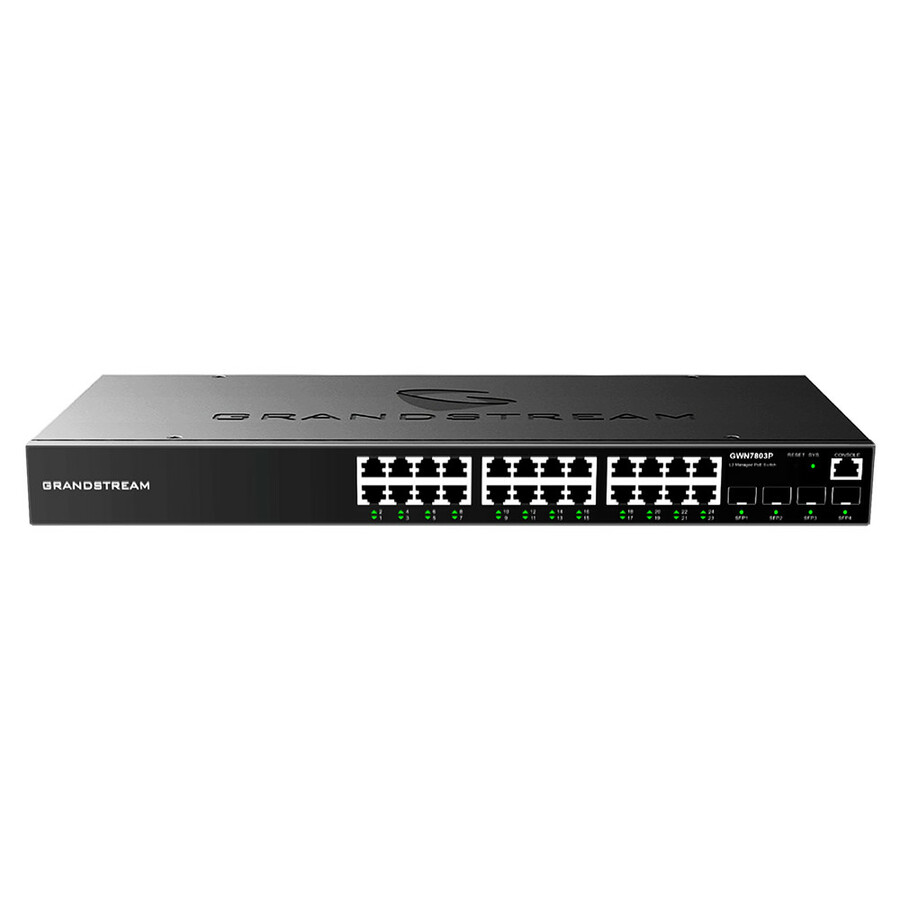
Grandstream Networks
Grandstream Enterprise Layer 2+ Managed Network Switch
GWN7803P
A 24-port Layer 2+ managed switch with four SFP slots and a 360 W PoE budget, so the cameras, phones and access points a NAC policy has to classify are powered from the same box.
$282.45Back-ordered1U managed, low draw
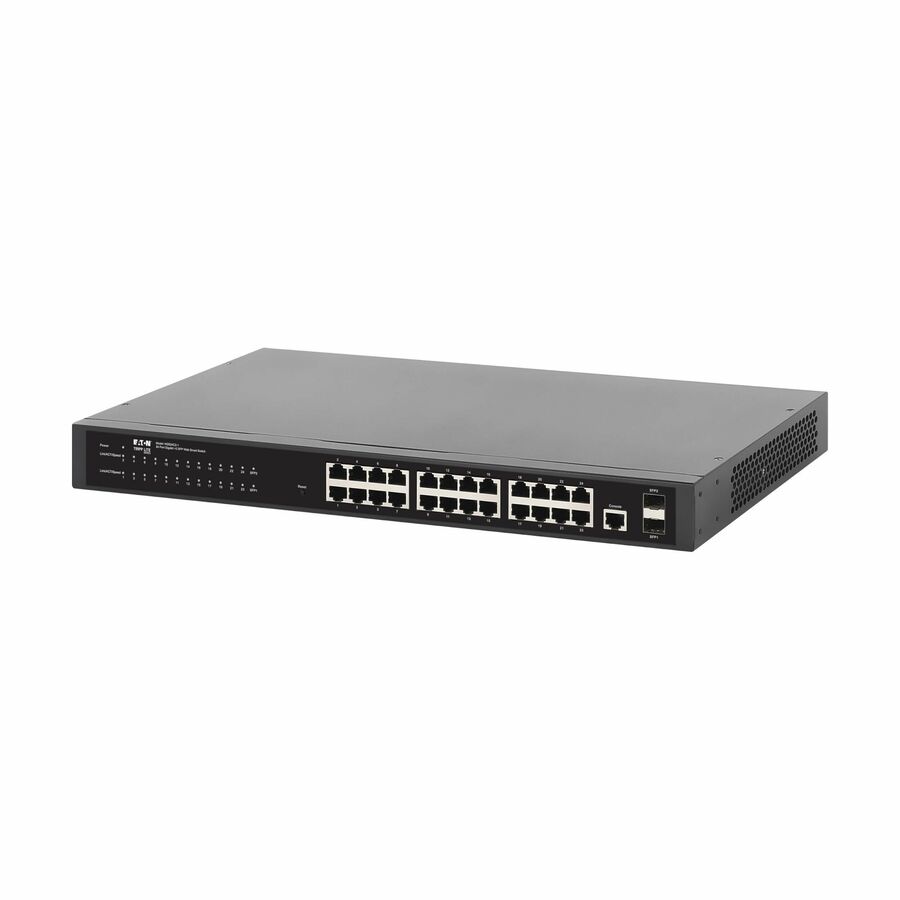
Eaton
Tripp Lite series 24-Port Managed Gigabit Ethernet Switch
NGS24C2-1
A 1U 24-port managed gigabit switch with two SFP slots and a 16.7 W typical draw — a quiet fit for a closet with limited power and cooling headroom.
Confirm 802.1X authenticator and MAC Authentication Bypass support per model against the vendor's datasheet before standardising on it.
$378.12In stockFrequently asked
- What is the difference between NAC and a firewall?
- They control different boundaries. A firewall sits between networks and decides which traffic may cross, judging packets and sessions against a policy. Network access control sits at the point where a device attaches and decides whether that device may be on the network at all, and which segment it belongs in. A firewall can stop a compromised laptop from reaching a server; NAC can stop the laptop from getting an address in the first place, or move it into isolation mid-session. Most designs use both, with NAC handling admission and segmentation at the access layer and firewalls enforcing policy between the segments it creates.
- Does NAC require 802.1X?
- 802.1X is the standard mechanism and the strongest one, but a NAC deployment is rarely 802.1X alone. Endpoints without supplicant software — printers, cameras, badge readers, industrial and medical equipment — are handled by MAC Authentication Bypass, and guests are usually handled by a captive portal. A realistic deployment runs all three concurrently, with 802.1X for managed endpoints and the weaker methods scoped tightly and segmented away from anything sensitive. Some lighter products enforce through DHCP or ARP manipulation instead, which avoids touching the switches but is considerably easier to evade.
- Do our switches need to support anything specific?
- Yes, and it is worth confirming per model rather than per vendor. Access switches need to act as 802.1X authenticators, support MAC Authentication Bypass, accept dynamic VLAN assignment from RADIUS attributes, and honor RADIUS Change of Authorization so sessions can be changed without a reconnect. Downloadable per-session access lists and multi-domain authentication — a phone and a PC on one port in different segments — are close to essential in practice. Unmanaged switches support none of this and cannot participate, so anything connected behind one is outside the policy.
- How do printers and IoT devices get on the network?
- Through MAC Authentication Bypass, in which the switch presents the device's hardware address to the policy server and access is granted on that basis. Because a hardware address is broadcast in the clear and easy to copy, MAB is a weak credential and should be paired with two things: device profiling, which fingerprints the endpoint from its DHCP options, protocol behavior and open ports and flags a device that stops matching its profile, and tight segmentation so a spoofed printer address reaches only what a printer needs. Treat every MAB entry as an exception with an owner rather than as normal onboarding.
- Is NAC the same as zero trust?
- No, but it implements part of it. Zero trust is an architecture that replaces location-based trust with explicit, continuously re-evaluated access decisions across identity, devices, networks, applications and data. NAC is the control that enforces the device and network portions at the point of attachment — verifying identity and endpoint health before admission, assigning least-privilege segmentation, and using Change of Authorization to revoke access when conditions change. A zero-trust program needs identity, application and data controls that NAC does not provide, and NAC without those is network segmentation with good authentication rather than zero trust.
- How long does a NAC rollout take?
- Longer than the software installation suggests, and the schedule is dominated by discovery rather than configuration. The sequence that works is monitor mode first — authenticating and logging without enforcing — across a full business cycle so that seasonal, month-end and rarely-used equipment appears; then a low-impact phase where failures land in a restricted segment instead of being denied; then closed enforcement, rolled out site by site. Every deployment discovers undocumented devices during the monitoring phase, and compressing that phase to meet a date is the most common cause of a rollback.
Sources
- 1.IEEE 802.1X-2020 — Port-Based Network Access Controlstandards.ieee.org
- 2.RFC 3748 — Extensible Authentication Protocol (EAP)rfc-editor.org
- 3.RFC 5176 — Dynamic Authorization Extensions to RADIUSrfc-editor.org
- 4.NIST SP 800-207 — Zero Trust Architecturecsrc.nist.gov
- 5.CISA Zero Trust Maturity Modelcisa.gov
Keep reading