
Short answer
Zero trust is a security model that removes implicit trust from network location: every request is evaluated against identity, device state and policy before access is granted, and that grant is re-evaluated while the session runs. NIST SP 800-207 splits the decision across a policy engine, a policy administrator and a policy enforcement point.
Key facts
- NIST SP 800-207, Zero Trust Architecture, was published in August 2020 and is the reference definition US federal agencies work from.
- SP 800-207 names three logical components: a policy engine that decides, a policy administrator that sets up the connection, and a policy enforcement point.
- CISA's Zero Trust Maturity Model version 2.0 defines five pillars plus three cross-cutting capabilities, with four maturity stages inside each pillar.
- The CISA model aligns to OMB Memorandum M-22-09, published in January 2022, which set the federal zero-trust strategy.
- Zero trust is an architecture, not a product. No single appliance implements it — the identity, device, network and data controls are bought separately.
By Uniqcli Team
Zero trust is a cybersecurity model built on a single principle: never trust, always verify. Instead of assuming that anything inside the corporate network perimeter is safe, a zero trust architecture treats every user, device, and connection as untrusted by default and requires each access request to be authenticated, authorized, and continuously validated before — and while — it reaches a resource. Access is granted per-session, scoped to the least privilege needed, and re-evaluated as context changes.
The idea emerged as the traditional 'castle-and-moat' perimeter dissolved: cloud services, remote work, mobile devices, and third-party access mean users and data now sit far outside any single firewall boundary. Zero trust is a strategy and an architecture, not a single product you install. It is formally described in NIST Special Publication 800-207 and operationalized for U.S. federal agencies through the CISA Zero Trust Maturity Model, which organizes the work into five pillars supported by cross-cutting capabilities.
How does zero trust actually work?
At its core, zero trust replaces implicit network trust with explicit, per-request decisions. Every request passes through a policy decision point that weighs signals — verified identity, device health and posture, resource sensitivity, location, and behavioral context — before a policy enforcement point grants or denies access. Trust is never permanent: sessions are time-bound and re-checked continuously, so a device that falls out of compliance or a session that starts behaving anomalously can be cut off mid-stream. Access is granted at the level of individual applications and resources rather than to the whole network.
The CISA Zero Trust Maturity Model frames this across five pillars: Identity (strong, phishing-resistant authentication and least-privilege access), Devices (inventory, health, and posture checks on every endpoint), Networks (micro-segmentation and encrypted traffic so a breach in one segment cannot move laterally), Applications and Workloads (securing apps, APIs, and workloads wherever they run), and Data (classifying, encrypting, and governing access to information itself). Three capabilities cut across all five: Visibility and Analytics, Automation and Orchestration, and Governance. Technologies like identity providers with MFA, next-generation firewalls (NGFW), micro-segmentation, and continuous monitoring are the building blocks — but the model, not any one tool, is what makes it zero trust.
What are the variants and maturity stages?
Zero trust is adopted in stages, not switched on overnight. CISA's maturity model describes four stages — Traditional, Initial, Advanced, and Optimal — that let an organization measure where each pillar stands and prioritize incremental improvement. Most enterprises begin with the Identity pillar (rolling out MFA and consolidating identity providers) because it delivers the fastest risk reduction, then extend to device posture, network segmentation, and data controls over time.
In practice you will also hear related terms. Zero Trust Network Access (ZTNA) is the technology category that replaces traditional VPNs by brokering per-application access based on identity and context. Secure Access Service Edge (SASE) and Security Service Edge (SSE) bundle ZTNA with other cloud-delivered controls. Microsegmentation refers specifically to the network-pillar practice of isolating workloads so lateral movement is contained. These are components or delivery models within a zero trust strategy — not competing definitions of it.
When do you need zero trust?
Zero trust becomes essential when your users, devices, and data no longer sit behind one defensible perimeter — which today describes nearly every organization with cloud services, remote or hybrid staff, contractors, or bring-your-own-device access. It is particularly valuable for limiting the blast radius of a breach: because access is segmented and least-privilege, a compromised credential or endpoint cannot freely traverse the environment.
For U.S. federal agencies it is a mandate, not an option. Executive Order 14028 (May 2021) directed agencies toward zero trust, and the follow-on OMB Memorandum M-22-09 set a federal zero trust strategy with specific goals organized around the CISA pillars. Defense organizations follow the DoD Zero Trust Reference Architecture and its associated target and advanced activities. Contractors, state and local government, education, and regulated industries increasingly inherit these expectations through procurement requirements and cyber-insurance conditions, making zero trust a baseline for anyone selling into or partnering with the public sector.
What should you consider when buying for zero trust?
Because zero trust is an architecture, evaluate capabilities against the five pillars rather than shopping for a single 'zero trust box.' Start by mapping your current maturity per pillar, then identify the gaps that most reduce risk — usually phishing-resistant MFA and a consolidated identity provider first, followed by device posture and network segmentation. Prioritize solutions that interoperate through open standards (SAML, OIDC, SCIM, syslog/API telemetry) so policy signals and logs flow into a common decision and visibility layer instead of creating new silos.
Practical evaluation criteria include: support for phishing-resistant authentication (FIDO2/WebAuthn, PIV/CAC where required); device health and posture checks that feed access policy; granular, application-level segmentation (via ZTNA and NGFW capabilities) rather than broad network access; strong logging and analytics for continuous verification; and clear alignment to NIST SP 800-207 and the CISA maturity model. If you sell to or operate within government, confirm relevant compliance frameworks (FedRAMP authorization, CMMC, FIPS 140-validated cryptography) up front. Finally, weigh operational fit — automation, orchestration, and manageability determine whether the architecture is sustainable, since zero trust is a continuous program, not a one-time deployment.
Key takeaways
- Zero trust is a security model and architecture — 'never trust, always verify' — not a single product you can buy or install.
- CISA organizes it into five pillars: Identity, Devices, Networks, Applications and Workloads, and Data, plus cross-cutting Visibility, Automation, and Governance.
- Adoption is incremental across maturity stages (Traditional, Initial, Advanced, Optimal); most organizations start with identity and MFA for the fastest risk reduction.
- Core building blocks include phishing-resistant MFA, device posture checks, micro-segmentation, ZTNA/NGFW, and continuous monitoring — assembled into one policy and visibility layer.
- For U.S. federal agencies it is mandated by Executive Order 14028 and OMB M-22-09; contractors and regulated sectors often inherit the requirement through procurement.
- Evaluate purchases pillar by pillar, favor open-standards interoperability (OIDC/SAML/SCIM), and confirm compliance frameworks (NIST 800-207, FedRAMP, CMMC) relevant to your environment.
Shop it at Uniqcli
Parts for this job
Branch enforcement point
WatchGuard Technologies
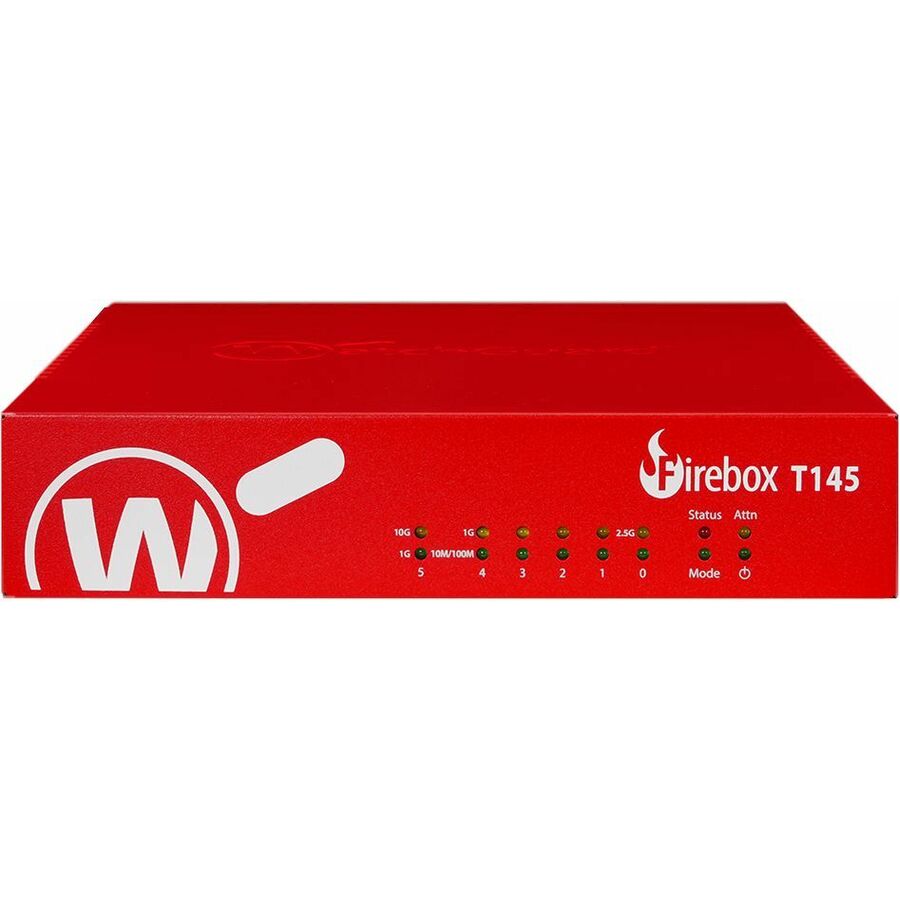
WatchGuard Firebox T145 Appliance Only
WGT145000
A five-port Firebox T145 rated 3.90 Gbit/s firewall throughput with 2.5 GbE ports — the enforcement point at a small site where policy decides what leaves the building.
$368.67In stockLarger site
WatchGuard Technologies
WatchGuard Firebox T185 Appliance Only
WGT185000
The eight-port Firebox T185 is rated 7.90 Gbit/s firewall throughput with an expansion slot, for a site whose inspected traffic outgrew a five-port box.
$728.00In stockWireless included
WatchGuard Technologies
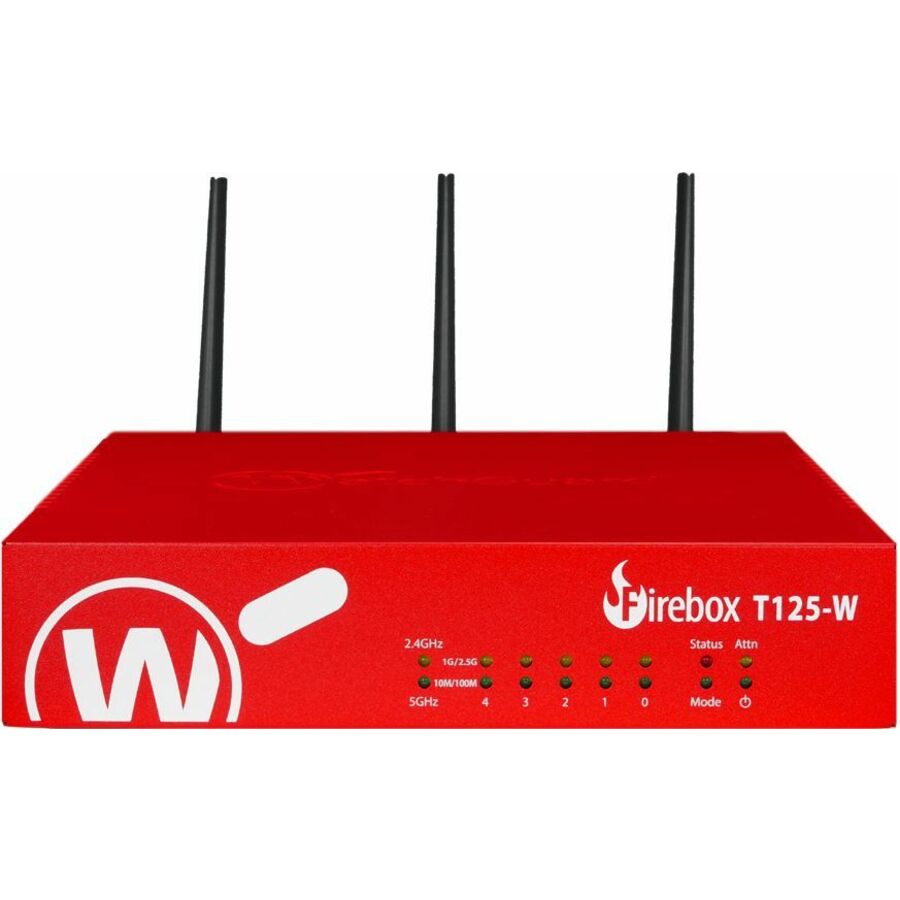
WatchGuard Firebox T125-W Appliance Only
WGT126000
The Firebox T125-W adds 802.11be wireless to a five-port 2.28 Gbit/s appliance, so a small office runs one policy across wired and wireless clients.
Appliance only. Subscription services are licensed separately by the vendor.
$280.00In stockFrequently asked
- Is zero trust a product I can buy?
- No. Zero trust is a security strategy and architecture, not a single product. Vendors sell components that support it — identity providers with MFA, next-generation firewalls, micro-segmentation, ZTNA, and monitoring tools — but a genuine zero trust posture comes from combining these under a consistent policy that verifies every access request. Any single tool marketed as 'zero trust in a box' only addresses part of the model.
- What are the five pillars of zero trust?
- The CISA Zero Trust Maturity Model defines five pillars: Identity (who is requesting access), Devices (the health and posture of the endpoint), Networks (segmentation and encryption to prevent lateral movement), Applications and Workloads (securing apps and APIs wherever they run), and Data (classifying, encrypting, and governing information). Three capabilities — Visibility and Analytics, Automation and Orchestration, and Governance — cut across all five pillars.
- Is zero trust required by federal mandates?
- For U.S. federal agencies, yes. Executive Order 14028 (2021) directed agencies to adopt zero trust, and OMB Memorandum M-22-09 set a government-wide strategy with goals aligned to the CISA pillars. The Department of Defense follows its own Zero Trust Reference Architecture. These mandates apply directly to agencies, and their requirements frequently flow down to contractors, integrators, and other partners through procurement and compliance obligations.
- How is zero trust different from a VPN or firewall?
- A traditional VPN or perimeter firewall grants broad network access once a user is 'inside,' operating on implicit trust. Zero trust instead grants access to individual applications and resources per session, based on verified identity and device context, and re-checks that trust continuously. Zero Trust Network Access (ZTNA) is the technology that replaces the VPN model, while next-generation firewalls and micro-segmentation enforce the network pillar by containing lateral movement.
Sources
- 1.NIST SP 800-207 — Zero Trust Architecturecsrc.nist.gov
- 2.NIST SP 800-207 — full text (PDF)nvlpubs.nist.gov
- 3.CISA Zero Trust Maturity Modelcisa.gov
Keep reading