
Short answer
The main difference between XDR and EDR is how much telemetry the detection pipeline sees. EDR acts on signals from endpoints only; XDR correlates that endpoint telemetry with network, identity, email and cloud signals, so it is a superset of EDR rather than a replacement. Choose EDR when the endpoint is the only domain you can feed it; choose XDR when the others are genuinely connected.
Key facts
- EDR's scope is the endpoint: the host agent's process, file, registry and local network telemetry, and the ability to act on that machine.
- XDR adds other domains — commonly network, identity, email and cloud — and correlates them, so one case carries evidence from several sources.
- MDR is not a tool tier at all: it is a service in which a provider operates EDR or XDR on your behalf and works the queue.
- OMB memorandum M-22-01 (October 2021) directs agencies to accelerate EDR adoption and names a Government-wide EDR initiative implemented by CISA.
- NIST's CSRC glossary carries an endpoint detection and response entry, sourced to NIST SP 1800-24C and SP 800-66r2.
Endpoint detection and response is a defined thing: an agent on laptops, desktops and servers that records what processes do — files touched, registry keys written, connections opened, scripts spawned — and turns that record into detections an analyst can investigate and act on. The response half is what separates it from antivirus: isolate a host from the network, kill a process, quarantine a file, roll a change back, all from a console rather than a desk visit.
Extended detection and response is that same capability with more telemetry attached. The 'X' is meant to stand for the additional domains — identity, email, cloud workloads, SaaS, sometimes network — and the promise is correlation: a suspicious sign-in, a mail with a bad attachment and a process launch on a laptop stop being three unrelated alerts in three consoles and become one case with a timeline. In practice nearly every XDR platform is built on an EDR core, because the endpoint sensor is the richest signal any of them has. That makes this a superset relationship rather than a fork in the road.
Which is why the honest buying question is narrower than the marketing suggests. XDR is worth its premium in proportion to how many of your domains the platform actually ingests. If your identity provider, your mail platform and your cloud accounts are all connected, the correlation is real and it collapses a lot of manual work. If they are not, because they belong to another vendor or the connectors cost extra or nobody has the time to wire them up, then what you have licensed is endpoint detection and response with a broader name on the invoice.
At a glance
Side by side
| Factor | EDR | XDR |
|---|---|---|
| What it watches | Endpoints (laptops, desktops and servers) through an installed agent | Endpoints plus identity, email, cloud workloads, SaaS and sometimes network |
| Where the data comes from | One sensor type you deploy and control | Several sources, each of which has to be connected, licensed and kept working |
| Unit of detection | Suspicious behavior on one machine | A correlated sequence across machines, accounts and services |
| Response actions | Isolate a host, kill a process, quarantine a file, roll back a change | The same endpoint actions, plus identity and mail actions where those domains are integrated |
| Relationship between them | The sensor most XDR platforms are built on | Almost always an EDR core with additional telemetry attached |
| Vendor coupling | Coexists reasonably with tooling from other vendors | Native XDR assumes one vendor's stack; open XDR ingests third-party at more integration effort |
| Effect on alert volume | One high-signal source, and every alert needs triage | Fewer, richer cases — correlation collapses related alerts into one |
| Overlap with a SIEM | Little; the data is different in kind | Real. XDR curates high-value telemetry, a SIEM retains everything, including for records obligations |
| What it needs from the team | Somebody to work endpoint alerts | Still somebody to work cases — fewer of them, each one broader |
| Failure mode of a bad fit | Coverage gaps in domains it was never meant to see | Paying for correlation across sources that were never connected |
EDR is the right scope when
- Endpoints are the actual gap — the estate has signature antivirus and no behavioral detection or remote response on the machines themselves
- The team is small and the priority is one high-signal source worked properly rather than five sources worked badly
- Identity, mail and cloud are already covered by tooling you are not planning to replace, so the correlation an XDR sells would be duplicating what exists
- A control set, an insurance questionnaire or a customer security review asks specifically for endpoint detection and response coverage across the fleet
- You want to keep the option of changing vendors later without unpicking an integration in four other systems
XDR earns the premium when
- Investigations already cross domains and an analyst is stitching endpoint, identity and mail evidence together by hand out of separate consoles
- Most of those domains are ones this platform can genuinely ingest — count them before you sign, because that count is the entire value case
- Alert volume rather than alert quality is the bottleneck, and correlation would turn many separate alerts into a smaller number of complete cases
- You are consolidating vendors deliberately and accept the coupling that comes with a native single-vendor stack
- There is an operator: correlation reduces the work but does not remove it, and an unread case queue is no better than an unread alert queue
Bottom line
XDR does not replace EDR; it contains it, which is why 'which one' is the wrong question. Get endpoint detection and response right first: it is the highest-signal telemetry in the estate, it is where response actions actually bite, and the CISA Zero Trust Maturity Model treats detection and response on the device itself as a Devices-pillar capability rather than a nice-to-have. Then treat the step up to XDR as a coverage-and-consolidation decision with a test you can run on paper: list your identity provider, mail platform, cloud accounts and network sensors, and mark the ones the platform will really ingest under the license you are being quoted. If most of them are marked, the correlation is worth paying for and it will visibly shorten investigations. If only one or two are, you are buying EDR with a broader label and you should say so out loud in the evaluation. Two things neither tier solves: a SIEM still has a job, because retention and reporting obligations cover far more than the curated telemetry an XDR keeps, and somebody still has to work the queue — which is exactly the gap managed detection and response exists to fill, and the honest answer for teams that cannot staff a rota.
Products for this decision
Endpoint detection and response
WatchGuard Technologies
WatchGuard Endpoint Protection Detection and Response - 1 Year
WGEPDR30101
A one-year per-seat endpoint detection and response licence — the endpoint domain on its own, which is where most programmes start.
Licensing here is per seat and per term; size the seat count and the renewal date together.
Request pricingEndpoint plus email
Sophos
Sophos Endpoint Protection Advanced and Mail - 1 Year - Renewal
EAMF1CTAA
A one-year per-user renewal for endpoint protection and mail — two of the telemetry domains an XDR pipeline correlates.
A renewal part number, priced at the 25-49 licence band; a first-time buyer needs the new-subscription sku instead.
$69.05Back-orderedThe network domain
Sophos
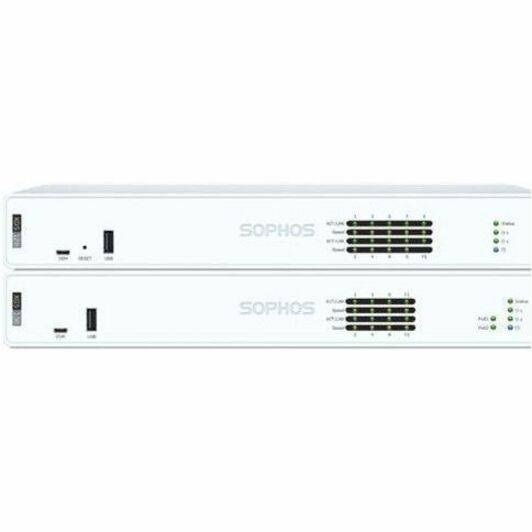
Sophos XGS 88 Network Security/Firewall Appliance
ZD88ZZ51ZZNGAA
A desktop firewall appliance with 2.5 GbE ports. It is not itself detection and response; it is the boundary that produces the network telemetry XDR ingests.
$250.42Back-orderedFAQ
Common questions
- Is XDR just EDR with a bigger name?
- Sometimes, and the way to tell is to count the connected domains. A genuine extended detection and response deployment ingests telemetry from identity, email, cloud workloads and often network alongside the endpoint agent, and correlates across them so a single case carries evidence from several sources. A deployment where only the endpoint sensor is actually feeding the platform produces endpoint detections with extra branding. The platform is not misrepresenting itself in that case — the integrations exist and you have not enabled them — but the value you are paying for is not being delivered, and that is a question to settle during the evaluation rather than a year in.
- Do I need a SIEM if I have XDR?
- Usually yes, and for reasons that are only partly about detection. XDR curates a relatively narrow set of high-value telemetry and keeps it for as long as the platform's detection logic needs it. A SIEM is built to take everything — application logs, infrastructure, network devices, systems the security platform has no connector for, and to retain it for the periods that audit, regulatory and records obligations require, which are frequently far longer. There is real overlap in the detection layer and it is fair to ask whether you need two detection engines, but the retention and reporting job is not one XDR was designed to do.
- How is XDR different from MDR?
- They are different kinds of thing. XDR is a product tier — software that collects, correlates and acts. MDR, managed detection and response, is a service: people who operate detection tooling on your behalf, triage what it produces, and either respond or tell you to. A provider will usually run some product underneath, sometimes their own and sometimes yours, so the two are complementary rather than alternatives. The question that separates them is not technical. It is whether you have staff to work a queue at the hours the queue needs working. Most organizations that buy MDR do so because the answer is no, not because the tooling was inadequate.
- Does either one replace antivirus?
- In practice yes, in the sense that modern endpoint platforms include preventive protection and are sold as the replacement for a standalone antivirus product. The distinction is what they add rather than what they remove: signature-based prevention still stops known bad files, and detection and response adds the behavioral layer that catches activity with no signature, plus the record that lets someone reconstruct what happened, plus the ability to act on the machine remotely. Running a separate legacy antivirus alongside an endpoint detection agent is generally discouraged by the vendors themselves, because the two compete for the same hooks and the conflicts are difficult to diagnose.
- What does an EDR or XDR rollout ask of the hardware?
- More than teams expect, and it is worth checking before the license count is finalized. The agent consumes CPU and memory on every endpoint it runs on, which is felt most on older or minimally specified machines and on servers already running close to their limits, and a fleet at the bottom of its refresh cycle can turn a rollout into a performance complaint. Telemetry retention consumes storage, on the platform side or yours depending on the model. And if the network domain is part of the plan, that usually means a sensor with a clean feed from a TAP or mirror port rather than a purely software deployment. Size those three things alongside the subscription, not after it.
- What is the difference between EDR, MDR and XDR?
- EDR is endpoint tooling you run. XDR is that tooling extended across network, identity, email and cloud telemetry in one correlation pipeline. MDR is a service where somebody else operates either one for you, usually around the clock. Two of the three are products and one is staffing, which is why an organisation can end up buying MDR on top of XDR without either being redundant.
- What is the difference between EPP and EDR?
- EPP — endpoint protection platform — is the preventive layer: signatures, reputation and policy that stop known bad files before they run. EDR is the detective and responsive layer on the same agent: it records what happened, spots behaviour with no signature, and lets an analyst act on the machine. Current products ship both in one agent, so the distinction is now about which capability you are actually licensed for.
- What is NDR, and how does it relate to EDR and XDR?
- NDR — network detection and response — does for network traffic what EDR does for the endpoint: it watches a mirror or TAP feed, models normal behaviour and raises cases. It is one of the domains an XDR platform correlates, which is why teams that already run NDR and EDR sometimes get most of XDR's value by integrating what they have rather than replacing it.
Sources
- 1.OMB M-22-01 — Improving Detection of Cybersecurity Vulnerabilities and Incidents on Federal Government Systems (EDR)bidenwhitehouse.archives.gov
- 2.NIST CSRC glossary — endpoint detection and responsecsrc.nist.gov
- 3.CISA — Zero Trust Maturity Model (five pillars, cross-cutting visibility and analytics)cisa.gov