
Short answer
The main difference is placement and authority: an IDS sits out of band on a mirror port or a TAP and raises an alert, while an IPS sits inline and can drop, reset or block the session. NIST defines an IPS as software with all the capabilities of an IDS that can also attempt to stop the incident — in most products it is one engine, and the cabling decides which job it does.
Key facts
- NIST SP 800-94 defines an IPS as software that has all the capabilities of an IDS and can also attempt to stop possible incidents.
- The same document notes prevention features can usually be disabled in IPS products, causing them to function as IDSs — one engine, two jobs.
- NIST covers four IDPS classes: network-based, wireless, network behavior analysis, and host-based.
- An IDS is fed by a SPAN/mirror port or a network TAP; an IPS carries production traffic, so its failure is a traffic event unless a bypass or HA pair is fitted.
- A false positive costs an alert on an IDS and a blocked legitimate session on an IPS, which is why inline deployments start in detection-only mode.
- Neither reads inside TLS without a separate decryption decision, which costs throughput, latency and a privacy judgement of its own.
Both of these systems inspect network traffic and match it against signatures, protocol rules and behavioral baselines. In many products they are literally the same engine. What separates an intrusion detection system from an intrusion prevention system is not what it can recognize but where it is wired and what authority it has: an IDS receives a copy of the traffic from a mirror port or a network TAP and raises an alert, while an IPS sits in the forwarding path and can drop, reset or block the session as it passes.
That one difference decides everything else. Because an IDS is out of band, it cannot slow the network down and it cannot take it off the air: if the sensor is overwhelmed or fails, you lose visibility, not connectivity. Because an IPS is inline, it adds latency, becomes a component that has to be sized and made redundant, and turns every false positive from an inconvenient alert into a blocked legitimate session that somebody will have to explain. Detection is cheap to be wrong about. Prevention is not.
It is also worth saying plainly that the standalone appliance question has mostly gone away. Most organizations buy this capability as an inspection subscription on a next-generation firewall at the boundary, and get their out-of-band visibility from a sensor feeding a SIEM or a network detection platform. NIST's Guide to Intrusion Detection and Prevention Systems (SP 800-94) folds the two together under a single name for exactly this reason. So the practical question is rarely 'which product do I buy'. It is where in the topology inspection happens, and which of those places is allowed to block.
At a glance
Side by side
| Factor | IDS (detection) | IPS (prevention) |
|---|---|---|
| Position in the path | Out of band — fed by a SPAN/mirror port or a network TAP | Inline — production traffic passes through it |
| Action on a match | Raises an alert and records the session | Drops, resets or blocks the traffic as it passes |
| Effect of a sensor failure | You lose visibility; traffic is unaffected | A traffic event, unless a bypass or high-availability pair is fitted |
| Cost of a false positive | A noisy alert an analyst has to dismiss | A blocked legitimate session — an outage with a ticket attached |
| Latency added | None to the production path | Real, and it grows with signature depth and any TLS inspection |
| Typical placement | Core or aggregation, wherever a TAP sees the most traffic | Internet edge, DMZ boundary, between segments, in front of high-value enclaves |
| How it is usually bought today | A sensor plus a TAP or packet broker, feeding a SIEM or analytics platform | Most often an inspection subscription on a next-generation firewall |
| Sizing trap | An oversubscribed SPAN port drops frames silently, and the gap is invisible | Throughput with inspection enabled is far below the headline firewall figure |
| Encrypted traffic | Sees metadata and flow behavior unless traffic is decrypted elsewhere | Same limit; inline decryption adds cost, latency and a privacy decision |
| Host-based variant | A HIDS agent watches one system's files, logs and processes | A HIPS agent can block the action on that system |
Lean on detection when
- The segment is one you are not willing to put a device inline on — operational technology, clinical networks, process control, anything where an unexpected block is a safety conversation
- You are still establishing what normal looks like, and rules have to run against real traffic before anyone trusts them to act
- Visibility is the actual gap: the traffic crosses a boundary nobody is currently watching, and the first win is knowing what is on it
- The output has somewhere to go — a SIEM, a monitored queue, an on-call analyst. An IDS whose alerts nobody reads is an expensive log file
- A control set asks for monitoring rather than blocking, which is often how boundary and system-monitoring requirements are actually written
Put prevention inline when
- The link is a trust boundary: the internet edge, a DMZ, or a hop into an enclave with a different classification or risk level
- There are systems behind the sensor that cannot be patched on a normal cycle, and blocking known exploit traffic is standing in for a patch
- You have the process to tune it — a way to review what a signature would have blocked, and a change window to promote it from alerting to enforcing
- The design has answered the failure question on purpose: sized throughput with inspection enabled, redundancy or a bypass, and a documented choice between failing open and failing closed
- Someone owns the false positives, because the first time a business application is blocked the response determines whether the system stays in enforcing mode at all
Bottom line
These are two placements of one capability, and mature networks run both rather than choosing. Put prevention where traffic crosses a trust boundary and the failure mode is understood — the internet edge, the DMZ, the link into a sensitive enclave — and put detection where you need to see without the risk of interfering, which is usually the core, the aggregation layer and any segment too fragile or too critical to sit behind an inline device. The standard way to get from one to the other is to deploy inline but start in detection-only mode, review what each new signature would have blocked against real traffic, and promote rules to enforcing once they are quiet. Two procurement details decide whether the result works: buy on throughput measured with inspection actually enabled rather than the raw forwarding figure, and get the taps, mirror capacity or packet broker into the same budget, because a sensor with no clean feed and an oversubscribed SPAN port that drops frames are the two failures nobody notices until an incident review. And be honest about encryption: neither placement reads inside TLS without a decryption decision that carries its own cost, latency and privacy consequences.
Products for this decision
Small site boundary
Sophos
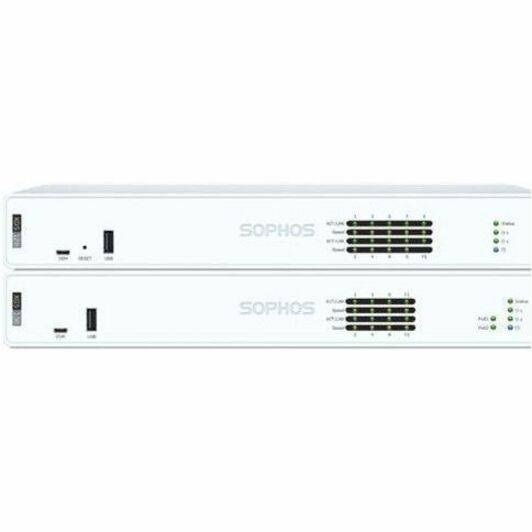
Sophos XGS 88 Network Security/Firewall Appliance
ZD88ZZ51ZZNGAA
A desktop next-generation firewall with four 2.5GbE ports, the shape most small sites get inline inspection in rather than as a separate appliance.
Inspection throughput is far below the headline firewall figure — size on the inspected number, not the forwarding one.
$250.42Back-orderedBranch or mid-size boundary
SonicWall
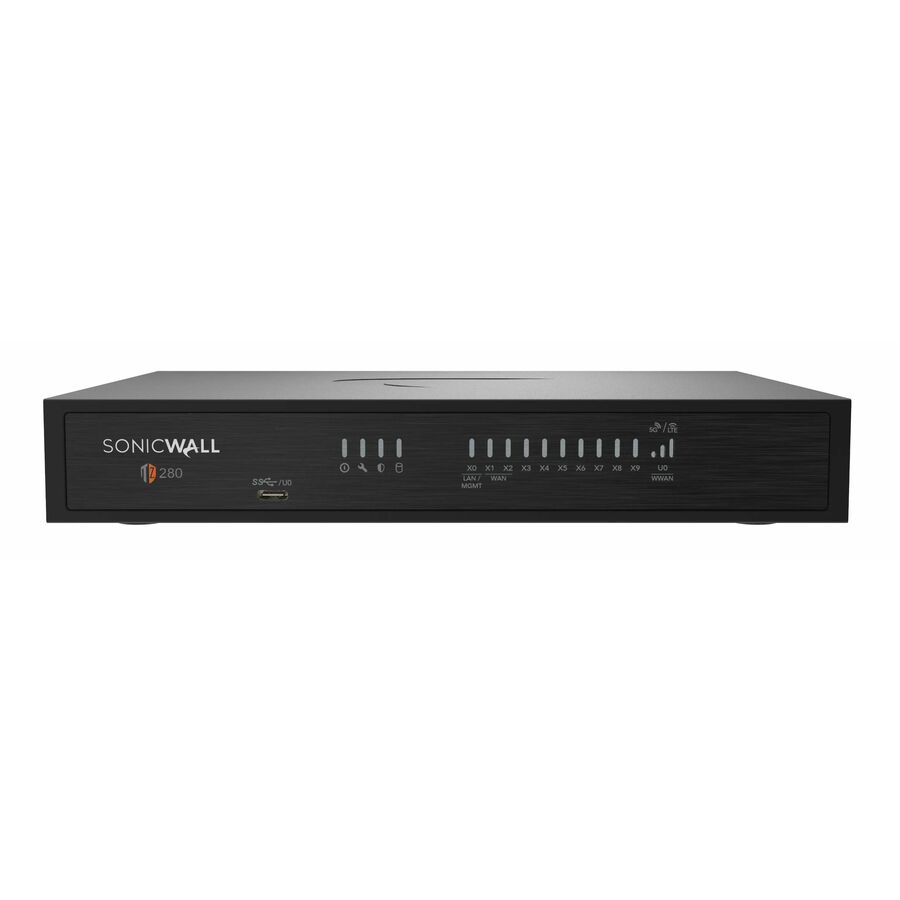
SonicWall TZ280 Network Security/Firewall Appliance
03-SSC-6937
An eight-port desktop firewall listing intrusion prevention among its inspection functions, for a branch edge or a DMZ boundary.
$482.08Back-orderedRack-mount boundary
Palo Alto Networks
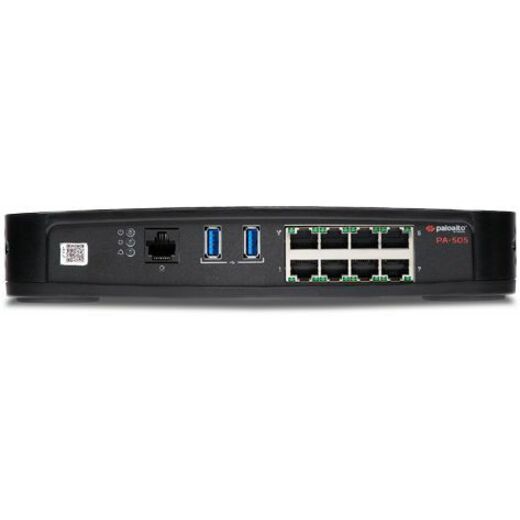
Palo Alto PA-505 Network Security/Firewall Appliance
PAN-PA-505-SPR
A 1U seven-port firewall appliance with intrusion prevention, for a rack where the inline inspection point is a fixed part of the topology.
Plan the failure mode before it goes inline: a bypass, an HA pair, or a documented choice between failing open and failing closed.
$293.98Back-orderedFAQ
Common questions
- What is the actual difference between an IDS and an IPS?
- Placement and authority, not detection capability. An intrusion detection system receives a copy of the traffic — from a switch mirror port or a network TAP — and its only output is an alert and a record. An intrusion prevention system sits in the forwarding path, so it can drop a packet, reset a session or block a source as the traffic passes. The inspection engines are frequently identical; in many products the same box does either job depending on how it is cabled and configured. Everything that follows (latency, failure behavior, the cost of being wrong) comes from that one structural difference.
- Do I still need a separate IDS or IPS if I have a next-generation firewall?
- At the boundary, usually not as a separate box: intrusion prevention is a standard inspection subscription on next-generation firewalls, and for most organizations that is where the inline capability lives. What a boundary firewall does not give you is visibility into traffic that never crosses it — east-west movement between servers, activity inside a segment, traffic on a network the firewall does not sit on. That internal visibility is the gap an out-of-band sensor, a network detection platform or a SIEM feed fills, and it is a different purchase from the firewall subscription even when the underlying technology is similar.
- Can an IPS run in detection-only mode?
- Yes, and it is the normal way to deploy one. The device is cabled inline but configured to alert rather than block, so you can watch what each signature would have done against production traffic without any risk of interrupting it. After a tuning period the rules that are quiet and accurate are promoted to enforcing, usually in batches and in a change window. Skipping that step is the most common way an intrusion prevention deployment ends up permanently in monitor mode: one high-profile false positive early on tends to remove the organization's appetite for enforcement altogether.
- Should the sensor be fed by a SPAN port or a network TAP?
- A TAP is the more reliable feed and a SPAN port is the more convenient one. A mirror port is free in the sense that the switch already exists, but it competes with forwarding for switch resources, it can be oversubscribed when you mirror several ports onto one, and when it is oversubscribed it drops frames silently — so the sensor reports nothing wrong while missing traffic. A TAP is a passive device in the physical link that copies everything without the switch's involvement. On links that matter, use a TAP, and where several sensors need the same feed, put a packet broker between them so the aggregation is deliberate rather than accidental.
- Can either one inspect encrypted traffic?
- Not the payload, without decrypting it first. Both placements can still do a surprising amount with what remains visible — certificate details, destinations, timing, volumes and flow behavior — and behavioral detection leans on exactly that. Reading inside the session means terminating and re-encrypting it at an inspection point, which needs certificate management on every client, costs a significant share of the appliance's rated throughput, adds latency, and raises a privacy and policy question that is usually broader than the security team. Treat decryption as a scoped decision for specific traffic, not a default setting.
- Can IDS and IPS work together?
- Yes, and mature networks run both rather than choosing. Prevention goes where traffic crosses a trust boundary and the failure mode is understood — the internet edge, a DMZ, the link into a sensitive enclave. Detection goes where you need to see without any risk of interfering: the core, the aggregation layer, and segments too fragile to sit behind an inline device. The two answer different questions, so the alerts and the blocks belong in the same place afterwards.
- What is IDS and an example?
- An intrusion detection system automates the monitoring of events on a network or host for signs of possible incidents, and its output is an alert and a record. A network-based example is a sensor fed by a TAP on an aggregation link, matching traffic against signatures and behaviour baselines and forwarding findings to a SIEM. A host-based example is an agent on one server watching its own files, logs and processes.
- What are the five types of firewalls?
- Firewall types are usually listed as packet-filtering, stateful inspection, circuit-level gateway, application-level gateway (proxy), and next-generation — with next-generation being the one that folds intrusion prevention, application awareness and threat intelligence into the same appliance. That last category is where most organisations now get inline inspection, which is why the standalone IPS appliance question has largely disappeared.