
Short answer
A DMZ (demilitarized zone) is a separate network segment between the internet and the internal LAN that holds the services which must accept inbound connections, so compromising a public server does not put an attacker on the internal network. It is a firewall rule set, not a product: the internet reaches only published DMZ services, and DMZ hosts may not open connections inward.
Key facts
- A DMZ is a design, not a device. The firewall policy between outside, DMZ and inside is what makes a segment a DMZ.
- The defining rule is asymmetric: the internet reaches only published DMZ services, and DMZ hosts may not open connections into the internal network.
- Two designs dominate: one three-legged firewall with internet, DMZ and internal interfaces, or a screened subnet placed between two separate firewalls.
- Web servers, reverse proxies, SMTP relays, external DNS and VPN concentrators belong in a DMZ; databases, directory services and internal app servers do not.
- A consumer router's 'DMZ host' setting forwards all unsolicited inbound traffic to one device. That exposes the device; it does not create an isolated segment.
- NIST SP 800-53 control SC-7 requires publicly accessible components to sit on subnetworks separated from internal networks — the DMZ, written as a control.
By Uniqcli Team
A DMZ, short for demilitarized zone, is a separate subnetwork that sits between an organization's trusted internal network and an untrusted outside network — almost always the internet. Its purpose is to host the systems that must be reachable from outside, such as web servers, mail relays, and other public-facing services, while keeping them isolated from the internal network where sensitive data and users reside. Because those exposed systems live in their own segment, compromising one of them does not hand an attacker a direct path into the internal network. The term is borrowed from the military name for a buffer zone between two opposing territories.
A DMZ is not a product you buy but a design, created and enforced with firewalls — and often switches and VLANs — that control exactly what traffic may move between the outside, the DMZ, and the inside. The defining characteristic is asymmetry: the internet may reach only specific published services in the DMZ, internal users may reach the DMZ when needed, but the hosts in the DMZ are tightly restricted and, in a sound design, cannot open connections into the internal network at all. That one-way posture is what turns a cluster of internet-exposed servers into a controlled buffer rather than an open door.
How does a DMZ work?
A DMZ is defined by the firewall rules that govern traffic among three zones: the untrusted outside, the DMZ itself, and the trusted inside. Inbound connections from the internet are permitted only to the specific services a DMZ host publishes — for example, ports 80 and 443 to a web server — and nothing else. Internal users and systems are generally allowed to reach the DMZ when they need to manage or use those services. The rule that matters most is the one governing traffic from the DMZ toward the inside: it is denied by default and opened only for narrow, explicitly defined flows, so a server in the DMZ cannot freely reach into the internal network.
That asymmetric policy is the whole point of the design. Public-facing servers are the most exposed systems an organization runs, because anyone on the internet can attempt to reach them, so they are also the most likely to be attacked or compromised. Placing them in a DMZ means that if one is breached, the attacker is contained within a segment that has little or no standing access to internal systems, and must defeat a second layer of controls to go further. The DMZ therefore does not prevent a public server from being attacked; it limits how far a successful attack can spread, which is the essence of defense in depth.
What are the common DMZ designs?
The simpler approach uses a single firewall with three network interfaces, sometimes called a three-legged or three-homed design. One interface faces the internet, one connects to the DMZ, and one connects to the internal network; the firewall enforces a distinct policy for traffic between every pair of zones. This design is inexpensive and easy to manage because there is only one device to configure, and it is common in smaller environments. Its drawback is that a single firewall is both the only enforcement point and a single point of failure — if it is misconfigured or compromised, every boundary it protects is affected at once.
A more robust approach places the DMZ between two firewalls, a design often called a screened subnet. A front-end (perimeter) firewall sits between the internet and the DMZ and permits only published services inbound; a back-end (internal) firewall sits between the DMZ and the internal network and is far more restrictive, allowing only the narrow connections that DMZ hosts legitimately need inward. Traffic heading from the internet toward internal systems must pass two independent policy checks. A frequent hardening recommendation is to use firewalls from two different vendors, so that a single vulnerability or misconfiguration is unlikely to defeat both layers simultaneously.
What runs in a DMZ?
A DMZ hosts the services that, by definition, must accept connections from the outside. Typical residents include public web servers and the reverse proxies or load balancers that front them, inbound mail gateways (SMTP relays), externally reachable DNS servers, file-transfer and remote-access gateways, and VPN concentrators that terminate remote-user tunnels. A web application firewall is often placed here as well, inspecting inbound requests before they reach an application. The common thread is that each of these systems has a legitimate reason to be reachable from the internet, which is precisely why it belongs in an isolated segment rather than on the internal network.
Just as important is what does not belong in a DMZ. Databases, internal application servers, directory services, and anything holding sensitive data should remain on the internal network, reachable from the DMZ only through tightly controlled, specific connections — a web server in the DMZ talking to a database inside, for instance, should be limited to exactly that one path. DMZ hosts are typically hardened and stripped to the minimum software they need, since they are the most exposed systems in the environment. One point of confusion is worth clearing up: the "DMZ host" setting on many consumer routers, which forwards all unsolicited inbound traffic to a single device, is not a true DMZ — it exposes that device rather than isolating a protected buffer segment.
How does a DMZ fit modern and government networks?
The DMZ is one of the oldest expressions of network segmentation — the practice of dividing a network into zones so that a problem in one cannot spread freely into another. Isolating internet-facing services behind a managed boundary is a baseline expectation in most security frameworks, which often refer to the pattern as a screened subnet or a managed interface and treat it as a form of boundary protection. For federal and enterprise buyers, this makes the DMZ less a single purchase than an architectural requirement: the segmentation is enforced with firewalls, switches, and disciplined address planning rather than delivered as one box.
The classic perimeter DMZ has not disappeared, but it now sits alongside newer models. Zero-trust architectures reduce reliance on a single hardened boundary and instead authenticate and authorize each request, while micro-segmentation applies fine-grained isolation deep inside the network rather than only at the edge. Cloud platforms recreate the same idea with public and private subnets, security groups, and gateways that keep internet-facing tiers separate from data tiers. The underlying principle the DMZ established — keep the systems the internet can touch away from the systems that hold what matters — remains foundational, whether it is implemented as a physical screened subnet or as cloud network policy.
Key takeaways
- A DMZ (demilitarized zone) is a subnetwork between an organization's internal network and the internet that hosts public-facing services while keeping them isolated from internal systems.
- It is not a device but a design enforced with firewalls, switches, and VLANs; the firewall rules — not any single product — are what make a segment a DMZ.
- The defining rule is asymmetry: the internet reaches only published services in the DMZ, and DMZ hosts are, by design, unable to open connections into the internal network.
- Two common designs exist: a single three-legged firewall with internet, DMZ, and internal interfaces, or a more robust screened subnet between two firewalls, often from different vendors.
- Public web servers, reverse proxies, mail and DNS gateways, and VPN concentrators belong in a DMZ; databases and sensitive internal systems stay on the internal network.
- Isolating internet-facing services behind a managed boundary supports defense-in-depth and segmentation expectations; the concept persists in zero-trust and cloud designs as public and private subnets.
Parts for this job
Small three-legged design
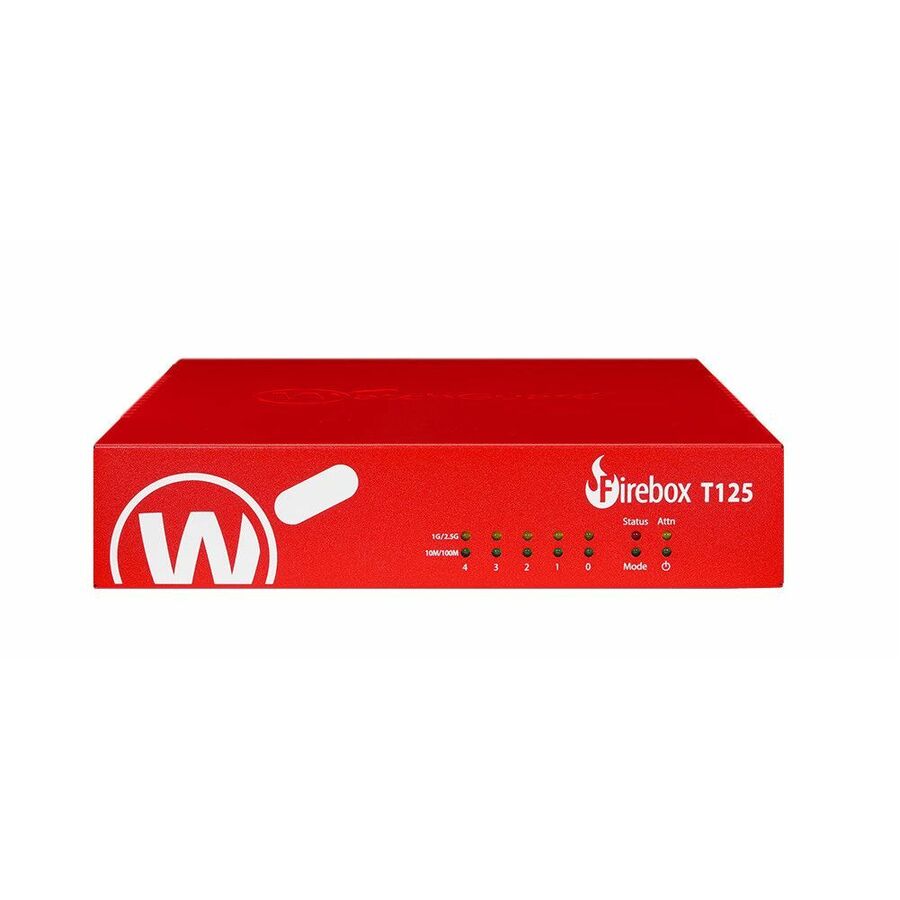
WatchGuard Technologies
WatchGuard Firebox T125 Appliance Only
WGT125000
A five-port 2.5 Gigabit Ethernet firewall — enough interfaces to give the internet, the DMZ and the internal network their own leg on one device in a branch or small site.
$242.66In stockDesktop or rack
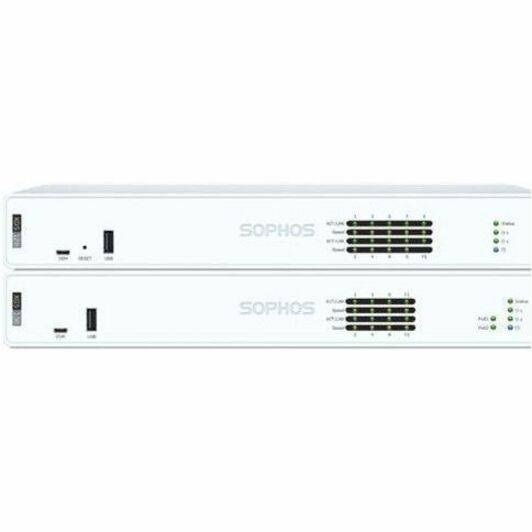
Sophos
Sophos XGS 88 Network Security/Firewall Appliance
ZD88ZZ51ZZNGAA
A four-port 2.5 Gigabit Ethernet firewall that mounts on a desk or in a rack — the minimum port count for a three-zone policy with one uplink left over.
$250.42Back-orderedMore interfaces
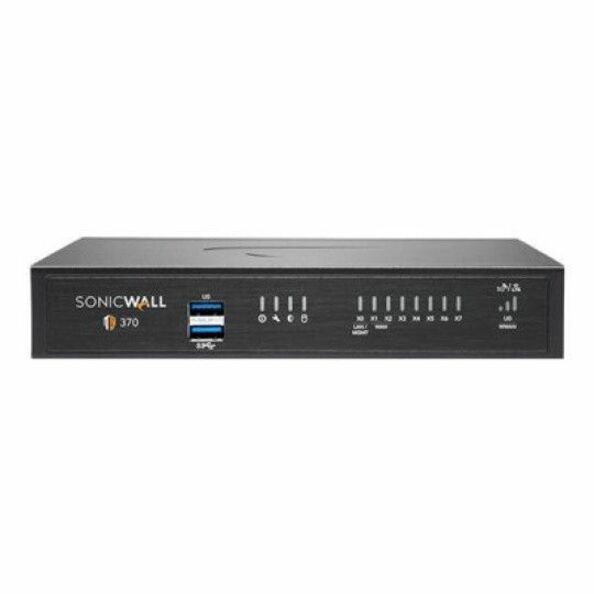
SonicWall
SonicWall TZ370 Network Security/Firewall Appliance
02-SSC-8441
An eight-port gigabit firewall that sits on a desk or in a rack — the port count for several DMZ segments rather than one, or for the internal half of a screened subnet later.
A screened subnet uses two firewalls; a frequent hardening recommendation is to source them from different vendors.
$607.19Back-orderedFrequently asked
- What is a DMZ in networking?
- In networking, a DMZ (demilitarized zone) is a subnetwork positioned between an organization's internal network and an untrusted external network, usually the internet. It hosts the services that need to be reachable from outside — such as web, mail, and DNS servers — while isolating them from the internal network where sensitive systems and data reside. The isolation is enforced by firewall rules, so that if a public-facing server in the DMZ is compromised, the attacker does not gain a direct route into internal systems. The name comes from the military term for a buffer zone between two territories.
- What is the difference between a single-firewall and a dual-firewall DMZ?
- A single-firewall DMZ uses one firewall with three interfaces — internet, DMZ, and internal — and enforces the policy between all three zones from a single device. It is simpler and cheaper but concentrates all enforcement, and the risk of failure, in one place. A dual-firewall DMZ, or screened subnet, places the DMZ between two firewalls: a perimeter firewall facing the internet and an internal firewall guarding the inside network. Traffic toward internal systems must clear two independent checks, and using firewalls from different vendors reduces the chance that one flaw defeats both layers.
- What should and should not be placed in a DMZ?
- A DMZ should hold the systems that must accept inbound connections from the internet: public web servers, reverse proxies and load balancers, inbound mail (SMTP) gateways, externally reachable DNS servers, file-transfer gateways, and VPN concentrators. It should not hold databases, internal application servers, directory services, or anything storing sensitive data — those belong on the internal network and should be reachable from the DMZ only through specific, tightly controlled connections. The guiding principle is that only systems with a genuine need to face the internet go in the DMZ, and each is hardened to the minimum software it requires.
- Is a DMZ still relevant with zero trust and cloud?
- Yes. Zero trust and cloud architectures change how segmentation is implemented, but not the underlying goal of keeping internet-facing systems away from internal ones. Zero trust reduces reliance on a single hardened perimeter by authenticating every request, and micro-segmentation isolates workloads deep inside the network rather than only at the edge. Cloud platforms recreate the DMZ pattern using public and private subnets, security groups, and gateways. The specific term "DMZ" matters less than the principle it introduced, which remains a standard part of layered, defense-in-depth network design in both on-premises and cloud environments.
Sources
Keep reading