
Short answer
The main difference between air cooling and liquid cooling is how close to the chip the heat is captured: air cooling moves it with fans and room air, while liquid cooling carries it in a fluid loop at the cabinet door, at a cold plate, or by submerging the boards. Choose air below the density where moving enough air is impractical; choose liquid when per-rack power exceeds what air can remove.
Key facts
- Data centers use 10 to 50 times the energy per unit of floor space of a typical commercial office building, so the cooling method is a facility decision.
- Data centers account for roughly 2% of total US electricity consumption, which is why cooling efficiency carries a standard of its own.
- ASHRAE's TC 9.9 datacom guidance covers environmental limits and cooling technologies, and ANSI/ASHRAE Standard 90.4 is the energy standard for data centers.
- Direct-to-chip cooling pipes liquid to cold plates on the hottest packages; the rest of the node is still air cooled, often by a rear-door heat exchanger.
- Immersion cooling submerges the hardware in a fluid, in a tank or a sealed rack; ASHRAE flags fluid compatibility and service access as the trade-offs.
Air cooling and liquid cooling are the two ways a data center gets heat away from silicon and out of the building. Air cooling moves it with moving air: fans pull room air across heatsinks, and a raised floor, hot- and cold-aisle layout, and computer-room air handlers carry the warm exhaust back to be chilled. Liquid cooling moves it with a fluid loop that touches the heat far closer to its source — a rear-door heat exchanger on the cabinet, cold plates sitting directly on the CPUs and GPUs, or, at the extreme, whole boards submerged in a dielectric fluid — rejecting it through a coolant distribution unit rather than through the room air. Both are legitimate, current approaches; neither is a replacement for the other so much as a different tool for a different heat density.
The reason this has become a live procurement question is that accelerated compute changed the numbers. A conventional rack of servers, storage, and networking rejects a modest, well-understood amount of heat that moving air handles comfortably. A densely populated GPU rack concentrates several times that much into the same footprint, and past a certain point the sheer volume of air you would have to move becomes loud, power-hungry, and physically hard to duct. That is the crossover where liquid enters the conversation. The decision belongs at facilities-planning time — before the compute is racked — because the cooling method dictates plumbing, floor loading, power, and water long before the first node powers on, and retrofitting the wrong assumption is far more expensive than designing for it. The facilities layer that answers this at Uniqcli is deep: more than 3,300 Vertiv line items spanning rack PDUs, rack systems, thermal management, and UPS, and over 8,800 Eaton Corporation line items across power distribution, UPS, and enclosures — capital, lead-time gear that is planned alongside the accelerated-compute inventory whose density drives the question in the first place.
At a glance
Side by side
| Factor | Air cooling | Liquid cooling |
|---|---|---|
| Heat-transfer medium | Moving air pulled across heatsinks by fans | A liquid loop — water/glycol, or a dielectric fluid — carrying heat away near the source |
| How heat leaves the chip | Through a heatsink into the surrounding room air | Into a cold plate or fluid in direct or near-direct contact with the component |
| Where heat is finally rejected | CRAC/CRAH units, chillers, and hot/cold-aisle airflow | A coolant distribution unit (CDU) handing off to facility water or a dry cooler |
| Density it suits | Comfortable at low-to-moderate per-rack power; strains as density climbs | Purpose-built for high per-rack density that air can no longer move economically |
| Forms it takes | Raised floor, aisle containment, in-row and rear fans, blanking discipline | Rear-door heat exchangers, direct-to-chip cold plates, or full immersion |
| Facility change required | Minimal — extends the HVAC and airflow you already run | Adds plumbing, coolant loops, leak detection, and often facility water |
| Operational familiarity | Universally understood; every facilities team already runs it | Newer operationally; needs coolant handling and specialized skills |
| Energy and acoustics at high load | Airflow volume grows loud and draws more fan power as density rises | Moves far more heat per unit of energy at density, and runs quieter |
| Retrofit friction | Easy to expand within its density ceiling | Best designed in from the start; harder and costlier to add to a room later |
Choose air cooling when
- Per-rack density stays within what moving air can practically reject — general compute, storage, and networking rather than dense accelerators
- You already run a raised floor with CRAC/CRAH capacity and containment that has headroom for the load
- Operational simplicity and broad team familiarity matter, and you would rather not introduce facility water and coolant loops
- The lowest-friction path is the priority and you can revisit the method if density climbs later
- You are extending an existing hall where air is working and the new load fits inside its proven ceiling
Choose liquid cooling when
- Per-rack density outruns what air can move economically — dense GPU and accelerator nodes whose heat concentrates beyond a heatsink's reach
- You are designing a new hall or high-density zone and can plumb coolant, floor loading, and power in from day one
- Energy efficiency and acoustic limits at sustained high load rule out simply moving more air
- You accept the added plumbing, coolant handling, and leak management in exchange for real density headroom
- The deployment will run at or near its thermal ceiling for long stretches, where air's airflow penalty compounds
Bottom line
Stay on air until per-rack power exceeds what the room can move; go liquid at the density where fans stop being enough. Air cooling remains the default and covers the vast majority of enterprise and government racks, because most workloads never reach the density where it runs out of headroom. Liquid cooling is the answer where accelerator density concentrates more heat than air can practically move, and it rarely arrives all-or-nothing: memory, drives, and NICs still shed heat to air even in a direct-to-chip rack, so most AI-era halls end up hybrid. The one firm rule is timing — decide the method at facilities-planning time, before the compute is racked, so plumbing, power, and floor loading are provisioned rather than retrofitted. For the per-rack kilowatt thresholds, containment tactics, and how to sequence a retrofit, our data center cooling planning guide walks the full decision in depth; this page is the concept-level starting point.
Products for this decision
Switch airflow correction
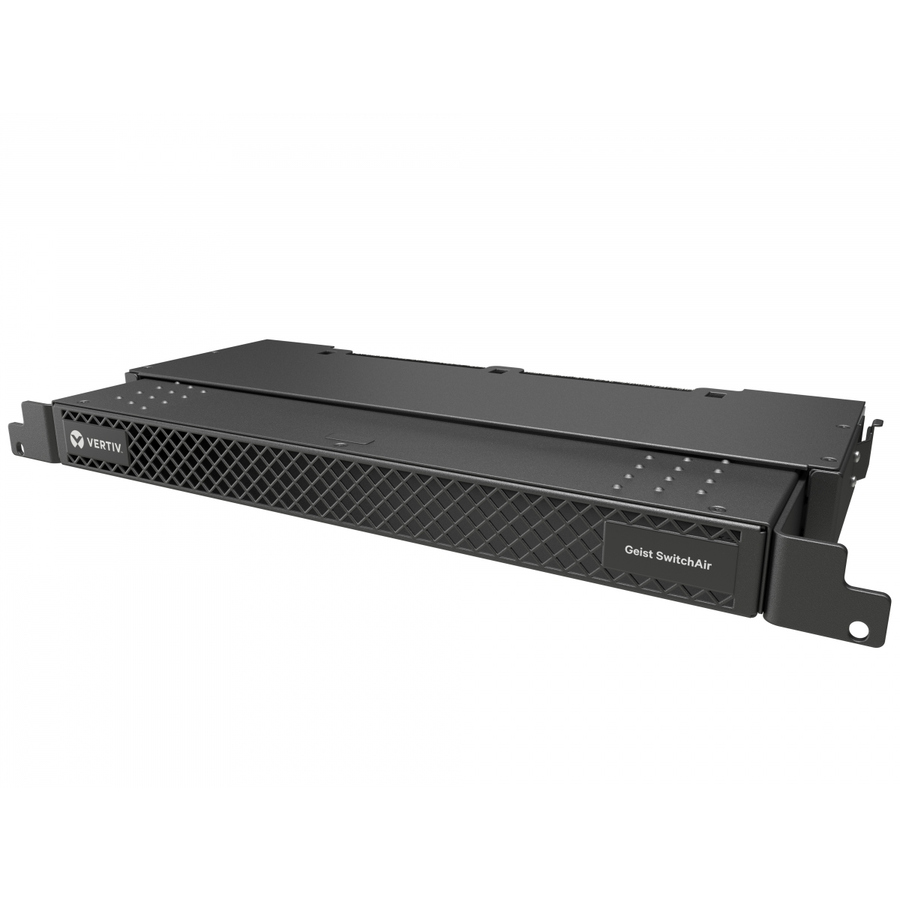
Vertiv
Vertiv Geist SwitchAir Airflow Cooling System
SA1-01002S
A 1U airflow system that redirects a side-breathing network switch into the cabinet's front-to-back path, so one device stops recirculating its own exhaust.
These are air-side products. A liquid loop is a facility design item — plumbing, floor loading and water — decided before the racks are populated.
$192.24Back-orderedSealed cabinet cooling
Legrand
Middle Atlantic CLS-COOL1 Airflow Cooling System
CLSCOOL1
A 50 CFM airflow cooling system for an enclosed cabinet that has no room air path of its own.
$379.40In stockRack blower panel
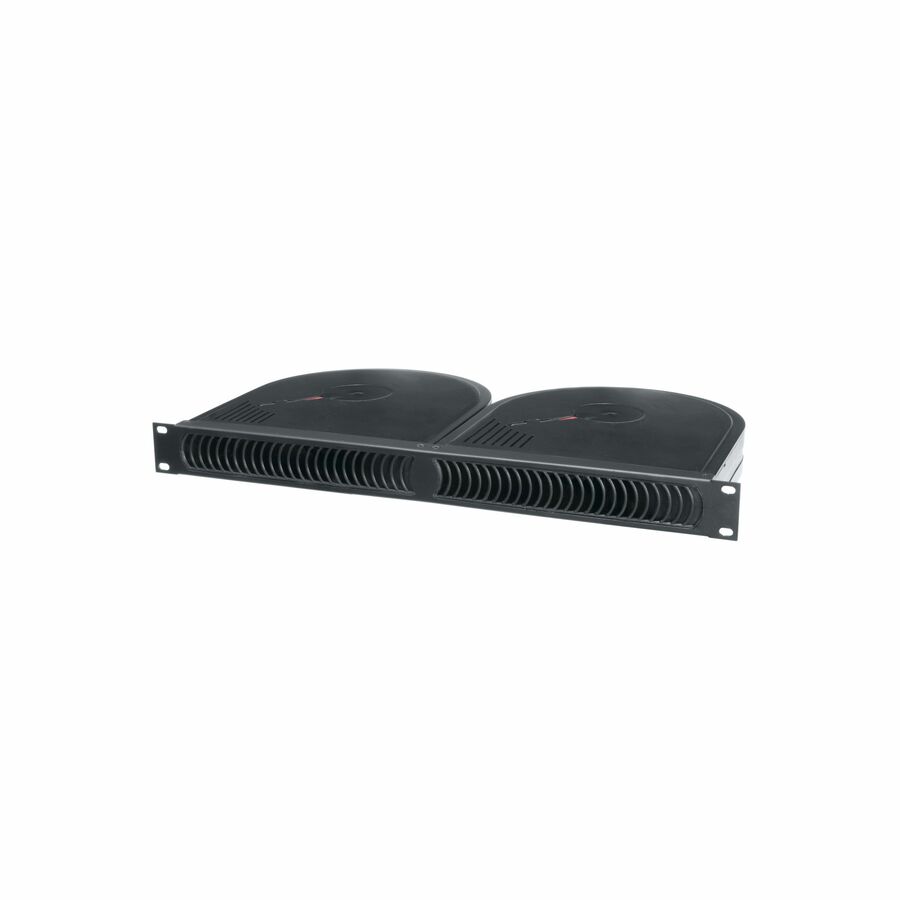
Legrand
Middle Atlantic QBP 1RU Quiet Blower Panel
QBP-2
A 1RU 100 CFM blower panel for pulling heat out of a rack section where passive front-to-back flow is not enough on its own.
$515.55In stockFAQ
Common questions
- What is the difference between air cooling and liquid cooling?
- Air cooling rejects heat using moving air — fans push it across heatsinks, and a raised floor, aisle containment, and CRAC/CRAH units carry the warm air away to be chilled. Liquid cooling uses a fluid loop to capture heat much closer to the component — at the cabinet door, on a cold plate mounted directly to the chip, or by submerging boards in a dielectric fluid — and rejects it through a coolant distribution unit. The core distinction is how near the heat source the cooling happens and how much heat the medium can carry away per unit of energy.
- Is liquid cooling always better than air cooling?
- No. Below the density where air runs short of headroom, air cooling is simpler, cheaper to operate, universally understood, and needs no facility water or coolant handling, so it is the right call for the large majority of racks. Liquid cooling earns its added plumbing and complexity only when per-rack density concentrates more heat than moving air can practically remove. It is a regime decision, not a ranking — match the method to the heat you actually have to reject.
- What are the main types of liquid cooling?
- Three, in rough order of how much facility change they demand. Rear-door heat exchangers mount on the back of the cabinet and cool the exhaust before it re-enters the room, so the rack looks air-cooled from the front. Direct-to-chip liquid cooling puts cold plates on the hottest components and carries their heat away in a closed loop, while leaving other parts for air — which is why it is rarely all-or-nothing. Immersion cooling submerges whole boards in a dielectric fluid and addresses the extreme density end, at the cost of the heaviest operational change.
- When should we plan liquid cooling instead of air?
- When measured or projected per-rack density is high enough that the air volume required to cool it becomes loud, power-hungry, and hard to duct — typically dense GPU and accelerator deployments rather than general compute. The important part is timing: make the call at facilities-planning time, before the racks are populated, because plumbing, floor loading, power, and water are far cheaper to provision than to retrofit. Our data center cooling planning guide covers the specific per-rack kilowatt thresholds and how to zone a hall for both.
- What is immersion cooling in a data center?
- Immersion cooling submerges whole servers in a dielectric fluid that carries heat away by direct contact, so the boards have no fans and the room has no hot aisle to manage. Single-phase systems circulate the fluid to a heat exchanger; two-phase systems let it boil and condense. It addresses the densest end of the range and demands the heaviest operational change — fluid handling, service procedures, floor loading and hardware that the vendor supports in immersion.
- What is direct-to-chip liquid cooling?
- Direct-to-chip cooling mounts cold plates on the hottest packages — usually the CPUs and accelerators — and pipes coolant to them through a loop served by a coolant distribution unit. It is the least disruptive liquid option because the chassis keeps its normal shape and the rest of the components are still cooled by room air, which is why it is rarely all-or-nothing. Plan the water, the CDU and the leak-detection path at facilities stage rather than at install.