
Short answer
NVIDIA AI Enterprise is NVIDIA's commercially supported software suite for AI — microservices, frameworks, libraries and GPU orchestration in one production-ready package. It is licensed per GPU: one license for every GPU installed in the server or workstation that hosts the software, sold either as a subscription or as a perpetual license that includes five years of Business Standard Support.
Key facts
- NVIDIA AI Enterprise is licensed on a per-GPU basis: a license is required for every GPU installed in the host that runs the software.
- It is sold as a subscription that must be renewed, or as a perpetual license that includes five-year Business Standard Support.
- After the perpetual license's initial five years, support services can be renewed annually.
- Each NVIDIA H100 PCIe or NVL Tensor Core GPU includes a five-year NVIDIA AI Enterprise subscription.
- Each NVIDIA H200 NVL Tensor Core GPU includes a five-year subscription; each A800 40GB Active GPU includes three years.
- NVIDIA cites extended-lifetime production branches and STIG-hardened containers as part of the supported platform.
By Uniqcli Team
NVIDIA AI Enterprise is NVIDIA's commercially supported software suite for building and running AI. NVIDIA describes it as microservices, frameworks and libraries for AI development brought together with GPU orchestration and infrastructure management in a production-ready commercial package — the supported counterpart to assembling the same open-source components yourself.
The reason it appears on a hardware quote is that it is licensed per GPU. A license is required for every GPU installed in the server or workstation that will host any of the software included in the suite, so the accelerator count in a configuration sets the software line as directly as it sets the power budget.
That makes it a procurement item rather than a footnote. Two otherwise identical eight-GPU hosts differ by eight licenses, the licenses have a term, and some GPUs arrive with a subscription already attached — which is exactly the kind of detail that decides whether a renewal lands as expected or as a surprise.
What is actually in the suite
NVIDIA's own description of the platform is a bundle rather than a single product: microservices for inference, frameworks for building and customizing models, libraries, and orchestration and infrastructure management for the GPUs underneath. The components are largely the same building blocks that exist in open form; what the subscription buys is the packaged, tested and supported version of them.
Two elements matter more than the component list for organizations with a compliance posture. NVIDIA cites extended-lifetime production branches — versions maintained for a defined period rather than moving with upstream — and security-hardened containers built against the Security Technical Implementation Guides, alongside vulnerability mitigation through its supply chain. For a regulated environment, that maintenance model is usually the argument for buying the suite at all.
How the licensing works
The rule is short and worth quoting on a quote: NVIDIA AI Enterprise software is licensed on a per-GPU basis, and a license is required for every GPU installed on the server or workstation that will host any software included with NVIDIA AI Enterprise. Not per server, not per socket, not per user.
Two commercial shapes exist. A subscription runs for a stated term and has to be renewed. A perpetual license allows indefinite use of the software and includes five years of Business Standard Support, after which support services can be renewed annually. Choosing between them is a decision about what happens in year six, not about what the software does in year one.
Some GPUs arrive with the subscription already included. NVIDIA states that each H100 PCIe or NVL Tensor Core GPU includes a five-year NVIDIA AI Enterprise subscription, that each H200 NVL Tensor Core GPU includes a five-year subscription, and that each A800 40GB Active GPU includes a three-year subscription. Check the bundle against the exact part before adding separate license lines that duplicate it.
Do you need it?
Not every deployment does. The frameworks and runtimes the suite packages exist in open form, and a team that is comfortable tracking upstream releases, building its own containers and carrying its own support burden can run a GPU estate without it. That is a real choice and a common one in research environments.
The case for buying it is support and maintenance rather than capability: a supported version to point at when something breaks, production branches that do not move underneath a validated deployment, and hardened container images that shorten an accreditation conversation. Where an application owner has to name a supported software stack for the environment it runs in, the suite is usually the shortest path to that answer.
Getting the line items right
Count the GPUs first, including any the host will take later — the license count follows the installed GPU count, so a chassis fitted with four cards today and eight next year has two different license positions. Then confirm which of those GPUs already carry a bundled subscription and for how long, so the quote does not license the same card twice.
Finally, line up the terms. A five-year bundled subscription attached to a GPU and a three-year subscription bought separately expire on different dates, and an estate whose licenses lapse at different times is an administrative problem that compounds. Ask for the software and the hardware on one document, with term and expiry stated per line.
Key takeaways
- NVIDIA AI Enterprise is a commercially supported suite of AI microservices, frameworks, libraries and GPU orchestration.
- It is licensed per GPU: one license for every GPU installed in the server or workstation that hosts the software.
- It sells as a subscription that must be renewed, or as a perpetual license including five years of Business Standard Support.
- Some GPUs include a subscription — NVIDIA names five years with H100 PCIe or NVL and H200 NVL, and three years with the A800 40GB Active.
- The value is maintenance rather than capability: extended-lifetime production branches and STIG-hardened containers.
- License count follows GPU count, so plan for the cards a chassis will hold later, not only the ones fitted today.
Shop it at Uniqcli
Parts for this job
General-purpose accelerator
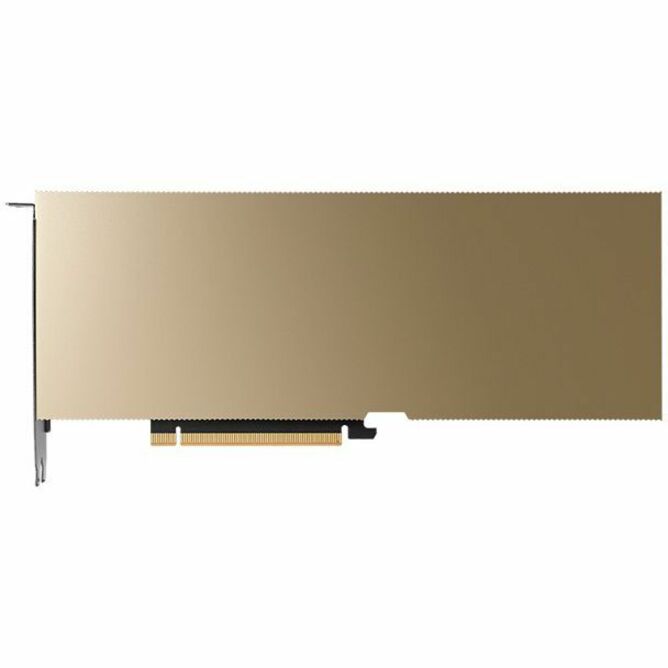
PNY Technologies
PNY NVIDIA Quadro L40S Graphic Card
NVL40STCGPU-KIT
PNY NVIDIA L40S with 48 GB of GDDR6 — a data-center card for mixed training, inference and visualization workloads on a standard PCIe host.
Software is licensed per GPU, so the card count in the chassis sets the license count.
$12,266.32Back-orderedDensity and inference
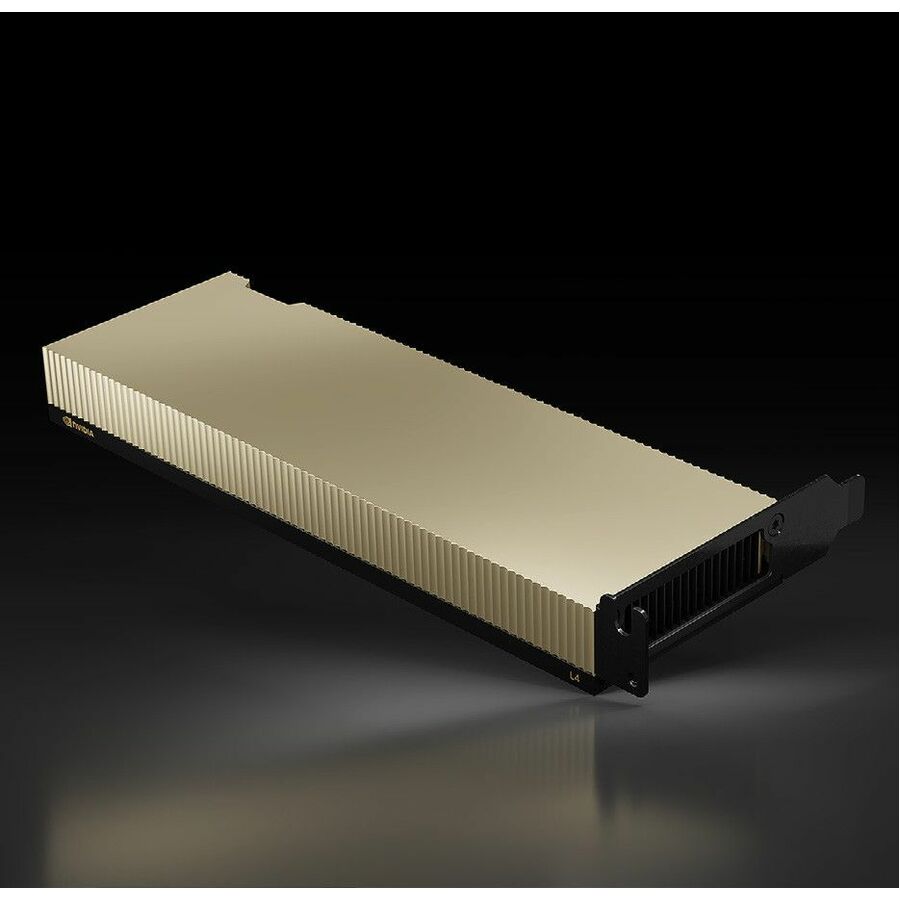
NVIDIA
NVIDIA L4 Graphic Card
900-2G193-0000-001
NVIDIA L4 with 24 GB of GDDR6 on a single-slot, low-profile board rated at 72 W — the card for packing inference capacity into general-purpose servers.
$3,426.27Back-orderedTop of the range
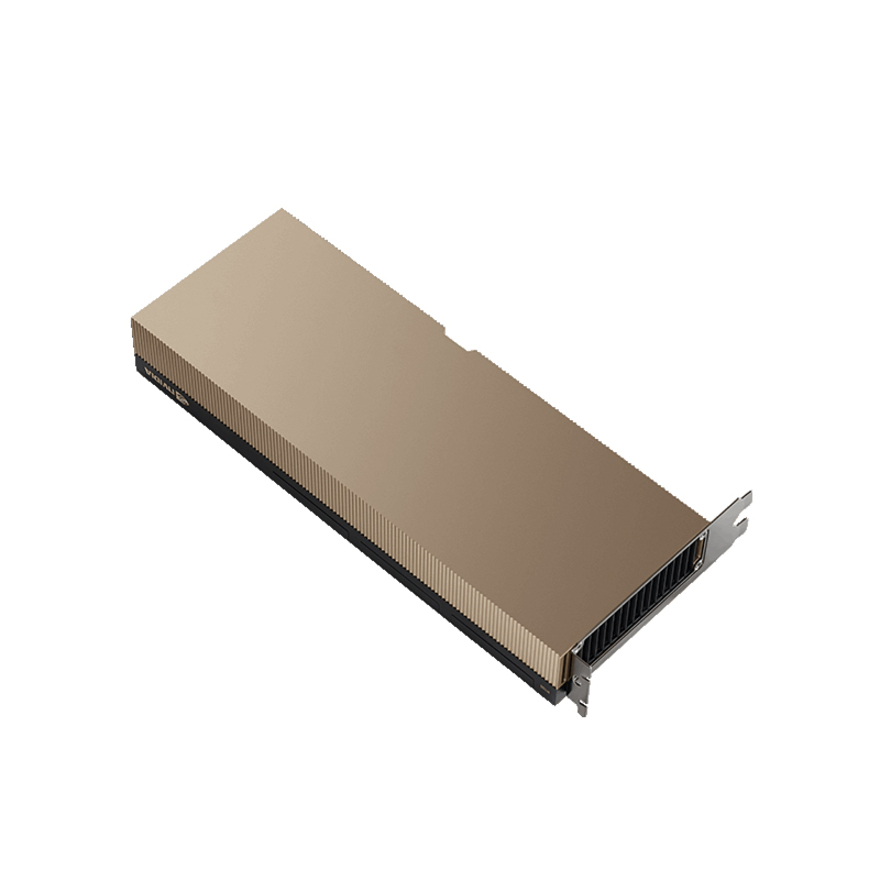
PNY Technologies
PNY NVIDIA H100 Graphic Card
NVH100TCGPU-KIT
PNY NVIDIA H100 with 80 GB of HBM3 — the Hopper-generation accelerator for large model training and high-throughput inference.
NVIDIA states that each H100 PCIe or NVL Tensor Core GPU includes a five-year AI Enterprise subscription; confirm the bundle on the exact part you quote.
$37,122.36Back-orderedFrequently asked
- How is NVIDIA AI Enterprise licensed?
- On a per-GPU basis. NVIDIA requires a software license for every GPU installed on the server or workstation that will host any software included with NVIDIA AI Enterprise — not one per server and not one per user. It is sold either as a subscription for a stated term, or as a perpetual license that includes five years of Business Standard Support with annual renewals after that.
- Do I need NVIDIA AI Enterprise to run open-source AI frameworks?
- No. The frameworks and runtimes the suite packages exist in open form and can be run without it. What the subscription adds is the supported, tested build of them, extended-lifetime production branches that do not move underneath a validated deployment, and security-hardened container images. Buy it for the maintenance and support model, not because the software will otherwise refuse to run.
- Which GPUs include an NVIDIA AI Enterprise subscription?
- NVIDIA names three. Each H100 PCIe or NVL Tensor Core GPU includes a five-year subscription, each H200 NVL Tensor Core GPU includes a five-year subscription, and each A800 40GB Active GPU includes a three-year subscription. Check the bundle against the exact part number before adding separate license lines, or the same card gets licensed twice.
- What is the difference between a subscription and a perpetual NVIDIA AI Enterprise license?
- A subscription runs for a stated term and stops unless it is renewed. A perpetual license allows use of the software indefinitely and includes five years of Business Standard Support, after which support can be renewed annually. The difference is what happens when the term ends: with a subscription you lose the right to use the software, with a perpetual license you lose only the support.
Sources
- 1.NVIDIA AI Enterprise — product overviewnvidia.com
- 2.NVIDIA Enterprise Licensing Guide — NVIDIA AI Enterprise licensingdocs.nvidia.com
- 3.NVIDIA L4 Tensor Core GPU — specificationsnvidia.com
Keep reading