
Short answer
A desktop AI system is a compact machine built on NVIDIA's GB10 Grace Blackwell Superchip, sold by NVIDIA as DGX Spark and by ASUS as the Ascent GX10. It pairs a 20-core Arm CPU with a Blackwell GPU and up to 128 GB of coherent unified LPDDR5X memory at 273 GB/s, which NVIDIA rates at up to 1 PFLOP of FP4 tensor performance in a 240 W system that sits on a desk.
Key facts
- The GB10 Grace Blackwell Superchip pairs a 20-core Arm CPU — 10 Cortex-X925 and 10 Cortex-A725 — with a Blackwell GPU on one package.
- Memory is up to 128 GB of coherent unified LPDDR5X shared by CPU and GPU; NVIDIA lists 273 GB/s of bandwidth on DGX Spark.
- NVIDIA rates DGX Spark at up to 1 PFLOP FP4, with 240 W total system power and a 140 W TDP for the GB10 chip.
- NVIDIA states the 128 GB of unified memory supports inference on models up to 200 billion parameters.
- DGX Spark measures 150 mm by 150 mm by 50.5 mm and weighs 1.2 kg — a desk machine, not a rack unit.
- Both DGX Spark and the ASUS Ascent GX10 carry an NVIDIA ConnectX-7 SmartNIC plus 10 Gigabit Ethernet on RJ-45.
By Uniqcli Team
A desktop AI system is a compact machine built around NVIDIA's GB10 Grace Blackwell Superchip, which puts a 20-core Arm CPU and a Blackwell GPU on one package with a single pool of memory both can address. NVIDIA sells its own version as DGX Spark; ASUS builds the Ascent GX10 on the same superchip, and Acer, PNY and others ship the design under their own model numbers.
The specification that defines the category is the memory. NVIDIA lists up to 128 GB of coherent unified LPDDR5X at 273 GB/s on DGX Spark, shared by the CPU and the GPU rather than split between system RAM and a separate card. That is what lets a machine measuring 150 mm on a side hold a model that would not fit in the video memory of a much larger workstation — NVIDIA states the 128 GB supports inference on models up to 200 billion parameters.
So the honest positioning is neither a supercomputer nor a gaming PC. It is a development and inference machine for a person who needs a large model resident in memory at a desk, on a 240 W power budget, without waiting for time on a shared cluster.
What is inside a GB10 system?
The superchip pairs a 20-core Arm CPU — ten Cortex-X925 cores and ten Cortex-A725 cores — with a Blackwell GPU carrying fifth-generation Tensor Cores and fourth-generation RT Cores. NVIDIA rates the combination at up to 1 PFLOP of FP4 tensor performance, and lists a 140 W TDP for the GB10 itself inside a 240 W total system power figure.
Memory is the architectural point. Rather than a CPU pool and a GPU pool connected over PCIe, GB10 presents one pool of coherent unified LPDDR5X, up to 128 GB, that both processors address directly. Model weights do not have to be copied across a bus before the GPU can read them, and the working set is bounded by the whole pool rather than by the capacity of a discrete card.
Storage and networking follow the same desk-side logic. NVIDIA lists up to 4 TB of self-encrypting NVMe storage on DGX Spark; ASUS offers the Ascent GX10 with 1 TB and 2 TB PCIe 4.0 options alongside a 4 TB PCIe 5.0 option. Both carry a ConnectX-7 SmartNIC — NVIDIA specifies it at 200 Gbps — plus 10 Gigabit Ethernet on RJ-45, which is how two units are linked to work on a model larger than one can hold.
How does it compare with a GPU workstation or a rack server?
A tower workstation with a professional graphics card gives you more raw compute per dollar for training and far more display and expansion capability, but the model has to fit in the card's own video memory. That is the trade: the workstation wins on throughput and on everything that is not model size, and loses the moment the working set exceeds the card.
A rack server wins on both counts and loses on every other one — it needs a rack, three-phase-capable power, real cooling and a data center or at least a properly conditioned server room. A GB10 system draws 240 W and sits on a desk. DGX Spark measures 150 mm by 150 mm by 50.5 mm and weighs 1.2 kg.
The decision therefore turns on where the work happens rather than on benchmark tables. If a developer needs a large model resident locally, iterating without scheduling cluster time, the desk-side machine is the answer. If the job is production training at scale, it is not.
What to check before buying one
Storage tier is the main configurable on the systems listed here, which all carry 128 GB of unified memory; NVIDIA has also announced a 64 GB configuration, listed as coming soon and sold only through participating OEM partners. The choice is between the 1 TB, 2 TB and 4 TB options and the PCIe generation each one uses — checkpoints and datasets are what fill a machine like this, not the operating system.
Then check the software path. These systems run NVIDIA's DGX OS on Arm, so verify that the frameworks, containers and drivers your team depends on are published for that combination before the purchase order rather than after. An x86 assumption buried in a build script is the most common surprise.
Finally, decide whether one unit is the whole plan. The ConnectX-7 interface exists so that units can be linked for a model that exceeds a single machine's memory — NVIDIA documents connecting up to four DGX Spark systems for models of up to 700 billion parameters — and that is a different cabling and switching conversation from a single desk-side box.
Key takeaways
- The category is defined by NVIDIA's GB10 Grace Blackwell Superchip: a 20-core Arm CPU and a Blackwell GPU on one package.
- Up to 128 GB of coherent unified LPDDR5X is addressed by both processors, so model size is bounded by system memory rather than by a card's video memory.
- NVIDIA rates DGX Spark at up to 1 PFLOP FP4 and lists 240 W total system power with a 140 W TDP for GB10.
- NVIDIA states the 128 GB supports inference on models up to 200 billion parameters.
- Networking is a ConnectX-7 SmartNIC plus 10 Gigabit Ethernet, so two units can be linked for a model one cannot hold.
- The systems run NVIDIA DGX OS on Arm — confirm your frameworks and containers are published for that combination before ordering.
Shop it at Uniqcli
Parts for this job
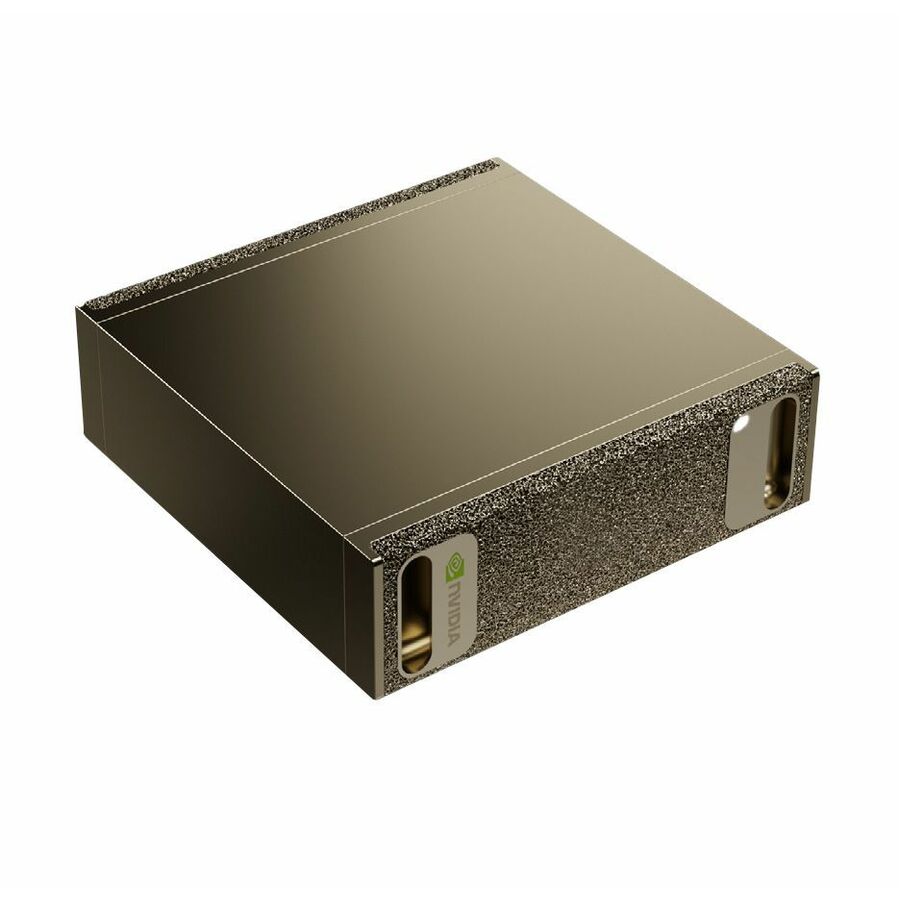
DGX Spark
PNY Technologies
PNY DGX Spark Desktop AI Computer
NVDGXSPARK-PB
The DGX Spark design with 128 GB of unified memory and 4 TB of NVMe storage, running NVIDIA DGX OS — the configuration with the most room for checkpoints and datasets.
$8,149.98In stockASUS Ascent GX10
ASUS Computer International
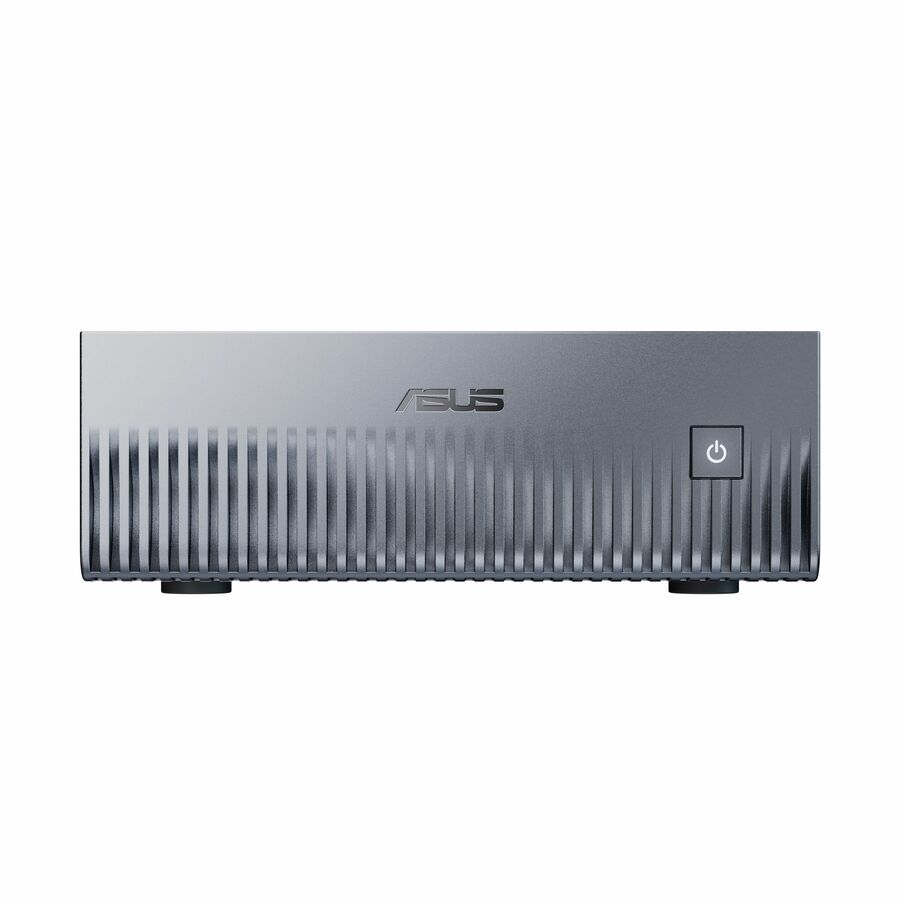
Asus Ascent GX10-GG0010BN Desktop AI Computer
GX10-GG0010BN
The same GB10 superchip and 128 GB of unified memory with a 1 TB PCIe 4.0 NVMe drive, for a developer whose datasets live on the network rather than on the box.
2 TB and 4 TB storage tiers exist on the same 128 GB of memory; the storage is the variable, not the memory.
$7,831.33In stockAcer Veriton GN100
Acer
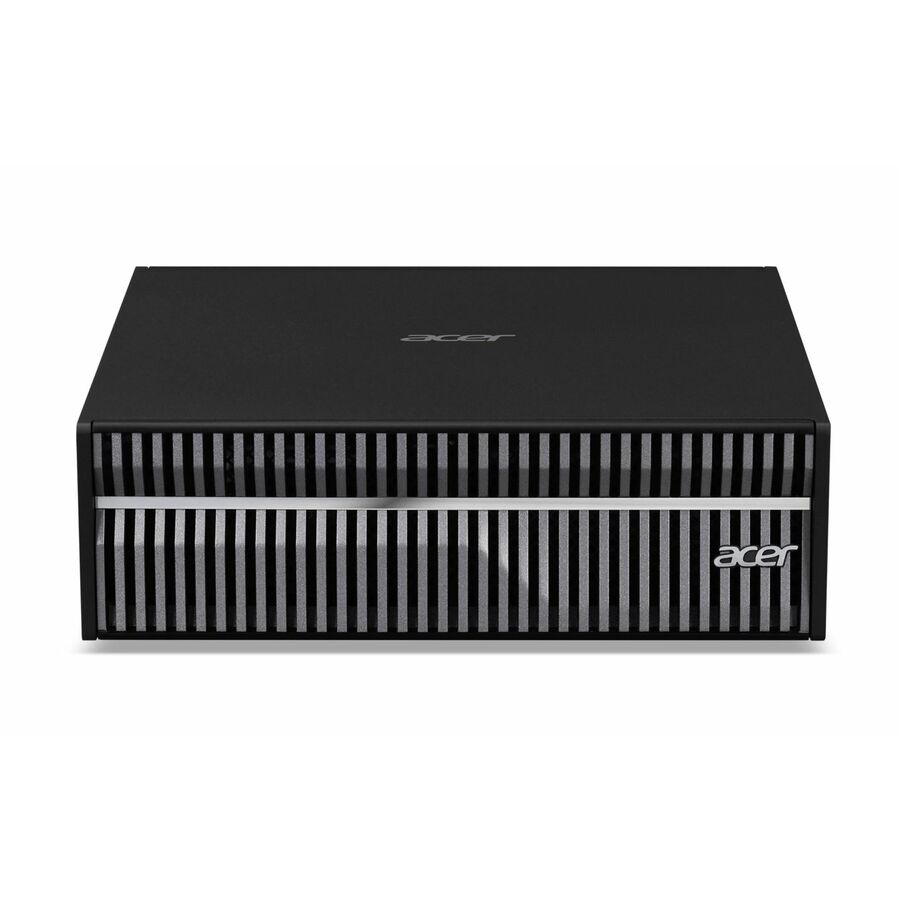
Acer Veriton VGN100-UD13 Workstation
DT.R6LAA.003
Acer's mini workstation on the GB10 superchip, with 128 GB of unified memory, DGX OS and 10 Gigabit Ethernet, listed as a workstation rather than a desktop.
$8,219.00In stockFrequently asked
- What is the ASUS GX10?
- The ASUS Ascent GX10 is ASUS's desk-side AI system built on NVIDIA's GB10 Grace Blackwell Superchip. ASUS lists a 20-core Arm CPU (10 Cortex-X925 and 10 Cortex-A725), an integrated Blackwell GPU, 128 GB of unified LPDDR5X memory, 1 PFLOP of tensor performance, a ConnectX-7 SmartNIC and 10 Gigabit Ethernet, in storage tiers of 1 TB, 2 TB and 4 TB. It runs NVIDIA DGX OS, the same software stack as DGX Spark.
- How much does the ASUS Ascent GX10 cost?
- It depends on the storage tier, because every Ascent GX10 model ASUS lists carries the same 128 GB of unified memory — the 1 TB, 2 TB and 4 TB NVMe options are what separate the part numbers. The current figure for each tier is shown on its own product page, and volume quantities are quoted rather than listed.
- Is a desktop AI system the same as a GPU workstation?
- No. A GPU workstation runs a discrete graphics card with its own video memory, and the model has to fit in that memory. A GB10 system gives the CPU and GPU one pool of unified memory, up to 128 GB, so a much larger model fits, at lower raw compute than a high-end workstation card. The workstation wins on throughput and expansion; the GB10 system wins when model size is the constraint.
- Can two units be linked together?
- Yes — that is what the ConnectX-7 interface is for. NVIDIA specifies the NIC at 200 Gbps and states that its networking enables connecting up to four DGX Spark systems to work with AI models of up to 700 billion parameters. Two is the ordinary desk-side pairing, cabled directly, for a model larger than one machine's memory; Acer documents up to four of its units on a 200 GbE switch. Past four units the conversation becomes a cluster with its own cabling and power design.
Sources
Keep reading