
SSD Price Increase 2026: Enterprise Buying Signals to Watch
TrendForce forecast NAND Flash contract prices up 70–75% quarter over quarter in Q2 2026 and described tight supply as producers favored higher-value demand. That is a serious sourcing signal, but it is not a universal enterprise SSD price. Buyers must recheck the exact drive, endurance, firmware qualification, allocation, and quote.
By Uniqcli Team · · 10 min read · Updated
Key takeaways
- NAND contract-price forecasts describe an upstream market, not a guaranteed pass-through to every finished SSD.
- Compare enterprise drives by interface, form factor, usable capacity, endurance, power-loss protection, encryption, firmware, and platform qualification—not price per raw terabyte alone.
- A quote can expire while the underlying drive is also allocated. Confirm stock or allocation, order acceptance, shipment conditions, and substitutions in writing.
- TLC and QLC are design inputs, not automatic “good” and “bad” labels. Match write pattern, endurance, latency, and workload life.
- Validate OEM support for server and storage-array drives. A mechanically compatible SSD may be unsupported or missing the correct carrier/firmware.
- Label market forecasts, vendor notices, channel reports, and buyer inference separately.
On this page
Procurement Guidance
What can be verified today
TrendForce's March 31, 2026 release forecast NAND Flash contract prices up 70–75% quarter over quarter in Q2. It tied the outlook to supplier allocation and demand, including enterprise and AI-related storage. Later TrendForce reporting described NAND undersupply through 2026.
These are research forecasts about NAND components and contracts. They do not establish a finished-drive percentage, one effective date, or a price for a particular buyer. SSD manufacturers, OEMs, distributors, and resellers can have different inventory, contracts, discounts, qualification cycles, and service bundles.
Use the market figure to rank exposure and request evidence. Use a current quote and applicable terms to approve the purchase.
Why enterprise SSD prices move differently
NAND is only part of the drive
An enterprise SSD also contains a controller, firmware, DRAM or other metadata memory, capacitors for power-loss protection, enclosure, connector, and qualification/support value. Finished pricing reflects yield, capacity, performance, endurance, inventory, support, and commercial terms.
Inventory delays pass-through
A distributor with pre-change inventory may hold a better price until those units sell. A factory-configured server or storage array may expose current component cost on a different schedule. Two quotes can be legitimate while reflecting different inventory vintages.
Qualification reduces substitution
Storage arrays and servers often use firmware-qualified drives and vendor carriers. An alternate with the same interface and capacity may not be recognized, supported, or covered by the system warranty. Qualification can make some SKUs more constrained than the broad NAND market.
Endurance and capacity tiers do not move together
Read-intensive QLC, mixed-use TLC, write-intensive drives, and specialized low-latency products serve different workloads. Supply and demand can affect them differently. A single “SSD up X%” statement erases those distinctions.
Three enterprise drive classes this pressure reaches on different clocks
Kingston Technology
Kingston DC600M 960 GB Solid State Drive
$850.40In stockAxiom Memory Solutions
Axiom UX10 1.92 TB Solid State Drive
$2,770.10In stock
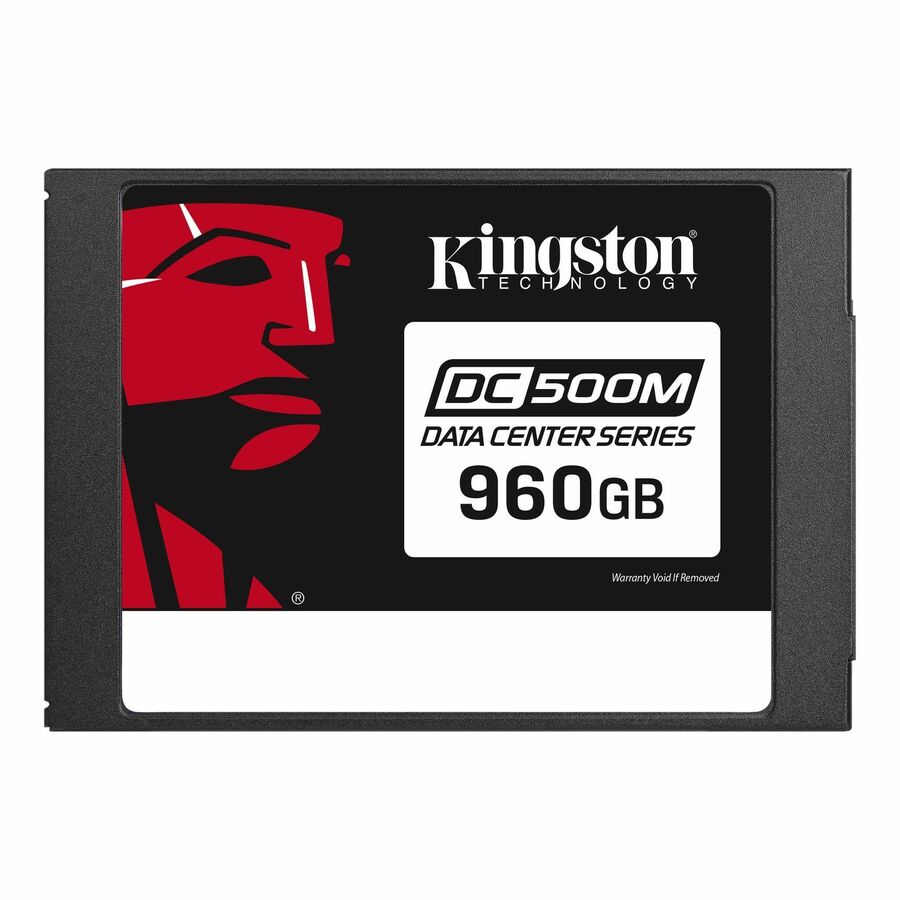
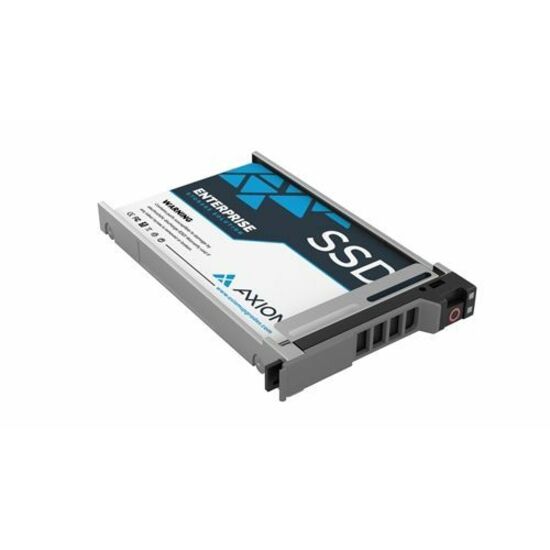
Three shapes this pressure reaches on different clocks: a mixed-use data-center SATA drive, a data-center NVMe module, and a higher-capacity 2.5-inch NVMe drive. Prices and availability are read from the catalog when this page renders rather than written into the article, so these are today's numbers, not the ones that were true on the publication date.
Freeze the storage requirement
Capture each required field before sending an RFQ:
- system or array manufacturer and exact model;
- drive manufacturer and orderable part number;
- interface and protocol: SATA, SAS, NVMe, U.2/U.3, EDSFF, or other;
- form factor and carrier/caddy;
- raw and usable capacity;
- NAND type when disclosed;
- endurance rating and measurement basis;
- sequential and random performance requirements;
- latency and quality-of-service requirements;
- power-loss protection;
- encryption and secure-erase capabilities;
- firmware/qualification version;
- hot-swap and multipath behavior;
- warranty and support provider; and
- quantity, spares, needed-by date, and installation plan.
Do not let an RFQ say only “7.68 TB enterprise SSD.” That description can return products intended for very different write workloads and support environments.
Size from workload, not fear
Capacity
Start with current used space, data growth, snapshots, replication, rebuild or spare policy, overprovisioning, retention, and workload placement. Distinguish raw, usable, and effective capacity after protection and data reduction. Vendor “effective” claims depend on workload and assumptions.
Performance
Collect IOPS, throughput, latency, queue depth, read/write ratio, block size, and peak windows. A faster interface does not guarantee better application latency if the array, network, controller, or software is the bottleneck.
Endurance
Estimate daily writes and write amplification over the intended service life. Compare the manufacturer's endurance specification using the same basis, often drive writes per day or total bytes written. Leave enough margin for peaks and growth.
Availability and failure model
Include RAID or erasure coding, rebuild behavior, hot spares, dual-port needs, and replacement SLA. A lower-cost drive that lengthens rebuild or lacks dual-port support can increase availability risk.
TLC versus QLC without slogans
TLC stores fewer bits per cell than QLC and often provides higher endurance and steadier write behavior. QLC can provide attractive density and cost for read-heavy workloads. Controller, firmware, overprovisioning, and workload pattern matter alongside NAND type.
Ask these questions:
- What is the expected daily write volume at the device after data services?
- How bursty are writes, and how much sustained-write performance is required?
- What endurance warranty applies at the selected capacity?
- Does the platform qualify this exact drive and firmware?
- Is latency during garbage collection acceptable?
- Would additional QLC capacity lower the write rate per drive?
- What happens during rebuild, compaction, or cache destage?
Do not substitute QLC for TLC solely to recapture an old budget. It can be an excellent design when the workload fits and a poor one when it does not.
Requote workflow
1. Preserve the baseline
Save the original BOM, quote, firmware/support assumptions, and workload sizing. Give it a revision date.
2. Request a like-for-like quote
Keep manufacturer part number, quantity, support, and terms identical. This isolates price movement from design change.
3. Request alternates separately
For each alternate, require a variance table for capacity, endurance, performance, firmware, qualification, encryption, warranty, lead time, and support. Avoid the word “equivalent” without the table.
4. Confirm supply
Ask whether units are in stock, allocated, factory-configured, or only estimated. Record where the inventory sits and the last confirmation date. Do not publish or promise availability without a current check.
5. Read commercial terms
Identify quote expiration, order acceptance, price protection, partial shipment, backorder, substitution, cancellation, freight, tax, and return conditions.
6. Reapprove changes
Architecture, security, operations, and contracting owners review material changes. A different firmware branch or support model is not merely a procurement substitution.
7. Verify receipt
Reconcile labels, product IDs, carriers, firmware, serials, quantity, and condition. Confirm entitlements and warranty. Update the as-built storage record.
The quote comparison table
Part number/firmware
Approved baseline: Like-for-like refresh: Alternate:
Interface/form factor
Approved baseline: Like-for-like refresh: Alternate:
Capacity/quantity
Approved baseline: Like-for-like refresh: Alternate:
Endurance
Approved baseline: Like-for-like refresh: Alternate:
Performance/latency
Approved baseline: Like-for-like refresh: Alternate:
Encryption/PLP
Approved baseline: Like-for-like refresh: Alternate:
Platform qualification
Approved baseline: Like-for-like refresh: Alternate:
Warranty/support
Approved baseline: Like-for-like refresh: Alternate:
Unit/extended price
Approved baseline: Like-for-like refresh: Alternate:
Stock/allocation
Approved baseline: Like-for-like refresh: Alternate:
Price-protection condition
Approved baseline: Like-for-like refresh: Alternate:
The alternate column should never be cheaper merely because a required property has been left blank.
Prioritizing purchases
Requote first when a project has high SSD content, a short quote window, few qualified alternatives, a hard fiscal or deployment date, or a platform near lifecycle transition. Also prioritize replacements needed to maintain spares for a production array.
Do not accelerate speculative capacity merely because NAND is tight. Validate the demand, platform life, warranty start, secure storage, and deployment schedule. Inventory can age while firmware and platform requirements move.
Evidence labels for an SSD market update
Confirmed market forecast
original research publisher states the period, segment, and forecast.
Confirmed vendor action
manufacturer price list, official notice, filing, or current quote states a change.
Reported channel action
credible publication cites a notice that the publisher cannot independently provide.
Buyer observation
like-for-like quote comparison shows a change for a specific transaction.
Inference
a memory-heavy or high-capacity configuration appears more exposed based on its BOM.
Never write “confirmed” because three secondary sites repeat the same unnamed source.
How to brief the decision
A good brief says: “TrendForce forecast Q2 NAND contract prices up 70–75% quarter over quarter. This is component-market context. Our identical-SKU quote refresh dated [date] changed by [amount]; the seller attributes [amount] to price-list revision [revision number] and [amount] remains unexplained. Option A preserves the approved firmware and endurance. Option B changes [configuration change] and saves [amount]. Quote expires [date]; protection starts at [triggering event].”
That gives management an actual choice rather than a dramatic headline.
Workload-specific checkpoints
Virtualization and private cloud
Measure steady-state and peak write behavior across hosts, not only a single guest. Include snapshots, migrations, backup windows, log bursts, and a host or drive failure. Confirm how the hypervisor and storage stack handle discard/TRIM, multipathing, queue depth, and firmware updates. If the platform licenses by capacity or node, add that cost to the alternate.
Databases
Separate data, log, temp, and backup behavior. Transaction logs can require low and consistent write latency while a reporting data set may be read-heavy. Check durability and power-loss protection. A benchmark from a large sequential transfer is poor evidence for a latency-sensitive log device.
VDI
Model login storms, patching, antivirus scans, profile operations, and image updates. Average daily writes can hide concentrated peaks. Evaluate steady-state latency and user experience, not headline IOPS alone.
Backup and archive
Capacity and sequential throughput may dominate, but retention, immutability, restore performance, and daily ingest still matter. QLC may fit some read-heavy repositories; validate overwrite cycles, garbage collection, endurance, and the appliance vendor's qualification.
Edge and rugged environments
Check temperature, vibration, power-loss behavior, write endurance, remote replacement, and secure erase. A commodity drive with a good price per terabyte may not meet the environmental or service requirement.
Replacement and spare strategy
Spares are not simply extra capacity. For a production array, identify which exact spare models and firmware revisions the vendor supports, whether the system accepts a later higher-capacity drive, and how warranty replacement works. Some platforms require a vendor-supplied part number even when the underlying drive appears familiar.
Choose a spare level based on fleet size, failure history, vendor SLA, site remoteness, support end, and the operational cost of waiting. Record where spares are stored and rotate or test them under the organization's policy. Avoid buying a large speculative lot that could age unused or become incompatible after a platform refresh.
If supply is constrained, ask whether the OEM guarantees a functionally supported replacement during the warranty term. Preserve that answer with the support agreement.
Security and data-handling review
Enterprise storage procurement also needs a data-disposition plan. Confirm supported encryption modes, key ownership, secure erase or sanitize commands, crypto-erase behavior, and the organization's media-destruction requirement. Verify these capabilities for the exact firmware and platform; a product-family datasheet can overgeneralize.
For self-encrypting drives, confirm that the system actually enables and manages the feature. Encryption capability on a label is not evidence that data is protected in the deployed configuration. For failed-drive retention, price keep-your-drive or equivalent terms when policy requires the organization to retain media.
Supply-chain and authenticity controls should match the acquisition's risk. Capture manufacturer, authorized source, serials, condition, and chain of custody as required. Do not infer authenticity from packaging alone.
A 30-day sourcing plan
Days 1–5
inventory open storage purchases, freeze requirements, and retrieve current platform qualification lists. Rank by required date, SSD spend, and number of acceptable alternates.
Days 6–10
request like-for-like quotes and two validated alternate responses. Require stock/allocation, firmware, endurance, warranty, and commercial terms.
Days 11–15
run line-level price and technical comparisons. Benchmark only where an existing qualification or representative workload requires it. Resolve security and support gaps.
Days 16–20
select the configuration, complete price analysis, validate funds, and route approvals. Refresh any quote that will expire before the order can be accepted.
Days 21–25
release the authorized order and obtain written acknowledgment, quantity allocation, and expected shipment. Recheck proposed substitutions.
Days 26–30
prepare receiving, firmware, test, asset, and deployment steps. If delivery extends beyond the month, keep monitoring rather than presenting the estimate as complete.
The schedule is a working template, not an assertion that every SSD order can close in 30 days. Complex arrays, public acquisitions, and security reviews can take longer.
What to monitor after award
Track order acknowledgment, allocation, expected shipment, partials, substitution notices, carrier handoff, receipt, firmware, test results, warranty registration, and installation. Name a date and owner for each. If a shipment slips, confirm whether price remains protected and support start is adjusted.
After deployment, compare observed latency, write volume, endurance consumption, and capacity growth with the sizing assumptions. Feed those measurements into the next purchase. Market pressure is temporary; a disciplined storage record is reusable.
Performance evidence that a buyer can use
Prefer an OEM qualification record, platform compatibility matrix, standardized benchmark with disclosed settings, or a workload pilot. Record firmware, capacity, overprovisioning, queue depth, block size, read/write ratio, test duration, fill state, and whether results are steady-state. “Up to” performance from a datasheet is a product claim, not proof of application behavior.
For an alternate, choose two acceptance thresholds that matter to the workload—such as 99th-percentile write latency and sustained throughput after the cache is exhausted—plus endurance and error criteria. Run the baseline and alternate under the same method.
Do not demand an expensive benchmark for a routine qualified replacement when existing platform evidence is sufficient. The evidence burden should follow the risk. But when a lower-cost drive changes NAND type, controller, firmware, or endurance tier in a critical workload, price the validation instead of assuming equivalence.
Save failed as well as successful results, including thermal or steady-state behavior that disqualified an alternate. The next sourcing event should not repeat a test simply because the cheaper drive reappears under a new quote. Retest only when a material product, firmware, platform, or workload condition changes.
Name the engineer who accepted the result.
Frequently asked questions
How much did enterprise SSD prices rise in 2026?
There is no single honest percentage for all drives. TrendForce forecast Q2 NAND contract prices up 70–75%, but finished enterprise SSD prices depend on capacity, endurance, inventory, qualification, OEM, channel, and terms.
Will SSD prices fall later this year?
This draft makes no future price prediction. Monitor original market research and current vendor quotes. Do not delay a validated critical purchase based on an unverified forecast.
Is QLC safe for enterprise use?
QLC can fit read-heavy workloads when performance, endurance, firmware, qualification, and failure behavior meet the requirement. Validate the exact product and workload; the NAND label alone is not a decision.
Can we install a third-party SSD in an OEM server or array?
Sometimes, but confirm compatibility, firmware, warranty, diagnostics, support, carrier, and security. A drive that appears electrically compatible may not be platform-supported.
Does an in-stock quote guarantee allocation?
No. Ask whether the quantity is reserved for the order, where it is held, and what event secures it. Confirm in writing and recheck until shipment.
Update — September 4, 2026
The Q2 NAND figure this piece opens with has been overtaken by two later TrendForce releases, and both are worth reading before the next storage requote. On July 3, 2026 TrendForce forecast NAND Flash contract prices up 10–15% quarter over quarter in 3Q26 — a materially slower pace than the first half of the year, and the first sign of deceleration in this cycle. Deceleration is not reversal: on August 25, 2026 TrendForce projected enterprise SSD prices up a cumulative 235% across 2026, following a rise of roughly 35% in the second half of 2025.
That pair is the honest shape of the market. Quarter-over-quarter increases are getting smaller while the cumulative level keeps climbing, so a buyer comparing this month’s quote to last quarter’s will see a smaller gap than one comparing it to a quote written a year ago. Neither number is an enterprise SSD price. Endurance tier, capacity, controller, power-loss protection, firmware qualification and allocation still decide what a specific drive costs and whether it can be substituted at all.
No enterprise SSD vendor has published a dated 2026 price notice of its own that changes the guidance above. The running status card for NAND and DRAM, with the source and publication date behind each figure, is on the 2026 IT hardware price tracker.
Go deeper on the components