Storage Architecture for Government AI: Feed the GPUs Without Losing Control
AI storage cannot be sized by capacity alone. Training reads large datasets repeatedly and writes checkpoints. Fine-tuning mixes base models, curated datasets and derived artifacts. Retrieval-augmented generation creates metadata-heavy indexes. Inference needs model-load speed, predictable retrieval and durable logs. Government environments add data classification, records, retention, provenance, backup and disconnected-operation requirements.
By Uniqcli Team · · 6 min read

Key takeaways
- Profile throughput, metadata, file size, concurrency and checkpoint behavior—not only terabytes.
- Separate source-of-truth, active training, local scratch, checkpoint, retrieval, archive and recovery tiers.
- GPUDirect Storage can reduce CPU-path overhead when the complete filesystem, driver, NIC and topology stack is supported.
- Treat models, adapters, datasets, indexes, prompts, outputs and logs as separately governed artifacts.
- Design backup and cyber recovery outside the active cluster failure domain.
- Validate storage with the real framework and data shape before accepting the GPU cluster.
On this page
The design should map each lifecycle stage to a performance tier and security boundary. The goal is not to put every byte on the fastest media. It is to keep the expensive GPUs supplied while preserving control, recovery and evidence.
Start with data lifecycle and workload
Inventory the artifacts: original source data, cleaned/curated data, training shards, model weights, optimizer state, checkpoints, adapters, container images, retrieval corpora, vector indexes, evaluation sets, prompts, outputs, logs and backups. Record owner, sensitivity, retention, growth and movement for each.
Then profile access. Collect dataset size, average and percentile file size, sequential/random mix, read/write ratio, metadata operations, concurrent workers, required aggregate throughput, burst duration and checkpoint interval/size. A million small documents behave differently from a few large training shards even at the same total capacity.
Map the model pipeline. Where does ingest occur? Where is data transformed? What must be shared across nodes? Which artifacts need low-latency access and which can stage ahead? How quickly must a failed job restore its last checkpoint? Which outputs become federal records or evidence?
Benchmark with the intended framework, data loader, worker count and security controls. Synthetic sequential bandwidth is useful for component testing but does not prove application performance.
Build storage tiers
Most AI environments need multiple tiers:
Authoritative data tier. Durable source-of-truth with governance, versioning and controlled ingest. It may prioritize integrity and capacity over peak GPU throughput.
Active performance tier. Scale-out file or object architecture sized to feed concurrent GPU nodes and handle checkpoints. It needs throughput, metadata capacity, failure tolerance and expansion.
Node-local scratch. NVMe in compute nodes can cache shards, temporary results or checkpoints and reduce shared-fabric load. Treat it as ephemeral unless explicitly protected. Define rehydration and sanitization.
Model and artifact registry. Versioned store for weights, adapters, tokenizers, configurations, evaluations and approval status. This is a control system, not merely a folder.
Retrieval tier. Document/object store plus search/vector/index services. It may be metadata- and latency-sensitive rather than bandwidth-dominant.
Archive and recovery tiers. Lower-cost retention and a protected recovery copy. They should not share every credential and administrative failure domain with production.
Data movement between tiers must be automated, observable and policy-aware. Record hashes and versions when artifacts are promoted. Avoid manual copies named “final-v2” that cannot be reproduced.
Understand GPUDirect Storage
NVIDIA GPUDirect Storage enables a direct DMA path between storage and GPU memory, avoiding a bounce buffer through CPU memory. That can reduce CPU load, latency and system-bandwidth bottlenecks for supported paths.
GDS is not a storage product or universal performance guarantee. The server PCIe topology, NIC, filesystem/client, kernel, NVIDIA driver, nvidia-fs/cuFile components, alignment and application behavior matter. A proposed system should identify the supported compatibility matrix and the exact mode used.
Ask whether the workload actually uses cuFile/GDS or relies on a framework abstraction. Verify fallback behavior: a job may run through a CPU path without obvious failure but miss its performance target. Monitor GDS path activation and CPU utilization during acceptance.
Do not use GDS to justify an undersized backend. The array still needs enough media, controllers, network ports and metadata capacity. Model the end-to-end path from storage media through switches and NICs to the target GPUs.
Design the network data path
Decide whether storage uses a dedicated fabric, shares an AI Ethernet fabric or traverses a converged network. A shared design can reduce components but increases congestion and change coupling. A dedicated design creates clearer capacity and failure boundaries but costs ports and operations.
Map every link: storage controllers/servers, leaf and spine switches, compute NICs, speeds, port counts, oversubscription, multipathing and failure domains. Keep management and replication traffic visible. A “400 Gb/s storage connection” at one endpoint does not establish aggregate cluster throughput.
Coordinate with the InfiniBand versus Spectrum-X design. Some architectures use a compute fabric plus separate Ethernet storage. Others support storage across the same high-performance Ethernet. Validate the endorsed design and operational tooling.
Test contention. Run representative compute communication while reading training data and writing checkpoints. Measure tail behavior and job variability, not only aggregate throughput. Fail a path and confirm multipath recovery without silent corruption or unacceptable stalls.
Protect governance and provenance
Apply access control at data and workload layers. Separate data stewards, platform administrators, model developers and production operators. Use service identities with minimum necessary access instead of embedding broad storage credentials in containers.
Encrypt data in transit and at rest according to agency requirements, with managed keys and documented recovery. Understand performance and acceleration support. Validate cryptographic requirements for the actual security domain rather than assuming a marketing checkbox meets them.
Record dataset and model provenance: source, license/authority, owner, sensitivity, transformations, hash/version, evaluation, approval and deployments. NIST's AI Risk Management Framework encourages lifecycle governance and measurement. Provenance connects model behavior to the inputs and version used.
Define handling for outputs and logs. Prompts and generated content can contain sensitive data even when model weights are public. Retrieval indexes may reveal source content. Deletion must include replicas, caches, snapshots and node-local scratch under the applicable retention policy.
For disconnected systems, maintain local repositories and enough capacity for duplicate artifacts during transfer/validation. Follow the air-gapped AI transfer design.
Plan backup, recovery and retention
Not every high-performance byte needs traditional backup. Classify what can be regenerated, re-ingested or re-downloaded and what is unique. Source data, curated labels, proprietary adapters, approved model versions, configurations, registries and audit records often deserve stronger protection than ephemeral caches.
Define recovery time and recovery point by artifact. A training checkpoint may need rapid restore; an archived raw corpus may tolerate hours or days. Keep at least one recovery copy isolated or immutable enough to resist compromise of the active cluster. The immutable backup and cyber-recovery guide provides a hardware planning model.
Test restoration at scale. A backup system that writes quickly but cannot restore a multi-terabyte model and checkpoint within the mission window is not adequate. Include metadata, permissions, registry state and keys in the exercise.
Plan media and system retirement. Document sanitization for local NVMe, storage nodes, failed drives, cache devices and appliances. Coordinate manufacturer service so removed media does not violate handling rules.
Procurement and acceptance checklist
Require bidders to provide:
- Workload and data-profile assumptions.
- Usable capacity by tier, protection and growth method.
- Sustained throughput, IOPS/metadata and concurrency targets.
- Network topology, ports, oversubscription and multipath.
- Filesystem/object/protocol and client compatibility.
- GDS support matrix and fallback behavior if claimed.
- Encryption, identity, logging and key-management interfaces.
- Snapshot, replication, backup and recovery design.
- Expansion, rebalance and failure behavior.
- Software licensing, support and firmware baseline.
- Factory/site benchmark and recovery test.
- As-built data-path diagram and operations runbooks.
Acceptance should test representative data, framework and node count; concurrent read/write and checkpoint; failure/recovery; access controls; monitoring; and a restore. Record configuration and versions so results are reproducible.
How much AI storage capacity should an agency buy?
Start with retained source data, active curated copies, model artifacts, checkpoints, retrieval indexes, user workspaces, protection overhead, snapshots, backup staging and growth. Then apply lifecycle policies so temporary copies expire. Keep at least 20–30 percent operational headroom only when the selected platform's rebalance and performance behavior supports that planning assumption; do not treat that range as universal. Capacity without throughput and metadata sizing can still leave GPUs idle, so approve all three together.
How Uniqcli can map the data path
Uniqcli can connect AI compute, integrated racks, fabric and storage into a configuration-controlled data path. Review the NVMe form-factor and lane-budget guide, then request a workload-to-storage worksheet.
Bring the dataset shape, framework, node count, checkpoint target, security boundary, retention and recovery objective. The deliverable should show where every important artifact lives, how it moves and how performance and control will be tested.
Architecture note: Storage performance claims depend on workload and full-path configuration. Validate current vendor compatibility and agency data-handling requirements.
Data-centre NVMe this catalog carries
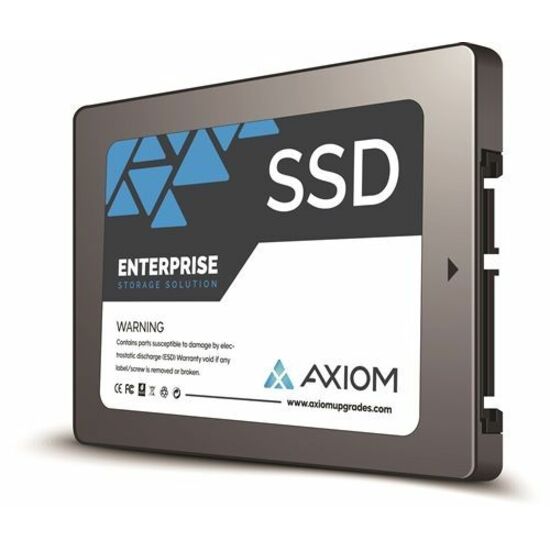
Axiom Memory Solutions
Axiom UX10 15.36 TB Solid State Drive
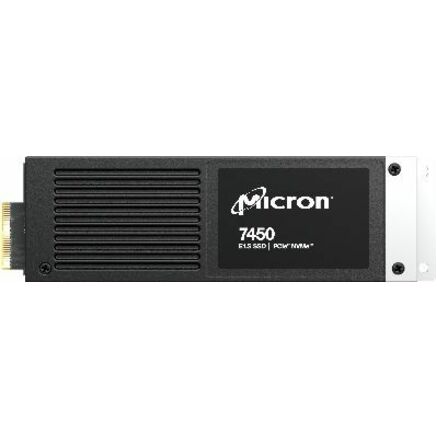
$17,544.87In stockMicron Technology
Micron 7450 PRO 3.75 TB Solid State Drive
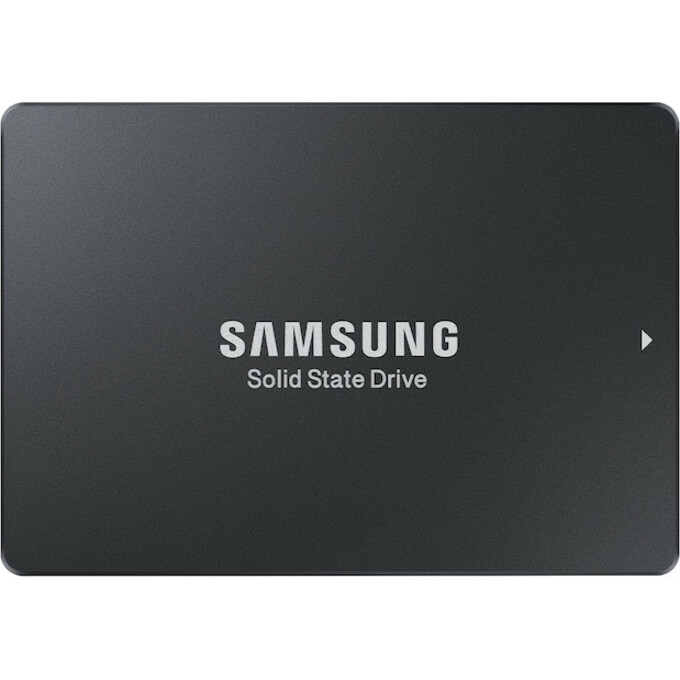
$12,253.44Back-orderedSamsung
Samsung PM9A3 7.68 TB Solid State Drive
$12,984.24Back-ordered