InfiniBand vs Spectrum-X Ethernet for Government AI Infrastructure
InfiniBand and NVIDIA Spectrum-X Ethernet can both support high-performance GPU clusters. The right choice depends on workload communication, scale, topology, existing skills, operational tooling, security boundaries and the validated end-to-end design. Port speed is not enough. An AI fabric must deliver predictable collective communication while storage, management and tenant traffic operate around it.
By Uniqcli Team · · 6 min read
Key takeaways
- InfiniBand is a purpose-built HPC/AI fabric with a mature RDMA ecosystem.
- Spectrum-X is an Ethernet platform combining NVIDIA switches, SuperNICs/DPUs and telemetry/congestion-control features for AI traffic.
- The comparison must include adapters, switches, topology, oversubscription, congestion control, cabling, software and operations.
- Separate compute, storage, in-band management and out-of-band management planes even when some share physical infrastructure.
- Validate collective communication and failure behavior at target scale.
- Choose the design the mission can secure, monitor, operate and support—not the familiar protocol label alone.
On this page
Government buyers should request an architecture, bill of materials, configuration baseline and acceptance test for the full fabric. “400 Gb/s Ethernet” and “InfiniBand included” are descriptions, not performance evidence.
What the compute fabric does
Distributed training and large inference systems move gradients, parameters, activations and cache data between GPUs. Collective operations can synchronize many workers; one slow or congested path affects the job. The compute fabric therefore needs high bandwidth, low latency, predictable tail behavior and a topology that scales.
Do not confuse scale-up and scale-out. NVLink/NVSwitch connects GPUs within a server or rack-scale domain. InfiniBand or Spectrum-X connects nodes and scalable units across the cluster. Storage and management may use separate fabrics or defined shared paths.
Create a traffic model: node count, GPUs per node, NICs per node, message sizes, collective pattern, east-west bandwidth, storage traffic and expected growth. State whether the cluster is single-tenant, scheduled multi-tenant or partitioned across security/mission zones. That model drives rail count, leaf/spine ports and oversubscription.
InfiniBand strengths and tradeoffs
InfiniBand has a long history in HPC and GPU clusters. It provides RDMA, low latency and fabric management designed for tightly coupled workloads. Teams with existing InfiniBand expertise, monitoring and operational processes can deploy predictable patterns and reuse knowledge.
The trade is a distinct operational domain. InfiniBand adapters, switches, subnet management, diagnostics and cabling require specific expertise. Integration with an agency's Ethernet-based security and network-management standards may need clear boundaries and tooling. That is not inherently negative; a dedicated compute fabric can reduce interference, but responsibilities must be assigned.
Specify generation and speed, adapter ports, switch model, topology, rail design, subnet management, adaptive routing/congestion features, telemetry, partitioning, firmware and support. Confirm cable and optical-media compatibility. Require failure testing for a link, leaf, spine and manager where redundancy is claimed.
Avoid assuming every workload scales linearly because InfiniBand is present. CPU/GPU affinity, PCIe topology, NCCL settings, job placement, storage and model code all influence results.
Spectrum-X strengths and tradeoffs
Spectrum-X is not generic Ethernet with a marketing label. NVIDIA's AI Factory for Government networking guidance describes a platform built from Spectrum switches, BlueField/ConnectX components and telemetry-driven congestion control for distributed AI workloads.
The HGX enterprise reference architecture describes RDMA-compliant leaf-spine fabrics with rail-optimized GPU connectivity. An endorsed design aligns switch, SuperNIC, topology and configuration. Buying unrelated high-speed Ethernet parts does not reproduce that architecture.
Spectrum-X may align with teams that want Ethernet operational concepts and integration while still requiring AI-specific behavior. It can support converged designs, but convergence should be justified. Storage, general data-center and AI collective traffic can interfere without capacity, QoS and congestion design.
Specify the validated component set, Ethernet speed, RoCE/RDMA configuration, adaptive routing/load balancing, telemetry/controller services, firmware, switch buffer/queue design and lossless behavior. Confirm which features require NVIDIA-specific components and licenses so the agency understands portability.
Topology and congestion control
A full nonblocking fat-tree or Clos design provides path capacity but uses many switch ports. Oversubscribed designs cost less and may fit inference or development workloads, but the ratio must be stated and tested. “Leaf-spine” alone does not establish bandwidth.
Rail-optimized designs connect corresponding GPU/NIC paths across nodes to reduce contention and improve collective behavior. Map GPU, PCIe switch, NIC, leaf and spine affinity. A cable in the wrong port can preserve link-up while degrading performance.
For InfiniBand, document routing, adaptive routing, service levels/partitions and congestion-control settings appropriate to the design. For Spectrum-X, document RoCE behavior, priority flow control or alternatives where used, ECN/congestion notification, load balancing and telemetry/control. Use the supported reference configuration rather than assembling settings from unrelated guides.
Simulate failures and maintenance. Can the fabric reroute around a link or switch without causing unacceptable job failure or performance collapse? Does the scheduler know degraded topology? How are firmware upgrades staged? Nonblocking at day one can become oversubscribed after a growth phase if spine ports were not reserved.
When both fabrics may coexist
Some organizations operate InfiniBand for a tightly coupled training enclave and Ethernet for inference, storage, development or general data-center integration. Coexistence can preserve an established HPC domain while letting other workloads use an AI-optimized Ethernet design. It also creates two sets of adapters, switches, cables, tools, firmware, spares and skills.
If a dual-fabric strategy is proposed, document why each workload belongs on its fabric and how data moves between them. Keep management and security responsibilities explicit. Avoid designing a permanent bridge that becomes an unmonitored shortcut between zones. Normalize telemetry into the approved operations platform where practical, but retain fabric-native diagnostics for deep troubleshooting.
Price lifecycle operations, not only ports. A mixed environment can be appropriate at agency or enterprise scale and wasteful for a small cluster. Require a five-year port, optics, support, training and staff model before calling coexistence a low-risk compromise.
Is Ethernet automatically less expensive than InfiniBand?
No. Generic Ethernet components may look cheaper, but a validated Spectrum-X design includes specific adapters, switches, optics, licenses, telemetry and engineering. InfiniBand pricing likewise depends on generation, topology and support. Compare equal node counts, nonblocking or stated oversubscription, cables, management, spares, deployment and five-year operations. Include the cost of staff skills and the performance cost of a design that misses the workload target. Protocol names do not establish total cost.
Operations and security
Define four logical planes even if implementation combines some links:
- Compute collective traffic.
- Storage and data ingest.
- In-band cluster/service management.
- Out-of-band device management.
Protect management with dedicated identity, least privilege, secure protocols, configuration backup, logging and controlled update. Export fabric events and performance telemetry to approved monitoring without opening an unreviewed path into a restricted cluster.
Decide how tenants or missions are isolated. InfiniBand partitions and Ethernet VRF/VLAN/ACL mechanisms have different operating models; neither replaces workload-level security. Document which team approves changes, diagnoses a slow job, responds to a fabric alert and coordinates OEM escalation.
Inventory firmware and transceivers. Use the NIC and transceiver compatibility guide to build a controlled matrix. Counterfeit or unsupported optics can create intermittent faults that are difficult to distinguish from workload problems.
Train operations before production. Require runbooks for link failure, congestion, firmware update, switch replacement, cable cleaning, performance baseline and escalation. A fabric that only the installer understands is not mission-ready.
Procurement requirements and acceptance
Request these artifacts:
- Workload traffic and growth assumptions.
- Logical and physical topology with oversubscription.
- GPU/NIC/leaf/spine rail mapping.
- Switch, adapter/DPU, optics and cable BOM.
- Firmware/software/license matrix.
- Congestion-control, routing and QoS baseline.
- Management, identity, logging and configuration-backup design.
- Rack elevation, power and cooling values.
- Factory and site acceptance plan.
- Support ownership and spares.
Acceptance should test link health, topology correctness, end-to-end bandwidth, collective communication at representative node count, storage coexistence, job-to-job variability, telemetry, a controlled failure and recovery. Record NCCL or application-test versions, message sizes, duration and thresholds.
Do not accept a single best run. Use repeated tests and observe distribution. Tail latency and intermittent errors matter to long training jobs. Establish a post-install baseline so future changes can be compared.
A practical decision framework
Choose InfiniBand when tightly coupled workload performance, existing HPC operations and a dedicated fabric align, and the organization can support the specialized domain. Choose Spectrum-X when a validated AI Ethernet architecture, Ethernet-oriented operations and integration requirements align. Either can be the wrong choice if assembled outside its supported design or operated without the necessary skills.
Score performance evidence, scale/growth, operational fit, security integration, component availability, facility impact, support and lifecycle cost. Test a representative scalable unit before a large purchase. Preserve an exit/growth plan: spare ports, cabling pathways, firmware strategy and documented configurations.
How Uniqcli can map the fabric
Uniqcli can map GPU nodes to fabric ports, switches, optics, cables, racks and acceptance tests as part of AI server rack integration and cloud/infrastructure solutions. Request a compute-to-fabric port matrix with node count, OEM model, target scale, existing network standards and security boundary.
The output should make every physical and operational interface visible, regardless of which fabric wins.
Technical note: Use current NVIDIA and OEM validated designs. This comparison does not imply that all Ethernet or InfiniBand implementations deliver equivalent AI performance.
Fabric adapters and cables this catalog carries
NVIDIA
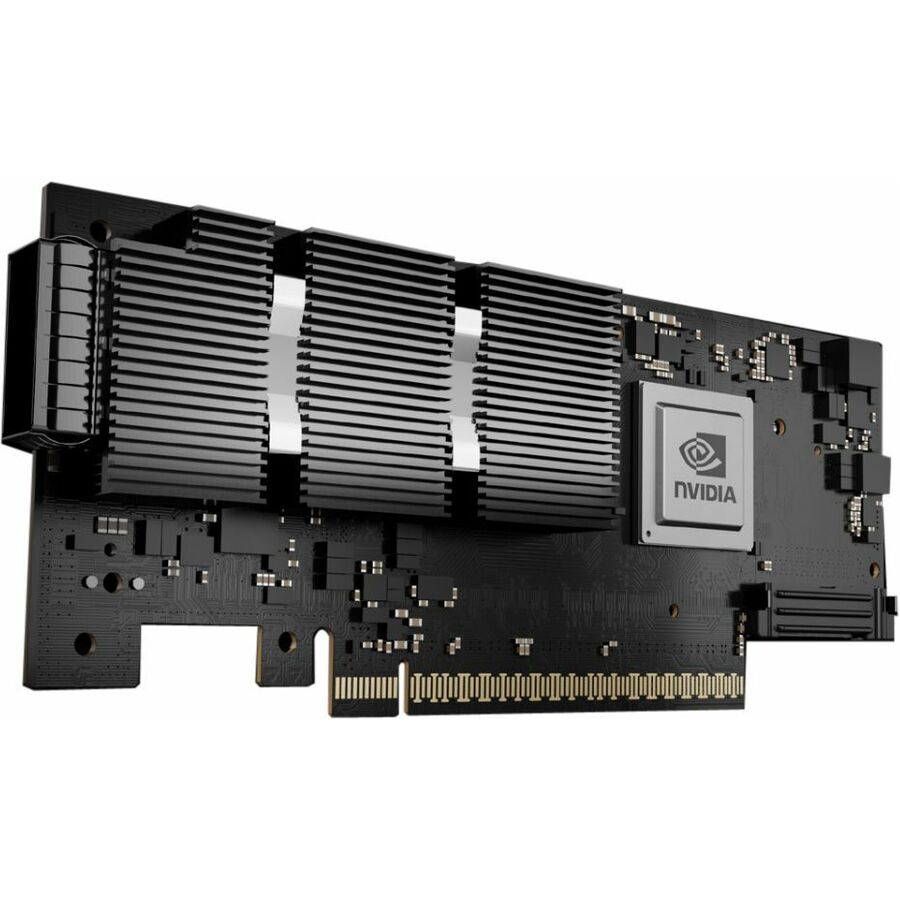
NVIDIA ConnectX-7 NDR 400G InfiniBand Adapter Card
$1,861.29In stockNVIDIA
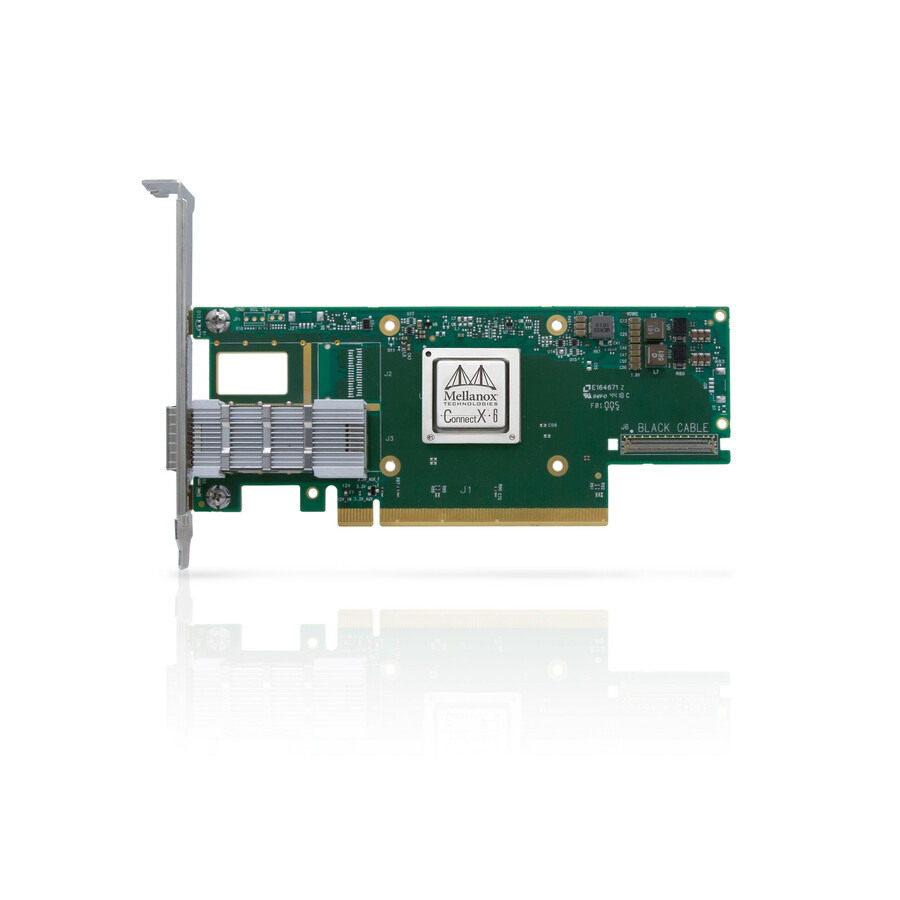
NVIDIA MCX653105A-HDAT-SP ConnectX-6 VPI Adapter Card HDR/200GbE
$2,428.02In stockNVIDIA
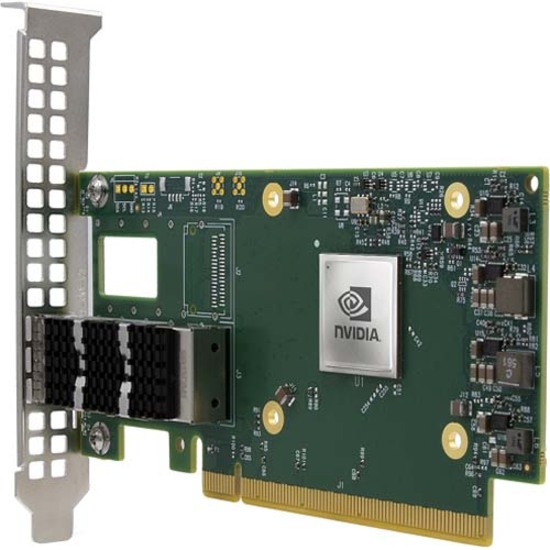
NVIDIA ConnectX-6 DX 200Gigabit Ethernet Card
$3,143.18Back-orderedNVIDIA
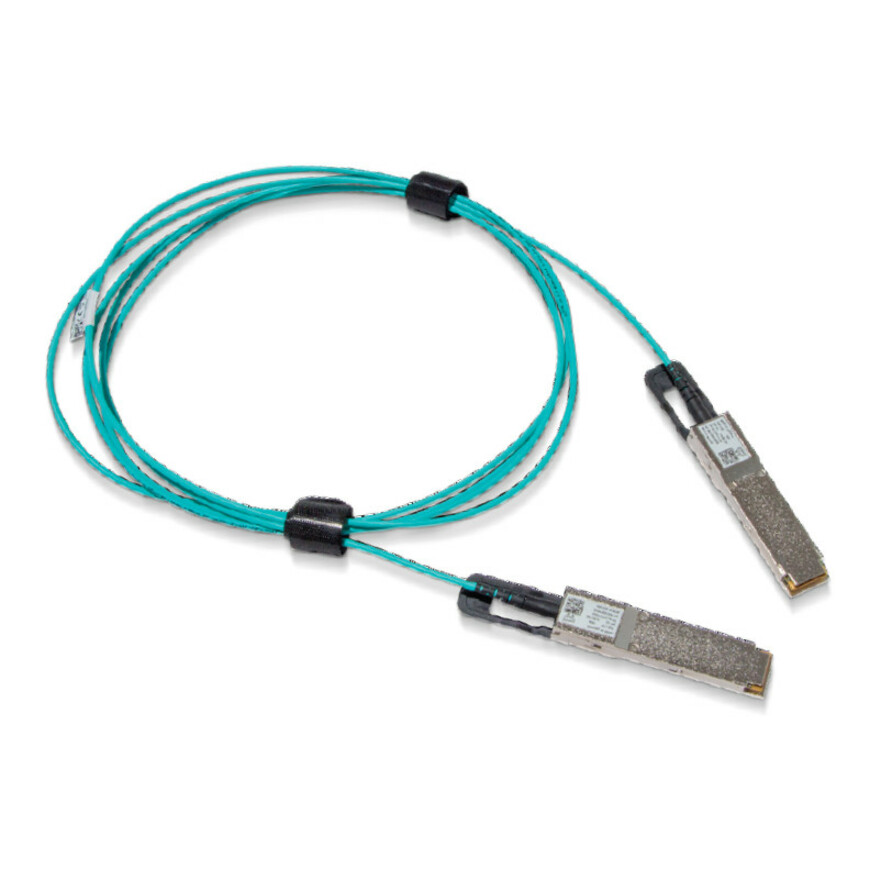
Mellanox 200Gb/s HDR QSFP56 Active Optical Cable - 32.81 ft
$1,329.95Back-ordered