
Your EDR Is Only as Strong as the Silicon Under It
Behavior-based EDR and XDR read telemetry from an operating system that assumes its own boot chain is honest — an assumption detection software is rarely built to verify. TPM 2.0, secure boot, and hardware-based manageability are the prerequisites that let that assumption hold, and most Windows 11 refresh purchases are already paying for them.
By Uniqcli Team · · 9 min read · Updated

Key takeaways
- Behavior-based EDR and XDR read OS-level telemetry that a compromised boot chain can quietly falsify before the agent ever loads.
- TPM 2.0 is a hardware root of trust: a tamper-resistant chip that stores keys and measures the boot chain separately from the OS it protects.
- Secure Boot blocks unsigned code; measured boot records what actually ran, giving detection and access systems something to verify.
- Windows 11's hardware baseline requires TPM 2.0 and Secure Boot, so most refresh-cycle purchases are already paying for this silicon.
- More than 4,000 of Uniqcli's 24,000-plus notebook, desktop, and workstation listings already carry vPro or TPM 2.0 on the spec sheet.
On this page
Endpoint security
Your detection software trusts a boot chain it never gets to inspect
Endpoint security spent the last decade moving away from signature files and toward behavior: watching what a process actually does, not just whether its hash matches a known-bad list. That shift, from antivirus to endpoint detection and response and now extended detection and response, made evasion much harder for attackers working inside the operating system. It did nothing to change what the detection agent has to assume about everything underneath the operating system. A behavior-based agent reads kernel telemetry, process trees, and memory activity, and it reads all of it on the assumption that the platform it is running on booted the way it was supposed to. Most buyers never test that assumption, because until recently there was no practical way to. There is now, and a large share of the Windows 11 refresh already underway is quietly buying the hardware that makes it possible — whether the spec sheet was read that closely or not.
From signature files to behavior: what changed, and what did not
Traditional antivirus worked by comparison: a file's hash or byte pattern was checked against a database of known malware, and a match triggered a block. It was fast and cheap, and it was also structurally blind to anything new — a single byte changed in a malicious file, or malware that never touches disk as a file at all, could walk straight past a signature engine that had nothing to compare it to.
Endpoint detection and response answered that gap by watching behavior instead of matching files: process creation, parent-child relationships, command-line arguments, memory injection, unusual network calls from a normally quiet application. Extended detection and response widened the lens further, correlating that endpoint telemetry with signals from identity, network, and cloud logging so an attack chain can be recognized across systems, not just on one machine. Both are real improvements, and both share the same architectural position: they run as software, inside or alongside the operating system, reading what the operating system tells them is happening.
The blind spot sits below the operating system, not inside it
Everything a detection agent observes depends on the layers beneath it having booted honestly. Firmware initializes the hardware, a bootloader hands control to the operating system kernel, and only after all of that finishes does an EDR or XDR agent load and start watching. If firmware, the bootloader, or an early driver is altered before that handoff, the agent inherits whatever picture that compromised layer chooses to show it — a rootkit or bootkit operating below the OS can hide processes, forge telemetry, or persist across a full reinstall, precisely because it started running before the software meant to catch it did.
This is not a knock on behavior-based detection; it is a description of where its job ends. An EDR agent is built to reason about what happens on top of a trustworthy platform. Whether the platform is actually trustworthy is a separate question, and answering it requires something the operating system cannot fully provide about itself: a component that watched the boot sequence happen, is physically isolated from the OS it is watching, and can prove — not merely assert — what actually loaded.
A hardware root of trust, defined: what a TPM 2.0 chip actually does
A Trusted Platform Module is that component. TPM 2.0, the current generation of the standard maintained by the Trusted Computing Group and standardized as ISO/IEC 11889, is a dedicated security processor — either a discrete chip soldered to the board or a firmware implementation running in an isolated execution environment on the main CPU, such as Intel Platform Trust Technology or AMD's fTPM — that generates and stores cryptographic keys in a boundary the operating system cannot read directly. Those keys do not leave the chip in usable form, which is why a stolen drive stays encrypted and a compromised OS still cannot exfiltrate the keys BitLocker or a device certificate depends on.
The TPM's second job is what makes it relevant to detection, not just encryption: as the machine boots, each stage — firmware, bootloader, OS components — is hashed and the result is folded into a set of Platform Configuration Registers inside the chip. Because each new measurement depends on the one before it, the final register values are a fingerprint of exactly what code ran, recorded by hardware that was watching before any software agent existed to be fooled. That fingerprint is the raw material a hardware root of trust gives everything downstream, including the EDR agent that has no other way to know its own foundation is intact.
Secure Boot blocks; measured boot proves — and detection software needs the second one
Secure Boot and measured boot get bundled together in casual conversation, but they solve different problems. Secure Boot, part of the UEFI firmware specification, checks the digital signature of each boot component against a trusted certificate store and refuses to run anything unsigned or altered. It is a gate: code that fails the check does not execute. That is valuable, but it is also a yes-or-no answer taken on faith once the gate closes — nothing downstream gets to double-check the result.
Measured boot, using the TPM's Platform Configuration Registers described above, keeps a record instead of just a verdict. Every stage gets hashed and logged whether or not Secure Boot would have allowed it, and that log can be attested to — reported to a remote verifier, an EDR platform, or a conditional-access policy — so a decision-maker other than the firmware itself can evaluate whether the boot chain matches a known-good state before extending trust. This is the practical hook between hardware and detection software: an agent, or the identity and access system behind it, can ask a device to prove what it booted instead of assuming the device is telling the truth. It is also the mechanism underneath the device pillar of a zero-trust architecture, where every access decision is expected to weigh a verified device state rather than a network location.
Remote manageability: control that survives an unresponsive or compromised endpoint
The third piece buyers often overlook is out-of-band manageability, which matters at exactly the moment detection software matters most: when an endpoint is unresponsive, wiped, or actively compromised. Intel vPro is a platform tier — not a single feature — that bundles hardware-based remote access below the operating system, so IT can reach, diagnose, reimage, or isolate a machine even when its OS will not boot or its network stack has been disabled by an attacker. AMD's commercial platforms support DASH, a comparable open manageability standard aimed at the same problem from the other side of the CPU market. Neither is automatic; both are platform or SKU decisions made at the time of purchase, not a setting an IT team can add after the fact.
For a security team, the value is specific: a hardware-anchored management channel is one of the few remediation paths that does not depend on the compromised software stack cooperating with you. Pulling telemetry, reimaging from a known-good source, or powering a machine down remotely all work through it even when the operating system the EDR agent lives inside cannot be trusted to do any of those things itself.
Windows 11 already put this hardware on your invoice — spec it on purpose
Windows 10 reached end of support on October 14, 2025, and the resulting refresh wave is buying this hardware whether anyone asked for it by name or not: Windows 11's baseline requires TPM 2.0 alongside UEFI Secure Boot and a supported processor, so a compliant new machine already has the root of trust described above sitting inside it. More than 24,000 notebook, desktop, and workstation listings run through Uniqcli's catalog today, and upwards of 4,000 of them already carry vPro or TPM 2.0 by name on the spec sheet — this is a mainstream configuration on business-class hardware, not a premium add-on that needs its own budget line. The gap is rarely availability; it is whether the purchase specifies the capability on purpose or leaves it to chance.
- Treat TPM 2.0 as already funded — Windows 11's hardware floor requires it, so using its attestation and encryption capabilities adds close to zero marginal cost.
- Confirm the TPM ships enabled by default rather than merely present and switched off in firmware, which still requires a manual step during imaging.
- Ask whether the SKU is a vPro or equivalent manageability tier, not just a base consumer model sharing the same processor family name.
- Standardize the choice across the whole refresh wave, so every imaged device carries the same security floor instead of a mix that depends on which configuration happened to be in stock.
What to confirm on the spec sheet before you sign the purchase order
A few concrete lines turn 'security-ready' from a marketing phrase into something you can validate at receiving.
- TPM 2.0 present and enabled by default — discrete or firmware-based (Intel PTT or AMD fTPM) both satisfy the Windows 11 requirement.
- UEFI Secure Boot supported and on by default, not an option buried in an advanced firmware menu.
- vPro or an equivalent hardware-manageability tier, if IT will need out-of-band remote access to that device class.
- Windows 11 Pro, not Home, preinstalled, matching the fleet's device-management and BitLocker requirements.
- A documented firmware update path, so the boot chain itself gets patched over the device's life and not only the operating system sitting on top of it.
- TAA country-of-origin and NDAA §889 screening status confirmed on incoming hardware, particularly for public-sector fleets.
Business-class chassis this catalog carries
Lenovo
Lenovo ThinkStation P3 Ultra Gen 2 30J50034US Workstation
$2,495.13In stockLenovo
Lenovo ThinkPad X13 Gen 7 21YH001BUS 13.3" Touchscreen Copilot+ PC…
$2,637.35In stockLenovo
Lenovo ThinkCentre M90q Gen 5 12TH000LUS Desktop Computer
$2,600.67In stock
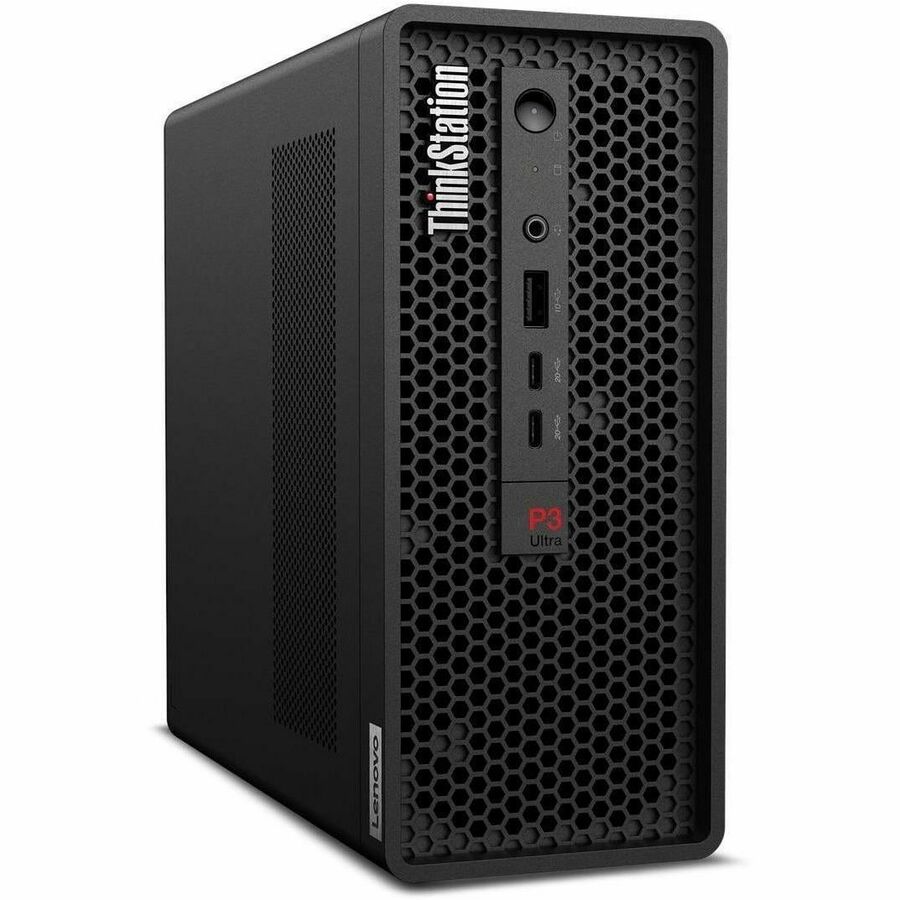
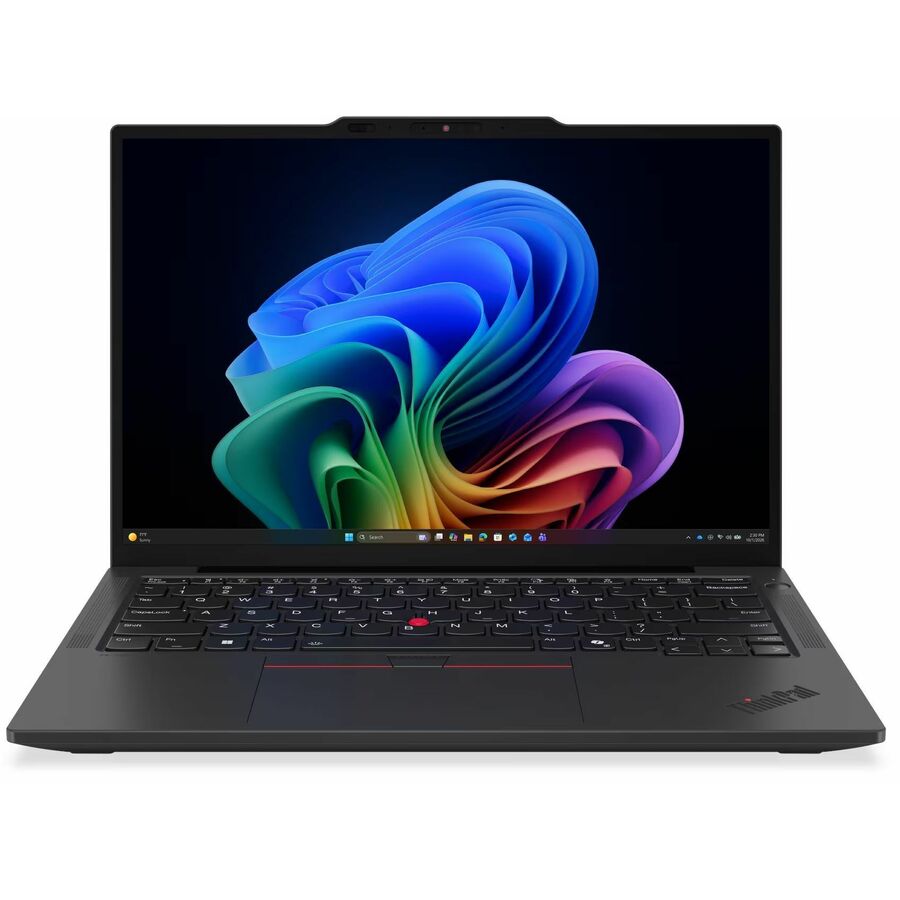
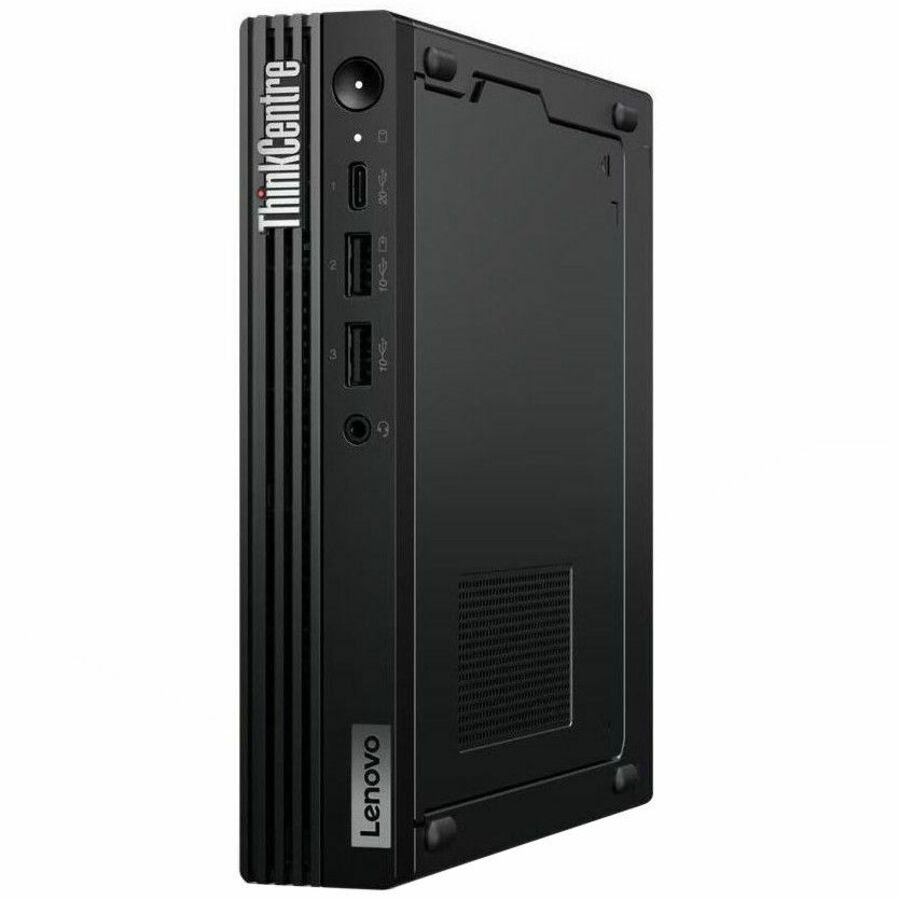
A compact workstation, a business notebook and a small-form-factor desktop — the three chassis classes a refresh wave normally spans, in the tier where the baseline above is worth asking about. Treat these as shapes to price, not as answers to the checklist: what a catalog title records is a model and a configuration, and every line on that list is a property of the specific unit as it ships, confirmed on the quote. Prices and availability are read from the catalog when this page renders.
Frequently asked
What is a hardware root of trust?
A hardware root of trust is a component — most commonly a TPM 2.0 chip — that anchors a device's security in physical hardware rather than software alone. It generates and stores cryptographic keys in a boundary the operating system cannot read directly, and it records measurements of the boot process as the machine starts, so the platform's integrity can be checked by something that was present before any OS-level agent, including endpoint detection software, ever loaded.
Does Windows 11 require a TPM chip?
Yes. Windows 11 requires TPM 2.0 alongside UEFI Secure Boot and a supported 64-bit processor. Most business-class laptops, desktops, and workstations built in recent years already include TPM 2.0, often as a firmware implementation such as Intel Platform Trust Technology or AMD's fTPM, though it can ship disabled in firmware and needs to be turned on.
Can EDR or antivirus software detect a firmware-level rootkit on its own?
Not reliably. Endpoint detection and response agents run as software on top of the operating system and read the telemetry that operating system provides. A rootkit or bootkit that compromises firmware or the bootloader executes before the agent loads and can shape what the agent is allowed to see. A hardware root of trust addresses this by measuring the boot chain independently of the OS, giving a way to verify platform integrity that does not depend on the same software stack an attacker may have already altered.
What is the difference between Secure Boot and measured boot?
Secure Boot checks each boot component's digital signature and refuses to run anything unsigned or altered — it is a pass-or-fail gate enforced by firmware. Measured boot uses the TPM to hash and log every stage that runs, signature check or not, producing a record that can be attested to by a remote verifier or access policy. Secure Boot blocks; measured boot proves what actually happened, which is the piece detection and access-control systems can build verification on.
What is Intel vPro, and do I need it for endpoint security?
Intel vPro is a platform tier for business PCs that bundles hardware-based, out-of-band remote manageability with the standard security baseline, letting IT reach, diagnose, or reimage a device even when its operating system is unresponsive or compromised. AMD offers a comparable manageability standard, DASH. Neither is included automatically on every SKU with a given processor, so it is worth specifying explicitly if incident response or remote fleet management is part of your security plan.
Go deeper
Spec the Windows 11 refresh with the hardware security baseline built in
TPM 2.0 is already part of the purchase — the only decision left is whether it ships enabled, on a manageable SKU, and standardized across the wave. Browse Windows 11-ready inventory, or read the full refresh sequence in our playbook.