
NVIDIA DGX Station: What Research Teams Can Run Locally
See how research teams use DGX Station for protein search, weather forecasts and model development, then check memory, power and the exact system before buying.
By Uniqcli Team · · 6 min read · Updated
Key takeaways
- EPRI used Station for a 50-member GenCast ensemble timestep in about 150 seconds. That is a reason to test local weather or simulation iterations, not a speed promise for another model.
- Protein-database search, a large model shared by a lab, and fine-tuning before edge deployment are other documented research uses. Each needs a different fit or timing test.
- Station's 748 GB combines 252 GB of GPU HBM3e with 496 GB of Grace CPU memory. A workload near 700 GB does not run entirely in GPU HBM.
- A buyer needs the Linux/Arm software stack, a 20 A circuit, and the exact OEM storage and support configuration settled before delivery.
On this page
EPRI's researchers used a deskside DGX Station to run one timestep of a 50-member GenCast weather ensemble for electric-grid planning. In the test NVIDIA documents, that run took about 150 seconds; the case study estimates more than ten hours on a CPU-only server. That result belongs to EPRI's setup, but it shows why a research team might want this much compute within reach rather than waiting for a shared cluster slot.
A DGX Station purchase still has to answer ordinary questions: Will our model fit at the precision we use? Can our team share the machine without slowing each other down? Can the room power and cool it? Here is how to answer those questions before requesting a quote.
What research teams are doing with it
At Sungkyunkwan University School of Medicine, researchers load protein-structure databases, including an AFDB50 collection of more than 60 million structures, into memory for fast homology searches. Cornell computer-science professor Kilian Weinberger reports using the memory to train multibillion-parameter language models without waiting for scheduled compute. These are different jobs, yet both benefit from having large, accessible memory next to the researcher.
The work is not limited to language models. Carnegie Mellon University's Robotics Institute reports fine-tuning a drone-detection model on Station, then deploying it to a Jetson Orin NX for real-time inference. EPRI uses Station for weather prediction and downscaling research that informs electric-grid planning. The useful question for a buyer is which stalled experiment, slow data step or queue of jobs the system would remove for their own team. NVIDIA's examples are customer-reported use cases, not promised results for another lab.
Turn those examples into a buying test
- Protein search like Sungkyunkwan's: Record the database and index size, memory occupied during a representative query, and searches completed per hour. The deciding issue is whether the working set fits and remains responsive when researchers share the system.
- Ensemble forecasting like EPRI's: Run one representative timestep with the planned ensemble size and downscaling stage. Record time to result and peak memory; EPRI's 150-second result was for its own 50-member timestep, not a general Station benchmark.
- Fine-tuning like CMU's: Use the intended dataset and model, then record training time, checkpoint size and whether the exported model still meets its target device's latency and memory limits. Station compute does not remove the separate edge-deployment test.
Understand the 748 GB before sizing a model
DGX Station pairs one Blackwell Ultra GPU with a 72-core Grace CPU through NVLink-C2C. The GPU has 252 GB of HBM3e; the CPU has 496 GB of LPDDR5X. Together they form a coherent 748 GB address space, but data in CPU memory does not run at the same speed as data in GPU HBM. A model's weights, context cache, training states and active users all compete for space and bandwidth.
NVIDIA lists up to 20 PFLOPS of FP4 compute and support for models up to one trillion parameters. Those are platform limits under particular conditions, not a speed or model-fit guarantee. Ask the team to record the exact checkpoint, precision or quantization, context length, batch size and target latency. If the decision depends on a large model running without harmful offload or serving several people at once, request a test with those settings rather than extrapolating from parameter count.
Plan the room and the software
NVIDIA rates Station at 1,600 W and requires a 20 A circuit. Have facilities check the circuit, outlet, heat load, clearance, delivery path and service access against the OEM unit in the quote. A deskside machine still needs an installation plan.
The shipping Linux configuration uses Ubuntu with NVIDIA AI Developer Tools. ASUS lists that environment for its ExpertCenter Pro ET900N G3. NVIDIA says DGX Station for Windows is expected from OEMs in December 2026; a current Linux ASUS unit should not be treated as a Windows purchase. Check Arm support for your containers, licensed software and model runtime before placing the order. For a shared machine, also decide who controls user access, updates, backups and storage.
Station includes ConnectX-8 networking, with up to 800 Gb/s of platform bandwidth, and NVIDIA now supports linking two Linux Stations through NVIDIA Sync. That peak does not specify the cables or switch in your room. Name the network it must join and ask the supplier to list the required transceivers and links. If visualization or simulation is part of the job, NVIDIA allows one additional RTX PRO GPU on supported configurations; confirm the card and OEM support in writing.
Check the exact ASUS system
ASUS says its ExpertCenter Pro ET900N G3 is available to order worldwide and publishes several configurations. The base two-SSD version lists two 2 TB NVMe drives; other versions add drives, QSFP transceivers or an RTX PRO card. The Uniqcli catalog page below is a useful starting point, but its listing does not establish immediate stock or the lead time for your chosen configuration.
Ask for the manufacturer's full configuration, usable storage after any mirroring, required network parts, OS image, warranty, support entitlement and a dated delivery estimate. If a lab needs a different storage layout or graphics option, put that requirement in the request before a price is assembled.
MSI's XpertStation WS300 is another DGX Station-architecture option in the Uniqcli catalog. MSI's manufacturer page calls the listed WS300 part a barebones configuration, so request a complete bill of materials and clarify the installed storage, software and support before comparing it with the ASUS system.
DGX Station systems in our catalog
ASUS Computer International
Asus ExpertCenter Pro Agent Computer PRO ET900N G3-2SSD Workstation
$114,628.43Back-orderedMSI
MSI XpertStation WS300 NVIDIA DGX Station GB300 748GB Deskside AI…
$105,451.75Back-ordered
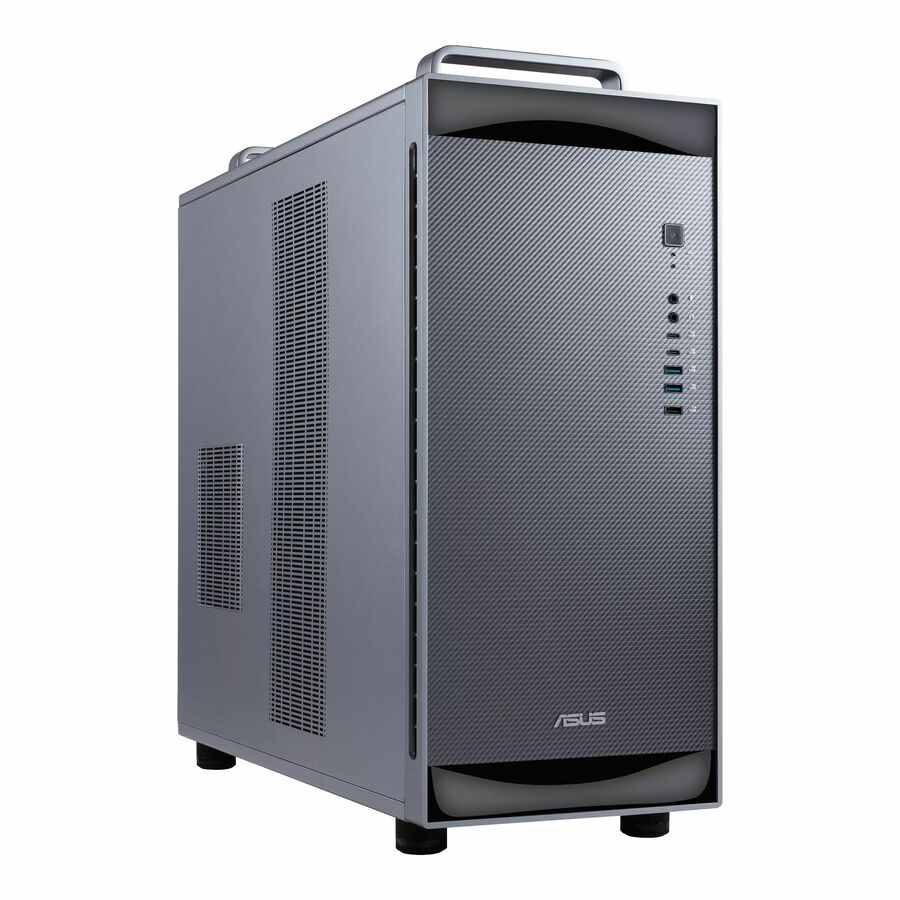
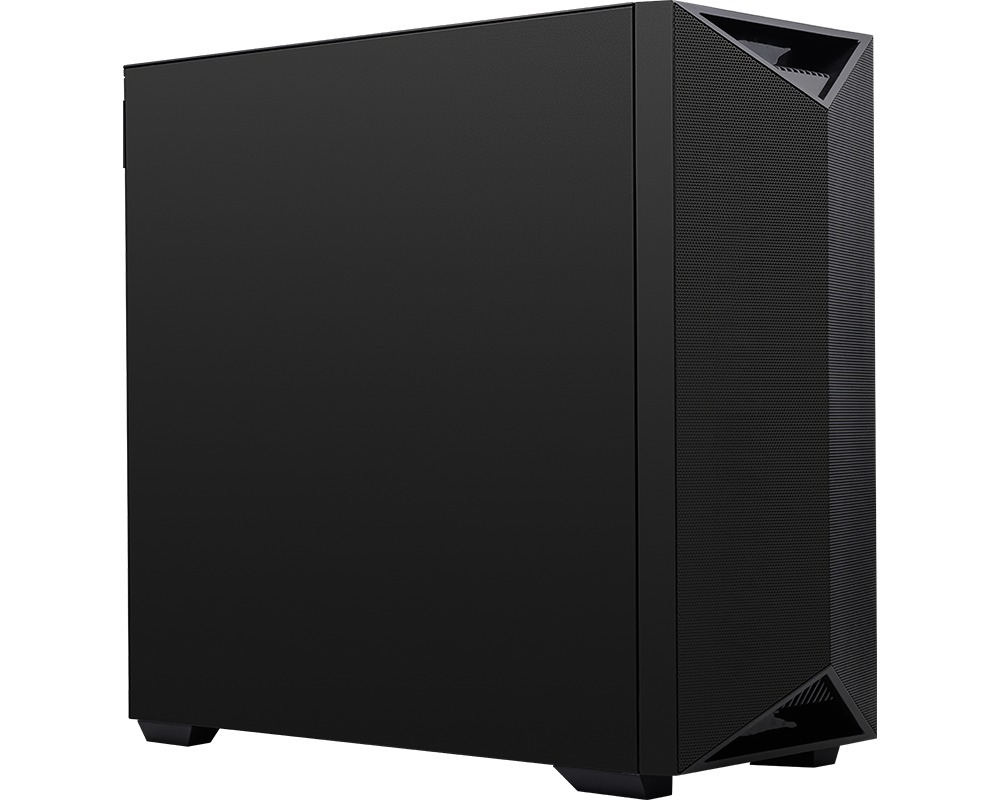
Compare the configured ASUS system with MSI's request-pricing WS300 listing. Confirm the exact included components and current delivery terms.
Explore the system and the larger alternative
Send a useful request for quote
- Describe the real workload: checkpoint, precision, context length, data volume and whether the job is training, fine-tuning or inference.
- Give an acceptance target: time for a representative job, response latency, throughput or number of concurrent researchers.
- State the site's power, room and network details, plus any required security or remote-management controls.
- Specify storage, an optional RTX PRO card, software entitlement and support needs for the exact OEM build.
- Ask for the complete delivered configuration, current lead time and who handles installation.
Get a DGX Station configuration quote
Send your workload and site details. We can check the exact ASUS configuration, support terms and current lead time.
FAQ
Can a model that needs 700 GB run entirely in GPU memory?
No. Station has 252 GB of GPU HBM3e and 496 GB of CPU memory. The coherent total can help a large workload fit, but where its data sits changes speed. Ask for a run using your checkpoint, precision, context and concurrency target before assuming that a model near 700 GB will be usable.
Do seven MIG partitions mean seven researchers each get a full DGX Station?
No. MIG divides one GPU into isolated partitions; each receives only part of its capacity. That can suit independent smaller experiments. If several people each need a large model or the full GPU, schedule access or size more systems instead of counting seven partitions as seven Stations.
What does facilities need to approve before delivery?
Start with NVIDIA's 1,600 W rating and 20 A circuit requirement. Have facilities verify the quoted OEM unit's plug, circuit, ventilation, clearance, floor location and receiving route. Add the network links and transceivers to the installation review if the Station will connect to a fast fabric.
Can we buy a Windows DGX Station now?
NVIDIA says Linux DGX Stations are shipping and expects Windows-based systems from OEM partners in December 2026. ASUS currently describes Ubuntu with NVIDIA AI Developer Tools for the ET900N G3 and calls Windows support future. Request a Windows-specific configuration and delivery date if Windows applications control the purchase.
Does the MSI WS300 listing include a complete ready-to-run system?
MSI labels the listed WS300 part as barebones. Have the offer name the installed storage, OS image, required network parts, warranty and support before comparing its price with an ASUS configuration. The live product cards show current pricing and availability terms; manufacturer orderability does not establish immediate delivery for either OEM.
Sources
- 1.NVIDIA DGX Station product, specifications and named research examplesnvidia.com
- 2.NVIDIA EPRI case studynvidia.com— Weather-forecast workload and EPRI test results.
- 3.NVIDIA October 2026 DGX Station updateblogs.nvidia.com— Linux shipping status, Windows timing and two-Station Sync.
- 4.ASUS ExpertCenter Pro ET900N G3 specificationsasus.com
- 5.ASUS ET900N G3 launch and configuration listasus.com
- 6.MSI XpertStation WS300 manufacturer specificationseps.msi.com— Station architecture and barebones configuration.
- 7.NVIDIA DGX GB300 rack-scale systemnvidia.com
Product information reviewed October 25, 2026. Confirm the offered configuration and current commercial terms before ordering.