
UPS Battery Replacement: Build the Cycle Before Runtime Fades
An Eaton UPS battery replacement plan should combine the exact model's guidance with chemistry, installation age, temperature, discharge history, measured runtime, health data, and maintenance risk—not wait for a red light. Eaton recommends proactive sealed-battery replacement between three and five years. APC publishes a typical three-to-five-year lifecycle for VRLA cartridges and eight-to-ten years for lithium-ion. Real conditions can shorten either interval.
By Uniqcli Team · · 11 min read · Updated
Key takeaways
- Battery life is a range, not a guarantee. Heat, deep discharges, time on battery, charging, load, storage, and manufacturing variation change it.
- Record the battery installation date separately from the UPS manufacture date. A replacement cartridge can be newer than the chassis—or old stock installed late.
- A brief automatic self-test does not prove the UPS will deliver the runtime required for a controlled shutdown or generator start.
- Use the exact manufacturer-approved cartridge or documented battery set for the exact UPS and external battery pack. Voltage alone does not establish compatibility.
- Replace all required blocks in a string or approved cartridge together unless the manufacturer’s service procedure explicitly permits another method.
- Plan safety, bypass, shutdown, qualified labor, data-bearing management cards, recycling, post-install configuration, charging, and validation before the maintenance window.
On this page
Procurement Guidance
Why batteries fail before the UPS
A UPS contains power electronics and an energy-storage system with different lifecycles. Batteries age chemically whether or not an outage occurs. Their capacity and ability to support load decline over time. The UPS can look normal on utility power while the remaining battery runtime has fallen below the operating requirement.
Valve-regulated lead-acid, or VRLA, is common in single-phase and many larger UPS systems. Schneider Electric describes a typical VRLA lifecycle of three to five years under normal use. Eaton’s 2026 lifecycle checklist recommends full replacement of sealed batteries between three and five years on average. Lithium-ion UPS batteries are commonly specified for longer service, with APC citing a typical eight-to-ten-year lifecycle for its category.
These are manufacturer planning ranges. The data sheet and service guide for the exact model and battery system remain authoritative. A battery designed for a ten-year service class can still fail early in heat or after repeated deep discharge.
Temperature is the first question
Battery life depends strongly on temperature. Schneider Electric states that 20–25°C, or 68–77°F, is the optimal range for lead-acid batteries and gives a general rule that each 8°C or 15°F increase can cut service life roughly in half. Vertiv likewise identifies temperature as the most important variable among several battery-life factors.
Measure where the battery sits, not only at the room thermostat. A UPS near the ceiling of a network closet, behind blocked vents, between heat-producing switches, or inside a crowded rack can have a higher internal battery temperature than the room average.
Collect ambient and, where supported, internal temperature over time. Investigate cooling outages, after-hours HVAC setbacks, blocked airflow, dust, failed fans, and exhaust recirculation. Correct the environment before installing a new cartridge; otherwise the replacement inherits the same shortened life.
Do not put batteries directly in cold-air discharge without reviewing condensation and operating limits. Stable conditions within the manufacturer’s range matter more than an improvised cold spot.
Discharge history and utility events
Every outage does not consume the same amount of life. A brief transfer and recharge is different from a deep discharge to shutdown. Repeated cycling, long time on battery, and operation near cutoff increase wear. Incomplete recharge between events can leave the next outage underprotected.
Use UPS event logs to count transfers, discharge duration, minimum state of charge, low-battery events, and recharge. Investigate nuisance transfers caused by tight input-voltage or frequency windows, poor generator power, loose connections, or failing utility circuits. A UPS that cycles to battery several times a day is reporting a power-quality or configuration problem, not just consuming batteries.
After a deep discharge, confirm the battery recharges for the manufacturer’s stated time before running another test. Do not schedule a runtime test immediately before a period when protection is critical.
Age must be tracked from installation
Asset records often contain the UPS purchase date and omit the battery date. That creates false confidence after a battery replacement and uncertainty after equipment moves.
Record:
- UPS manufacturer, model, serial, firmware, location, and load role;
- internal and external battery-pack models and serials;
- chemistry and cartridge or block part number;
- manufacture, receipt, and installation dates where available;
- prior battery removal date and disposition;
- expected inspection and replacement windows;
- temperature history and discharge events;
- self-test, runtime test, impedance or conductance, and service results;
- warranty and supplier;
- next planned replacement and owner.
Label the equipment with an installation date and asset ID without covering vents or warnings. Update the UPS or management card’s “last battery replacement” field. Schneider Electric’s current SMC guidance requires resetting battery replacement status so the UPS can monitor the new battery accurately.
Calendar, condition, and capacity triggers
Use three types of trigger together.
Calendar trigger
Plan budget and maintenance around the manufacturer’s service range. A three-to-five-year VRLA range should create an inspection and procurement milestone before year three, not an emergency order in year five.
Condition trigger
Replace or escalate for swelling, cracks, leakage, corrosion, unusual odor, overheating, loose terminals, damaged connectors, failed fans, alarms, rapidly rising internal resistance, or repeated self-test failure. Do not handle a damaged battery without the manufacturer’s safety procedure and appropriate trained personnel.
Capacity or runtime trigger
Define minimum required runtime at the actual load. Trend estimated and measured runtime. Stationary-battery practices such as IEEE 1188 provide maintenance, testing, and replacement guidance for VRLA systems; qualified facility teams should apply the relevant standard and manufacturer procedure for larger installations.
The operating requirement can trigger replacement before a generic percentage. If a network closet needs 20 minutes for orderly shutdown and now delivers 11, it has failed the mission even if the UPS has not declared end of life.
Self-test is necessary but limited
Automatic self-tests transfer to battery briefly and look for voltage and load response. They can detect an open, disconnected, or badly degraded battery. They do not fully prove sustained runtime.
Schneider Electric explains that self-test behavior and runtime calculation vary by model. A battery can pass a short test and still have inadequate capacity for a long outage. Its 2026 guidance also says a battery at service-life end should be replaced even if the UPS passes self-test.
Keep self-tests enabled at the vendor-recommended cadence unless the operational design requires a controlled alternative. Investigate failed or skipped tests. Pair them with runtime trending and periodic capacity validation appropriate to the system.
Do not repeatedly force self-tests to diagnose a weak battery. Each discharge adds stress and can leave the load with less protection.
Runtime calibration and load-bank testing
Runtime calibration estimates available battery time under load, usually by performing a meaningful discharge. It can improve the UPS estimate but consumes battery life and temporarily reduces protection. Schneider Electric cautions that frequent calibration can shorten VRLA life and recommends doing it only when necessary under model guidance.
For small units, follow the exact manual and ensure the battery is fully charged, the load is stable, the connected equipment can tolerate the test, and recovery time is available. Never improvise a test by pulling utility power from a critical load without approval.
For large UPS and stationary strings, qualified technicians may use load banks, conductance, impedance, voltage, temperature, and capacity testing under a maintenance program. Coordinate bypass, generator, redundancy, arc-flash, and facility safety. The test plan should define pass criteria, abort conditions, and restoration.
Required runtime comes from the operating plan
Decide what the battery must accomplish:
- bridge a short utility interruption;
- carry the load until a generator starts, stabilizes, and transfers;
- allow applications and storage to shut down;
- keep network and voice services running for a target period;
- support a remote site until staff respond;
- maintain a specific business transaction or safety function.
Measure connected watts during normal and peak conditions. Include PoE load, redundant power supplies according to real sharing behavior, storage rebuilds, future growth, and devices added since installation. Compare against the manufacturer’s runtime curve at that load and battery age.
VA rating alone does not predict runtime. Two UPS models with the same VA can have different battery capacity and curves. Use UPS selector and runtime calculator for a planning shortlist, then verify the exact manufacturer curve.
Choose the exact replacement cartridge
Start with the full UPS model and serial. Identify internal and every connected external battery pack. Use the manufacturer’s replacement-battery selector or service manual. APC says its replacement cartridge selector maps the UPS model to the complete cartridge required; some cartridges contain several internal batteries.
For an Eaton UPS battery replacement, use Eaton’s exact UPS and battery documentation or authorized service channel. A generic search result containing “Eaton-compatible” is not enough. Confirm cartridge, quantity, connector, voltage, capacity, chemistry, physical dimensions, wiring, fuse, tray, firmware, and external-pack configuration.
Do not combine old and new blocks in a series string unless the manufacturer’s service procedure explicitly allows it. Differences in capacity and internal resistance can cause imbalance and premature failure. Replace the approved set and date it as one service event.
Third-party replacement batteries can vary in cell quality, harness, fuse, connector, assembly, shipping state, warranty, and recycling. If they are considered, require a written exact-model compatibility statement and assign responsibility for runtime and support. Critical environments often favor OEM cartridges or authorized service.
Replacement cartridges for common units
CyberPower Systems
CyberPower APCRBC110-CP Replacement Battery Cartridge
$56.59In stockEaton
Eaton Tripp Lite Series UPS Replacement Battery Cartridge for Select…
$75.56In stockSchneider Electric
APC Replacement Battery Cartridge for Back-UPS, 12V 6.5Ah lead-acid…
$89.89In stockSchneider Electric
APC Replacement Battery Cartridge for Smart-UPS Line Interactive, 24V…
$161.09In stock
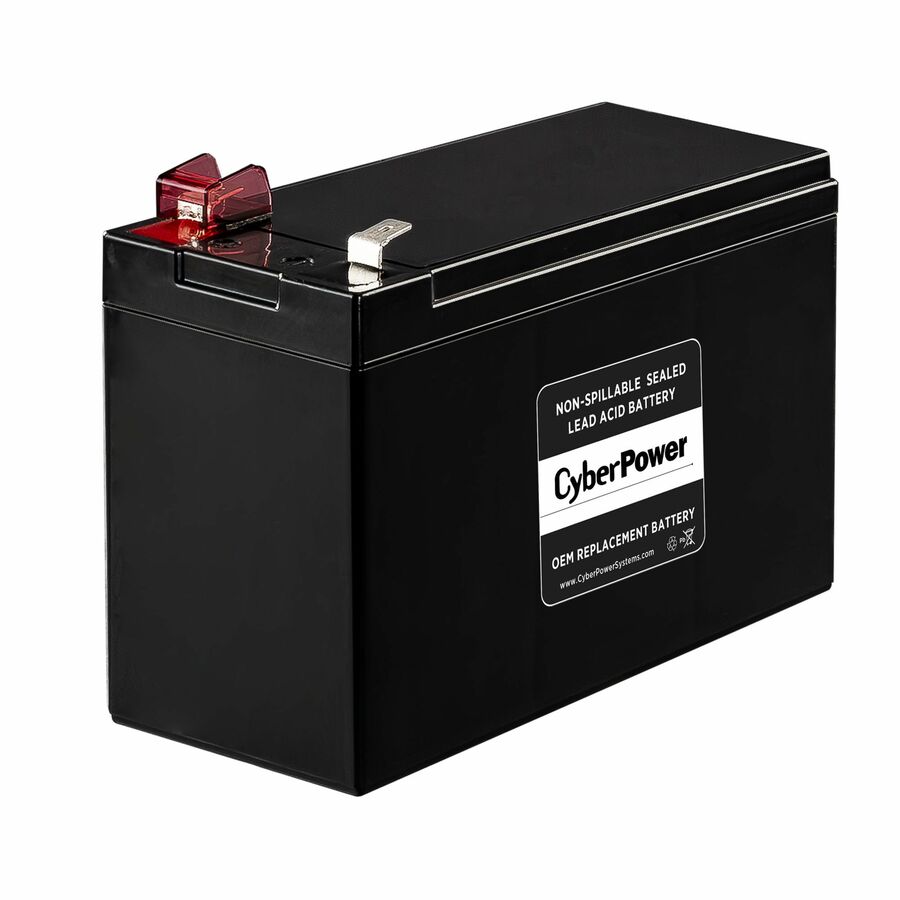
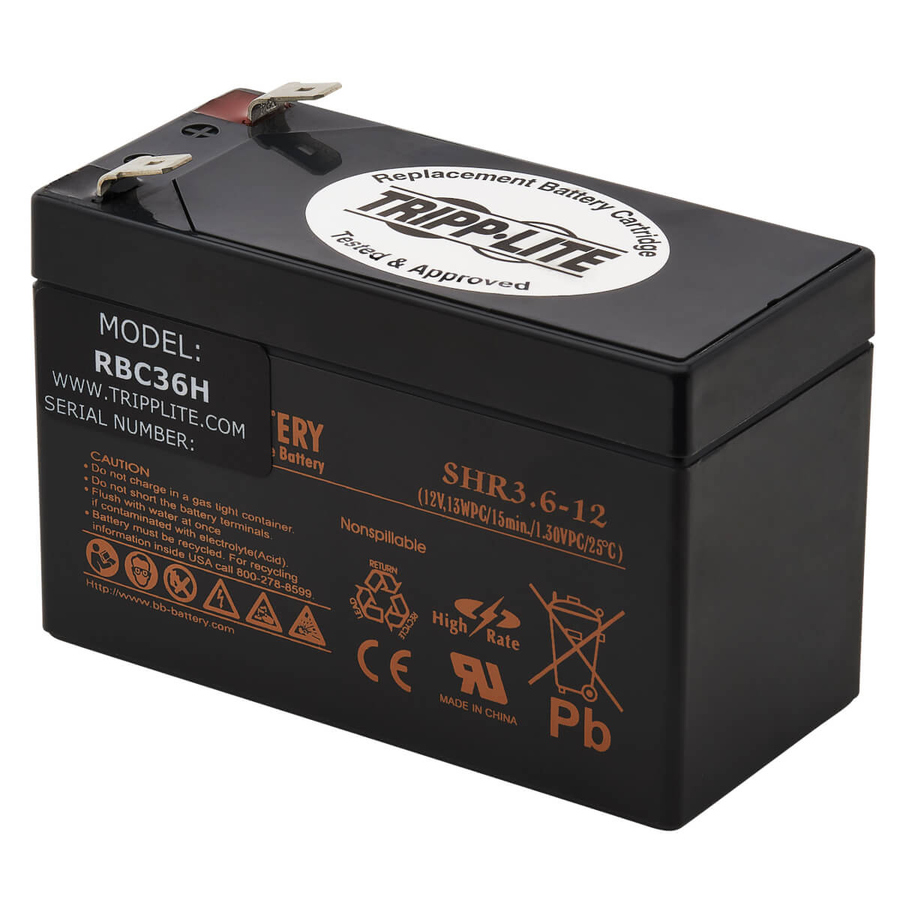
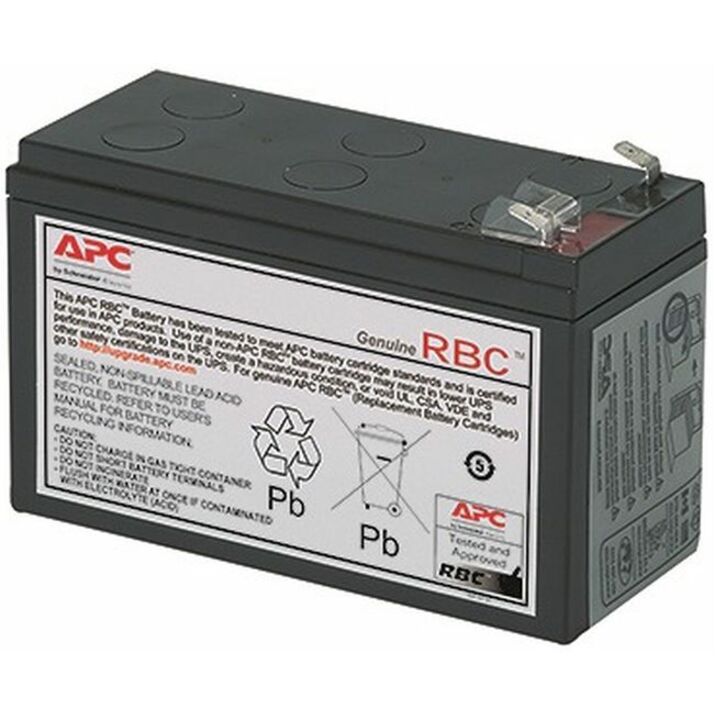
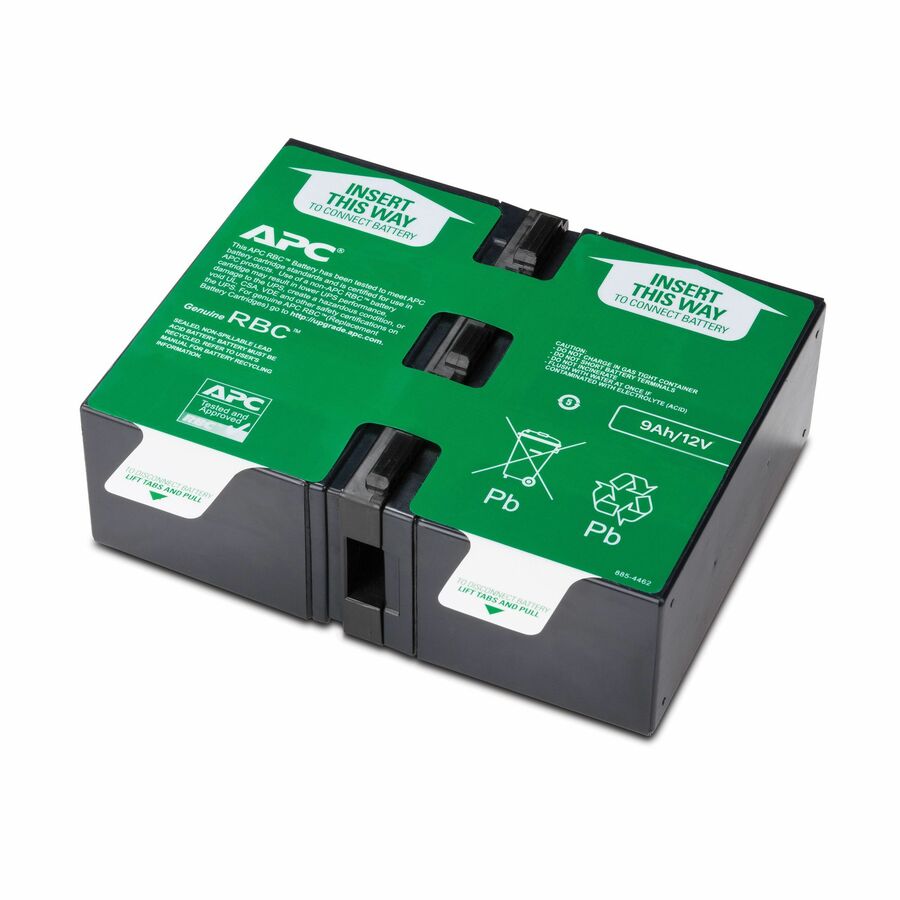
Cartridges are matched to specific UPS model families rather than to a voltage and capacity alone — the connector, the tray and the physical dimensions all have to fit. Read the compatible-model list on the product record against the model number on the unit before ordering, and note that a single-unit replacement and a fleet refresh are different purchases.
Battery chemistry cannot be changed casually
Do not replace VRLA with lithium-ion cells because voltage appears similar. Charging, management, protection, thermal behavior, certification, firmware, and fire response differ. Use only chemistry and cartridge options approved for the UPS.
A factory lithium-ion UPS can offer longer battery lifecycle, lower weight, faster recharge, and different temperature performance. It can also have a higher purchase price and a battery-management system that must remain supported. Compare the complete UPS platform and service model.
For fleet refresh, evaluate whether replacing the battery or replacing the UPS is better. Schneider Electric suggests considering battery replacement for units in an intermediate age range and full modernization for older equipment; the exact decision depends on model support, electronics age, efficiency, capacity, network security, warranty, and parts.
Replace battery or replace UPS?
Consider a new UPS when:
- electronics, fans, capacitors, relays, or display are aging or unsupported;
- capacity no longer covers the measured load and growth;
- the unit lacks pure sine-wave output or topology needed by the load;
- network management is obsolete or insecure;
- replacement cartridges approach the value of a supported new unit;
- outlets, voltage, plug, form factor, or runtime no longer fit;
- repeated battery failures point to charging or environmental problems;
- parts and service are unavailable.
Consider battery replacement when the UPS is supported, correctly sized, environmentally sound, electrically healthy, and provides the required management and topology. Document the evaluation rather than using one universal age cutoff.
For topology context, see line-interactive vs online UPS.
Safety and maintenance-window planning
UPS batteries can deliver high fault current. Large strings involve hazardous DC voltage, stored energy, heavy lifting, chemical exposure, and arc-flash risk. Work must follow the product manual, facility electrical-safety program, applicable codes, and qualified-person requirements.
Plan:
- whether the battery is genuinely hot-swappable in this configuration;
- load redundancy and bypass state;
- approved shutdown if protection is lost;
- generator and alternate-source availability;
- lockout/tagout and arc-flash boundaries;
- personal protective equipment and insulated tools;
- lifting, rack stability, and battery weight;
- ventilation and damaged-battery response;
- correct terminal sequence and torque;
- emergency contacts and fire response;
- disposal and transport.
“Hot-swappable” means the design can support replacement under stated conditions; it does not make the work risk-free or guarantee the load retains battery protection during service. Read the manual.
Receiving and storage
Inspect packaging for damage, leakage, swelling, and incorrect labels. Confirm part number, quantity, manufacture date where available, voltage, connector, and warranty. Do not install a damaged or suspect cartridge.
Batteries self-discharge in storage. Follow manufacturer temperature and recharge intervals. Rotate stock first-expiring-first-out and avoid buying years of spares that age on a shelf. Store under appropriate fire, environmental, and safety controls.
For remote sites, coordinate delivery close to the maintenance date. Heavy battery shipments can be delayed or damaged, and return or recycling packaging may be needed for the old unit.
Replacement procedure and post-install work
Use the exact service manual. Confirm backups and application readiness. Record pre-change load, runtime estimate, alarms, firmware, external battery-pack count, and event log. Verify the replacement parts before opening the UPS.
After physical replacement:
- Inspect seating, connectors, trays, covers, and airflow.
- Confirm the UPS recognizes internal and external batteries.
- Update installation or last-replacement date.
- Clear only resolved battery alarms using the supported procedure.
- Allow the battery to charge for the manufacturer’s stated time.
- Run the prescribed self-test.
- Perform runtime calibration only if needed and approved.
- Verify monitoring, notifications, shutdown software, and management-card communication.
- Record new parts, serials, date, result, and next milestone.
- Recycle the old battery and retain disposition evidence.
Do not declare success because the front panel is green immediately after connection. The new battery may need charging, date reset, pack-count configuration, or calibration before the estimate is meaningful.
Runtime trend and quarterly review
For managed UPS fleets, collect model, location, load percentage and watts, input events, battery date, temperature, charge, estimated runtime, health, self-test, external pack count, alarms, and communication status. Review quarterly and after outages.
Trend runtime at comparable load. A falling estimate can reflect battery capacity loss, increased load, configuration change, temperature, or calculation drift. Normalize before concluding.
Set alerts for replace-battery status, failed self-test, high temperature, low runtime, overload, frequent transfer, communication loss, and overdue service. Assign each to a person and escalation time. Monitoring without response ownership is an inventory of ignored alarms.
Budgeting a replacement cycle
Build a rolling five-year plan grouped by chemistry, model, site, age, and criticality. Include cartridge, freight, tax, labor, maintenance window, bypass or temporary power, disposal, travel, and contingency. Separate planned lifecycle replacement from fault response.
Order against the exact current fleet, not the original purchase count. Remove retired units and add moved or newly installed packs. Consolidate compatible work at a site when it reduces labor without replacing healthy batteries prematurely.
Keep a small appropriate spare strategy for critical common models, balanced against shelf aging. For diverse older fleets, standardizing on fewer supported UPS platforms can be cheaper than maintaining many cartridge types.
Disposal and recycling
Lead-acid and lithium batteries must not go into ordinary trash. Use manufacturer take-back, authorized recycler, or approved hazardous-material process. Follow shipping rules for chemistry and condition; damaged lithium batteries require special handling.
Record UPS asset, battery part, quantity, serial where used, removal date, carrier or recycler, and disposition receipt. Remove asset labels that are not needed but keep safety labels intact. Battery cartridges typically do not store user data, but network-management cards and UPS configuration records can; handle those separately during full-unit retirement.
Close the maintenance record
After the UPS has returned to normal operation, have a second person review the event log, battery date, alarm state, runtime estimate, external-pack count, monitoring path, and connected load. Attach photographs only when site policy allows them and they add useful evidence; never expose network addresses, credentials, or sensitive rack labels.
Keep the service ticket open through the initial charge period and successful prescribed test. Note any temporary bypass, lost redundancy, or deferred defect and assign an owner. Notify the system owner that battery protection is restored and state the next inspection date.
Review the removed battery against the prior forecast. Early failure should trigger an environmental, charging, load, or quality investigation. A battery that exceeded the planned interval without adequate runtime should tighten the next cycle. This feedback turns a calendar replacement program into an evidence-based reliability process.
Frequently asked questions
How often should UPS batteries be replaced?
Follow the exact model and chemistry. APC and Eaton publish a typical three-to-five-year planning range for VRLA or sealed batteries under normal conditions, while lithium-ion categories can be longer. Heat and cycling can shorten the range.
Can a UPS battery pass self-test and still need replacement?
Yes. A brief self-test can pass while sustained runtime is inadequate or the battery has reached its planned service-life end. Use age, environment, runtime, health, and model guidance together.
How long will a UPS last after battery replacement?
Runtime depends on actual watts, battery capacity and charge, temperature, age, topology, and connected external packs. Use the manufacturer’s runtime curve and validate the operating plan.
Can I use a generic battery in an Eaton or APC UPS?
Use the exact approved cartridge or a documented compatible assembly accepted by the risk and support owners. Match the complete cartridge, not just nominal voltage and amp-hours.
Should all batteries in a string be replaced together?
Normally, replace the approved cartridge or complete string together so age and internal resistance remain matched. Follow the manufacturer or qualified stationary-battery service procedure for the exact system.