
iDRAC, iLO and XCC Licensing: What Each Tier Actually Unlocks
Every enterprise server ships with an out-of-band controller. The one capability that makes it worth having — remote console with virtual media — is licensed per server, bound to that chassis, and re-bought at every refresh.
By Uniqcli Team · · 8 min read

Key takeaways
- Health monitoring, inventory, event logs, power control and the Redfish API are available on the included tier of iDRAC, iLO and XCC — no license required.
- The licensed capability on all three vendors is the same pair — graphical remote console through POST, and virtual media for remote OS installation and repair — but Lenovo can place the two in different tiers, so confirm both are in the tier quoted.
- Licenses bind to a specific service tag or serial number, so they do not follow a workload, they are re-bought at every refresh, and a system-board swap usually requires re-hosting the entitlement.
- Console licensing is priced per server while a rack KVM is priced per rack plus a cable kit per host, so density decides the crossover — but a KVM only substitutes where somebody can reach the rack.
- In air-gapped or accredited spaces the license buys nothing usable; the sanctioned path is a secure KVM whose port count, video standard and reader options are part of the evaluated configuration.
On this page
Server management
The line item that shows up after the servers do
Out-of-band management is the small computer inside your server that stays awake when the server does not — Dell calls its implementation iDRAC, HPE calls it iLO, Lenovo calls it XClarity Controller. All three ship on the board. All three give you something for free. And all three put the same capability behind a license: seeing the console and mounting media remotely — though not always in the same tier as each other, which is where quotes go wrong. There is a lot of noise online about what those licenses cost and how the pricing has moved. There is much less about what you are actually buying, what the free tier already does, why a license does not survive the chassis it was sold against, and how the per-server math compares to the per-rack alternative. That is what this covers — vendor-neutral, and without pretending the tier names have stayed still, because they have not. Specifications and licensing figures in this guide are checked against manufacturer documentation and live catalog data.
What the base tier already gives you
Before deciding whether to license anything, be precise about what is already included on every server you own. The unlicensed controller reports hardware health and sensor data, gives you a full inventory of what is installed, holds the system event log, controls power — on, off, hard cycle, and a graceful shutdown request — and exposes serial-over-LAN so a headless machine can still be driven from a text console if the operating system cooperates.
It also exposes an API. Redfish is the industry standard here and is broadly available at base tiers across the three vendors, which means inventory collection, power control, boot-order changes and firmware reporting can all be automated with no license at all. IPMI over LAN has historically filled the same role, and while vendors have been narrowing or disabling it by default for security reasons, it is still the fallback in a lot of tooling. If your fleet management consists of scripted inventory and remote power cycling, you may already own everything you need.
What the base tier does not give you is the console. No graphical remote console, no keyboard and video redirection through POST and firmware setup, and no virtual media — which means no mounting an ISO from your desk to install or repair an operating system. On all three vendors, that pair is the licensed feature, and it is the reason people buy the license. Everything else in the upper tiers is a bonus that rarely justifies the purchase on its own.
Three vendors, one boundary
The tier names differ, and vendors have renamed and re-packaged them across generations — verify the tier against the generation you are actually buying. The boundary has not moved: remote console and virtual media both sit above the included tier everywhere, even where the two are not sold in the same tier as each other.
Dell iDRAC
A base or Express tier is included; the Enterprise tier is where the virtual console, virtual media and directory-service integration live, with a higher tier above it for telemetry streaming and extended power and thermal features. Dell has revised both the tier names and the packaging on recent PowerEdge generations.
HPE iLO
iLO Standard is included on the server. The Advanced tier adds the integrated remote console with virtual media plus directory and multi-factor integration, with a mid tier below it and a security-focused edition above. Licenses are applied per server as a key.
Lenovo XCC
XClarity Controller Standard is included, and Lenovo is the vendor that splits the pair. On the XCC generation still shipping on most ThinkSystem servers, Advanced carries remote KVM but not virtual media — mounting a remote ISO or image arrives at Enterprise, along with boot capture and power capping. Newer ThinkSystem generations drop the middle tier entirely and put console, media and boot capture together in a single Platinum or Premier tier, so read the tier list for the exact generation on the quote.
The rule that costs the most money: the license is bound to the chassis
On all three platforms the license is issued against a specific machine — a Dell service tag, an HPE or Lenovo serial number — and it activates on that controller and no other. This is not a licensing technicality; it is the fact that drives every downstream cost, and it has four consequences worth planning around.
First, a refresh re-buys the entire license line. The controller license is not a perpetual asset that follows a workload; it is consumed with the chassis. On a five-year cycle, a fleet-wide console license is a capital line that returns every five years at whatever the price is then. Budget it as recurring, because it is.
Second, a system-board replacement can strip it. When a board is swapped under warranty, the controller's identity changes and the license generally has to be re-hosted through the vendor's licensing portal or support. That is a straightforward process — and a miserable one to discover at two in the morning during the outage that caused the board swap. Record where the license entitlements live before you need them.
Third, second-hand and refurbished servers advertised as 'license included' need the entitlement checked against the tag, not against the listing copy. A license the previous owner activated on that specific chassis usually does convey with the hardware; a loose key that was never bound, or one bound to a different tag, does not. Ask for the tag and the entitlement together.
Fourth, cold spares are a decision, not an oversight. If you hold two unracked spare chassis for a 40-server estate, either they get licensed too — at full price, for machines that are switched off — or you accept that the first thing you do after swapping one in is drive to it with a crash cart.
The math nobody does: per server against per rack
Console licensing is priced per server. A rack console — a KVM switch with a drawer, or a secure KVM at the rack — is priced per rack, plus one cable kit per attached host. That difference in denominator is the entire decision, and it is arithmetic rather than opinion.
Licensing every host in a rack costs the number of hosts multiplied by the per-server license price. The KVM path costs the switch, plus a cable kit for each host you actually attach. The crossover is where the switch price divided by the difference between a license and a cable kit sits relative to your host count. In a rack with a handful of servers, licenses usually win. In a dense rack, the KVM usually wins — and it keeps winning at the next refresh, because the KVM is a piece of hardware that survives the servers it was bought for while the licenses do not.
Two honest caveats keep that from becoming a slogan. A KVM only substitutes for a license if somebody can reach the rack. For a remote site, an unstaffed facility or an out-of-hours failure, the license — or a KVM-over-IP appliance, which is a different purchase — is what prevents a truck roll, and no spreadsheet makes that comparison come out even. And a KVM switch attaches to a fixed number of hosts; a 4-port unit in a 20-server rack covers the four you chose in advance.
That points at the strategy most large fleets actually run, which is neither extreme: license a documented subset. The hypervisor management hosts, the jump hosts, one host per cluster, anything at a site with no staff. Everything else runs on Redfish automation plus a rack console for the exception cases. The one discipline this requires is writing down which hosts are licensed and putting that list where the on-call engineer can find it, because the night you need a console is the night you find out the box in front of you is one of the unlicensed ones.
One timing note that costs real money: buy the license with the server. Adding it afterwards is a separate transaction with its own lead time and, on some generations, a different price — and it is the item most likely to be dropped from a bill of materials during a budget trim, then bought back individually at worse terms six months later.
Where the license is beside the point
In an air-gapped enclave, or anywhere policy forbids a routable path between a management network and an administrator's desk, virtual console licensing buys nothing at all. The capability exists and cannot be used. The sanctioned answer in those rooms is a physical console at the rack, and for multi-system access the relevant category is the secure KVM: peripheral isolation, no data path between the connected systems, tamper-evident construction, and models evaluated against the NIAP protection profile for peripheral sharing devices.
That is worth pricing deliberately rather than improvising, because a secure KVM and a general-purpose KVM look similar on a purchase order and are not interchangeable in an accredited space. The isolation behaviour, the port count, the video standard and the presence or absence of a smart-card reader all appear in the evaluated configuration, and substituting a cheaper unit is a change to the accredited configuration, not a procurement optimisation.
Whichever way the license decision goes, the management plane needs the same hygiene. Out-of-band controllers belong on a dedicated management VLAN with no route to production and no route to the internet, with their own credential set, their own patch cadence and their own logging. Boundary protection and access control obligations under NIST SP 800-171 apply to the management interface exactly as they apply to anything else on the network — a controller reachable from a user VLAN with default credentials is a finding, not a convenience. And controller firmware is a patch target in its own right: it is the one component that keeps running when the operating system is off.
Rack-console pick
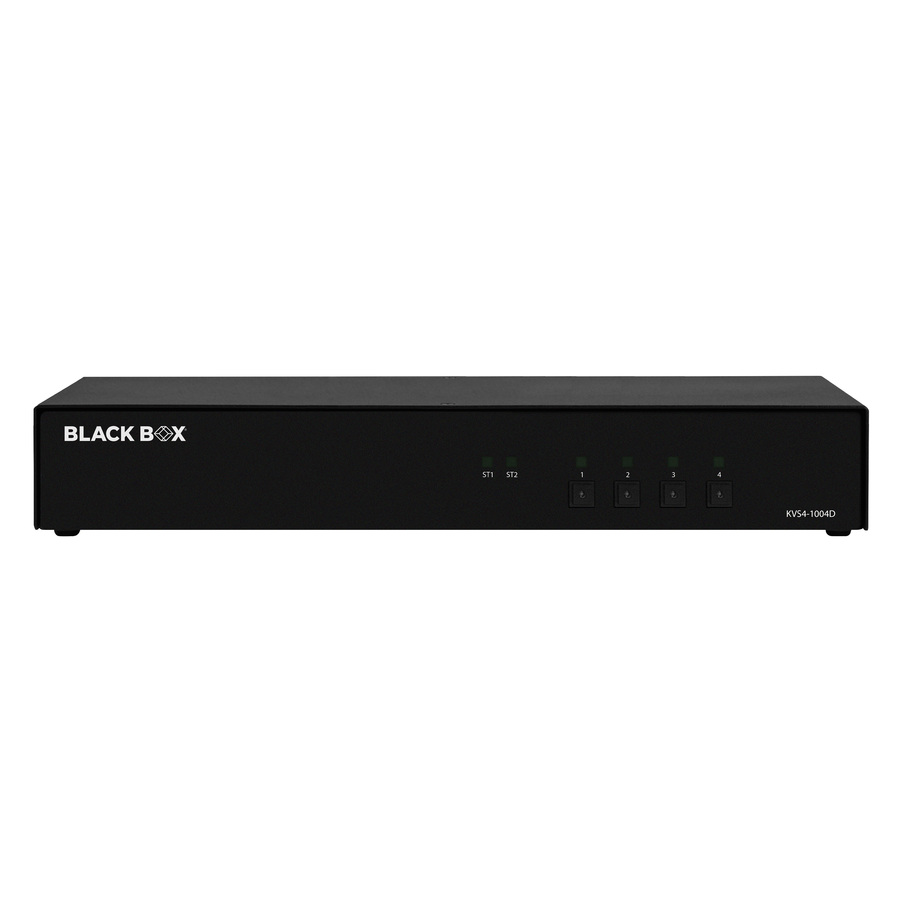
Black Box
Black Box KVM Switch, NIAP 4.0 Certified
KVS4-1004D
A four-port, single-monitor secure KVM for the racks where remote console is not an option — the manufacturer lists it as NIAP 4.0 certified and TAA compliant, with DVI-I video to 2560 × 1600.
Secure KVMs are specified as an evaluated configuration: port count, video standard and reader options are part of what was evaluated. Match the unit to the accredited design rather than to the nearest cheaper equivalent.
$958.69*In stockSecure 4K pick
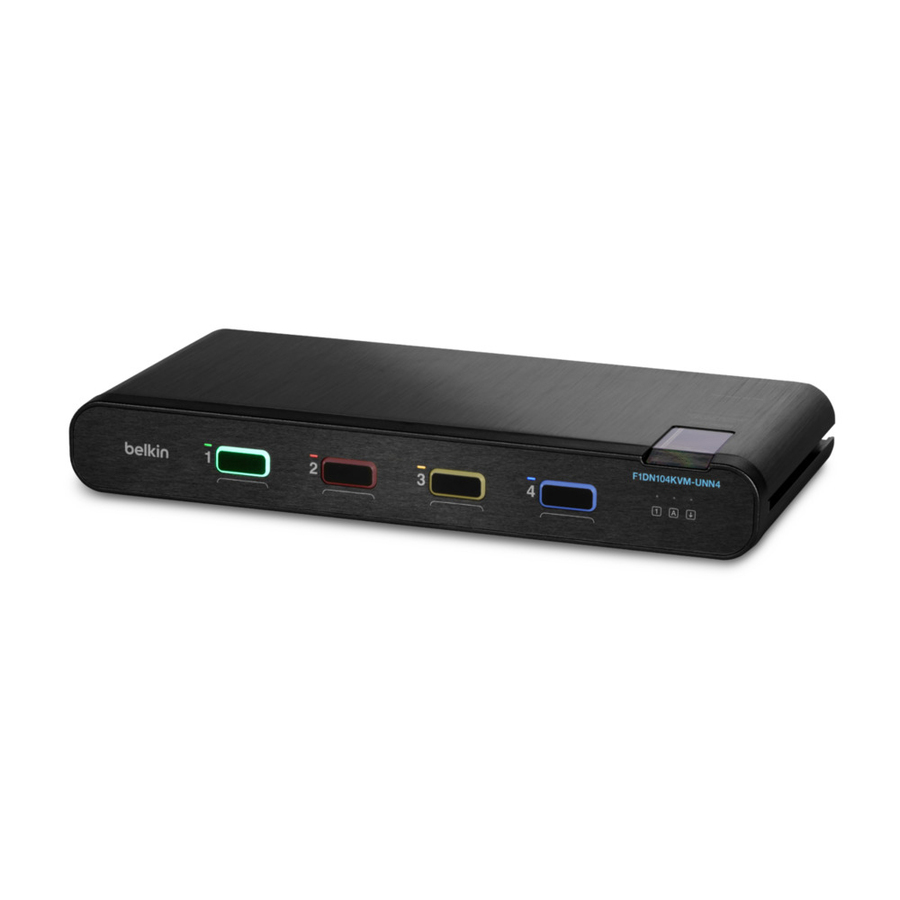
Belkin International
Belkin Universal 2nd Gen Secure KVM Switch, 4-Port Single Head No CAC
F1DN104KVM-UNN4
The same four-port, single-head idea for estates that have moved to HDMI and DisplayPort: a second-generation secure KVM rated to 3840 × 2160, listed as TAA compliant, in the no-smart-card-reader configuration.
This is the variant without a CAC reader. If your enclave requires smart-card pass-through at the console, that is a different model and a different evaluated configuration — say so on the request.
$1,040.51*Back-orderedNine questions worth answering first
Most of these cost nothing to answer at quote time and a great deal to answer later.
- What does your automation actually use today — Redfish, IPMI, or a vendor console? If it is API-driven, the base tier may already cover it.
- Which hosts genuinely need remote OS installation and ISO mounting, as opposed to remote power control?
- How many of your sites are staffed during the hours you would need a console?
- Is the license quoted per server, and is it named against the correct service tag or serial?
- Does the tier name on the quote match the server generation being purchased, not the previous one?
- Are cold spares and lab chassis licensed, or explicitly excluded with the consequence understood?
- Where do the entitlements live, and who can re-host one after a system-board replacement?
- Is the management network isolated from production, with its own credentials, logging and patch cadence?
- If a secure KVM is in scope, does the model, port count and video standard match the accredited configuration?
Keep reading
Related on server management
Frequently asked
What does an iDRAC, iLO or XCC license actually add?
In practical terms, one pair of capabilities: the graphical remote console — keyboard and video redirection that works through POST and firmware setup, before an operating system is running — and virtual media, which lets you mount an ISO or image from your workstation as if it were plugged into the server. Dell and HPE sell that pair inside one tier; Lenovo does not always, so on XCC confirm whether the tier you have been quoted includes virtual media or only the console. Directory integration, multi-factor options and extended telemetry sit in the upper tiers too, but the console and virtual media are what people are buying.
Can I manage a server without buying the license?
For a lot of tasks, yes. Health and sensor monitoring, hardware inventory, the system event log, power on, off and hard cycle, and serial-over-LAN are all available on the included tier, and Redfish gives you an API for inventory, power and boot-order automation without a license. What you cannot do unlicensed is watch the console or mount remote media, which means no remote operating-system install or repair.
Does the license transfer if I move the server or replace the board?
It does not move between machines — the entitlement is issued against a specific service tag or serial number and activates on that controller only. A system-board replacement changes the controller's identity, so the license usually has to be re-hosted through the vendor's licensing portal or support. Find out how that process works at your organisation before you need it during an outage.
Is a KVM switch cheaper than licensing every server?
It depends on density and on who can reach the rack. Licenses are priced per server, a rack KVM is priced per rack plus a cable kit per attached host, so the more hosts in the rack, the better the KVM looks — and the KVM survives the refresh that re-buys every license. The comparison fails for remote or unstaffed sites, where only a remote console (or a KVM-over-IP appliance) avoids a site visit, and it is limited by the switch's port count.
What is a secure KVM and when do I need one instead?
A secure KVM enforces isolation between the connected systems so a shared keyboard, monitor and mouse cannot become a data path between them, and it is built to be tamper-evident. It is the category used where systems at different classifications or enclaves share a desk, and where remote console access is prohibited outright. Models are evaluated against the NIAP protection profile for peripheral sharing devices, and the evaluated configuration — port count, video standard, reader options — is part of what was approved.
Quote the license line with the servers
Send the server list and how many sites are staffed, and we will price the console licenses against the correct tags and generation, alongside the rack-console alternative — so the comparison is made once, in writing, before the servers ship.