
Short answer
A product is TAA compliant when it is wholly produced in, or substantially transformed in, the United States or a country designated at FAR 25.003, so a federal buyer may accept it on an acquisition the Trade Agreements Act covers. Read the designation against the exact part number rather than the brand: manufacturers ship designated and non-designated builds of the same model family.
Key facts
- FAR 25.003 groups designated countries four ways: WTO GPA countries, free trade agreement countries, least developed countries and Caribbean Basin countries.
- Substantial transformation means the item became a new and different article of commerce with a name, character or use distinct from what it was made from.
- On open-market supply buys the rule attaches at the trade-agreement threshold — $174,000 under the WTO GPA, set by FAR Case 2025-007 effective March 13, 2026.
- China, India, Russia, Malaysia, Thailand and Vietnam appear in none of the four FAR 25.003 groups; Taiwan and Mexico are both designated.
- Repackaging, relabeling and minor finishing do not transform an item; assembling components into a finished server is the standard example that does.
- Section 889 is a separate test with no dollar threshold, so a designated-country product can still be barred under FAR 52.204-25.
By Uniqcli Team
TAA compliance means a product's country of origin qualifies it for U.S. federal purchase under the Trade Agreements Act of 1979 (19 U.S.C. § 2501 et seq.). To be compliant, an end product must be wholly grown, produced, or manufactured in the United States or a designated country, or be "substantially transformed" there into a new and different article of commerce. A TAA-compliant product can lawfully be offered to the government on covered contracts; a non-compliant one generally cannot.
The Act exists so the government honors the trade agreements the U.S. has signed, chiefly the World Trade Organization Government Procurement Agreement (GPA) and various free trade agreements. On procurements the Act covers, the Trade Agreements Act sets aside the domestic-preference requirements of the Buy American Act and instead opens the door to products from a defined list of partner countries, while keeping out products from non-participating nations. For IT hardware, where components are sourced globally and final assembly can happen anywhere, country of origin is rarely obvious, which is why TAA status has to be determined deliberately rather than assumed.
How does the Trade Agreements Act work?
The Act is implemented in the Federal Acquisition Regulation, primarily FAR Subpart 25.4, with the operative contract language in the clause at FAR 52.225-5 (which lists the designated countries) and the contractor's origin certification at FAR 52.225-6. It applies to acquisitions at or above trade-agreement dollar thresholds that the U.S. Trade Representative adjusts periodically; those thresholds sit in the low six figures for most supply and service contracts and much higher for construction. When a procurement is above threshold and TAA applies, the Buy American Act's domestic-content preference is waived, and the contracting officer may buy U.S.-made or designated-country end products on equal footing.
Compliance is certified by the offeror, not tested by the government up front. A vendor represents that each end product is a U.S.-made or designated-country product, and that certification is legally meaningful: a false or careless origin claim can expose a contractor to False Claims Act liability. Because enforcement is largely certification-based, responsible resellers trace origin to the manufacturer's own country-of-origin declarations rather than guessing from a brand name or an assembly label.
What counts as a designated country?
"Designated country" is a defined term (FAR 25.003) covering four buckets: WTO GPA member countries, free trade agreement partner countries, least-developed countries, and Caribbean Basin countries. In practice this list includes most of Europe, Canada, Japan, South Korea, Australia, Israel, Mexico, and many others. The list is published in FAR 52.225-5 and updated as agreements change, so it should be checked against the current clause rather than memory.
What matters most to IT buyers is who is not on the list. Several major electronics-manufacturing nations, including China, India, Russia, Indonesia, Malaysia, Thailand, and Vietnam, are not designated countries. A product wholly manufactured in one of those countries is not TAA-compliant, even if it carries a well-known U.S. or allied brand. This is the single most common failure point for commodity IT hardware, because so much assembly happens in non-designated countries.
What does "substantial transformation" mean?
A product does not have to be built from scratch in a designated country to qualify. It can still be compliant if it undergoes "substantial transformation" there, meaning a manufacturing or processing operation that results in a new and different article of commerce, with a name, character, or use distinct from the inputs that went in. Simple assembly, packaging, testing, labeling, or minor finishing generally does not meet the bar; the operation has to genuinely create a different product.
The determination is a legal and factual judgment, and U.S. Customs and Border Protection (CBP) is the authority that issues binding country-of-origin rulings on it. Because substantial transformation is applied case by case, two similar-looking devices can land on opposite sides of the line depending on where their defining assembly and configuration actually occur. When origin is ambiguous or high-value, buyers and vendors can request a CBP ruling rather than rely on assumption.
When do federal buyers need TAA-compliant products?
The clearest trigger is a solicitation that is above the trade-agreement threshold and includes the FAR 52.225-5 clause: in that case, only U.S.-made and designated-country end products may be offered. Separately, and importantly for IT teams, the General Services Administration requires TAA compliance for all products sold through GSA Multiple Award Schedule contracts regardless of the order's dollar value, because those vehicles are treated as covered by the Act. Many state, local, and education buyers that purchase off GSA vehicles inherit the same requirement.
The obligation also flows down the supply chain. A prime contractor bound by TAA passes the requirement to subcontractors and resellers through its own contract terms, so a distributor filling a line item on a federal order may be contractually required to supply only compliant goods even when it is not the party holding the government contract.
How is TAA compliance different from NDAA Section 889?
It is easy to conflate the two because both restrict what the government can buy, but they answer different questions. TAA is a country-of-origin trade rule: it asks where a product was made or substantially transformed and admits products from designated trading partners. Section 889 of the FY2019 National Defense Authorization Act is a supply-chain security prohibition: it bars agencies from buying, or contracting with companies that use, specified "covered" telecommunications and video-surveillance equipment and services from a named set of manufacturers and their affiliates.
The practical takeaway is that the two requirements are independent and cumulative. A product can be fully TAA-compliant on origin and still be prohibited under 889 if it is covered equipment, and vice versa. Federal IT buyers generally have to satisfy both, along with any other applicable supply-chain rules, rather than treating one as a substitute for the other.
Key takeaways
- TAA compliance is about country of origin: an end product must be made in, or substantially transformed in, the United States or a designated country.
- The rule lives in FAR Subpart 25.4, with the designated-country list in clause FAR 52.225-5 and the origin certification in FAR 52.225-6.
- Major electronics-manufacturing nations including China, India, Russia, Malaysia, Thailand, and Vietnam are not designated countries, which is where most commodity IT hardware fails.
- "Substantial transformation" requires a new article of commerce with a different name, character, or use; simple assembly, packaging, or testing does not qualify, and CBP is the authority that rules on it.
- GSA Schedule (MAS) purchases require TAA compliance for every product regardless of dollar value, unlike open-market buys that are only covered above trade-agreement thresholds.
- TAA and NDAA Section 889 are separate, cumulative requirements: origin compliance does not exempt a product from the 889 security prohibition, and vice versa.
Shop it at Uniqcli
Parts for this job
Desk monitor

LG Electronics
LG 24BA450-B 24" Class Full HD LCD Monitor
24BA450-B
A 23.8-inch 1920 x 1080 IPS panel with HDMI, DisplayPort and VGA and a height, tilt, swivel and pivot stand. The manufacturer's listing records this part number as TAA compliant.
A manufacturer designation is evidence for a specific part number. The determination for a given acquisition remains the contracting officer's.
$265.63*Back-orderedFixed desktop
MSI
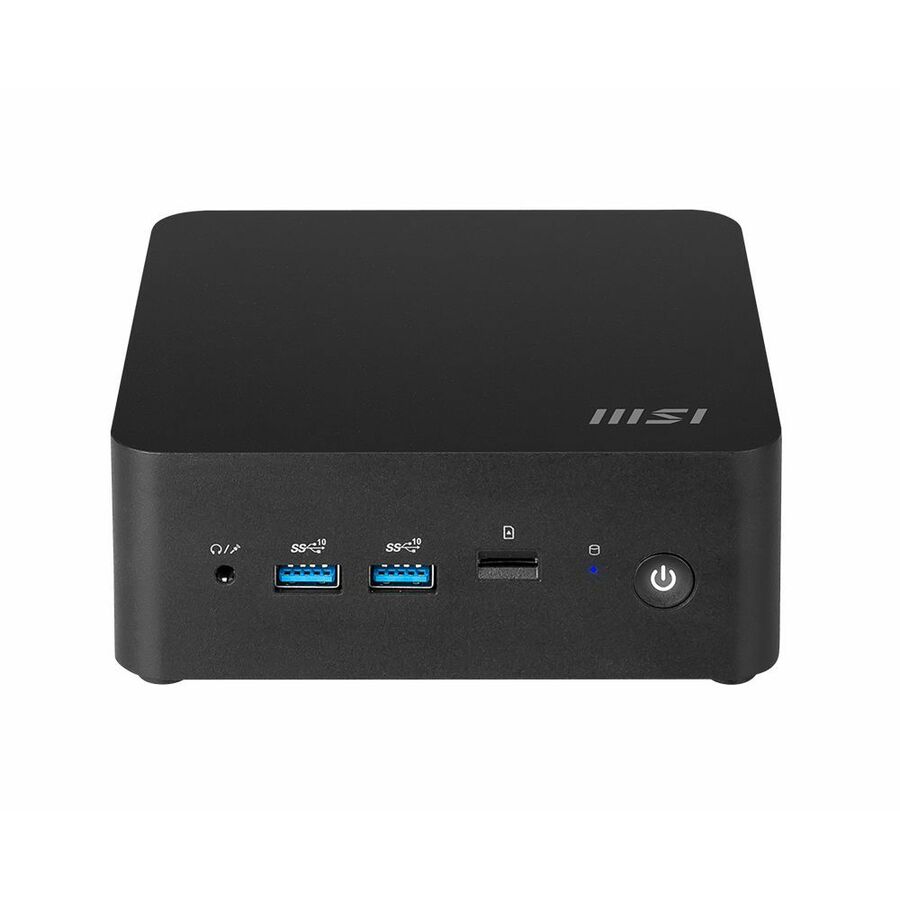
MSI Cubi NUC 1MG 014UST Mini PC, Intel Core 3-100U, 8GB. 500GB, W11P
CUBINUC014TAA
A mini PC with an Intel Core 3-100U, 8 GB of memory, dual LAN and Wi-Fi 6E, for a standard office build. The manufacturer's listing records this part number as TAA compliant.
$744.87*Back-orderedSmall switch
TRENDnet
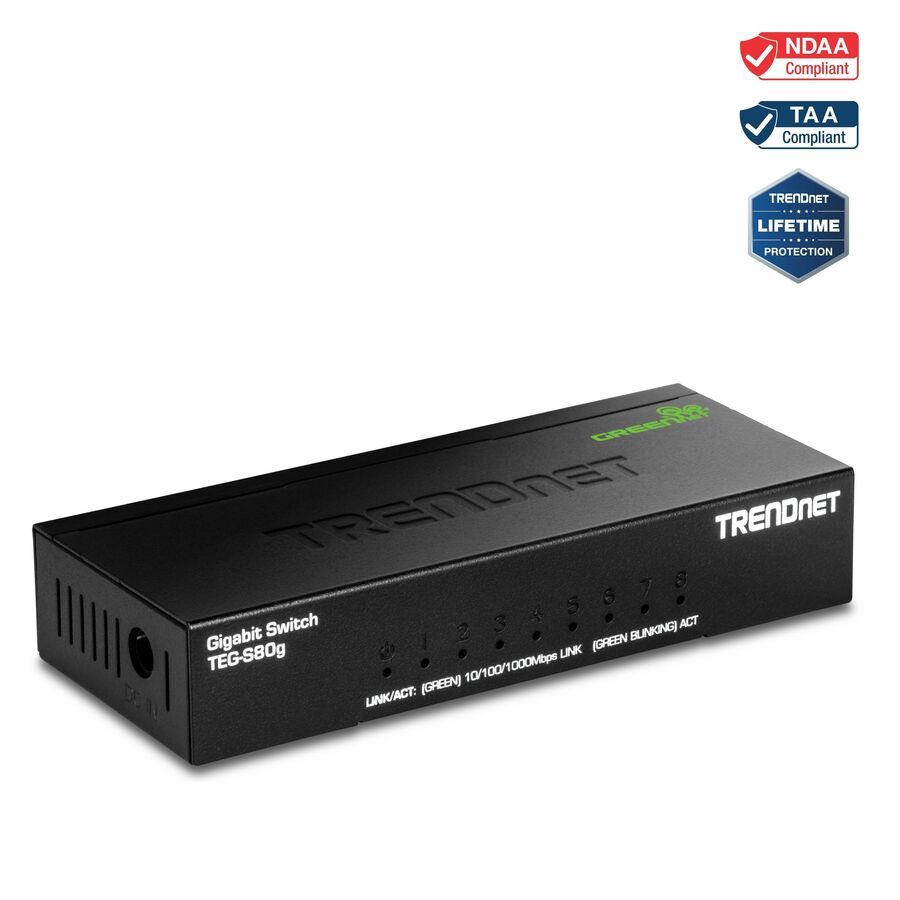
TRENDnet 8-Port Mini Gigabit Switch, TEG-S80g, GREENnet Technology…
TEG-S80G
An eight-port unmanaged gigabit switch, fanless in a metal case, for a single room or a small closet. The manufacturer's listing records this part number as TAA compliant.
$39.03*In stockFrequently asked
- Is a product from a well-known American brand automatically TAA-compliant?
- No. TAA status depends on where the product is manufactured or substantially transformed, not on the brand's headquarters. A device from a U.S.-based manufacturer that is wholly assembled in a non-designated country such as China is not TAA-compliant. Origin should be confirmed against the manufacturer's country-of-origin declaration for that specific model and configuration.
- Does TAA compliance apply to every federal purchase?
- Not automatically on the open market. The Trade Agreements Act applies to procurements at or above trade-agreement dollar thresholds that carry the FAR 52.225-5 clause; below those thresholds, Buy American Act rules may apply instead. However, purchases made through GSA Multiple Award Schedule contracts require TAA compliance for all products regardless of order value, which is why the requirement feels universal to many buyers.
- Who decides whether a product was "substantially transformed"?
- U.S. Customs and Border Protection (CBP) is the authority that issues binding country-of-origin rulings on substantial transformation. The test is whether processing in a country created a new and different article of commerce with a distinct name, character, or use. For high-value or ambiguous items, a party can request a formal CBP ruling rather than relying on an internal assumption.
- If a product is TAA-compliant, does that mean it also meets NDAA Section 889?
- No. They are independent requirements. TAA addresses country of origin, while Section 889 prohibits specific covered telecommunications and surveillance equipment and services from named manufacturers on security grounds. A product can satisfy one and violate the other, so federal buyers generally need to verify both separately.
- How do I request supply-chain provenance for a TAA product quote from Uniqcli?
- First assemble the part numbers and quantities, or a full bill of materials, through the catalog or the BOM Builder. Second, submit it through Get a quote. From there a specialist screens each line for country of origin at the substantial-transformation level and for NDAA §889 covered-vendor status as part of building the quote, and the returned quote carries the provenance with it: line-item provenance showing the US distribution channel each unit came through, the manufacturer's country-of-origin documentation, chain-of-custody records, and completed supplier questionnaires where your process requires them — with no payment up front. Uniqcli documents its part of the chain rather than certifying your compliance, so you receive the records to support your own determination.
- What documentation does Uniqcli provide for country-of-origin proof?
- On a quote, Uniqcli attaches origin documentation rather than a blanket catalog statement: the manufacturer's country-of-origin declaration or letter of origin for the specific model and configuration, the substantial-transformation basis behind it, line-item provenance and chain-of-custody records, and supplier questionnaires completed where your process requires them. The determination is traced to the manufacturer's own declaration for that exact model, not inferred from a brand name or an assembly label. Where an item is high-value or its origin is genuinely ambiguous, a binding country-of-origin ruling can be requested from U.S. Customs and Border Protection, which is the authority that decides substantial transformation. Request the item through Get a quote and a specialist confirms which documents apply per SKU.
- What are the benefits of TAA screening at Uniqcli?
- Every line is screened for country of origin at the substantial-transformation level — not a country-checkbox — and separately screened for NDAA §889 covered-vendor status, and that vetting happens as part of the quote, before the line reaches you, rather than being bolted on afterward. The origin documentation is attached rather than asserted with a blanket statement, so the paper trail is there if an order is later reviewed. The practical benefit is that the compliance answer is resolved up front: a fast or rushed buy doesn't turn into a country-of-origin problem — or False Claims Act exposure — discovered after the parts arrive. TAA and Section 889 are separate, cumulative requirements, and both are checked on the same quote; request your list through Get a quote to see it applied line by line.
- What is a TAA compliant device?
- It is a specific end product that a supplier offers as acceptable under the Trade Agreements Act on an acquisition the Act covers: an item wholly produced in the United States or in a country designated at FAR 25.003, or substantially transformed in one of those countries into a new and different article of commerce. The designation attaches to a part number, not to a brand or a product family, because manufacturers commonly build the same model in more than one country and give the variants different part numbers.
- What countries are not TAA compliant?
- A country is either designated at FAR 25.003 or it is not, and several large electronics manufacturing bases are not: China, India, Russia, Malaysia, Thailand and Vietnam appear in none of the four groups. That is a statement about the FAR lists and not a sanction or an import ban — goods from those countries trade normally in commercial channels. They are simply not acceptable end products on an acquisition the Act covers, which is why the same laptop model can be saleable commercially and unusable on a covered federal order.
- Which countries will be TAA compliant in 2026?
- The designated-country lists are amended as countries accede to the WTO Government Procurement Agreement, as free trade agreements enter into force or lapse, and as least developed country designations are updated — so the only reliable answer is the current text of FAR 25.003 at acquisition.gov on the day you need it. The origins IT buyers meet most often are the United States, Canada, Mexico, Taiwan, Japan, Korea, Singapore and the European Union member states. Treat any published copy of the list, this page included, as a snapshot.
Sources
- 1.FAR part 25 — Foreign Acquisition (25.003 definitions)acquisition.gov
- 2.19 U.S.C. 2501 — Trade Agreements Act of 1979uscode.house.gov
- 3.FAR Case 2025-007 — Trade Agreements Thresholds, final rule of March 13, 2026govinfo.gov
- 4.FAR 52.204-25 — Prohibition on Contracting for Certain Telecommunications and Video Surveillance Services or Equipmentacquisition.gov
Keep reading