
Short answer
A rugged laptop is a notebook tested against MIL-STD-810 environmental methods — drop, shock, vibration, dust, humidity, temperature — and usually rated to an IEC 60529 IP number for dust and water ingress. Match the tier to the environment: business-rugged for a vehicle or a job site, fully rugged and sealed for continuous exposure. No body certifies MIL-STD-810, so ask for the test report.
Key facts
- MIL-STD-810 is a US Department of Defense test-method standard for environmental laboratory tests. The current issue is Revision H Change 1, dated 18 May 2022.
- It issues no pass-or-fail certificate. Vendors pick which methods to run and self-report, so a claim means something only with methods and parameters attached.
- IP ratings come from IEC 60529 and carry two digits: the first rates solids 0-6, where 6 is dust-tight; the second rates liquids 0-9.
- IP65 is dust-tight plus low-pressure water jets. IP67 is dust-tight plus temporary immersion, typically about one metre for thirty minutes.
- Semi-rugged is a conventional chassis reinforced: spill-resistant keyboard, shock-mounted storage, a moderate drop spec. Fully rugged means a sealed enclosure.
- The operating system is conventional. Hardening is physical, so imaging, management and applications work exactly as they do on the rest of the fleet.
By Uniqcli Team
A rugged laptop is a portable computer engineered and tested to keep working through physical abuse and environmental extremes — drops, shock, vibration, dust, rain, and wide temperature swings — that would damage or disable an ordinary consumer machine. Ruggedness is demonstrated against published standards, chiefly the U.S. military's MIL-STD-810 environmental test methods and the IEC 60529 IP (Ingress Protection) rating for dust and water.
Rugged laptops exist because failure in the field is expensive: a dead machine on a job site, in a patrol car, or on a flight line can halt work, not just inconvenience a user. They trade some weight, thinness, and raw performance-per-dollar for sealed enclosures, reinforced chassis, sunlight-readable screens, and long service lifecycles. They come in tiers — from lightly hardened 'business-rugged' units to fully sealed 'fully rugged' systems — so the goal when buying is to match the level of protection to the actual operating environment.
How does a rugged laptop work?
Ruggedness comes from two things working together: hardened construction and standardized testing. Physically, rugged laptops use reinforced or magnesium-alloy chassis, shock-absorbing corner bumpers, gasket-sealed seams and port covers, solid-state (no moving parts) storage, and often fanless sealed cooling so dust and moisture have no path inside. The result is a machine that tolerates being dropped, shaken on a vehicle mount, or wiped down in the rain.
Those claims are validated against published standards. MIL-STD-810 is a U.S. Department of Defense standard that defines environmental test methods — shock, vibration, high and low temperature, humidity, blowing dust and sand, altitude, and more. Crucially, it is a set of test methods, not a pass/fail certification with a governing body: manufacturers choose which methods to run and self-report the results, so 'MIL-STD-810 tested' is only meaningful alongside the specific methods and parameters used. Dust and water resistance is graded separately by the IEC 60529 IP rating, written as two digits — the first (0-6) for solids and the second (0-9) for liquids.
What are the types of rugged laptops?
Rugged laptops fall on a spectrum. Business-rugged (often called semi-rugged) units are conventional laptops that have been reinforced — spill-resistant keyboards, shock-mounted storage, sturdier hinges and chassis, and moderate drop resistance. They stay relatively thin and light, cost less, and suit field sales, healthcare, education, and general mobile work where the risk is the occasional knock or spill rather than constant exposure.
Fully rugged systems are built for continuous punishment: fully sealed enclosures rated IP65 or IP67, wide operating-temperature ranges, higher drop specifications, sunlight-readable displays, and often hot-swappable batteries and legacy ports. They are heavier, thicker, and more expensive, and are used where downtime is not an option. Related fully rugged form factors include convertible 2-in-1s and rugged tablets, which trade the keyboard for a touch-first design in vehicles and walking-around roles.
When do you need a rugged laptop?
A rugged laptop earns its cost wherever the environment, not the user, is the main threat to the hardware: repeated drops and vibration (vehicle and forklift mounts), dust and moisture, temperature extremes, direct sunlight, and locations far from IT support. Typical settings include field service and utilities, public safety and defense, manufacturing floors and warehouses, logistics and fleet operations, oil and gas, mining, agriculture, construction, aviation, and maritime work.
The buying case is usually total cost of ownership rather than sticker price. A consumer laptop may be cheaper upfront but fails more often in harsh conditions, and each failure means lost productivity, data-capture gaps, and replacement logistics. Rugged units offset a higher purchase price with lower failure rates, field-serviceable parts, accidental-damage warranties, and multi-year availability that lets an organization standardize a fleet on one image and one dock.
What should you check before buying one?
Start by matching the protection level to the environment and resisting the urge to over-buy — extra ruggedness adds weight and cost. Then verify the specifics behind the labels: ask which MIL-STD-810 test methods were run and at what parameters (drop height, number of drops, temperature range), and request the test report rather than accepting the phrase alone. Confirm both digits of the IP rating, the full operating-temperature range, and battery behavior in heat and cold, including whether batteries are hot-swappable.
For outdoor use, prioritize a sunlight-readable display — high brightness (fully rugged units are often around 1,000 nits versus roughly 250-400 for consumer screens), anti-glare and anti-reflective treatments, and optical bonding that cuts internal reflection for better contrast in direct sun — along with glove- and wet-touch input. Finally, check the I/O you actually need (docking, vehicle mounts, legacy serial), hazardous-location certifications such as ATEX or Class I Division 2 if you work near explosive atmospheres, serviceability, security and manageability features, and how long the model will remain available for fleet replacements.
Key takeaways
- A rugged laptop is validated against MIL-STD-810 environmental test methods and the IEC 60529 IP rating for dust and water — verify the specifics, not just the label.
- MIL-STD-810 is a self-tested set of methods, not a pass/fail certification; always request the test report (methods run, drop height, temperature range).
- Match ruggedness to the environment: semi/business-rugged for occasional field use, fully rugged (sealed, IP65/IP67) for continuous harsh conditions — over-buying adds weight and cost.
- Outdoor work needs a sunlight-readable display: look for high brightness (often around 1,000 nits), anti-glare treatment, optical bonding, and glove/wet touch.
- Expect tradeoffs versus commercial laptops — more weight, thickness, and upfront cost, and often modest peak performance — justified by lower failure rates, less downtime, and longer lifecycles (TCO).
- Also weigh I/O and docking, hot-swap batteries, operating-temperature range, hazardous-location certs (ATEX/Class I Div 2), serviceability, and multi-year availability for fleet standardization.
Shop it at Uniqcli
Parts for this job
Semi-rugged
Panasonic
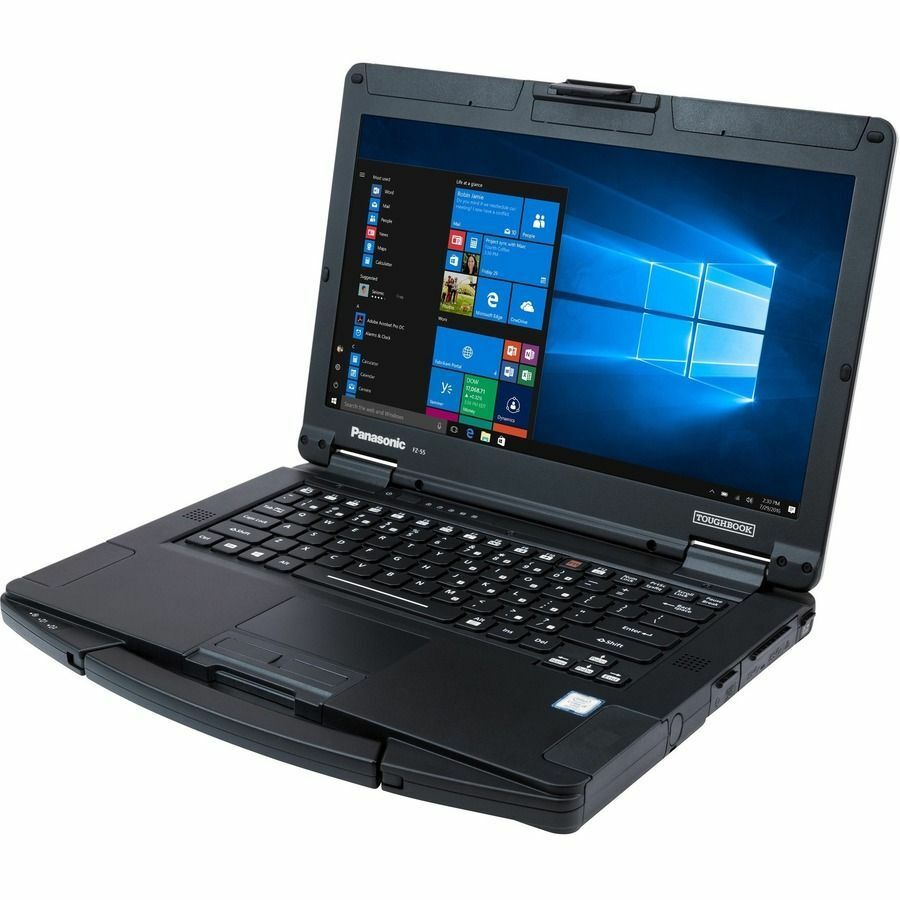
Panasonic TOUGHBOOK FZ-55 FZ-55GZ00PBM 14" Semi-rugged Notebook
FZ-55GZ00PBM
A 14-inch semi-rugged notebook on a 13th-gen Core i5 with vPro — the tier for a vehicle, a warehouse or a job site rather than continuous exposure.
$3,367.89Back-orderedFully rugged
Panasonic
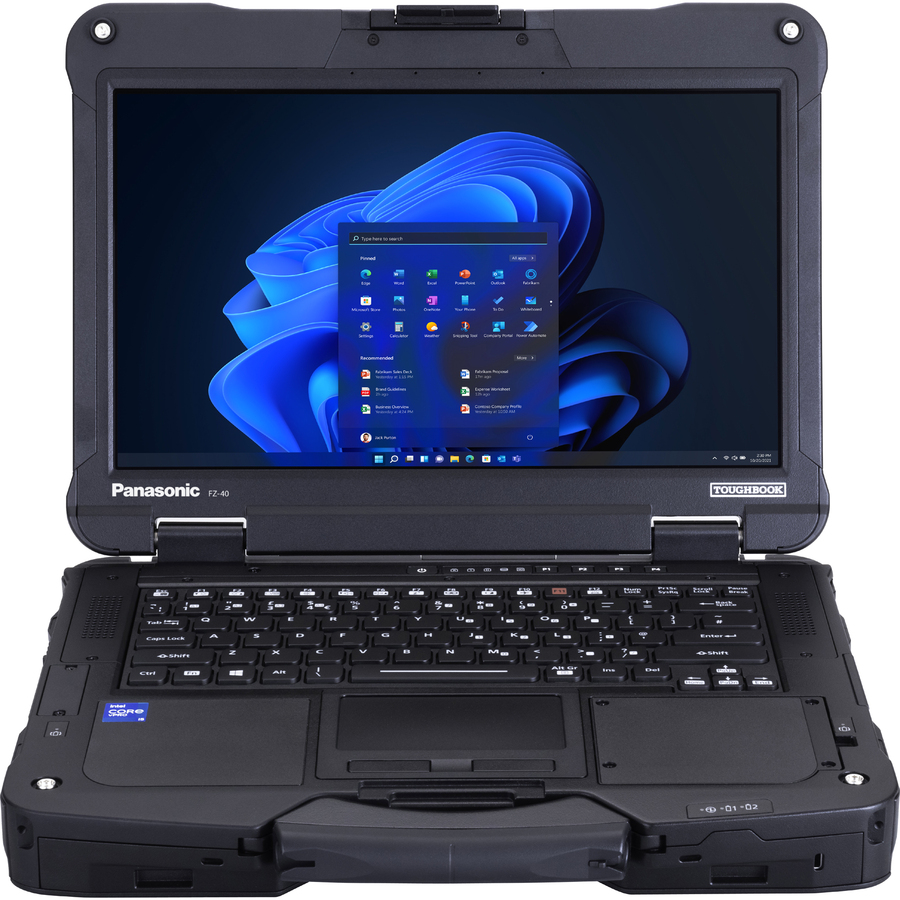
Panasonic TOUGHBOOK FZ-40 FZ-40EJAA1BM 14" Touchscreen Rugged Notebook
FZ-40EJAA1BM
A 14-inch fully rugged touchscreen notebook on a Core Ultra 5 with vPro, built as a sealed enclosure for sustained dust, water and drop exposure.
$6,814.99Back-orderedRugged tablet
Panasonic
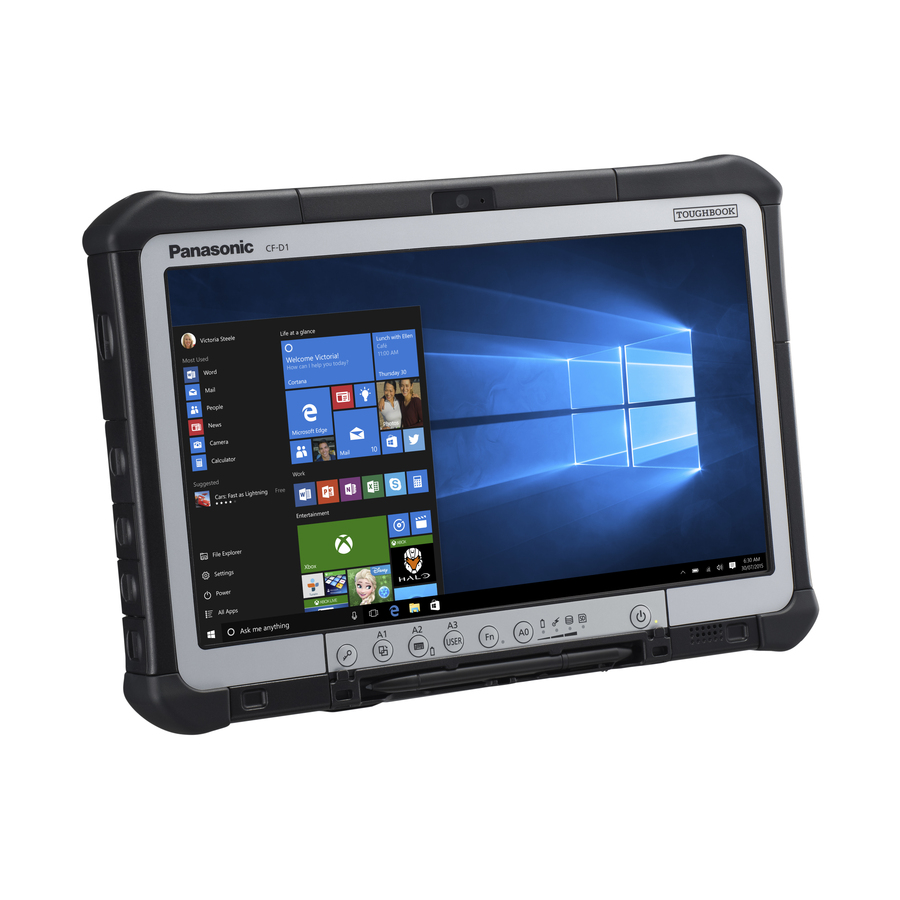
Panasonic TOUGHBOOK CF-D1 CF-D1QV330TW Tablet
CF-D1QV330TW
A 13.3-inch rugged tablet for work done standing up — inspection, field service, vehicle mounting — where a clamshell is the wrong shape.
Ask for the MIL-STD-810 methods and parameters the model was tested to, and the IP digits, before comparing two vendors' claims.
$2,049.73Back-orderedFrequently asked
- Is MIL-STD-810 a certification?
- No. It is a U.S. Department of Defense standard that defines environmental test methods — shock, vibration, temperature, dust, humidity and more — and no body issues a pass or fail against it.
- What is the difference between semi-rugged and fully rugged?
- Semi-rugged (business-rugged) laptops are conventional machines reinforced with features like spill-resistant keyboards, shock-mounted storage, and moderate drop resistance; they stay lighter and cheaper. Fully rugged laptops use fully sealed enclosures rated IP65 or IP67, wider temperature ranges, higher drop specs, and sunlight-readable displays for continuous harsh-environment use, at the cost of more weight, thickness, and price.
- What do IP ratings like IP65 and IP67 mean?
- IP (Ingress Protection) ratings come from IEC 60529 and use two digits. The first (0-6) rates protection against solids, where 6 means fully dust-tight; the second (0-9) rates liquids. IP65 means dust-tight and protected against low-pressure water jets, while IP67 means dust-tight and able to withstand temporary immersion (typically up to about 1 meter for 30 minutes).
- Do rugged laptops run standard operating systems and software?
- Yes. Most rugged laptops run standard Windows (some rugged tablets run Android), so normal enterprise applications, imaging, and device management work the same way as on a commercial fleet. The hardening is physical and mechanical; the OS and software stack are conventional, which is why they can be standardized alongside other corporate devices.
- What is a ruggedized laptop?
- The same thing as a rugged laptop — the two words are used interchangeably. It is a notebook built and tested to keep working through drops, shock, vibration, dust, water and temperature extremes that would stop an ordinary machine, demonstrated against MIL-STD-810 test methods and usually an IEC 60529 IP rating. Some vendors use "ruggedized" for a reinforced conventional design and reserve "rugged" for a fully sealed one, but that is a marketing preference rather than a defined distinction, so read the ratings instead of the adjective.
- What does MIL-STD-810 certified mean?
- Strictly, nothing — there is no such certification. MIL-STD-810 is a Department of Defense standard of environmental test methods, and no body issues a pass. A vendor selects the methods relevant to its product, runs them, and publishes the results, so "MIL-STD-810 certified" on a data sheet is shorthand for "the vendor tested it against some of the standard". The useful question is which methods, at which parameters, and whether the report is available. Two machines quoting the same standard can have been tested to very different severities.
Sources
Keep reading