
Short answer
NetScaler is licensed by throughput capacity within a feature edition — Standard, Advanced or Premium — and an instance checks its bandwidth out of one edition's pool, never two at once. Citrix's virtual apps and desktops entitlements are licensed separately from the appliance, so a renewal is priced from what you already hold plus the edition and capacity you are moving to.
Key facts
- NetScaler pooled capacity keeps a separate bandwidth pool for each software edition — Standard, Advanced and Premium.
- A given NetScaler instance cannot have bandwidth from different pools checked out concurrently, so an edition change is a licensing decision, not a toggle.
- Pooled licensing allows the bandwidth allocated to an instance to be raised or lowered at run time without affecting traffic.
- Pooled capacity is shared across NetScaler form factors, so hardware and virtual instances can draw from the same entitlement.
- The appliance capacity licence and the Citrix user entitlements are separate lines; a renewal quote needs the version, edition and quantity of each.
By Uniqcli Team
Citrix and NetScaler licensing is difficult to research for a specific reason: the products were restructured, renamed and rebundled after the Cloud Software Group acquisition, and they have been revised since. The consequence for a buyer is that the entitlement on your existing paperwork and the thing you can buy today often do not share a name, which makes a renewal quote hard to sanity-check and makes almost everything published on the open web either out of date or written about a different product generation.
What has not changed is the shape of the decision, and that is what this page covers. Five things determine what a quote can say: what you currently own and how it is counted, which metric the current program uses for the equivalent capability, how much capacity or how many users the environment actually needs, what term the organization wants to commit to, and which support level goes with it. Resolve those five and the pricing is arithmetic. Leave any of them open and every figure you are given is provisional.
One boundary is worth stating plainly before anything else. Uniqcli does not publish Citrix or NetScaler pricing, edition contents or program terms on this page, because those are the parts that move and a stale figure is worse than no figure. Every specific below routes to the vendor's own current documentation, and the quote confirms the terms in force on the day it is issued. What we do carry is the appliance side of a NetScaler deployment, the licensing itself, and the assessment and migration work that a restructured entitlement usually needs alongside it.
Start with what you own, in the vendor's current vocabulary
The first task on a Citrix renewal is a translation exercise rather than a pricing one. Older estates carry entitlements bought under earlier product names and earlier packaging — virtual apps and desktops sold as separate products, endpoint management sold under its own name, application delivery sold as an appliance line rather than as the separately branded product it is now. The current program expresses much of that capability differently, and mapping one to the other is the step that determines whether a renewal quote is comparable to the previous one.
The practical way through it is to pull the entitlement records rather than to reason from memory: the license files or allocations in the vendor's licensing portal, the support contract with its renewal date, and the actual deployed inventory. Those three frequently disagree, and the gaps between them — capacity licensed but never deployed, appliances deployed against an entitlement that lapsed, users counted under a metric the environment stopped using — are exactly what a true-up exists to reconcile.
Where the estate spans several acquisitions or several renewal cycles, expect that translation to take longer than the pricing conversation does. It is also the part where getting it wrong is expensive in both directions: under-declaring creates a compliance exposure, and over-declaring means renewing capacity nobody is using.
The metric is the decision, not the product name
Citrix's virtualization and workspace products have historically been counted per user or per device, with concurrent-user counting available in some programs and not in others — and the difference between those metrics is not cosmetic. A shift-based environment where three people share one seat across a day counts very differently under a named-user metric than under a concurrent one, and choosing the wrong one is the single most common way an organization ends up paying for entitlement it cannot use.
NetScaler is counted differently again, because it is capacity rather than population. Application delivery entitlements are generally expressed as throughput or capacity tiers attached to a platform, with pooled arrangements that let capacity be allocated across instances rather than fixed to one appliance. That distinction matters most in environments running several instances at different sizes, where pooled capacity can be considerably more efficient than sizing each one individually — and where the failure mode is buying a tier per instance because that is how the previous generation worked.
Because the available metrics and the pooling arrangements have both changed with the program restructuring, the honest advice is to confirm the current options against the vendor's own documentation for the specific product rather than against a previous purchase order. That is the confirmation step a quote performs, and it is why an accurate quote needs the environment described rather than a part number repeated.
Form factor: appliance, virtual, container
NetScaler is delivered in more than one form and the form factor is a licensing decision as much as an architectural one. Physical appliances carry the hardware and its throughput characteristics; virtual instances run on a hypervisor and are sized by allocated capacity; containerised instances sit inside a cluster and are sized and licensed differently again. An estate frequently runs more than one of these, and how the entitlement is expressed across them is precisely the thing pooled capacity is designed to simplify.
The physical side is where a reseller relationship actually matters, because an appliance refresh is a hardware purchase with a licensing consequence rather than the other way round. Uniqcli quotes the appliance, the licensing and the deployment work on one document, which keeps the entitlement attached to the hardware it is sized for. Where the estate is moving from physical to virtual instances, that transition is a licensing conversation held before the hardware decision is finalized, not after.
The related infrastructure is easy to forget and worth listing in the same scope: the network hardware in front of the instances, the certificates, the monitoring, and — where the design includes branch connectivity — the edge appliances themselves. Those are on the same project even when they are on different vendors' price lists.
Term, support and the renewal calendar
Subscription terms and the support level attached to them are the last two variables, and they interact. A longer commitment usually changes the annualised figure and reduces the number of times the mapping exercise above has to be repeated; a shorter one keeps flexibility in an estate that is mid-migration. Neither is universally right, and the deciding factor is normally whether the environment's shape is settled rather than what the arithmetic says.
Support level is a separate axis with its own tiers, and it is worth choosing deliberately instead of inheriting. The question to ask is what response commitment the business actually requires for this platform — an application-delivery tier fronting revenue traffic is not the same risk as a lab instance — and whether the estate has the in-house expertise the lower tiers assume.
The calendar is the practical constraint that catches people. Renewal dates on Citrix and NetScaler entitlements frequently sit apart from each other and apart from the hardware maintenance dates, and a renewal quote requested a fortnight before an expiry leaves no room for the translation exercise this page opens with. Ninety days is a comfortable lead time for an estate of any size; thirty is a scramble.
What a quote needs from you
A useful quote request carries five things. The current entitlement details as they appear in the vendor's licensing portal, including quantities and expiry dates. The deployed inventory — instances, form factors, appliance models and their sizes. The user or device population and how it is actually used, because that is what decides the metric. The target term. And the support level required, or a statement of the response commitment the business needs, which lets the tier be recommended rather than guessed.
With those in hand, the answer is a document rather than a conversation: the licensing, the appliances where a refresh is involved, and the professional-services work to reconcile and migrate, priced together. Where the mapping between the old entitlement and the current program is genuinely ambiguous, that ambiguity gets named in the quote rather than buried in it.
The rule that governs everything on this page applies to the quote too: it confirms the terms in force on the day it is issued. Vendor licensing programs change, and a quote is the only document that can honestly state the current ones.
Key takeaways
- The hard part of a Citrix renewal is mapping an older entitlement onto the current program — the products were renamed and rebundled, so the paperwork and the price list often do not share a name.
- Citrix workspace and virtualization licensing is counted by population (per user or per device, with concurrent counting in some programs); NetScaler is counted by capacity or throughput tier.
- Pooled capacity arrangements let NetScaler entitlement be allocated across instances rather than fixed per appliance, which is usually more efficient in a multi-instance estate.
- Form factor — physical appliance, virtual instance or container — is a licensing decision as well as an architectural one, and a refresh should settle it before the hardware is ordered.
- Pull the licensing-portal records, the support contract and the deployed inventory before requesting a quote; those three frequently disagree, and the gaps are what a true-up reconciles.
- Allow around ninety days before an expiry date: the translation exercise takes longer than the pricing conversation, and renewal dates rarely line up with hardware maintenance dates.
Shop it at Uniqcli
Parts for this job
1 Gbit/s tier
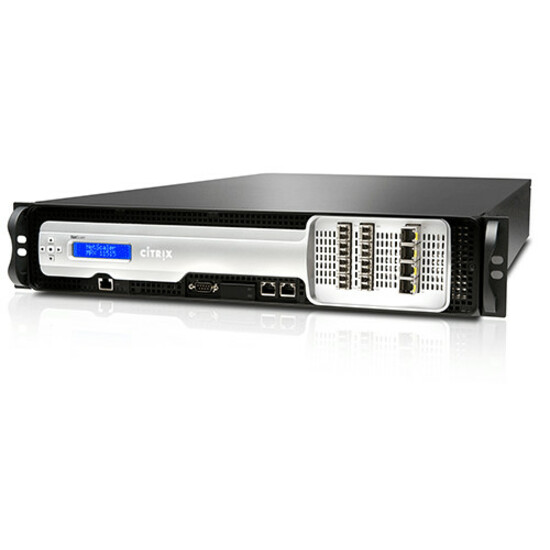
Citrix Systems
Citrix MPX 5901 Application Acceleration Appliance
3017594-E6
A 1U appliance with six RJ-45 ports, two SFP+ slots and 16 GB of memory, rated at 1 Gbit/s throughput — the capacity tier the licence is written against.
Capacity and feature edition are separate decisions. Confirm both against the current documentation before a renewal is priced.
$16,900.39Back-ordered5 Gbit/s tier
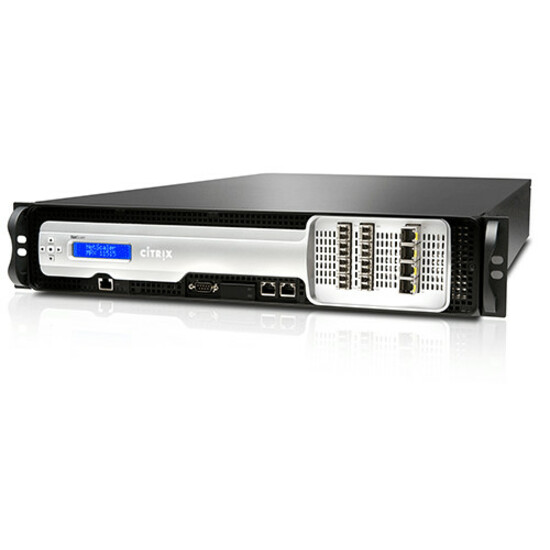
Citrix Systems
Citrix MPX 5905 Application Acceleration Appliance
3017595-E5
The same 1U six-port platform rated at 5 Gbit/s throughput, for an estate whose licensed capacity has outgrown the tier below it.
$20,649.21Back-orderedFrequently asked
- Why does my Citrix renewal quote not match what I bought last time?
- Usually because the entitlement has been re-expressed rather than re-priced. Citrix's products were renamed and rebundled after the Cloud Software Group acquisition and have been revised since, so capability that was previously bought as separate products may now be packaged differently and counted differently. The first step on any renewal is mapping what the licensing portal says you own onto the current program, and until that is done, no two quotes are comparable.
- Is NetScaler licensed per user or by throughput?
- By capacity rather than by population. Application delivery entitlements are generally expressed as throughput or capacity tiers attached to a platform, with pooled arrangements available that allocate capacity across instances instead of fixing it to one appliance. That is a different model from the per-user or per-device counting used on the virtualization and workspace side, and it is why an estate running both needs two separate sizing conversations.
- What happened to XenApp, XenDesktop and XenMobile?
- Those names belong to earlier product generations and the capability now sits under current Citrix product names and packaging. If your entitlement records still use the older names, that is a translation exercise rather than a problem — but it does mean a renewal cannot be quoted by repeating the previous part numbers. Send the entitlement details as they appear in the licensing portal and the current equivalents get confirmed on the quote.
- Does Uniqcli publish Citrix or NetScaler pricing?
- Not for licensing. Where a NetScaler appliance is carried in our catalog, its price is on the product card like any other hardware line. What is not published is a licensing figure: vendor programs, edition contents and term options change, and a published figure is stale within a release cycle — which is why so much of what is findable online about this product family describes a generation that no longer exists. What we publish is the shape of the decision; the current licensing terms and the actual figures are confirmed on the quote, on the day it is issued.
- Can the licensing, the appliances and the migration work go on one quote?
- Yes, and that is usually the right way to buy it. A NetScaler refresh is a hardware purchase with a licensing consequence, and a Citrix re-mapping is a licensing exercise with a services consequence — keeping them on one document keeps the entitlement, the hardware sizing and the professional-services scope attached to each other. Send the entitlement records, the deployed inventory, the population and the target term, and the whole scope can be priced together.
- How far ahead of a renewal date should we start?
- Around ninety days for an estate of any size. The pricing conversation is short; the work that precedes it — reconciling the licensing portal against the support contract against the deployed inventory, and mapping older entitlements onto the current program — is what takes time. Renewal dates for licensing, support and hardware maintenance also frequently sit apart from each other, and aligning them is easier to do at a renewal than between them.
- What are the NetScaler license editions?
- Three: Standard, Advanced and Premium. They are feature tiers rather than capacity tiers, and capacity is licensed separately by throughput, so an estate is described by both — the edition decides what the appliance may do and the bandwidth licence decides how much traffic it may do it to. The distinction matters at renewal because pooled capacity keeps a separate bandwidth pool for each edition, and a given instance cannot check bandwidth out of two pools at once. Moving an instance up an edition is therefore a licensing decision rather than a configuration change.
- What is NetScaler pooled capacity?
- It is a licensing model where bandwidth and instance licences sit in a shared pool rather than being pinned to one appliance. Instances check capacity out of the pool and return it, the allocation on an instance can be raised or lowered at run time without affecting traffic, and the pool is shared across form factors so hardware and virtual instances draw from the same entitlement. The constraint worth knowing before you buy is that the pool is per edition: Standard, Advanced and Premium each have their own, and one instance cannot draw from two.
Sources
- 1.NetScaler product documentation — Licensing overviewdocs.netscaler.com
- 2.NetScaler Console documentation — NetScaler Pooled capacitydocs.netscaler.com
Keep reading