
Short answer
The federal micro-purchase threshold is the dollar line below which an agency may buy supplies or services without competitive quotations. FAR 2.101 sets it at $15,000, and the simplified acquisition threshold above it at $350,000, both effective October 1, 2025. The threshold changes how a purchase is made, not what may be bought — Section 889 and origin rules still apply.
Key facts
- FAR 2.101 sets the general micro-purchase threshold at $15,000 and the simplified acquisition threshold at $350,000, both effective October 1, 2025.
- Statutory variants sit far lower: $2,000 for construction under the Wage Rate Requirements statute, $2,500 for Service Contract Labor Standards services.
- Contingency operations raise the micro-purchase threshold to $25,000 for work awarded and performed inside the United States and $40,000 outside it.
- Section 889 of the FY2019 NDAA carries no dollar threshold and reaches micro-purchases and commercially available off-the-shelf items alike.
- A purchase card is a payment and ordering instrument; the cardholder's agency-set single-purchase limit is frequently lower than the regulatory threshold.
- Splitting one requirement into several smaller awards to stay under a threshold is prohibited, whatever payment method is used.
By Uniqcli Team
The micro-purchase threshold is the dollar level below which a federal agency may buy supplies or services without most of the competition, solicitation and price-analysis machinery the Federal Acquisition Regulation otherwise requires. As of August 2026 the general micro-purchase threshold is $15,000 and the simplified acquisition threshold — the next step up, where simplified procedures still apply but competition and documentation requirements return — is $350,000. Both figures are set at FAR 2.101 and were raised from $10,000 and $250,000 respectively, effective October 1, 2025, under the FAR's periodic inflation adjustment of acquisition-related thresholds.
For an IT buyer, these two numbers decide how a purchase is made, not what may be purchased. They shorten the process. They do not relax country-of-origin rules, they do not relax supply-chain prohibitions, and they do not change what a product has to be. The most expensive mistake in small-dollar federal IT buying is assuming that a fast purchase is an unregulated one. Every figure below is current as of August 2026 and comes from the FAR as published at acquisition.gov; thresholds are adjusted periodically, so confirm them there before you rely on one.
The two thresholds, and what each one actually buys you
The micro-purchase threshold sits at the bottom of the FAR's structure. Below it, an agency may make a purchase without obtaining competitive quotations, provided the buyer considers the price to be reasonable. Purchases are distributed equitably among qualified suppliers rather than competed, and the documentation burden is minimal. This is the tier most day-to-day IT consumables, accessories, replacement parts and single-seat software renewals fall into.
The simplified acquisition threshold sits above it, at $350,000 as of August 2026. Between the two thresholds, an agency uses simplified acquisition procedures under FAR Part 13: still far lighter than a full negotiated procurement, but competition is expected, quotes are solicited, and the file has to show how price reasonableness was established. Acquisitions in this band are also generally reserved for small business. Above the simplified acquisition threshold, the full weight of the FAR's competition and clause requirements applies.
Two consequences follow for anyone quoting into this market. First, the threshold determines the kind of paperwork a buyer needs from you, not whether you may sell: a buyer under the micro-purchase threshold typically needs a clean, itemized quote with a defensible price, while a buyer in the simplified band usually needs a quote that can be compared against others on identical line items. Second, splitting a requirement into multiple awards purely to stay under a threshold is prohibited, so a quote that quietly encourages it is a quote that creates a problem for the customer.
The exceptions that move the number
The general micro-purchase threshold is not the only one. FAR 2.101 sets several statutory variants, and using the wrong one is a common source of trouble on mixed hardware-and-labor buys. As of August 2026: for construction subject to the Wage Rate Requirements statute at 40 U.S.C. chapter 31, subchapter IV, the micro-purchase threshold is $2,000. For services subject to the Service Contract Labor Standards statute at 41 U.S.C. chapter 67, it is $2,500. Those two are dramatically lower than the general figure, and they attach to the nature of the work rather than to the agency doing the buying.
The threshold also moves upward in defined circumstances. For acquisitions supporting a contingency operation or facilitating defense against or recovery from certain attacks, the micro-purchase threshold is $25,000 for purchases awarded and performed inside the United States and $40,000 outside it; the simplified acquisition threshold in those circumstances is $1,000,000 inside the United States and $2,000,000 outside. For humanitarian or peacekeeping operations, the simplified acquisition threshold is $650,000 outside the United States. Institutions of higher education and related nonprofit research organizations may have a micro-purchase threshold of $15,000 or a higher amount established by the head of the agency.
The practical reading for an IT seller: an installation, cabling or managed-service line item can pull an otherwise straightforward hardware order into a much lower threshold band, because the exception follows the labor. If a requirement mixes equipment with on-site work, expect the buyer's threshold analysis to be driven by the work, and structure the quote so the equipment and the labor are separately identifiable rather than bundled into one number.
How card-based micro-purchases work
Most micro-purchases are made with a government purchase card rather than through a written contract action. The card is a payment and ordering instrument: an authorized cardholder places the order directly with a vendor, the transaction settles like a commercial card payment, and the cardholder documents it against their own single-purchase and monthly limits. Those limits are set by the agency and by the cardholder's approving official, and they are frequently lower than the regulatory micro-purchase threshold — a cardholder's authority is whatever their agency granted, not automatically the FAR ceiling.
This changes what a vendor has to be good at rather than what a vendor has to be. The buyer is usually one person with an immediate need, a real limit, and no contracting officer standing behind the transaction. What makes that person's job possible is an itemized quote they can attach to their transaction log, a line-item total that does not move between quote and checkout, part numbers that match what arrives, and a receipt or invoice with enough detail to reconcile. Surprises at the payment step — an unexplained change in total, a substituted part, a line the receipt does not name — turn into a reconciliation exception for a cardholder who has to justify every transaction.
A cardholder cannot use the instrument to escape a rule. The purchase card is a payment mechanism, not an exemption: the same prohibitions on covered equipment, the same origin requirements where they attach, and the same prohibition on splitting requirements to stay under a limit all apply to a card transaction exactly as they would to a written order. Payment mechanics and procurement rules are two different systems, and only one of them is loosened at the micro-purchase level.
Section 889 applies at every dollar value
Section 889 of the John S. McCain National Defense Authorization Act for FY2019, Public Law 115-232, has no dollar threshold at all. It applies to every acquisition, including micro-purchases and commercially available off-the-shelf items. There is no small-order carve-out, which makes it the single rule most likely to be overlooked on a fast card purchase and the one with the least forgiving consequences.
Part A, at §889(a)(1)(A) and effective August 13, 2019, bars agencies from procuring covered telecommunications equipment or services, or any system that uses them as a substantial or essential component or as critical technology. Part B, at §889(a)(1)(B) and effective August 13, 2020, bars agencies from entering into, extending or renewing a contract with an entity that itself uses such equipment or services anywhere in its operations, absent an exception or waiver. The FAR implements both at provision 52.204-24 and clause 52.204-25. The named entities are Huawei Technologies, ZTE Corporation, Hytera Communications, Hangzhou Hikvision Digital Technology and Dahua Technology, together with their subsidiaries and affiliates — with Hytera, Hikvision and Dahua covered for video surveillance and telecommunications equipment used for public safety, security of government facilities, physical security surveillance of critical infrastructure, and other national security purposes.
The trap on small buys is the component, not the brand on the outside of the box. A low-cost IP camera, network video recorder, wireless bridge, intercom or two-way radio can carry a covered module under a reseller's own label, and the price point that makes it a micro-purchase is often exactly what made the covered component attractive to the manufacturer. Screening at the component level matters most in precisely the transactions that receive the least contracting scrutiny.
Small orders are not automatically small-rules orders
The Trade Agreements Act works differently from Section 889. On an open-market purchase, the origin rules of FAR subpart 25.4 attach at the applicable trade-agreement threshold rather than at every dollar: as of August 2026 the World Trade Organization Government Procurement Agreement threshold for supply contracts is $174,000, set for calendar years 2026-2027 by the FAR's trade agreements thresholds rule effective March 13, 2026. Several free trade agreements set lower supply thresholds — $105,767 for a group that includes Australia, Chile, Colombia, Singapore and the USMCA countries, and $100,000 under the Korea agreement. A small open-market order generally sits below all of them.
The exception that catches buyers is contractual rather than dollar-based. GSA states that the Trade Agreements Act applies to Multiple Award Schedule contracts unless the solicitation or contract says otherwise, and incorporates the trade agreements clause into the Schedule solicitation and the resulting contract. Because the threshold is tested at the contract level, and a Schedule contract's value is far above the trade-agreement threshold, the origin rule reaches individual orders regardless of the order's own value. A four-hundred-dollar order placed against such a contract is still governed by it. That is why two buyers can order the identical part at the identical price and face genuinely different origin obligations — the difference is the instrument the order rides on, not the size of the order.
Origin itself is decided by where an item was wholly grown, produced or manufactured, or where it was substantially transformed into a new and different article of commerce with a name, character or use distinct from what it was made from. That test is applied to the end product, which is why an assembly location alone rarely settles the question. The list of designated countries is amended periodically, so it should be confirmed at acquisition.gov rather than carried in a spreadsheet.
What this means when you are actually buying
Work the four questions in order, because they are independent and a product can pass three and fail the fourth. What is the threshold band, including any labor-driven exception that lowers it? What instrument is the order riding on, since that can attach origin rules a small order would not otherwise carry? Is anything on the bill of materials — at the component level, not just the brand level — covered by Section 889? And does the specification demand anything else, such as a validated cryptographic module, that is a separate question again?
Documentation is what makes a small purchase defensible later. A cardholder's file is usually thin by design, so an itemized quote naming manufacturer part numbers, a total that does not move, and a receipt that reconciles line by line is the difference between a clean transaction log and an audit exception. Ask for what you need to be answered in writing at quote time rather than after delivery; the paperwork burden on a micro-purchase is small precisely because so little of it is generated automatically.
For the origin question on quoted line items, Uniqcli performs TAA country-of-origin screening before the quote. Where a manufacturer designates a specific model as TAA-compliant, that designation is the manufacturer's, published on the product itself; ask for it by model and keep it with the order file.
Key takeaways
- As of August 2026 the general micro-purchase threshold is $15,000 and the simplified acquisition threshold is $350,000, both set at FAR 2.101 and both raised effective October 1, 2025.
- Statutory exceptions move the micro-purchase threshold: $2,000 for construction under the Wage Rate Requirements statute, $2,500 for services under the Service Contract Labor Standards statute, and higher figures for contingency and emergency operations.
- Below the micro-purchase threshold an agency may buy without competitive quotations; between the thresholds, simplified acquisition procedures under FAR Part 13 still expect competition and documented price reasonableness.
- Splitting a requirement into multiple smaller awards to stay under a threshold is prohibited — a quote should never be structured to encourage it.
- A government purchase card is a payment and ordering instrument, not an exemption: cardholder limits are set by the agency and are often lower than the regulatory threshold, and every procurement prohibition still applies.
- Section 889 of the FY2019 NDAA has no dollar threshold and applies to every acquisition including micro-purchases and commercial off-the-shelf items, implemented at FAR 52.204-24 and 52.204-25.
- The Trade Agreements Act attaches at trade-agreement thresholds on open-market buys — $174,000 for supplies under the WTO Government Procurement Agreement for 2026-2027 — but GSA applies it at the contract level on Multiple Award Schedule contracts, so it reaches small orders placed against them.
- Thresholds and the designated-country list are adjusted periodically; confirm both at acquisition.gov before relying on a figure.
Shop it at Uniqcli
Parts for this job
The card-purchase monitor
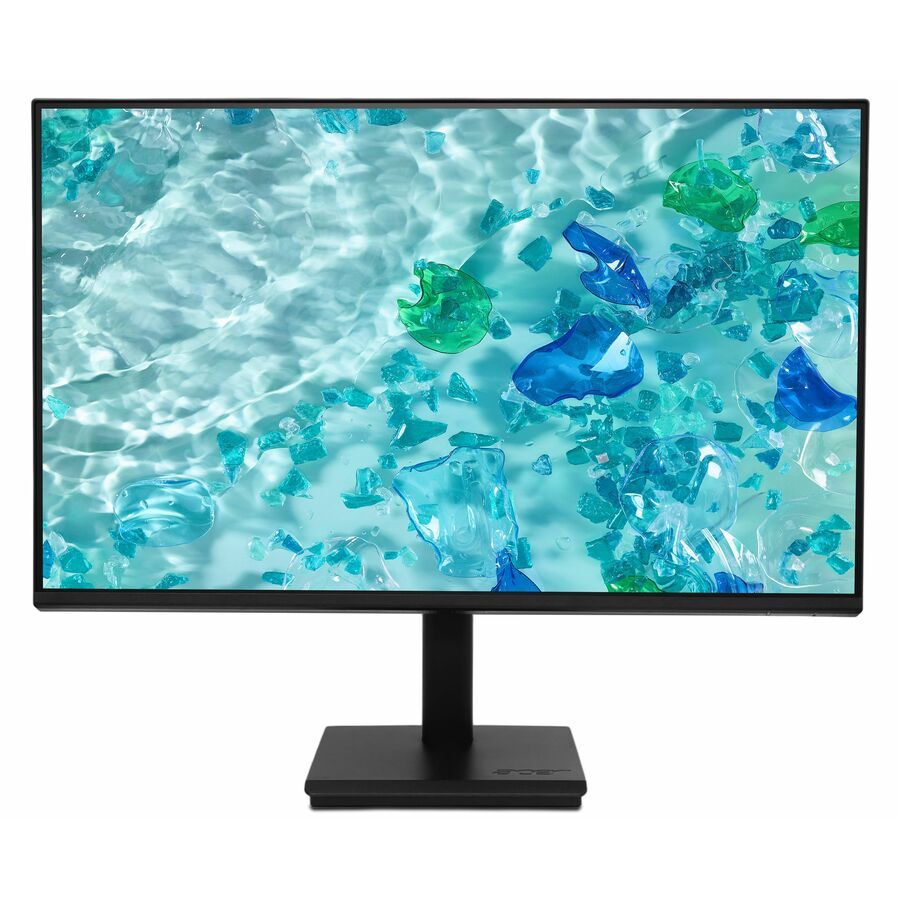
Acer
Acer Vero V247Y G 24" Class Full HD LCD Monitor
UM.QV7AA.G05
A 23.8-inch 1920 x 1080 IPS display with HDMI, VGA and a VESA mount — the ordinary desk refresh that sits well inside a cardholder's single-purchase limit.
$101.66In stockDock for a laptop desk
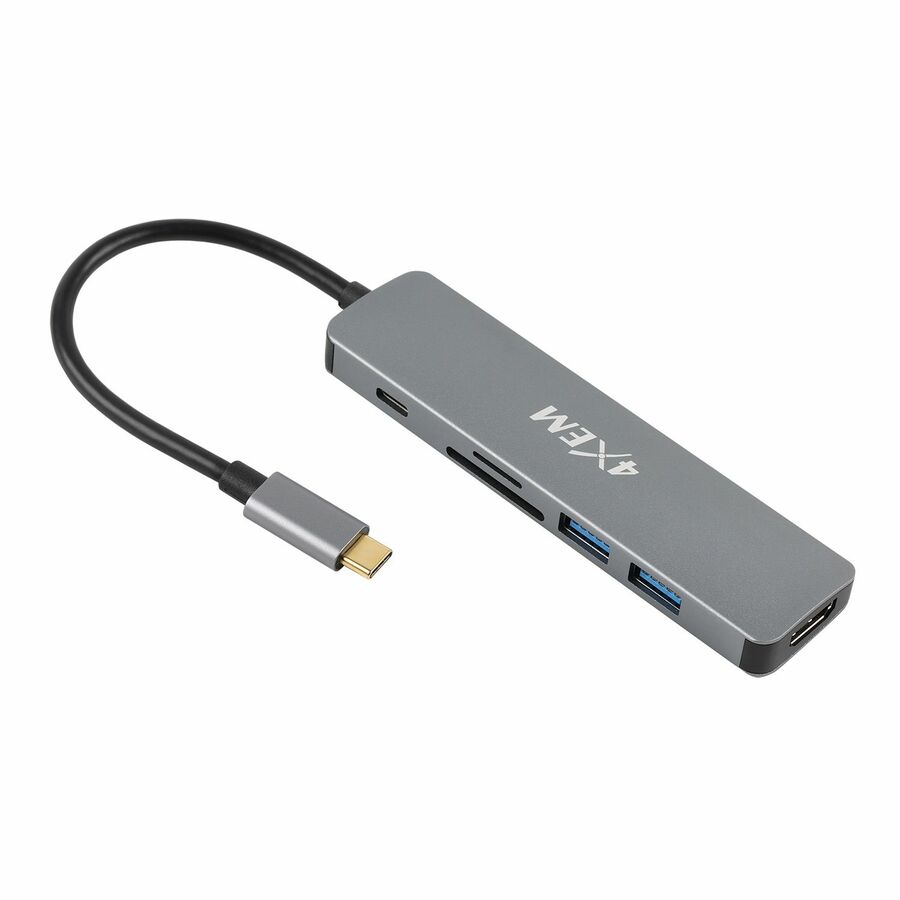
4XEM
4XEM 6-in-1 USB-C Docking Station with 4K HDMI, 100W Power Delivery…
4XHB03
A six-in-one USB-C dock with 4K HDMI, 100 W power delivery, two USB 3.0 ports and card readers, for turning a laptop into a docked workstation.
Ask for the manufacturer part number on the quote; a cardholder has to reconcile the receipt line by line.
$33.37In stockFrequently asked
- What is the federal micro-purchase threshold?
- As of August 2026 the general micro-purchase threshold is $15,000, set at FAR 2.101. It was raised from $10,000 effective October 1, 2025 under the FAR's periodic inflation adjustment of acquisition-related thresholds. Below that level an agency may buy supplies or services without obtaining competitive quotations, provided the price is considered reasonable. Several statutory variants sit lower — $2,000 for construction subject to the Wage Rate Requirements statute and $2,500 for services subject to the Service Contract Labor Standards statute — and contingency operations carry higher figures. Confirm the current values at acquisition.gov, since they are adjusted periodically.
- How is the simplified acquisition threshold different?
- The simplified acquisition threshold is the next tier up, $350,000 as of August 2026, raised from $250,000 effective October 1, 2025. Between the micro-purchase threshold and the simplified acquisition threshold, an agency uses the simplified procedures of FAR Part 13: lighter than a full negotiated procurement, but competition is expected, quotes are solicited, and the file must document how price reasonableness was established. Acquisitions in that band are also generally reserved for small business. Above it, the FAR's full competition and clause requirements apply.
- Does Section 889 apply to micro-purchases?
- Yes. Section 889 of the FY2019 NDAA has no dollar threshold and applies to every acquisition, including micro-purchases and commercially available off-the-shelf items. Part A, effective August 13, 2019, prohibits procuring covered telecommunications equipment or services or systems using them as a substantial or essential component; Part B, effective August 13, 2020, prohibits contracting with an entity that itself uses such equipment. The named entities are Huawei, ZTE, Hytera, Hangzhou Hikvision and Dahua, plus their subsidiaries and affiliates. The risk on small buys is usually a covered module inside an inexpensive camera, recorder or radio sold under another label.
- Does the Trade Agreements Act apply to small orders?
- It depends on the instrument, not only the amount. On an open-market purchase, the origin rules of FAR subpart 25.4 attach at the applicable trade-agreement threshold — $174,000 for supplies under the WTO Government Procurement Agreement for calendar years 2026-2027, with several free trade agreements setting lower figures — so a small open-market order usually sits below them. On a Multiple Award Schedule contract, the trade agreements clause is incorporated into the contract itself and the threshold is tested at the contract level, so the origin rule reaches individual orders regardless of an order's own value.
- Can a government purchase card be used above the micro-purchase threshold?
- The card is a payment and ordering instrument and its use is governed by the cardholder's delegated authority. As an ordering method for a purchase made under micro-purchase procedures, a cardholder is limited to their agency-set single-purchase limit, which is frequently lower than the regulatory threshold. Cards are also used as a payment method against orders placed under other procedures by a warranted contracting officer. What the card never does is change the underlying rules — the prohibition on splitting requirements to stay under a limit, and every procurement prohibition, apply to a card transaction exactly as to a written order.
- Is splitting a large requirement into several micro-purchases allowed?
- No. Dividing a requirement into multiple smaller purchases in order to stay under a threshold and avoid the competition or documentation requirements that would otherwise apply is prohibited. The test is the requirement, not the invoice: several orders placed close together for parts of one known need read as a split even when each individual order is small. For a vendor, the practical rule is not to structure or suggest a quote that depends on splitting — quote the requirement as it stands and let the buyer's contracting office choose the procedure.
- What should a quote include for a small federal IT purchase?
- Enough for a cardholder to justify the transaction without coming back with questions. That means itemized lines with manufacturer part numbers, a total that will not change between quote and payment, clearly separated equipment and labor where any on-site work is involved (labor can pull the order into a lower threshold band), any origin or covered-equipment information the buyer has asked for in writing, and a receipt or invoice detailed enough to reconcile line by line against the order.
Sources
- 1.Acquisition.GOV — FAR 2.101 Definitionsacquisition.gov
- 2.Acquisition.GOV — Threshold Changes, October 1, 2025acquisition.gov
- 3.Federal Register — FAR: Inflation Adjustment of Acquisition-Related Thresholdsfederalregister.gov
- 4.Acquisition.GOV — FAR 52.204-25, prohibition on covered telecommunications equipmentacquisition.gov
Keep reading