
Responsible AI Adoption: A Board-Ready Pilot Scorecard
Turn an AI pilot into a decision the board can defend. Define the task, baseline, owner, review point, cost and stop rule before the organization scales it.
By Uniqcli Team · · 16 min read

Key takeaways
- Ask management to bring a decision on a named use case, with an owner and a defined human decision boundary.
- Compare accepted, quality-checked work with the pre-AI baseline; count review, rework, integration and infrastructure costs.
- Test the model, the connected system and the people using it under conditions that resemble production.
- Teach approved use by role, including what data cannot be entered and when a person must take over.
- Approve a placement and scale plan only after data controls, reliability, capacity and an exit route are clear.
On this page
An AI pilot is ready for a board decision only when management can answer three questions: Did the work improve? What did each accepted result cost? Who can stop the system if it makes a consequential mistake? License counts and a polished demonstration do not answer any of them.
NIST's AI Risk Management Framework puts governance, measurement and management around a defined use case. That is a more useful shape for a board packet than a count of pilots. Directors do not need to inspect every prompt or choose a GPU. They need a clear record of what the system does, who is accountable, what was measured against the old process, what could go wrong and which conditions would trigger a pause. The CEO and CIO need the same record to decide which pilots deserve more money.
Give the board a decision, not a tour of pilots
The first page of a useful board packet states the decision requested. “Approve a limited deployment of the purchasing team's quote-comparison assistant to 20 trained users, with human approval before any recommendation reaches a customer” is reviewable. “Scale AI across procurement” is not. The first statement names the task, users and boundary. It gives the board something it can revisit in three months.
NIST's AI Risk Management Framework makes inventory, roles, training, measurement and a proceed-or-stop decision part of the same management cycle. The framework is voluntary, but its logic is useful for any organization deciding what to scale. The inventory prevents a blind spot; the named owner gives someone authority to correct a problem; measurement shows whether the system fulfills its purpose; and the stop rule ensures a pilot can end when it does not.
Give each material use case a short record: the business objective, affected people, data classes, model and supplier, connected systems, human reviewer, known limitations, baseline, pilot test, expected volume and fallback. The board can see a portfolio view across those records, while the operating team keeps the detailed evidence. A board dashboard showing only licenses activated or prompts submitted measures activity. It cannot tell a director whether an outcome improved.
For organizations running many AI systems, ISO/IEC 42001 offers a management-system standard for establishing and continually improving AI policies and controls. That can help make the use-case records consistent across teams. It does not replace the test of whether this particular assistant works safely in this particular purchasing process, or settle which laws apply.
Do not turn every experiment into a board vote. The organization should set risk thresholds and delegate routine decisions. A low-risk tool for drafting internal meeting agendas can follow a lightweight path. A system that influences hiring, credit, clinical care or security response needs a deeper review, appropriate expert participation and a clear escalation route. The board's role is to know the boundaries of that delegation and see material exceptions, incidents and results.
Define one use case at the decision level
First name the decision that changes when the tool enters the workflow. A model may summarize documents, but a person could still choose the supplier. Another system may rank suppliers and automatically populate a purchase order. The same broad label, “procurement AI,” covers different accountability and risk. Describe the output, who relies on it, and the point at which a human can still correct it.
Take a hypothetical quote-comparison assistant. It reads three submitted quotations and drafts a side-by-side summary of warranty terms, delivery dates and exclusions. A purchasing analyst checks the source documents and signs off before using the summary. That is a bounded pilot. If the team later wants the assistant to recommend a winning bid, enter an order or send a supplier response, document those as new uses. Each adds a different consequence and may require different tests.
Write down which data is allowed in the pilot. Vendor quotations can contain confidential prices and contract terms. An approved test set may exclude names or use supplier permission; a production system needs a reviewed route for retention, access and deletion. The Australian Cyber Security Centre's guidance on engaging with AI tells organizations to understand how a service uses and stores their data and to keep sensitive information out of unapproved tools. That is a concrete training rule, not merely a privacy slogan.
The use-case owner should be a person with authority over the workflow, not only the person who purchased the licenses. Technology staff can operate the platform; the business owner must say whether its output is fit for the decision. Security, privacy and legal specialists review the boundaries that fall within their roles. The record should state who can pause the pilot, who handles an incident and who tells affected users that an answer was wrong.
Set a baseline the pilot has to beat
Measure the current process before declaring the AI version faster. Choose a unit of work that matters to the user: an accepted quote comparison, a correctly resolved support request, a report that a reviewer can send, or a completed analysis with traceable sources. Count the whole workflow. If AI reduces drafting time but doubles verification time, the organization needs to know that before it signs a larger contract.
Here is an illustrative calculation, not a benchmark. Suppose 100 quote comparisons take 14 minutes each when an analyst prepares them manually: 1,400 minutes. An assistant takes four minutes to draft each summary and an analyst takes six minutes to verify each one. Twenty summaries require another eight minutes of correction. The new total is 1,160 minutes: 1,000 for drafting and review, plus 160 for corrections. The pilot saves four staff hours across 100 comparisons before software, integration, support and compute costs. If it also misses a material exclusion, that quality defect could outweigh the time gain.
The example is deliberately modest. It shows why “the model writes in seconds” is not a return-on-investment calculation. For each accepted result, include model or license fees, data preparation, human review, rework, monitoring, network and storage use, compute utilization and the cost of operating the old process as a fallback. Some costs are fixed and some rise with volume. A small pilot may look expensive per task because setup is spread over few uses; a large deployment may become expensive because concurrency, logging or review effort grows. Test both the current volume and the volume management expects.
Measure quality alongside cost. Use a sample that includes routine work and the awkward cases employees actually see. Define a material error for the task and who judges it. In the quote example, a false claim about warranty coverage may be more serious than awkward wording. Record the rate of accepted outputs, the rate of material corrections, review time and the cases where the human disagreed with the system. If the pilot has too few cases to estimate a reliable rate, say so. It can still reveal failure modes without pretending to prove long-term performance.
NIST's AI RMF calls for performance criteria to be measured under conditions similar to deployment and for ongoing comparison after launch. A board packet should therefore show the baseline, the pilot period, the sample size, the acceptance definition and who checked the result. A bar chart with no denominator or review method invites a confident answer to the wrong question.
Test the model, the system and the human workflow
A model can pass a benchmark and fail inside a business process. It may answer accurately in isolation but receive stale retrieval results, lose a document permission, leak a confidential field through a connector or give a persuasive answer that a hurried employee accepts without checking. NIST's 2026 ARIA evaluation planning manual describes three complementary forms of testing: model testing, red teaming and user testing. Use that as a way to design an evaluation for the complete application rather than treating a single score as proof.
- Model testing asks whether the output meets the task's quality bar. For a quote comparison, use source documents with complex exclusions and score whether the summary preserves them. Repeat with the model version and settings intended for production.
- Red teaming probes ways the system can fail or be manipulated. Place a harmless instruction inside a supplier attachment that tells the assistant to disregard its task; verify that the application treats the attachment as data. Try an unauthorized request for a private file and confirm the identity and tool layer denies it.
- User testing watches the people who will operate the workflow. Can analysts see the source passage behind a claim? Do they notice a false term? Can they correct the draft without starting over? Do they understand when the tool is unavailable or uncertain?
The three tests answer different questions. A red-team exercise can find an access-control problem even when the draft is accurate. User testing can reveal that a safe but confusing interface leads to poor decisions. Model testing can reveal a quality gap even if the security controls work. Report those findings separately, along with fixes and a retest date. A single “AI readiness” score hides the decision the board needs to make.
For high-impact uses, testing should include the conditions that trigger a human handoff. If a system cannot read a damaged document, lacks the current policy, detects conflicting sources or sees a request outside its approved task, what happens? The safer behavior may be a clear stop and a route to a person. That is a product requirement to verify, not a sentence in a policy that no one tests.
Teach the job, not only the technology
An AI literacy course can explain what a language model is and still leave employees unsure whether they may paste a customer record into it. Training should answer the questions people face during their own tasks: which tools are approved, what data may enter them, what outputs need checking, what a suspicious instruction looks like, and where to report an error. Give a purchasing analyst examples from quotations, a developer examples from code and a recruiter examples from candidate information. Revisit the material when the tool or policy changes.
NIST's AI RMF treats training and clear roles as governance outcomes. Where the EU AI Act applies, Article 4 requires providers and deployers to take measures that support AI literacy for staff and others operating systems on their behalf, accounting for their knowledge, experience and context of use. It does not prescribe a universal one-hour course or prove that a generic annual module is enough. The practical test is whether the people using this specific system can explain its limits and carry out the review they are assigned.
Make literacy measurable without reducing it to course completion. Ask users to work through a realistic case, identify information they must not enter, catch one incorrect output and show how to escalate it. Observe the result during the pilot. If trained employees consistently miss the same failure, improve the workflow and interface as well as the training. Responsibility cannot be delegated to a slide deck.
Choose infrastructure after the workload is understood
The placement decision should follow the use case's data and service requirements. A hosted model can be appropriate when the data terms, location, controls, latency and economics fit. A private environment may make sense when approved data boundaries or predictable utilization justify operating it. An edge system may be useful when the task needs local response or continued operation with limited connectivity. Each option still needs identity, monitoring, backup, support and a recovery plan.
Ask the CIO for the expected volume, peak concurrency, model size, context length, response-time target, data sources, retention period and support window. Include network paths to the data and the people who will maintain the service. A GPU quote without those details can be both underpowered and wasteful. A cloud bill based on a demo's few prompts can be equally misleading once a team sends large documents and runs repeated evaluations. Compare the total cost of the accepted workflow, not one token or one processor.
Power, cooling, storage and network design become more important as a pilot moves into shared service. The board does not need a port-level diagram, but it should see whether the organization has a facility and operations plan before it approves a large on-premises purchase. For a small local research or prototyping task, a deskside system may be enough; for many simultaneous users or larger models, a server or cluster project may be warranted. Validate the actual model and service stack before selecting hardware.
Uniqcli can quote DGX Spark systems and HPE ProLiant server configurations as possible building blocks. These are examples of products we sell, not a recommendation that every AI use case belongs on either platform. The workload, data boundary and acceptance test determine the configuration.
Local pilot example
NVIDIA
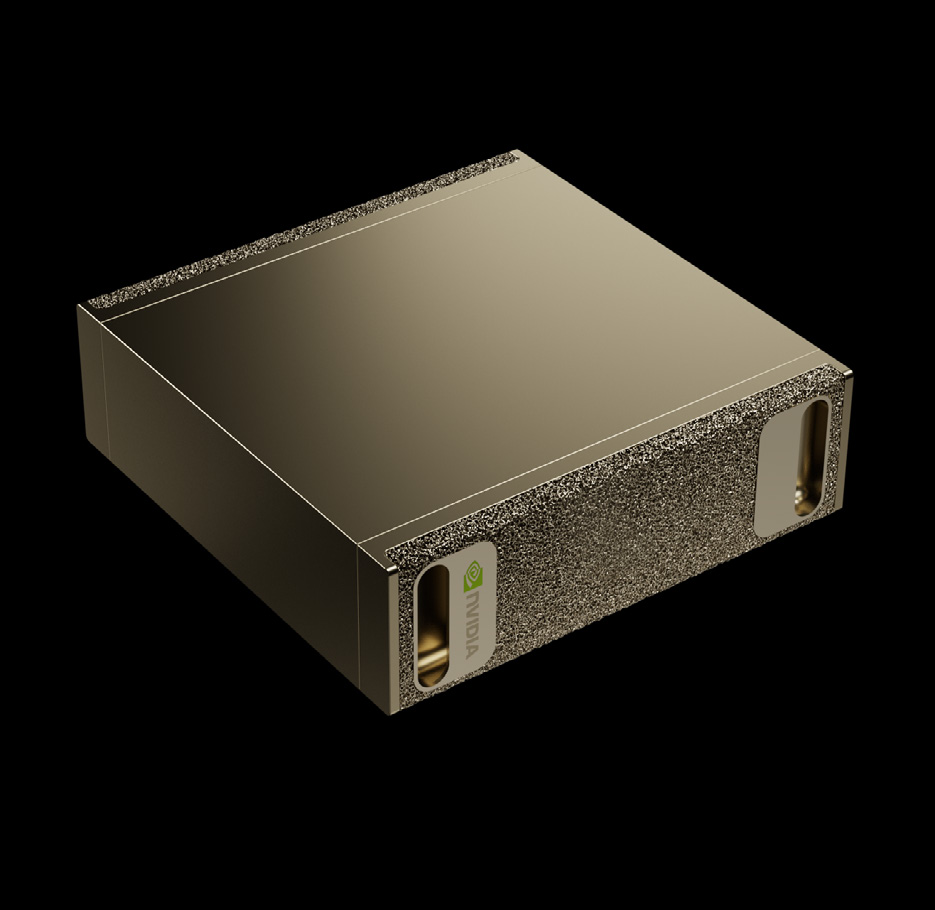
NVIDIA DGX Spark 128GB 4TB GB10 Grace Blackwell AI Desktop
940-54242-0000-000
A catalog DGX Spark system to evaluate only when the approved model, software and data boundary fit a local deployment. Test memory, Arm compatibility, performance and support before selection.
The pilot scorecard should decide whether private compute is needed at all.
$7,768.98In stockCompute paths to compare after the pilot is defined
NVIDIA DGX Spark systems
Explore local AI development systems and scope memory, software, data access and any multi-node needs with a specific workload.
HPE ProLiant server portfolio
Compare enterprise server configurations for a private or hybrid deployment, including storage, network and support requirements.
HPE supercomputing and AI systems
Start a separate design discussion for larger GPU infrastructure when the measured workload exceeds a small system.
Build a one-page scorecard for the next meeting
The scorecard is a decision record, not a decorative dashboard. Keep the rows stable enough to compare pilots while allowing each use case to set its own threshold. The following list can become a one-page board packet with an evidence link, owner and green, amber or red status for every row.
- Purpose: Name the specific job and the people affected. Evidence is a use-case record approved by the business owner. A broad goal such as “improve productivity” does not define an acceptable deployment.
- Ownership: Show the executive sponsor, operating owner, reviewer, security contact and person authorized to stop the system. An owner without control over the workflow cannot accept its risk for the team.
- Data and access: State the approved data classes, hosting path, connectors, retention and permissions. Attach the current configuration, not only the vendor's general security brochure.
- Baseline and value: Show the old process, sample size and cost per accepted result. Include review, rework, license, compute and integration cost. Mark estimates as estimates.
- Quality: Show material error types and acceptance thresholds from a representative pilot. The person who uses the output should help judge it; a vendor benchmark is supporting context.
- Security and resilience: Report the red-team findings, tool boundaries, logs, incident route and tested fallback. Record unresolved issues with a target date and owner.
- People: Show which roles are trained, how competence was checked and what help is available when the system fails. License activation alone is not evidence of safe use.
- Scale readiness: State the expected volume, peak demand, support plan and infrastructure decision. The plan should explain what changes as the pilot grows and which limit would force redesign.
- Decision: Choose scale, limit, redesign or retire. Write the reason, review date and condition that would reopen the decision. Avoid leaving an amber item with no accountable next step.
The board does not need every raw transcript. It does need a path back to the evidence. Where management recommends accepting a material exception, name the exposure and compensating control. If the quality bar was missed, do not replace the test with a persuasive demonstration. A documented no-go decision is a useful result: it saves money and preserves trust for the AI uses that can pass.
Decide what happens after the pilot
Scaling should have conditions. Approval might cover one team, one model version and one read-only connector. The next phase can expand the user group after the owner confirms quality at higher volume and security confirms the same access boundary. If new features add actions or data sources, rerun the relevant tests. NIST's Generative AI Profile calls for reassessing risks when a model is fine-tuned, retrieval is added or a third-party model is used outside the original evaluation context.
Some pilots need redesign rather than more spend. If employees spend too long verifying answers, improve retrieval and source presentation before buying more compute. If a model frequently misses a critical exception, narrow the task or require more structured input. If no useful outcome emerges after a fair test, retire the pilot and release its access. Removing an unsuccessful system is a responsible operating decision, not a failure of ambition.
Set a review rhythm that matches the use case. A weekly operating check can catch pilot defects; a monthly owner review can track quality and cost; a periodic executive review can decide where to invest. The board should see exceptions, material incidents, results and changes to the risk threshold. It should be possible to read the previous scorecard and tell whether the new one represents progress or merely more usage.
Quote the complete deployment, not a processor count
When a pilot earns an infrastructure budget, give suppliers the acceptance test and operating requirements. Include the exact model and serving framework, document size, concurrency, latency target, retention, data location, security controls, storage, network, facility constraints, support and growth assumption. Ask the supplier to identify which parts of the workload have been tested and which remain assumptions. For a hosted option, request the same full-workflow cost view so the alternatives can be compared fairly.
Uniqcli can turn a documented workload into a scoped hardware and integration request. The buyer should be able to review the entire configuration and the test that will determine acceptance. The quote should identify every dependency needed to pass that test.
Turn a proven pilot into a scoped deployment
Share the use case, data boundary, model, expected demand and acceptance criteria. We can quote the compute, networking and supporting components for a reviewable build.
FAQ
What should a board ask about an AI pilot first?
Ask what decision management wants, which named use case it covers and who owns the outcome. Then ask for the pre-AI baseline, pilot quality results, data and action boundaries, cost per accepted result, and the condition that would stop or limit deployment. Those answers make a scale decision reviewable; a demonstration and usage chart alone do not.
How do we calculate the value of a generative AI pilot?
Choose a unit of completed, accepted work and compare it with the old process over a representative sample. Include time to prepare, review and correct the output, plus license, model, integration, storage and support costs. Report quality failures beside the savings. If the sample is too small or the workflow changes during the test, explain the uncertainty instead of presenting a precise return figure.
Does human review solve the risk of a wrong AI answer?
It helps only when the reviewer has the source information, time, training and authority to reject the output. Test whether real users catch material errors under normal workload pressure. For consequential actions, keep approval and access checks in the application workflow, and provide an escalation and stop route that can be exercised.
Does every AI pilot need private infrastructure?
No. Placement follows data permissions, legal obligations where applicable, latency, expected utilization, budget and the ability to operate the service. A hosted tool may fit one task; a private or edge deployment may fit another. Compare the cost and control of the complete, accepted workflow and verify the actual model stack on the proposed hardware.
How often should the scorecard be refreshed?
Update it during the pilot as evidence arrives, then set a recurring review based on the importance of the use case. Reopen it sooner when the model, data source, connector, permission, volume or business decision changes. A material incident or repeated quality failure should trigger an immediate owner decision on whether to pause the system.
Sources
- 1.NIST AI Risk Management Framework Coreairc.nist.gov— AI inventory, roles, training, measurement, human oversight and proceed decisions.
- 2.NIST AI RMF Govern Playbookairc.nist.gov— Accountability structures, responsibilities and governance practices.
- 3.NIST AI RMF Measure Playbookairc.nist.gov— Production-like testing and comparison of live performance with predeployment measures.
- 4.NIST ARIA Evaluation Planning Manualnist.gov— Model testing, red teaming and user testing in a holistic evaluation.
- 5.NIST Generative AI Profilenist.gov— Reassessment after fine-tuning, retrieval or new deployment contexts.
- 6.ISO/IEC 42001 AI management systemsiso.org— Management-system framework for AI risks, opportunities and continual improvement.
- 7.Australian Cyber Security Centre AI use guidancecyber.gov.au— Approved use, sensitive-data protection and incident planning.
- 8.European Commission AI Act Article 4ai-act-service-desk.ec.europa.eu— Context-sensitive AI literacy obligations where the law applies.
- 9.European Commission AI Act Article 26ai-act-service-desk.ec.europa.eu— Human oversight and monitoring duties for covered high-risk systems.
Primary guidance reviewed October 25, 2026. Legal applicability and system-specific obligations require review for the actual use and jurisdiction.