
Best Medical Computer Carts for Hospitals and Clinics
Rolling point-of-care workstations for the ward and the exam room — read by what they carry (tablet, laptop or display), the height mechanism, and whether the power is a plug-in strip or an onboard battery.
Medical computer carts in stock at Uniqcli
How to choose →A curated selection with live pricing — in-stock lines first, then back-ordered lines with a typical lead time. Every line is sourced through US distribution and screened for NDAA §889 status before checkout, with TAA verified on request.
- CTA DigitalCTA Digital Medical Rolling Cart with Articulating Arm & Accessories for iPad 10.2 Series, iPad Air 3, and iPad Pro 10.5 - 5 Casters - Metal, AcrylicPAD-MCRFS
$223.64
Back-orderedBack-ordered — estimated OEM lead time 3–8 weeks (Nov 15 – Dec 20 if ordered today).
- CTA DigitalCTA Digital Height-Adjustable Rolling Medical Workstation Cart with VESA Plate - 4 Casters - 1QPAD-HRSWV
$633.00
$478.62
Back-orderedBack-ordered — estimated OEM lead time 3–8 weeks (Nov 15 – Dec 20 if ordered today).
- CTA DigitalCTA Digital Height-Adjustable Rolling Security Medical Workstation Cart for 7-14 Inch Tablets - 4 Casters - 22" Width x 19" Depth x 52" HeightQPAD-HRSW
$633.00
$539.85
Back-orderedBack-ordered — estimated OEM lead time 3–8 weeks (Nov 15 – Dec 20 if ordered today).
- CTA DigitalCTA Digital Medical Rolling Cart with Basket, Storage Box, and Handle Add-On Accessories - 33 lb Load Capacity - 5 Casters - Aluminum Alloy - 59.44" Height - 1PAD-MEDRCBB
$605.61
Back-orderedBack-ordered — estimated OEM lead time 3–8 weeks (Nov 15 – Dec 20 if ordered today).
- CTA DigitalCTA Digital Medical Rolling Cart with Basket, Storage Box, and Handle Add-On Accessories - 33 lb Load Capacity - 5 Casters - Aluminum Alloy - 59.44" Height - 1PAD-MEDRCBW
$605.61
Back-orderedBack-ordered — estimated OEM lead time 3–8 weeks (Nov 15 – Dec 20 if ordered today).
- Amer NetworksAmer Mounts Light Pedestal Medical Cart (Max Load 22.05 lbs) - 22.05 lb Load Capacity - 4 Casters - Steel, Aluminum Alloy, Plastic - 24.06" Width x 25.98" Depth x 48.54" HeightMCLPCC
$1,499.99
$1,358.95
Back-orderedBack-ordered — estimated OEM lead time 3–8 weeks (Nov 15 – Dec 20 if ordered today).
- Amer NetworksAmer Mounts Light Pedestal Medical Cart (Max Load 39.68 lbs) - 39.68 lb Load Capacity - 4 Casters - Steel, Aluminum Alloy, Plastic - 24.06" Width x 25.98" Depth x 48.54" HeightMCLPCH
$1,499.99
$1,358.95
Back-orderedBack-ordered — estimated OEM lead time 3–8 weeks (Nov 15 – Dec 20 if ordered today).
- Amer NetworksAmer Mounts Light Pedestal Medical Cart with Laptop Bar Mount (Max Load 20.94 lbs) - 20.94 lb Load Capacity - 4 Casters - Steel, Aluminum Alloy, Plastic - 24.06" Width x 25.98" Depth x 51.18" Height - 9.7" to 17.3" Screen SupportedMCLP1N
$1,499.99
$1,359.45
Back-orderedBack-ordered — estimated OEM lead time 3–8 weeks (Nov 15 – Dec 20 if ordered today).
- Amer NetworksAmer Mounts Light Pedestal Medical Cart with Display Mount (Max Load 17.64lbs) - 17.64 lb Load Capacity - 4 Casters - Steel, Aluminum Alloy, Plastic - 24.06" Width x 25.98" Depth x 65.08" Height - 34" Screen SupportedMCLP1M
$1,499.99
$1,361.61
Back-orderedBack-ordered — estimated OEM lead time 3–8 weeks (Nov 15 – Dec 20 if ordered today).
- Amer NetworksAmer Mounts Light Pedestal Medical Cart with Display Mount (Max Load 34.17 lbs) - 34.17 lb Load Capacity - 4 Casters - Steel, Aluminum Alloy, Plastic - 24.06" Width x 25.98" Depth x 65.08" Height - For 1 Devices - 34" Screen SupportedMCLP1MH
$1,499.99
$1,364.98
Back-orderedBack-ordered — estimated OEM lead time 3–8 weeks (Nov 15 – Dec 20 if ordered today).
Back-ordered — estimated OEM lead time 3–8 weeks (Nov 15 – Dec 20 if ordered today).



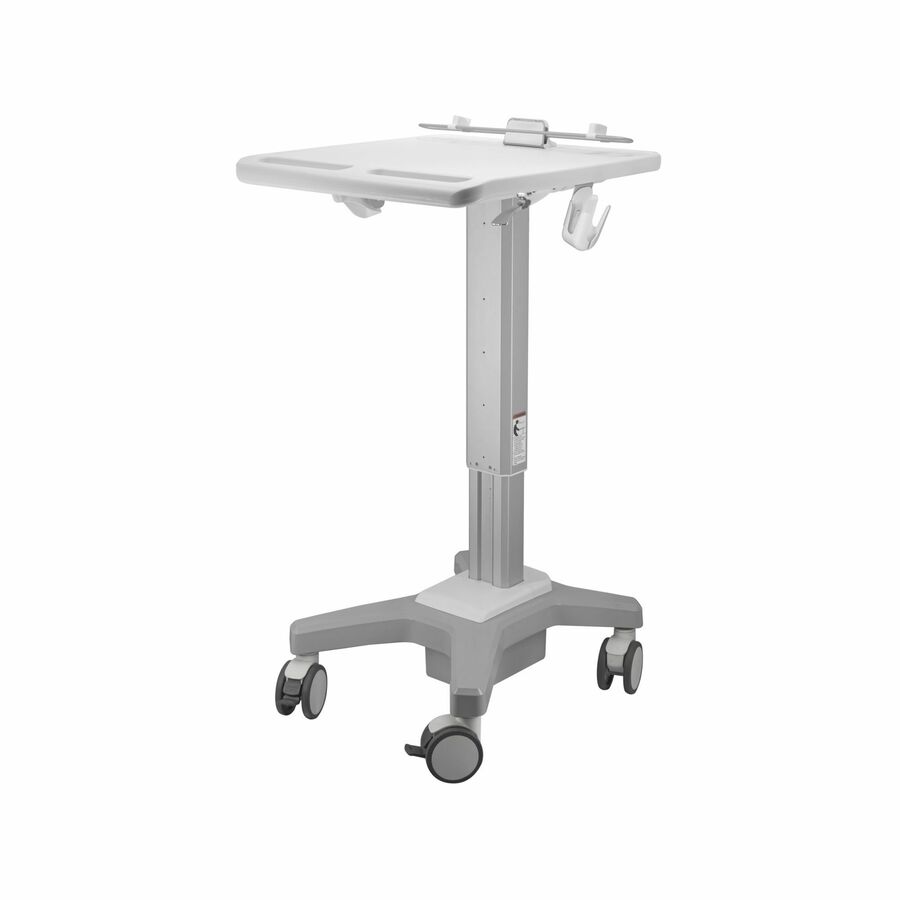
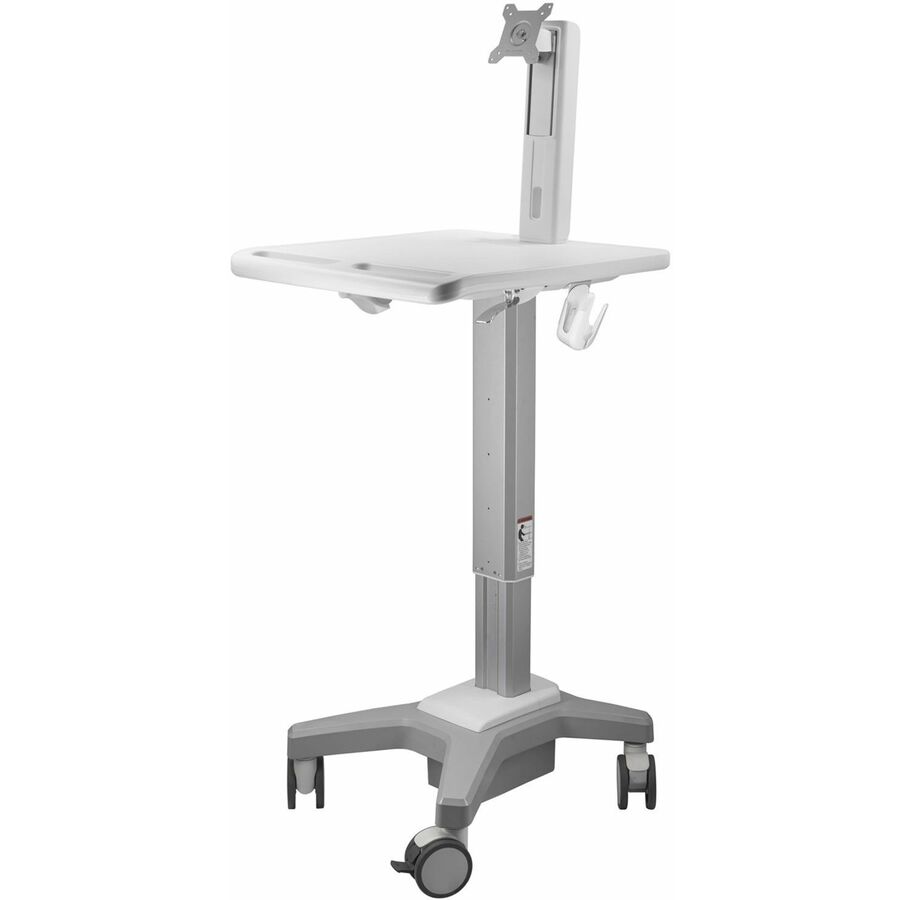
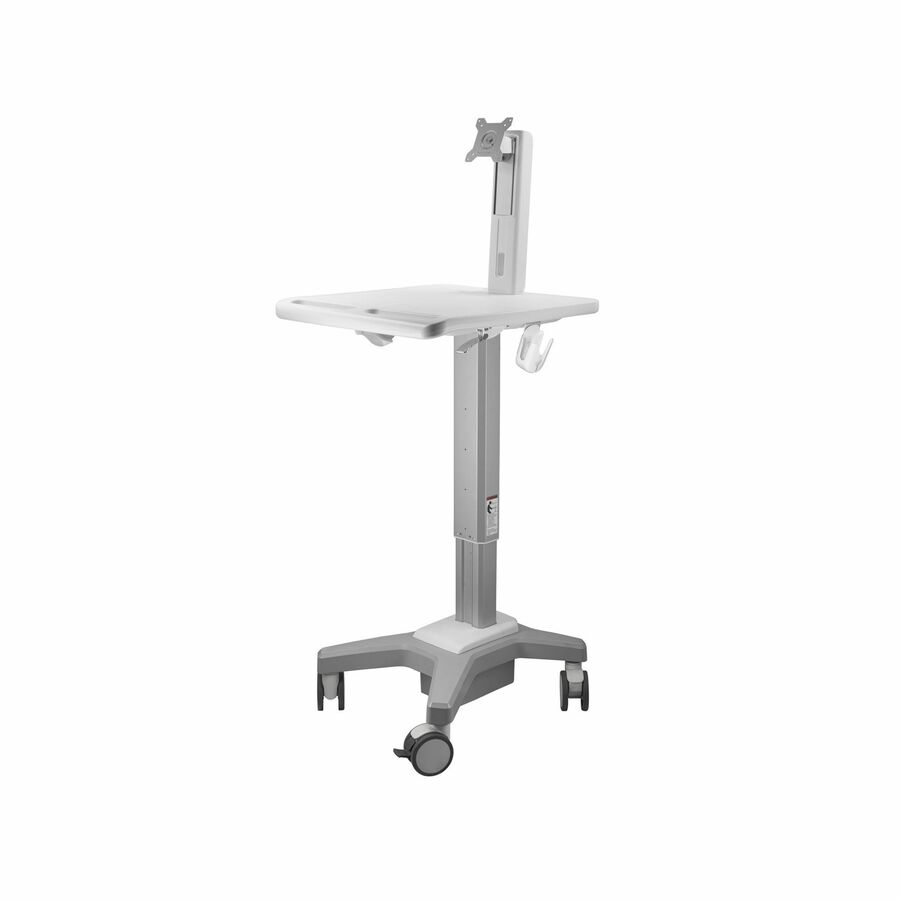
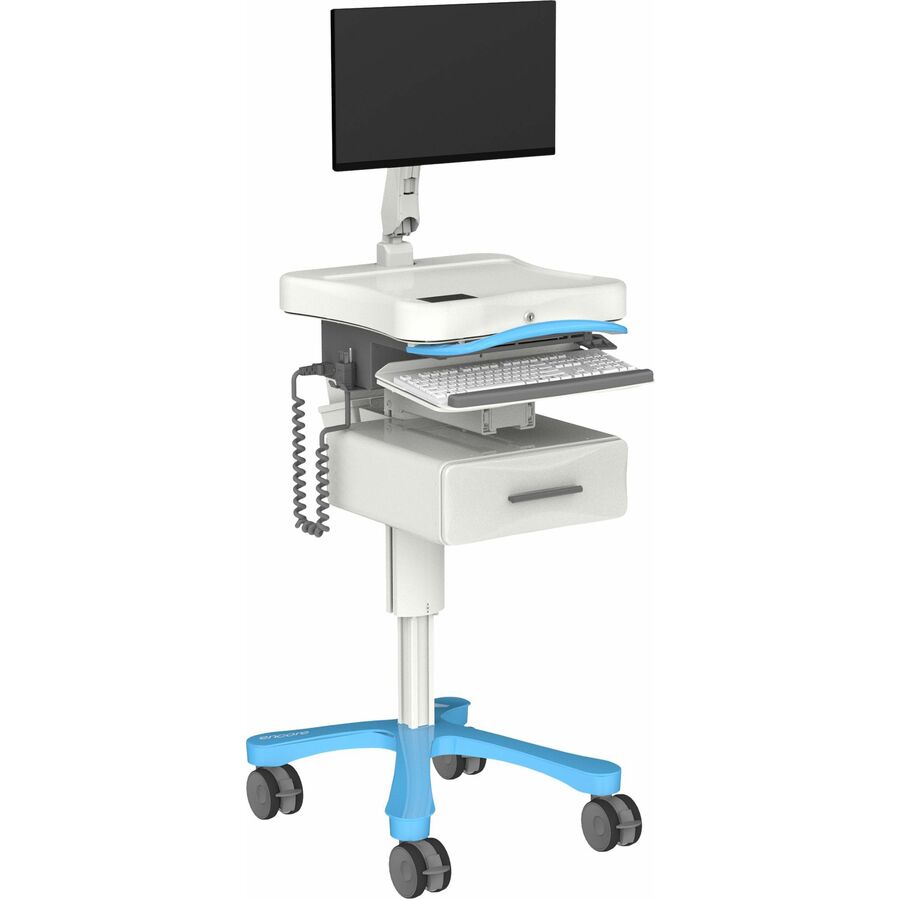

Tablet medical cart
CTA Digital
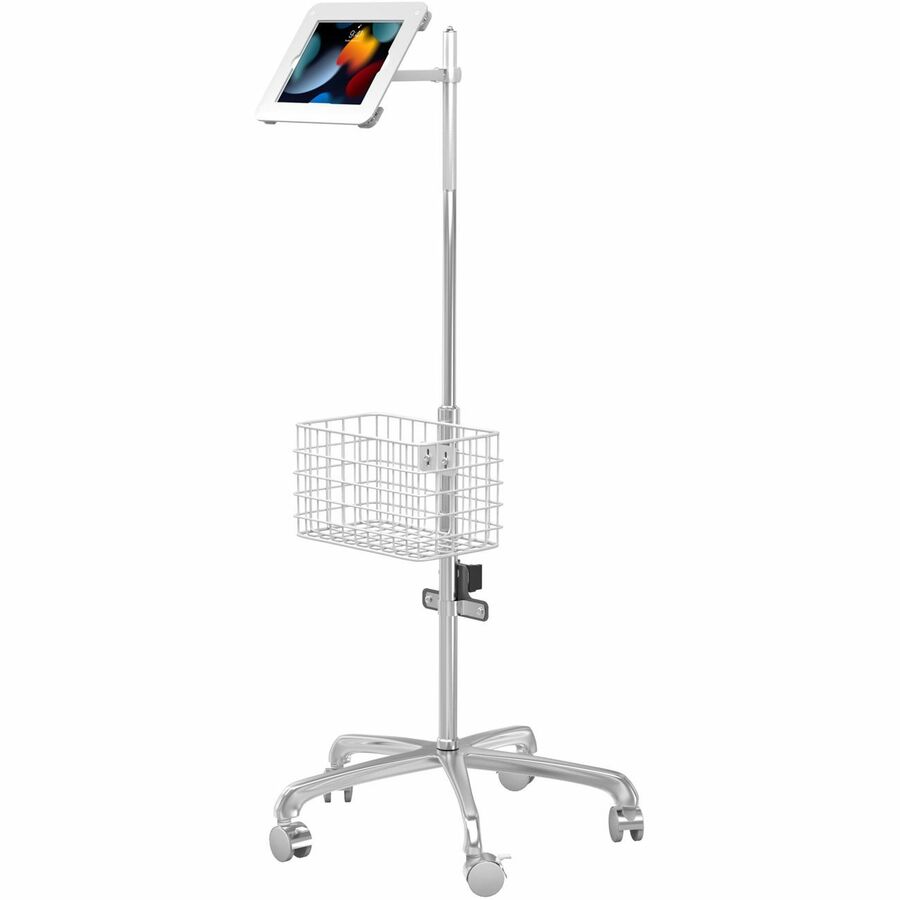
CTA Digital Medical Rolling Cart with Articulating Arm & Accessories…
PAD-MCRFS
A CTA Digital medical rolling cart with an articulating arm and accessories for a tablet — a light, inexpensive point-of-care station for a clinic or exam room where the tablet is the clinician's device.
$223.64Back-orderedHeight-adjustable
CTA Digital
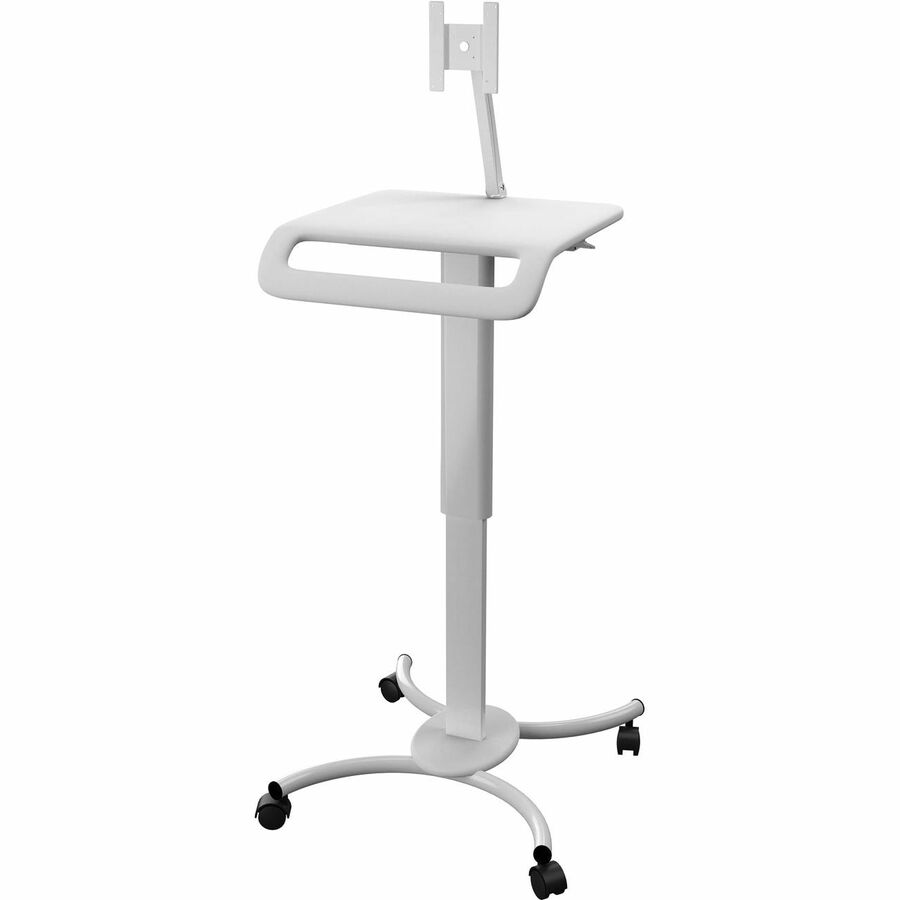
CTA Digital Height-Adjustable Rolling Medical Workstation Cart…
QPAD-HRSWV
A CTA Digital height-adjustable rolling medical workstation cart with a VESA plate — a sit-stand column that puts a mounted screen at the bedside for a clinician who both sits and stands across a shift.
$478.62Back-orderedHeight-adjust security
CTA Digital
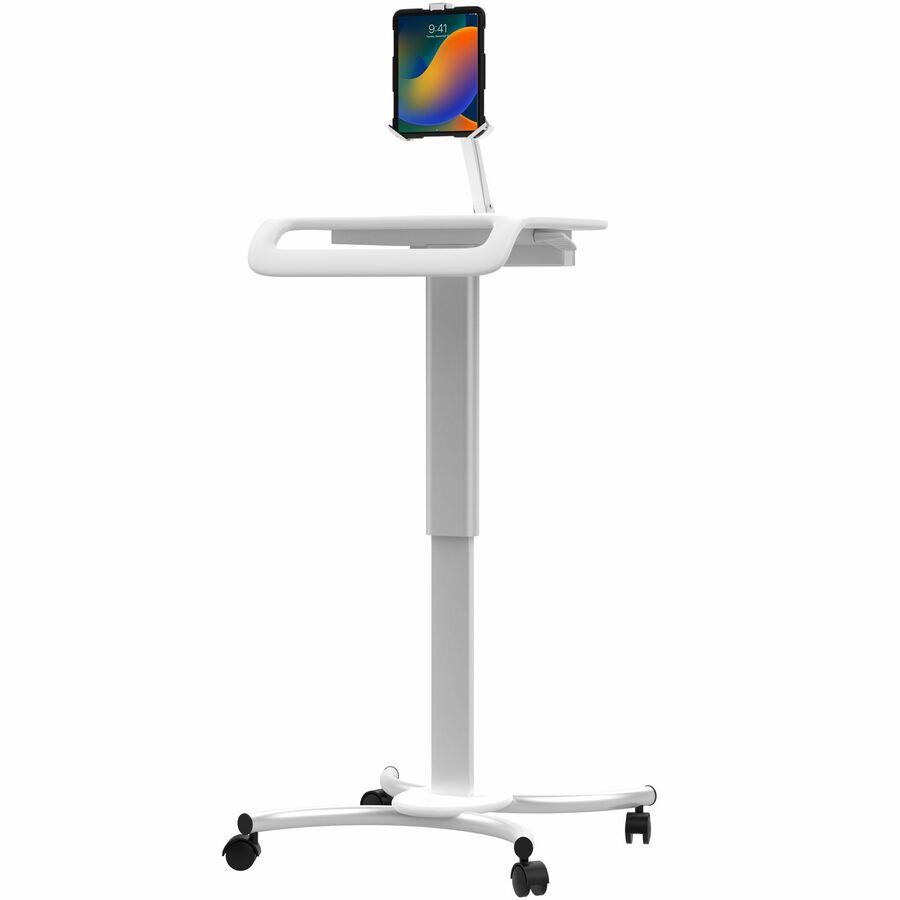
CTA Digital Height-Adjustable Rolling Security Medical Workstation Cart…
QPAD-HRSW
A CTA Digital height-adjustable rolling medical workstation cart with a security enclosure for a 7–14" tablet — a sit-stand cart that also locks the device down where an exposed tablet is a risk.
$539.85Back-orderedStorage cart
CTA Digital
CTA Digital Medical Rolling Cart with Basket, Storage Box, and Handle…
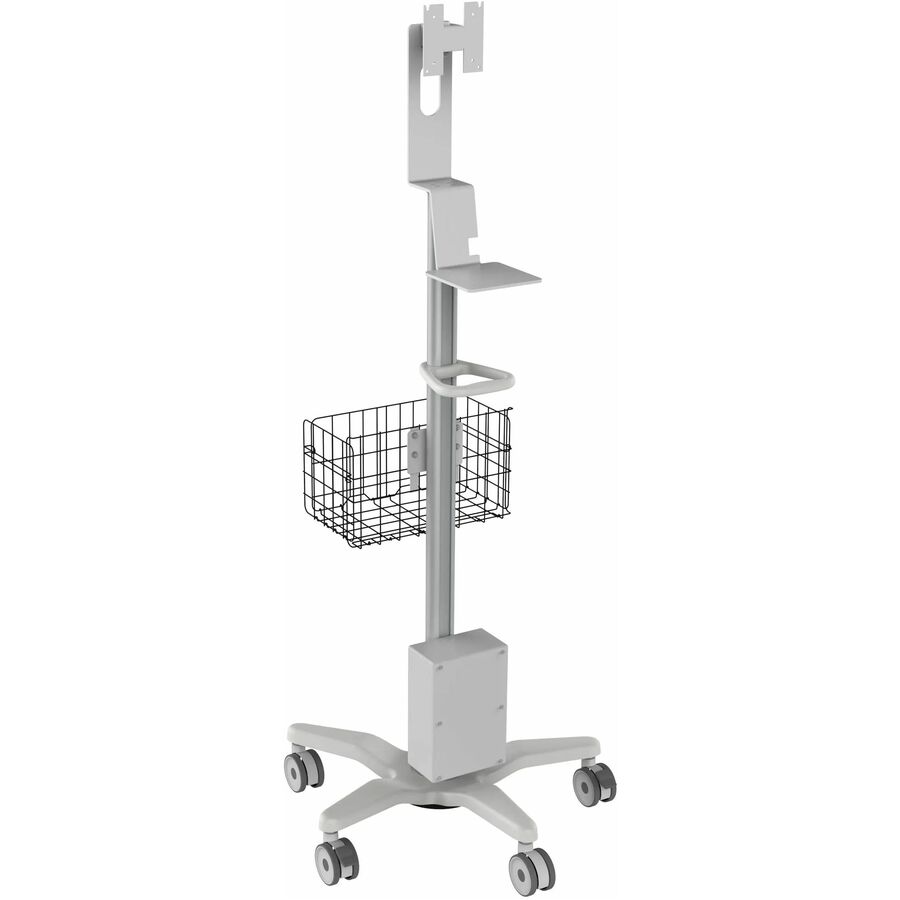
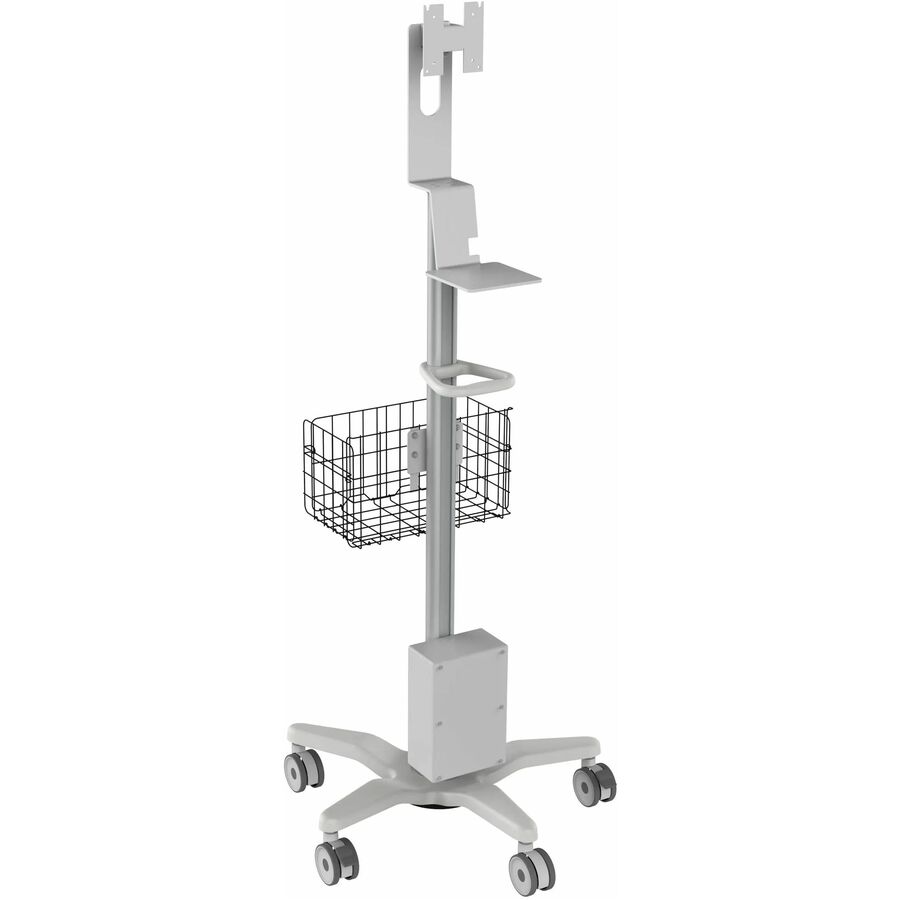
PAD-MEDRCBB
A CTA Digital medical rolling cart with a basket, a storage box and a handle — the point-of-care stand for a round that carries supplies alongside the device, on a compact rolling base.
$605.61Back-orderedPedestal cart
Amer Networks
Amer Mounts Light Pedestal Medical Cart (Max Load 39.68 lbs)
MCLPCH
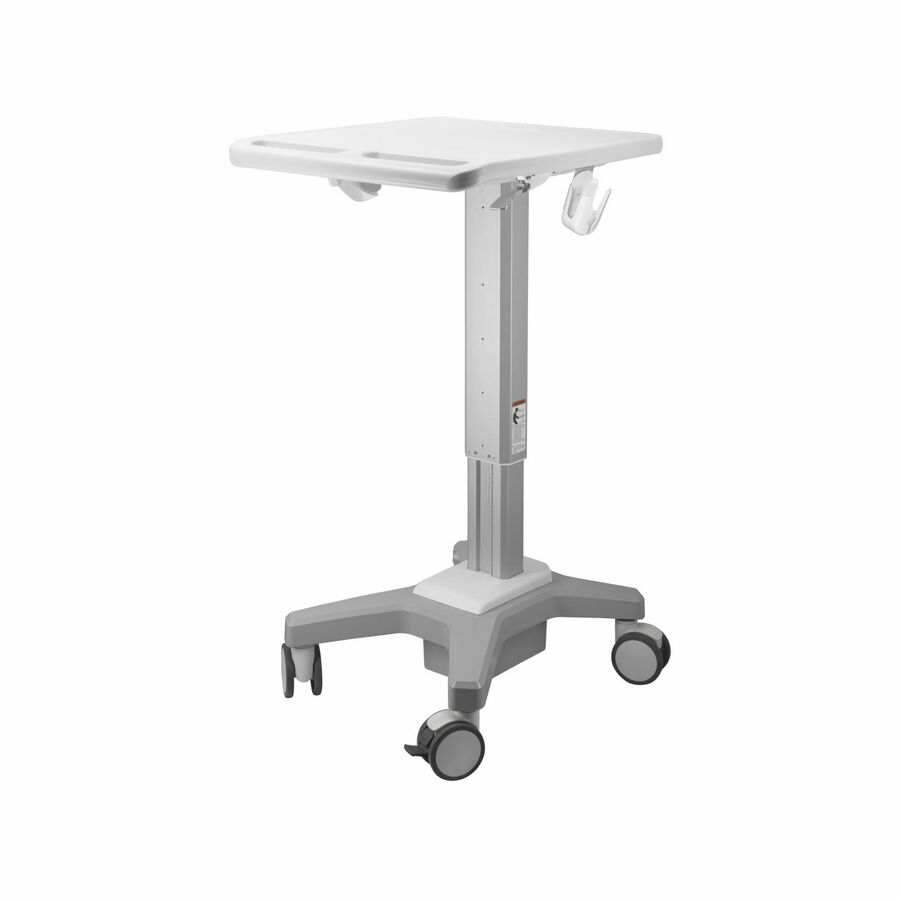
An Amer Mounts light pedestal medical cart with a higher load rating — a compact rolling pedestal that carries a monitor or an all-in-one where a full powered workstation is more cart than the room needs.
$1,358.95Back-orderedLaptop-bar cart
Amer Networks
Amer Mounts Light Pedestal Medical Cart with Laptop Bar Mount…
MCLP1N
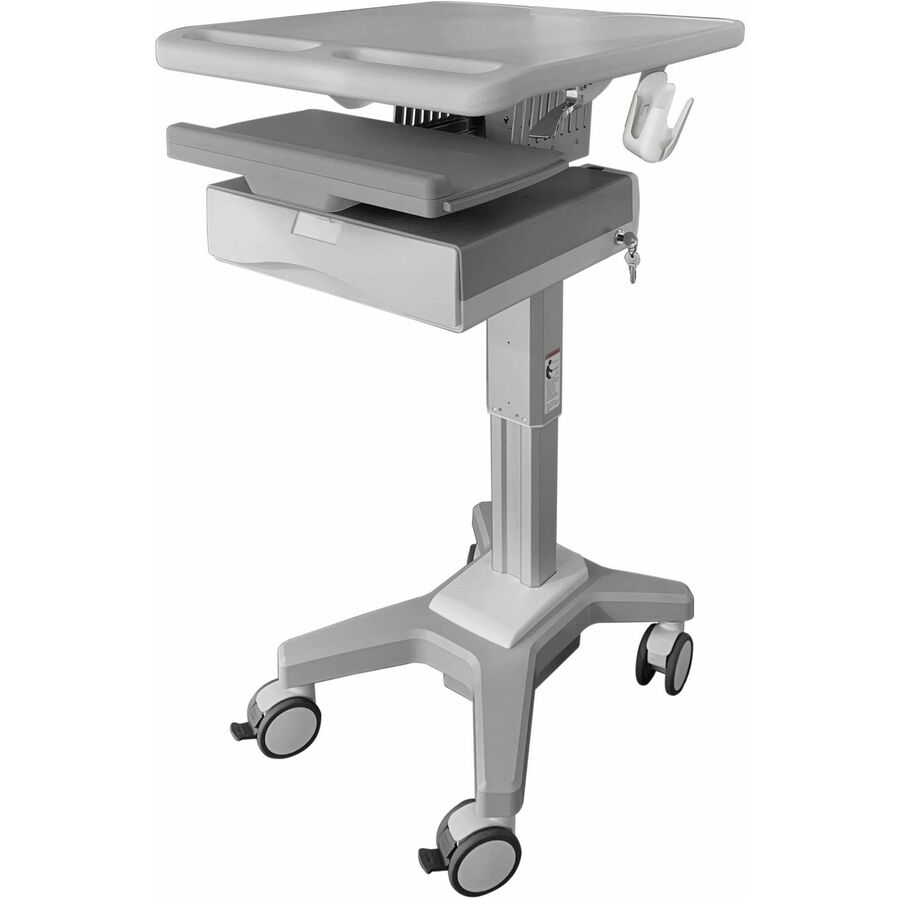
An Amer Mounts light pedestal medical cart with a laptop bar mount — the pedestal configured to carry a clinical laptop rather than a fixed display, for a room where the device travels with the clinician.
$1,359.45Back-orderedPedestal with display
Amer Networks
Amer Mounts Light Pedestal Medical Cart with Display Mount…
MCLP1M
An Amer Mounts light pedestal medical cart with a display mount — a compact rolling stand that carries a monitor and keyboard where a full powered workstation is more cart than the room needs.
$1,361.61Back-orderedEncore workstation
Ergotron
Enovate Encore Medical Cart
ENC2-MAP1-0DL0
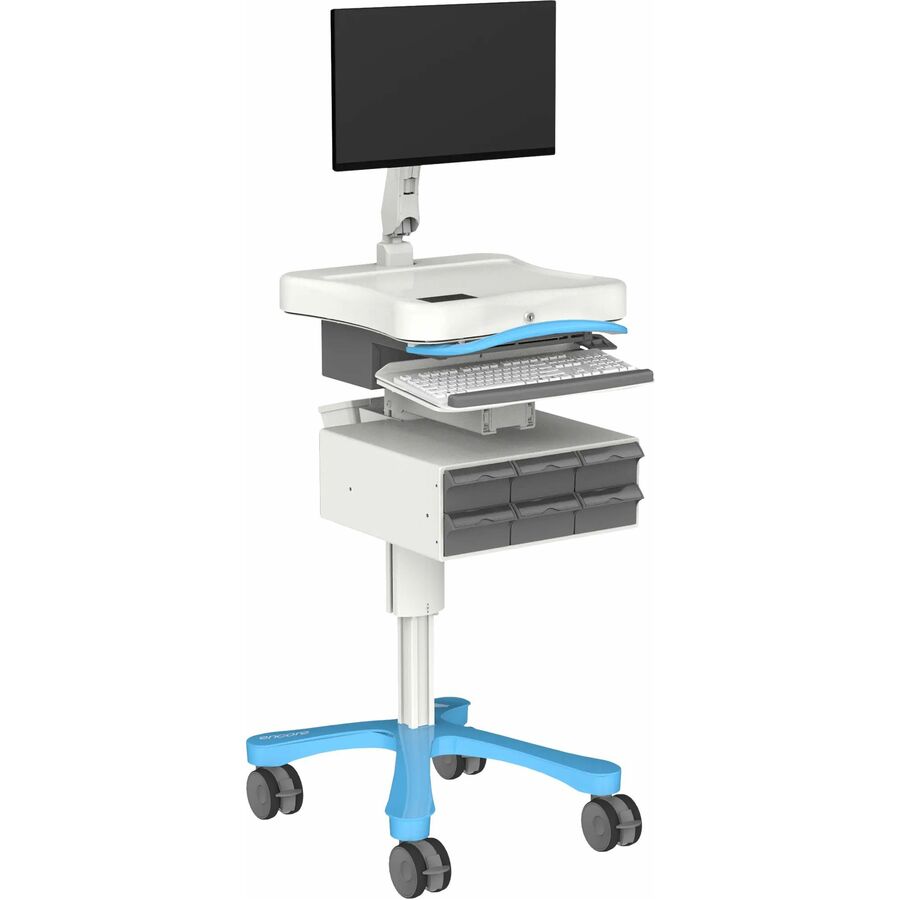
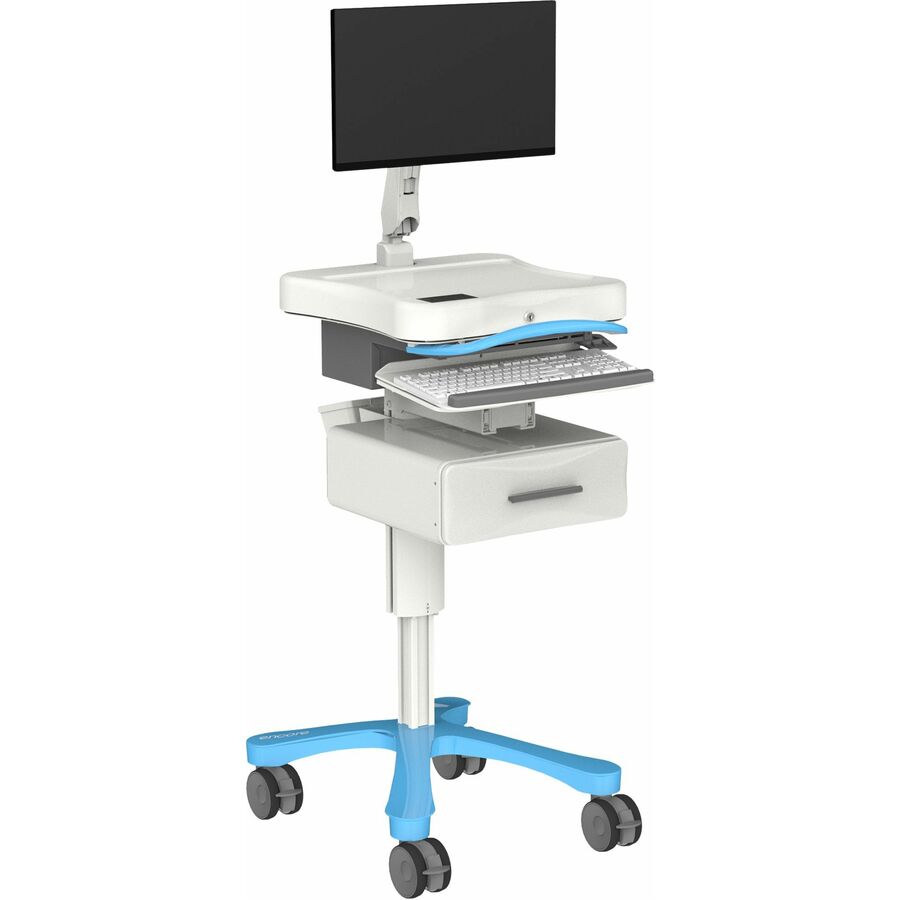
An Ergotron Enovate Encore medical cart in an aluminum build — a powered mobile workstation for a ward round, at the entry configuration of the Encore line for a fleet that does not need every option.
$4,405.95Back-orderedPowered clinical cart
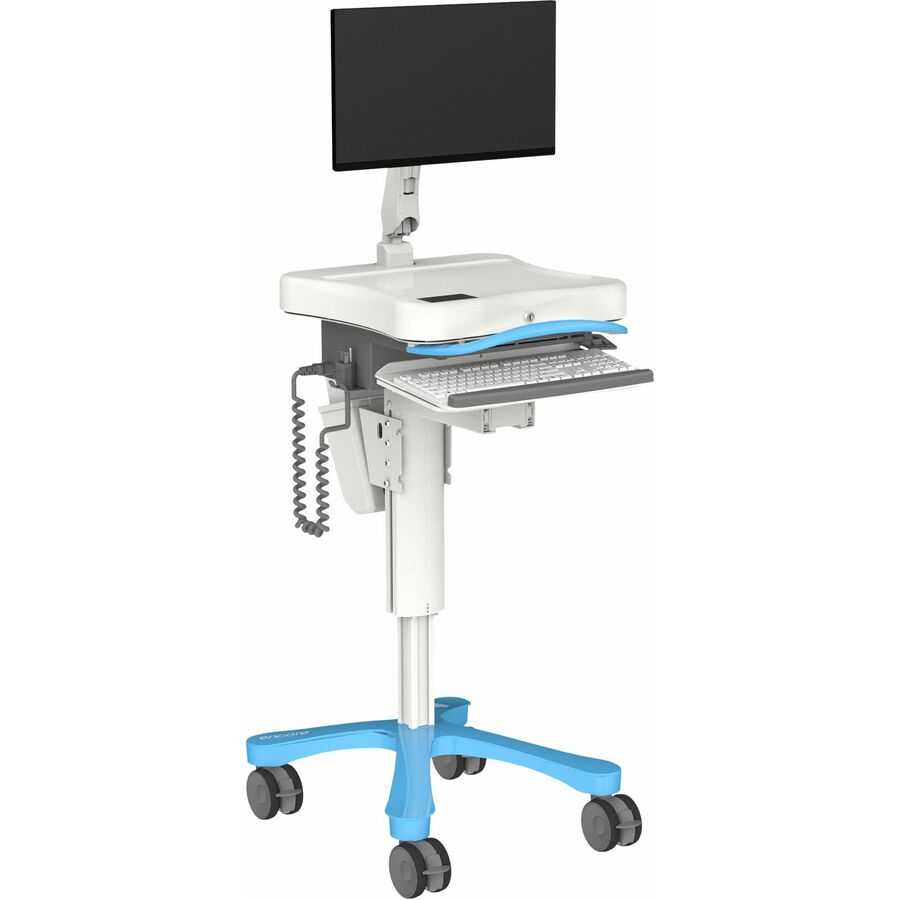
Ergotron
Enovate Encore Medical Cart
ENC2-MSP1-0000
An Ergotron Enovate Encore medical cart — a full powered mobile workstation on casters for a ward round that charts continuously away from any outlet, sized for a shift and recharged overnight.
Confirm the battery routine and surfaces against your facility's own protocols.
$5,669.43Back-orderedEnvoy powered cart
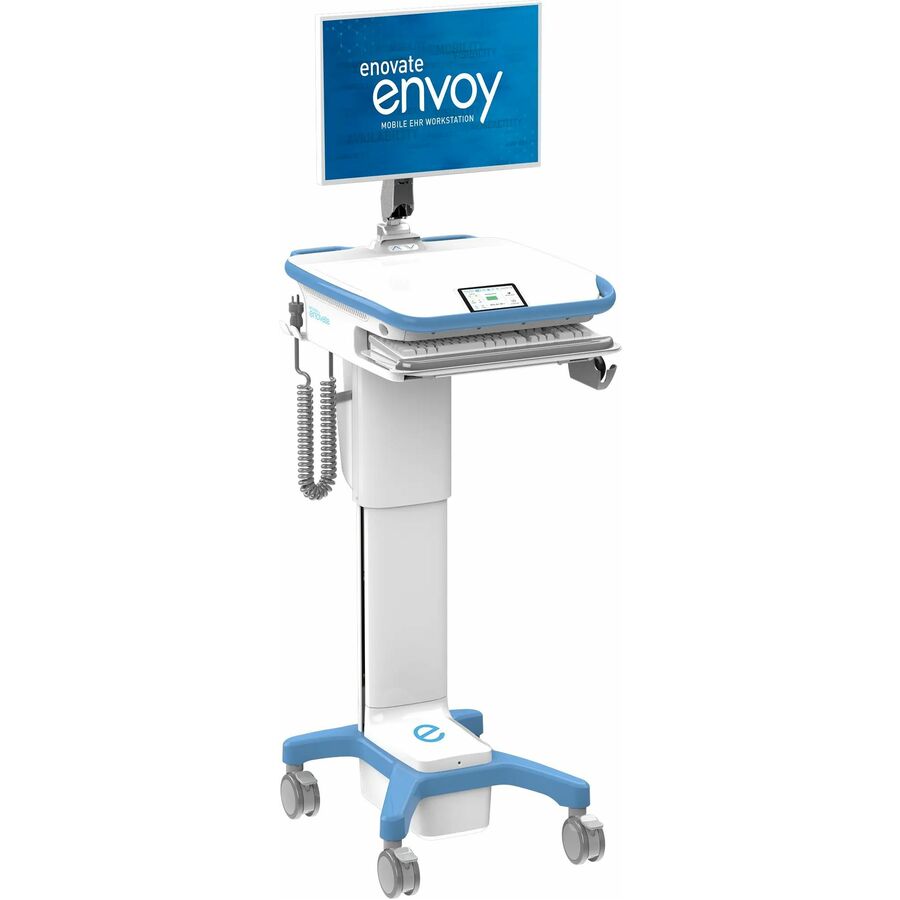
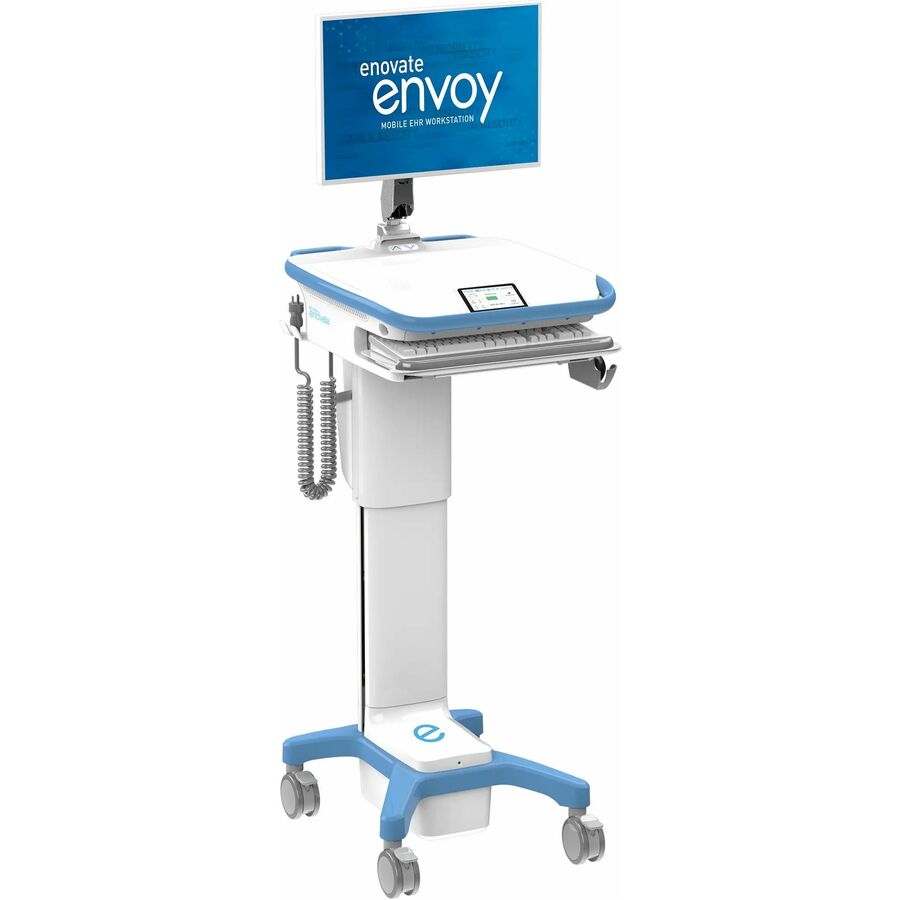
Ergotron
Enovate Envoy Medical Cart
ENV2-1DCAC0-AB0
An Ergotron Enovate Envoy medical cart — a full powered clinical workstation with an onboard status screen, for continuous charting across a shift away from any outlet, at the top of the powered range here.
$7,051.79Back-orderedMore carts and trolleys in the Uniqcli catalog
See all 1,688 carts and trolleysMore from across this category. In-stock lines lead, and a back-ordered line carries the same estimated availability its product page does — with live pricing throughout, NDAA §889 screening before checkout and TAA verified on request.
- ErgotronEnovate Envoy Medical Cart - 4 Casters - Blue, White - 5" Screen SupportedENV2-2DC001-A50
$7,407.78
Back-orderedBack-ordered — estimated OEM lead time 3–8 weeks (Nov 15 – Dec 20 if ordered today).
- ErgotronEnovate Envoy Medical Cart - 4 Casters - Blue, White - 5" Screen SupportedENV2-1DCAC0-AB0
$7,051.79
Back-orderedBack-ordered — estimated OEM lead time 3–8 weeks (Nov 15 – Dec 20 if ordered today).
Back-ordered — estimated OEM lead time 3–8 weeks (Nov 15 – Dec 20 if ordered today).
Back-ordered — estimated OEM lead time 3–8 weeks (Nov 15 – Dec 20 if ordered today).
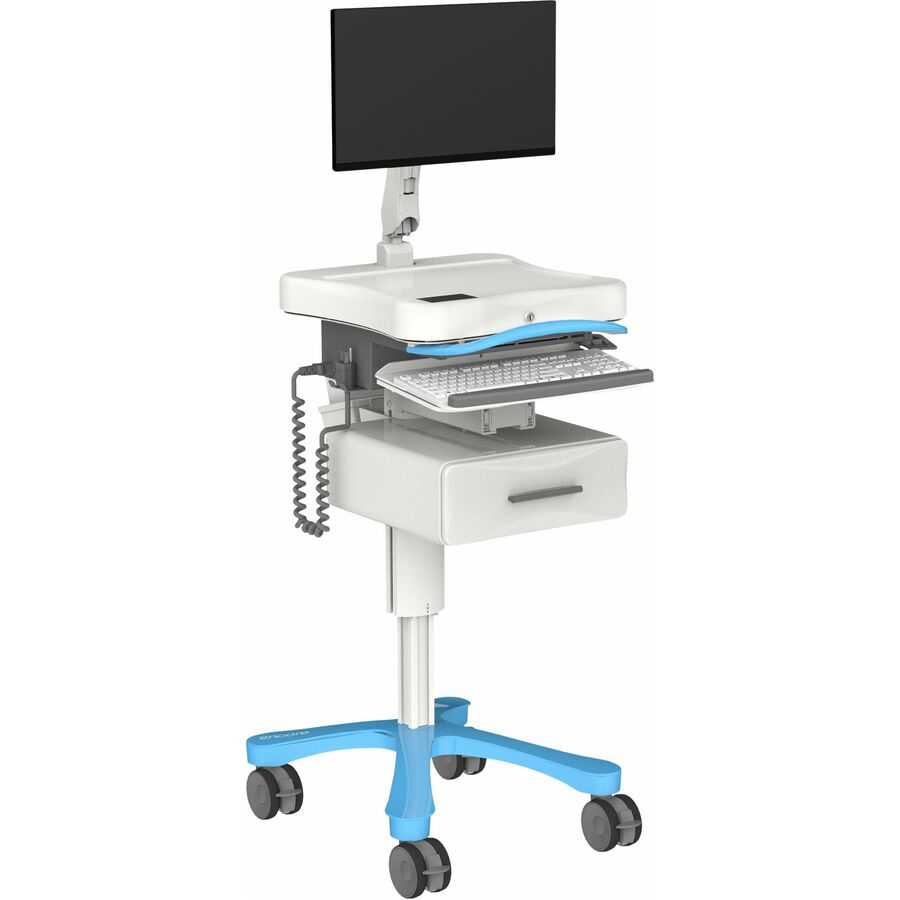
- ErgotronEnovate Encore Medical Cart - 4 Casters - Aluminum - Blue, White - 1ENC2-MAE1-0D00
$5,669.43
Back-orderedBack-ordered — estimated OEM lead time 3–8 weeks (Nov 15 – Dec 20 if ordered today).
Back-ordered — estimated OEM lead time 3–8 weeks (Nov 15 – Dec 20 if ordered today).
Need pricing on medical computer carts?
Tell us where to reach you and a Uniqcli specialist will follow up by email with current pricing, availability and lead time for the quantities you need — including parts that aren’t shown on this page.
Buying for an organization or for yourself — both work. No payment up front.
A medical computer cart is a mobile workstation for the point of care: it rolls a screen, a keyboard and often a scanner or a small store of supplies to the patient, so the clinician charts at the bedside instead of walking back to a nursing station. The category spans a wide range, and the range is the first decision. At one end are light tablet and laptop carts — a mount, a small work surface and casters — for a clinic or an exam room where the device is the clinician's own. At the other are full powered clinical workstations with an onboard battery that runs a whole shift, a height mechanism, and integrated storage. Every row in this grid carries 'Medical' in its own title, and each names what it is built to carry and how it moves.
Read the power model, because it is the fact that separates a light cart from a clinical one and it drives the price. A plug-in cart carries a power strip and is tethered to the wall while it charges — fine for a cart that parks between uses. A powered workstation carries a battery sized to run the computer and monitor for a shift and to be swapped or charged overnight, so it never has to find an outlet mid-round; that battery, its charger and the power management are most of what you are paying for over a plug-in cart. Between them sit carts that charge a tablet or laptop on board without powering a full desktop. Match the power to how the cart is actually used on the floor: a battery you do not need is expensive, and a plug-in cart on a round that never reaches an outlet is useless.
The rest is ergonomics and the environment. Height adjustment — a column or a lift — lets the same cart serve a clinician who sits and one who stands, and lets charting happen at the bedside without stooping, which matters across a shift. Casters and a footprint decide whether the cart turns in a crowded room and fits through a doorway. Storage — a drawer, a basket, a bin — carries what the round needs. And because these live in clinical spaces, wipeable surfaces and easily cleaned frames matter for the facility's own cleaning protocols. Uniqcli quotes the carts alongside the tablets, all-in-one computers or displays that ride on them, the mounting hardware, and the rollout and lifecycle services a fleet of them needs. This grid is drawn from the medical carts Uniqcli currently stocks, with live availability on each card.
Buyer's checklist
How to choose a medical computer cart
- Decide what the cart carries first — a tablet, a laptop, or a full display-and-keyboard workstation — because that sets the whole class of cart, its size and its price.
- Match the power model to the round: a plug-in strip for a cart that parks and charges between uses, and an onboard battery sized for a full shift where the cart has to keep working away from any outlet.
- Choose the height mechanism for the work: a sit-stand column lets one cart serve clinicians who sit and stand and puts the screen at the bedside without stooping across a long shift.
- Size the footprint and casters to the space — narrow enough to turn in a crowded exam room and to clear a doorway, with casters that roll and lock cleanly on the facility's floors.
- Add the storage the round actually needs — a drawer, basket or bin for supplies — without buying a cabinet the clinician has to push around empty.
- Confirm the surfaces suit the facility's cleaning protocol: frames and work surfaces that wipe down easily are what let a cart move between patients within the environment's own hygiene rules.
Plug-in cart or powered workstation
This is the decision that sets the budget, so make it against how the cart is actually used rather than against the spec sheet. A plug-in cart is a mobile work surface with a power strip: it is light, it is inexpensive, and it works wherever a wall outlet is nearby or where the device on it runs on its own battery. A powered clinical workstation carries a battery designed to run the computer and monitor across a full shift and to recharge overnight, plus the charging and power-management electronics that keep it healthy — and that system is the majority of the price difference. The right choice is the one that matches the round: a battery cart earns its cost where a clinician charts continuously away from any outlet, and a plug-in cart is the sensible, cheaper answer where the cart parks and charges between short uses. Buying the battery you do not need is a common and expensive mistake; so is buying a plug-in cart for a round that never passes an outlet. Tell us the workflow and we size it.
The device and the fleet around the cart
A cart is half of a point-of-care station; the other half is the computer, all-in-one or tablet that rides on it, and the two want to be specified together. The mount has to fit the device's VESA pattern and weight, the power has to match how the device charges, and — across a fleet — the imaging, the asset tags and the management want to be one project rather than a cart order and a separate device order that meet awkwardly on the ward. Standardising the cart model across a floor also pays off in training, spares and cleaning: staff learn one height control and one battery routine, and biomed keeps one set of parts. Send the device you are deploying, the number of carts and the wards they serve, and we will quote the carts, the computers or displays, the mounts and the rollout, imaging and lifecycle services on one order, with lead times on the same document.
FAQ
Common questions
- What is the difference between a plug-in medical cart and a powered one?
- A plug-in cart carries a power strip and is tethered to a wall outlet while it charges — it is lighter and cheaper, and it suits a cart that parks between uses or carries a device that runs on its own battery. A powered clinical workstation carries an onboard battery sized to run the computer and monitor for a full shift and to recharge overnight, plus the charging and power-management electronics, so it keeps working through a round that never reaches an outlet. That battery system is most of the price gap between the two. Choose against the workflow: the battery earns its cost where charting happens continuously away from power, and the plug-in cart is the right answer where the cart parks and charges between short uses.
- How do I match a cart to our computers or tablets?
- Work from the device out. The mount has to fit the display or all-in-one's VESA pattern and carry its weight, and the power arrangement has to match how the device charges — a tablet and laptop cart is a very different thing from a cart built to run a desktop and monitor. If you are deploying a fleet, specify the cart and the device together so the mounts, the power and the imaging line up as one project rather than two orders that meet on the ward. Tell us the exact device and how many carts you need, and we will confirm the mount, the power model and the fit before anything ships.
- Are these carts easy to clean for a clinical environment?
- The rows here are built for clinical spaces, with frames and work surfaces meant to be wiped down between patients, and the powered workstations enclose their electronics so the exterior can be cleaned to the facility's protocol. Cleaning procedures and approved agents are the facility's own to set, and you should confirm a specific cart's surfaces against your infection-control policy before you standardise on it — that is a decision for your environmental-services and biomed teams, not a claim we make for a product. What we can do is tell you the materials and finishes a given cart uses so your team can check it against the protocol you already run.
- Can hospitals, clinics and public-health buyers order these?
- Every line Uniqcli quotes is sourced through US distribution and screened for TAA country-of-origin and NDAA §889 status before checkout — with documentation tied to the specific part number, not a product family.
Need medical computer carts pricing?
Send a bill of materials or part numbers — we confirm stock and a below-market total, with TAA verified on request. No payment up front.