
Cybersecurity
Endpoint Detection & Response (EDR)
EDR is bought three times over — the per-seat subscription, the endpoints it runs on, and the labor of getting an agent onto every one of them. We quote all three on a single purchase order and hand over machines already imaged and enrolled.
- Category
- Endpoint agents that detect, record and reverse attacker activity
- What we quote
- Per-seat subscriptions and renewals, plus the endpoints they run on
- Deployment
- Imaging, agent enrollment and staging scoped on the same order
- Boundary
- You run the console and the response process; we supply and deploy
The license is the easy part; the enrollment is where rollouts stall
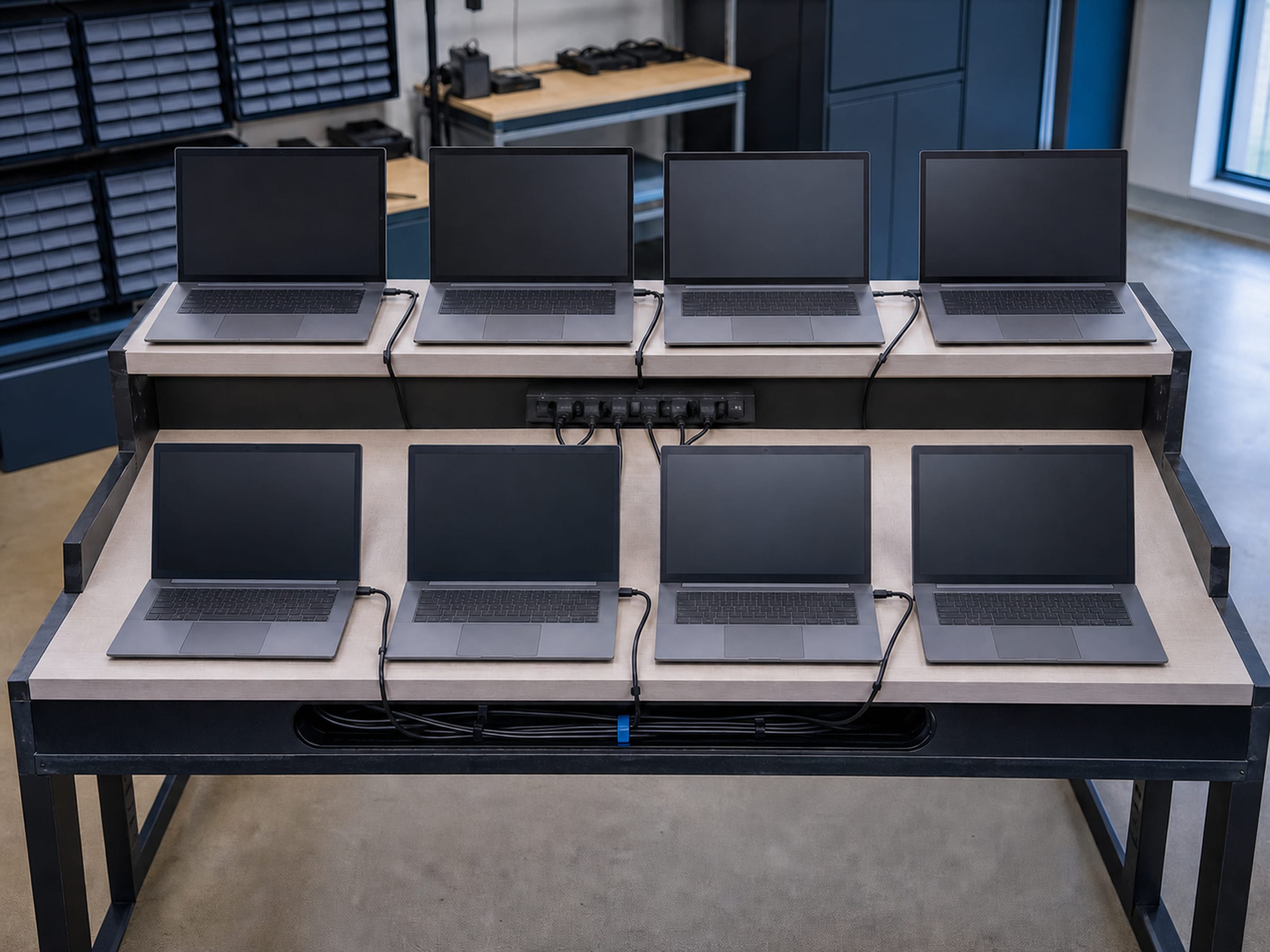
Every EDR evaluation ends the same way — a platform is chosen, a seat count is agreed, and then somebody has to get an agent onto four hundred laptops that are already in service. That second half is where schedules slip, and it is a procurement problem before it is a security one: the subscription arrives on one purchase order, the replacement endpoints on another, and the imaging labor on a third, each with its own lead time. We quote the three together. The subscription is sourced against your seat band and renewal date, the hardware is specified so the agent is supported on it, and through our OEM-integration lane the machines can be imaged to your gold build with the agent already installed and enrolled before they are boxed. What arrives is a labeled, enrolled kit rather than a pallet and a ticket queue.
What actually sits inside an EDR line item
EDR subscriptions are priced per protected device per year, and almost every vendor bands that price by volume — the same product carries different SKUs at 25 to 49 seats, 50 to 99, 100 to 149 and upward, with separate government and academic price levels. A workstation seat and a server seat are usually different SKUs again, and the tier above the base product (the one that adds threat hunting, rollback, or a vendor-run detection service) is a different SKU a third time. Quoting the wrong band is the single most common way a renewal comes back higher than the budget line.
The technical surface is smaller than the SKU surface. An agent needs a supported operating system and, on modern Windows builds, a machine with TPM 2.0 and Secure Boot for the platform integrity features to mean anything. It reports to a cloud or on-premises console that has to be reachable through your egress policy. It exports to whatever log destination your retention policy names. And it usually pairs with the firewall and email licenses from the same vendor, which is the correlation story the XDR tier is sold on.
Subscriptions are sourced through US distribution rather than held on a shelf, so stock language does not apply to them; what matters is the term, the seat band and the co-termination date.
The lines that make up an endpoint rollout
Every card below names a product line the hub catalog carries priced rows for, quoted per seat against your term. Naming a manufacturer describes the market, not a Uniqcli partnership or endorsement.
Sophos Intercept X
The deepest endpoint line we carry — device, server and CIXA tiers across the full range of volume and government price bands, quoted per endpoint against your co-termination date. Renewals and mid-term seat additions are priced against the same anniversary rather than restarting the term.
Bitdefender GravityZone
Business Security through the Enterprise tiers, priced per device per year across the same volume levels, with government pricing available on the lines that carry it. Quoted from the manufacturer price list, not a bundle we assembled.
Trend Micro, Check Point, ESET and McAfee
Four further endpoint estates we carry priced rows for, each with its own seat model and renewal cadence — including the multi-year terms agencies tend to buy on. This is where a decision to standardize on the vendor already supplying the rest of the stack, or to renew an incumbent estate rather than migrate it, gets costed.
Endpoints, imaged and enrolled
A rollout that refreshes the fleet at the same time is cheaper than two projects. Business laptops and desktops are quoted with the TPM and firmware baseline the agent expects, then imaged to your gold build with the agent installed and enrolled, asset-tagged and kitted through our OEM-integration lane — so each site receives configured machines rather than a pallet and a ticket queue.
What stays yours to run
An EDR console is an operational commitment. Somebody has to tune the policy down from the vendor default, triage what the agent surfaces, decide what gets isolated at two in the morning, and keep the exclusion list from quietly swallowing the estate. None of that is a purchase, and a supplier who implies otherwise is selling you a false economy.
We do not operate the platform after handover. The console, the policy, the tuning and the response process stay with your team or the MSP you have chosen; what we supply is the license, the hardware it runs on and the integration work that puts both into service.
EDR procurement questions
What is the difference between EDR and antivirus?
Traditional antivirus decides whether a file is known-bad and blocks it. EDR records what processes actually did on the endpoint — the parent chains, the registry writes, the network calls — so an analyst can reconstruct an incident and reverse it. In practice the modern products do both in one agent, which is why the license is usually a replacement for an antivirus line rather than an addition to it.
Can you quote EDR licenses without hardware?
Yes. Subscriptions are sourced through US distribution and quoted per seat against your term and volume band, with no hardware attached. The hardware and the imaging work are options on the same quote, not a condition of it.
Do you install and manage the EDR platform for us?
We supply the license, specify and stage the endpoints, and can deliver machines imaged with the agent installed and enrolled against your tenant. We do not operate the console, tune your detection policy or respond to alerts — that stays with your security team or the MSP you have engaged.
How do EDR renewals get priced?
Against your existing anniversary and seat band. We track the expiry date, reconcile the seat count you are actually using against the count you are licensed for, and quote ahead of expiry so the term does not lapse. Mid-term additions are co-termed to the same date rather than starting a second clock.
The solutions atlas
Every solution, by technology area and by customer.
By technology
By customer
- TAA & NDAA-889 Compliance Screening
- CMMC & CUI Solutions
- Federal & DoD
- State, Local & Education
- Healthcare
- Enterprise
- Rapid Procurement & GPC Buys
- Multi-Vendor Integration Projects
- eProcurement & Custom Catalogs
- FISMA Modernization
- CJIS-Compliant Justice Cloud & Local AI
- Federal Storage Modernization
- Government ERP & Business Systems Infrastructure
- Managed Procurement
- Secure AV & Conferencing
- Fiber Network Infrastructure
- Satellite & Resilient Connectivity
- Wavelength & Optical Transport
- Decentralized Data Centers
- Data Center Design & Build
Price an endpoint rollout
Send the seat count, the renewal date you are working to and the fleet you are protecting. We return one quote covering the subscription band, any endpoints being replaced alongside it, and the imaging and enrollment work — TAA and NDAA §889 screening performed per line before it goes out.