
The 2026 IT Price Increases: Order-Timing After the August Round
Nearly every major OEM raised list prices in 2026 and the heaviest cluster landed in August. That round is over; the order-timing method that beat it still works for the next one.
By Uniqcli Team · · 11 min read · Updated

Key takeaways
- Nearly every major IT OEM raised list prices in 2026, widely reported in the roughly 10-15% range, driven mainly by an AI-fueled memory shortage.
- Sophos confirmed a flat 10% increase on XGS firewall hardware and attached subscriptions effective July 1, 2026; virtual appliances are excluded.
- Distributors typically protect stock already shipped or in transit before a vendor's effective date; new orders placed after that date bill at new pricing.
- There is no single order-by date: it depends on your SKU's vendor effective date, your distributor's order cutoff, and your quote's expiration.
- Some vendor terms reprice orders placed before an increase but not shipped by a stated cutoff, so ordering in time alone doesn't guarantee your price.
On this page
Procurement Guidance
The 2026 IT price increase is not one event — it is a wave, and the August round has already landed
Across 2026, nearly every major IT and power OEM has raised list prices or reserved the right to reprice orders before they ship. The increases are widely reported in the roughly 10-15% range on affected hardware, driven overwhelmingly by an AI-fueled memory shortage rather than a single tariff. The practical question for a federal or enterprise buyer is not whether prices rise — it is whether your purchase order lands inside your vendor's current-price window or just after it. This guide explains the scope, the drivers, and the order-by logic for timing a purchase order against the next window.
Widely reported increase range on affected hardware list prices in 2026; higher on memory-dense server and workstation configs
Sophos XGS firewall hardware + attached subscriptions, confirmed effective July 1, 2026 (virtual appliances excluded)
Compressed quote-validity windows now reported at HPE and Lenovo, down from the 60-90 days common in calmer periods
When the first wave of 2026 effective dates landed; confirm your specific quote's window
The scope: nearly every major OEM, clustered in the second half of 2026
This is not a rumor about one vendor. It is a broad, documented, industry-wide repricing that spans PCs, workstations, servers, storage, networking, security appliances, rugged devices, and data-center power. The pattern is consistent enough that treating it as a single planning event — a 2026 IT price increase to be beaten with disciplined ordering — is the right posture, even though each OEM moves on its own schedule.
The confirmed anchor points are worth stating precisely, because they are the ones you can cite in a procurement justification. Sophos has partner-communicated a flat 10% increase on XGS firewall hardware and its attached subscriptions, effective July 1, 2026, with virtual and software-only SKUs excluded (Avanet partner bulletin; corroborated by Corporate Armor and OpenPR). Cisco confirmed on its February 12, 2026 Q2 FY2026 earnings call that it was raising prices and revising channel contract terms for component-cost volatility, with CEO Chuck Robbins characterizing networking-appliance increases as more nominal than memory-heavy compute (The Register; Cisco 8-K on SEC EDGAR). Eaton confirmed in its Q1 2026 earnings materials that it implemented April 1, 2026 price increases in Electrical Americas with additional price actions anticipated (Eaton/BusinessWire, May 4, 2026).
The rest of the field is documented as reported-in-market rather than vendor-confirmed to us, and we treat it that way. Dell was reported to raise commercial PC, workstation, and monitor prices effective March 30, 2026 (reported around 17%), with some commercial bulletins citing configurations up to 30% and an explicit warning that an order placed today does not guarantee current pricing at ship (Tom's Hardware; dtctoday.com). Lenovo was reported to be lining up a further portfolio-wide round of increases in July 2026, with server pricing specifically cited in a 20-40% range, and told partners at ISC 2026 that elevated memory pricing is the 'new normal' (TrendForce, June 10, 2026; Tom's Hardware). HPE amended its quoting terms to allow repricing of orders between quote and shipment and shortened quote validity to as little as 14 days (The Register / Network World, March 2026). HP Inc. told investors memory now accounts for roughly 35% of PC bill-of-materials cost and that cost-recovery actions are weighted to the second half of its fiscal year, which runs into the August-October window. Getac has no publicly confirmed percentage or date, but an authorized reseller has publicly flagged tariff-driven Getac increases, and the same memory pressure applies to its rugged BOM. Juniper — now under HPE — has no confirmed 2026 list-price increase, and HPE has described networking as comparatively insulated from the memory shortage; the live change there is the November 1, 2026 partner-program unification, not a sticker-price hike.
The through-line: many of these effective dates and second-half fiscal actions cluster around August 2026. That is a planning anchor, not a universal deadline. There is no single market-wide 'order by' date — the correct date is specific to your SKU, your vendor, and your quote.
The drivers: an AI memory shortage first, tariffs and freight second
The single largest driver is memory. DRAM, LPDDR5x, and NAND flash saw roughly 90-95% quarter-on-quarter contract price surges in early 2026 as hyperscalers locked up supply for AI servers and high-bandwidth memory. TrendForce projects conventional DRAM contract prices up another 13-18% quarter-on-quarter and NAND up 10-15% in Q3 2026 — a deceleration from the spike, but still a real increase. Data centers are estimated to consume roughly 70% of global memory output, and new fab capacity from Micron and SK Hynix is not expected in volume until 2027 at the earliest. This is why the increases land hardest on memory-dense gear: servers, high-RAM workstations, and large-storage configurations. HP Inc.'s disclosure that memory jumped to roughly 35% of PC build cost, and HPE's commentary that DRAM and NAND now make up over half the bill of materials on a traditional server, are the clearest illustrations of the mechanism.
Tariffs are a real but more nuanced factor. In January 2026 the administration issued a Section 232 proclamation imposing a 25% tariff on a defined set of advanced computing chips and derivative products — but with exclusions tied to domestic manufacturing, data-center use, repair, R&D, and public-sector use, so exposure varies sharply by SKU and end use rather than a blanket 25% on all IT gear (White House presidential action; GHY International). A statutory deadline around mid-April 2026 was set to recommend either escalation or moderation of the rate, so the phase status should be confirmed before assuming any specific number. For most buyers, tariffs are a compounding pressure on top of the memory shock, not the headline.
Freight and broader component inflation round out the picture. Ocean freight from Asia to the U.S. was reported up roughly 24% year-on-year as of mid-2026, with East Coast spot rates well above late-2025 levels, adding landed-cost pressure on freight-sensitive categories. On the power side, Eaton and peers cite raw-material and operational cost pressure plus a 2026 tariff backdrop on steel, aluminum, and copper. The takeaway for procurement: this is a durable, multi-quarter cost environment, not a one-week spike — which is exactly why locking a firm quote now has value that a wait-and-see posture does not.
How pricing actually flows: list price, distribution, GSA, and SEWP move on different clocks
Two distinct mechanisms operate, and they do not move in lockstep. First, OEM list prices (Dell, Cisco, Lenovo, HPE, and the rest) change on each vendor's own schedule via a partner bulletin — these are the root prices. Second, distribution and the federal price lists re-price against that root on their own separate cadences. Understanding the gap between them is where a buyer finds room to maneuver.
In distribution, standard industry practice is that a distributor takes title to inventory at list price when it ships from the vendor, and separately extends price protection to resellers — meaning stock already in the distributor's warehouse or in transit before a vendor's effective date is typically protected at the old price for a defined window, while new purchase orders placed after that date are billed at the new price. Whether a specific reseller PO is honored at order-acceptance price or ship-date price is governed by the individual distributor agreement and the vendor's terms, and it varies by line and sometimes by deal-registration status. This is not something to assume — it is something to get in writing on the quote or order acknowledgment.
On the GSA Multiple Award Schedule, a vendor raising its GSA price list must get contracting-officer approval under the Economic Price Adjustment clause (GSAR 552.238-120), and the updated list must be published on GSA Advantage within 30 days of the modification (GSAM 552.238-77). That creates a real lag: the GSA schedule price is often stale relative to street price during the window between a commercial change and its reflection on the schedule. On NASA SEWP, catalog prices are ceilings — a contract holder may charge less, including time-limited close-out pricing, but not more — and the order-level contracting officer determines price reasonableness independently of the catalog. In both federal vehicles, the posted figure can lag actual market pricing, so confirm current pricing directly with the contract holder rather than relying on the catalog alone.
The practical consequence is that federal buyers sometimes have a short-lived advantage — a schedule or ceiling price set against an older list — and sometimes a disadvantage, when a stale catalog has not yet caught a decrease. Either way, the number on a screen is not the number until it is on a firm quote tied to a validity date.
The order-by logic: three inputs, gathered from your own paperwork
There is no single universal order-by date. The correct date is a function of three inputs you must gather — not a market constant. First, the vendor's announced list-price effective date for your specific product line or SKU, found in the OEM partner bulletin or the distributor's pass-through notice. Second, the distributor's or reseller's order-cutoff date for getting a PO into the vendor's system before that effective date — vendors need lead time to process orders at the old price, so your practical cutoff is earlier than the effective date, sometimes by several business days to weeks. Lenovo's reported 2026 cycle, for example, had partners place orders by one date so the distributor could submit by another, ahead of a shipment deadline after which unshipped orders were subject to repricing.
Third — and this is the input most buyers miss — whether your own quote has an explicit expiration date and, separately, a shipment deadline. Some vendor terms reprice orders that were placed before the increase but not shipped by a stated cutoff. That means 'order by' alone may not protect you; 'ship by' can matter too. HPE's amended terms and Dell's March 2026 warning both illustrate that an accepted order can still be repriced if it does not ship in time. A quote's stated expiration date, not a market rumor, is the operative fact: if your PO is placed and accepted before the quote expires, the quoted price is the one that should apply — subject to whatever ship-date language is in the fine print.
So the discipline is straightforward. Get the specific SKU's effective date and any distributor cutoff in writing from your account team. Confirm your quote's expiration date and whether it is locked to PO acceptance or to shipment. Then, if you have a firm requirement and funding, place the PO with buffer before both the cutoff and the expiration — not on the last possible day. Distributor and vendor systems run slow during high-volume pre-increase ordering surges, and a PO stuck in a processing queue on the effective date is the exact failure mode this planning is meant to avoid.
For power and data-center gear, add a fourth consideration: lead time can outweigh price. Eaton reported a data-center backlog measured in years and orders up sharply in 2026, and industry reporting puts transformer and switchgear lead times well beyond a year, with some channels effectively sold out through 2028. On a facility project with fixed commissioning dates, a 60-90 day slip in placing a task order can mean both missing a price-letter window and slipping to the back of an allocation queue. Treat allocation and lead-time protection as at least as important as price protection.
Where Uniqcli fits: one PO, every line TAA-screened, no payment to lock a quote
The reason this wave is hard to manage is that it hits every OEM on a different clock. If you run separate procurements for Dell endpoints, Cisco networking, HPE servers, Sophos firewalls, Getac rugged devices, and Eaton power, you are tracking a half-dozen effective dates, cutoffs, and quote windows at once — and any one of them slipping past its date is a repricing event. Consolidating those lines onto a single purchase order collapses that tracking problem into one. A federal or enterprise buyer can lock current pricing across all of these brands at once, before their respective windows close, on one PO.
Every line quoted through Uniqcli carries TAA country-of-origin and NDAA Section 889 screening performed as part of the quote, with the screening result available on request — so a rushed pre-increase order does not become a compliance problem later. And because a quoted order never requires payment up front, requesting a firm quote costs nothing and commits nothing: it simply establishes the price and the validity date you can then take through your funding and approval cycle. In a market where quote-validity windows have compressed to as little as 14 days at some vendors, having a firm, dated quote in hand is the difference between beating the increase and re-quoting after it.
The mechanics are simple. Use the bill-of-materials builder to assemble the exact configuration you need across brands, browse the catalog to confirm the specific SKUs and their compliance flags, and request a firm quote, TAA verified on request, that states its expiration and whether it is locked to PO acceptance or shipment. That single quote is your instrument for beating the 2026 IT price increase — one document, one date, every brand, every line screened.
Lines the increase is denominated in
Axiom Memory Solutions
Axiom 16GB DDR5-5600 ECC RDIMM Cisco
$1,644.90In stockLenovo
Lenovo ThinkPad E16 Gen 3 21ST0004US 16" Notebook
$1,611.84In stockEaton
Eaton Metered Input Rack PDU 5.76 kW max 120/208V 16A 0U Three-Phase PDU
$1,159.20In stock
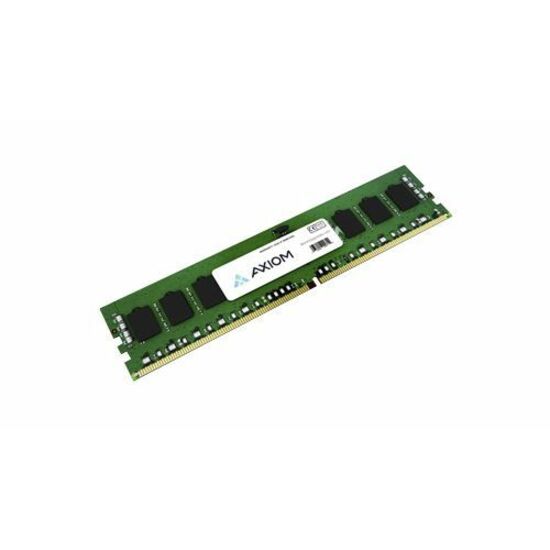
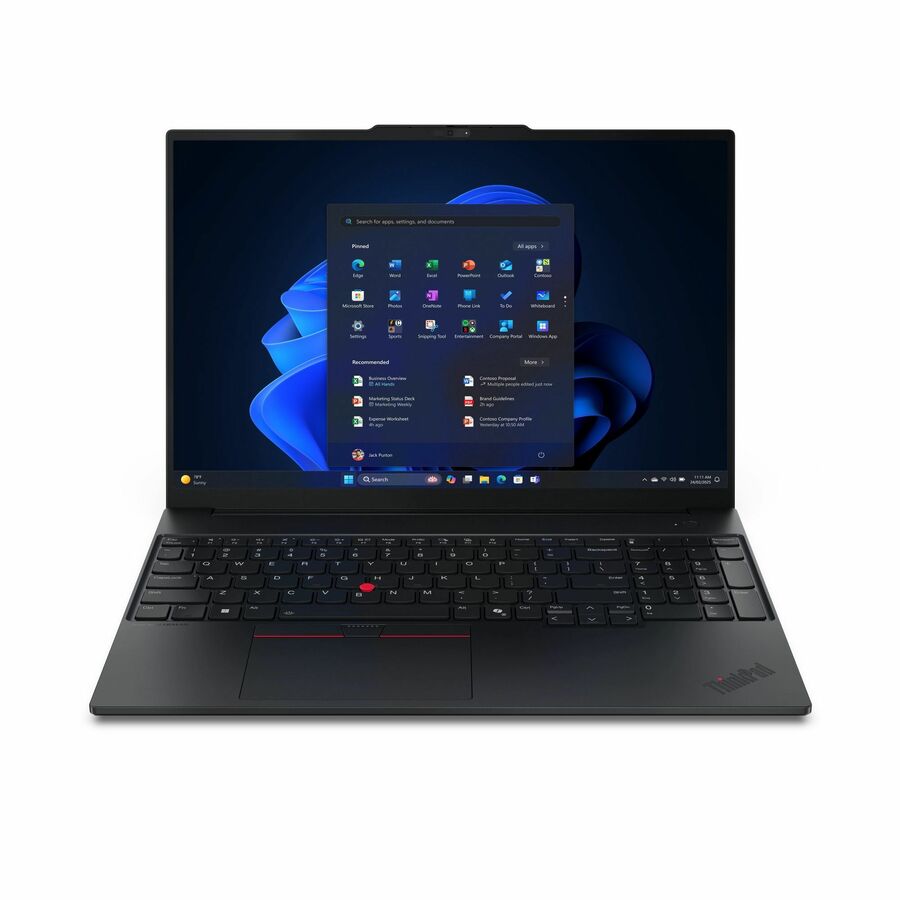

A registered memory module, a business notebook and a rack power line — three of the families this wave reaches, and three of the separate clocks the section above asks you to track rather than average together. They are here as a live reading, not an illustration: prices and availability are pulled from the catalog when this page renders, so these are today's numbers rather than the ones that were true on the publication date. None of them is a locked price until it is on a firm quote with its own expiration on it.
The nine OEMs, one page each
Each brand moves on its own clock. These break down the confirmed dates, the reported ranges, and the order-by logic for the products federal and enterprise buyers actually purchase.
Cisco
For Catalyst, Nexus, Meraki and SMARTnet buyers, the 2026 story is less a single price shock than a timing mismatch — Cisco's list and contract terms now move faster than your multi-year EA or SEWP quote can track.
HPE & HP
The 2026 HPE and HP price increase is a memory story: DRAM now dominates the cost of a ProLiant node and a third of an EliteBook — and HPE has reserved the right to reprice your quote after you order it.
Dell & Lenovo
A DRAM and NAND supply crunch — not tariffs — is pushing repeated Dell and Lenovo price increases through 2026, and config-to-order pricing is now volatile enough that a quoted fleet refresh can reprice before it ships.
Getac — rugged
No Getac-specific percentage is publicly confirmed — but an authorized reseller has already flagged tariff-driven hikes, the same memory shock hitting every OEM lands harder on a small rugged catalog, and refresh cycles measured in years mean the quote you sit on may not survive the fiscal year.
Sophos & Juniper
Sophos confirmed a flat 10% increase on XGS firewall hardware and its attached subscriptions from July 1, 2026. Juniper, now inside HPE, has announced no such hike — but the channel underneath it is being rewired. Two very different procurement moves in one vendor conversation.
Eaton — power
Eaton has already raised Electrical Americas list prices twice in 2026 and says more are coming. But for anyone buying UPS, PDUs, or transfer switches into a data-center or facility project, the price letter is the smaller risk — queue position is the bigger one.
2026 IT hardware price increase tracker
Every confirmed increase, effective date and reported range in one running list, updated as vendors move.
August 2026 price increase deadlines
The order-by calendar for the August cluster, re-marked after the 48-hour window closed.
RAM price increase 2026
The DRAM and NAND surge underneath nearly every price action on this page, with the Q3 guidance in full.
How to beat the increase: a buyer's order-by checklist
There is no market-wide deadline — only your SKU's date, your distributor's cutoff, and your quote's expiration. Work this checklist to make sure your PO lands inside the current-price window rather than just past it.
- Identify every affected line in your refresh — PCs, workstations, servers, storage, networking, security appliances, rugged devices, and power — and treat memory-dense configs (high-RAM servers and workstations, large SSDs) as the highest-priority to lock, since they carry the largest increases.
- Get the specific SKU's vendor effective date and any distributor order-cutoff in writing from your account team; the practical cutoff is earlier than the effective date, sometimes by weeks.
- Request a firm quote now, TAA verified on request, and confirm its expiration date and whether the price is locked to PO acceptance or to shipment — because some terms reprice unshipped orders even when the PO was placed in time.
- For federal buyers, ask whether the quoted GSA or SEWP price reflects the current vendor list or a prior one, and confirm current pricing with the contract holder rather than relying on a possibly stale catalog figure.
- Consolidate brands onto a single PO through one reseller so you track one set of dates instead of six, and lock pricing across all OEMs before their separate windows close.
- Place the PO with buffer before both the distributor cutoff and the quote expiration — never on the last day — and for power and data-center gear, secure allocation and lead time, which can matter more than the price letter.
Lock current pricing before the effective date
Send a bill of materials and we return a firm quote across every brand on one PO, TAA verified on request. Quoted orders never require payment up front, and every line is NDAA 889-screened.
Buyer questions
Is there really a 2026 IT price increase across all the major OEMs?
Yes. It is broad and documented, though not a single coordinated event — each OEM moves on its own schedule. Confirmed and reported actions in 2026 span Cisco, HPE, HP Inc., Dell, Lenovo, Sophos, and Eaton, with increases widely reported in the roughly 10-15% range on affected hardware and higher on memory-dense servers and workstations. Getac has no publicly confirmed figure but faces the same component pressure, and Juniper (now under HPE) has no confirmed 2026 list increase. The common driver is an AI-fueled DRAM and NAND memory shortage, with tariffs and freight as compounding factors.
What is the exact date I need to order by to lock current pricing?
There is no universal date. The correct order-by date is specific to three things you control: your SKU's announced vendor effective date, your distributor's order-cutoff to get a PO into the vendor's system before that date, and your own quote's expiration. Many 2026 effective dates and second-half fiscal-year price actions cluster around August 2026, but you should confirm your specific quote's window in writing rather than relying on that as a deadline. The safe move is to place a funded PO with buffer before both the distributor cutoff and the quote expiration.
If I place my order before the effective date, is my price guaranteed?
Not always — this is the trap. Several vendors, including HPE and Dell, reserve the right to reprice orders that were placed before an increase but not shipped by a stated cutoff, so 'order by' does not always protect you; 'ship by' can matter too. What is contractually operative is your quote's stated terms: if your PO is placed and accepted before the quote expires, the quoted price should apply, subject to any ship-date language in the fine print. Always confirm whether your quote is locked to PO acceptance or to shipment before you place the order.
How does Uniqcli help me beat the increase across so many brands at once?
By consolidating your lines onto a single purchase order, so you lock current pricing across Dell, Cisco, HPE, Sophos, Getac, Eaton, and more before their separate windows close — instead of tracking a half-dozen effective dates and quote expirations independently. Every line carries TAA country-of-origin and NDAA Section 889 screening performed as part of the quote, with the screening result available on request, so a fast pre-increase order does not create a compliance problem later. And because a quoted order never requires payment up front, requesting a firm, dated quote costs nothing and commits nothing — it simply gives you the price and validity date to carry through your funding cycle. Use the bill-of-materials builder and catalog to assemble your configuration, then request a firm quote.
Go deeper on the components
Related buyer guides