
HPE and HP Price Increase 2026: Why Server DRAM Is the Real Driver
The 2026 HPE and HP price increase is a memory story: DRAM now dominates the cost of a ProLiant node and a third of an EliteBook — and HPE has reserved the right to reprice your quote after you order it.
By Uniqcli Team · · 7 min read · Updated
Key takeaways
- HPE and HP both cite a DRAM/NAND memory shortage, not tariffs, as the driver of their 2026 price increases.
- HPE amended its quoting terms to allow repricing existing orders for commodity cost increases between quoting and shipment.
- HPE reportedly shortened quote validity to 14 days from 30, alongside the reprice-before-ship right.
- Memory now represents roughly 35% of a PC's bill-of-materials cost for HP, and over 50% for a traditional server's, per reported analysis.
- Neither HPE nor HP has published one universal percentage or effective date; get the specific quote's terms in writing.
On this page
Market Watch
For HPE and HP in 2026, the price increase is a memory-cost story — and config-to-order servers are the most exposed line on the quote
Both HPE and HP Inc. have publicly told investors in 2026 that they are raising prices, and both named the same cause: a DRAM and NAND memory shortage as AI data centers pull supply away from conventional servers and PCs. What makes these two brands different from a routine list-price bump is where the cost lands. On a modern ProLiant node, memory is now the single largest component of the bill of materials — and HPE has amended its quoting terms to let it reprice an order between the day you accept the quote and the day the hardware ships. That mechanic, not any single announced percentage, is the thing federal and enterprise buyers need to plan around.
Share of a PC's bill-of-materials cost that memory now represents for HP Inc., up from a prior ~15-18% (Tom's Hardware, TechRadar)
Reported DRAM + NAND share of a traditional server's bill of materials, up from a quarter to 40% historically (analysis via The Register / Network World)
Widely reported range for server/infrastructure list and quoted price increases; client PCs lower, near ~5% broadly — confirm your own quote
HPE's reportedly shortened quote-validity window, down from 30, alongside a reprice-before-ship right (The Register, March 2026)
Which product lines are actually affected — and how differently
The exposure splits cleanly along one axis: how much memory is in the box, and whether the price is built at configuration time. HPE's config-to-order compute and storage sit at the high-memory, built-at-quote end and are the most exposed. HPE ProLiant rack, tower, and blade servers carry the heaviest DRAM load per unit; analysis accompanying HPE's Q1 FY2026 earnings coverage (The Register, Network World) put DRAM and NAND at more than half the bill-of-materials cost of a traditional server, up from roughly a quarter to 40 percent historically. HPE Alletra and Nimble storage carry both NAND flash and DRAM cache exposure. HPE GreenLake consumption orders are swept in too — HPE's own characterization is that its reprice-before-ship right applies to those orders, to be used only 'in response to material increases in forecasted commodity costs.' HPE Aruba networking is less memory-intensive than compute or storage, but it was pulled into the same partner terms-and-conditions and shortened quote-validity windows.
On the HP Inc. side, the same driver shows up in client hardware. HP has told investors that memory now accounts for roughly 35 percent of a PC's bill-of-materials cost — up from a prior share of about 15 to 18 percent — after memory costs reportedly doubled quarter-over-quarter (Tom's Hardware, TechRadar). That reframes EliteBook and ProBook laptops and, especially, Z workstations: the higher the RAM configuration, the more of that 35 percent you are buying, so a large-memory Z workstation sees a disproportionately larger effective increase than the headline PC number. HP printers and supplies are a separate track — no 2026 DRAM-specific increase was confirmed in our research; HP's ink, toner, and Instant Ink pricing has followed its own periodic mid-single-digit pattern in prior years, unrelated to the memory shortage.
The driver: DRAM cost, not tariffs — and why config-to-order is the fault line
It is tempting to blame 2026 hardware inflation on the Section 232 semiconductor tariffs, but for these two brands the dominant driver is memory. TrendForce projected in January 2026 that average contract DRAM prices would rise roughly 50 to 55 percent quarter-over-quarter into Q1 2026, and reporting through mid-2026 described DRAM and NAND contract prices continuing to climb, decelerating but not reversing, as data centers consumed an estimated 70 percent of global memory output. New fab capacity from Micron and SK Hynix is not expected in volume until 2027 at the earliest. That is a supply-demand shock, and it lands hardest on whatever product bakes in the most memory at the moment of sale.
This is why config-to-order compute is the fault line rather than the whole portfolio. A ProLiant, Alletra, or dense GreenLake node has its price built at the instant you configure and quote it — and HPE has reserved the contractual right to build it again if DRAM moves before shipment. Fixed-SKU, catalog hardware behaves differently: standard Aruba switch and access-point part numbers, and most retail EliteBook, ProBook, and Z configurations, have list prices set on a slower cadence and shorter quote-to-ship windows, so they are comparatively more insulated. The line blurs for memory-dense fixed SKUs — a high-RAM workstation is a 'fixed SKU' that still bakes in a DRAM cost vendors are now passing through via list-price revisions — but as a planning rule, treat any large-memory config-to-order compute or storage buy as the item most likely to move on you.
The reported increase range — stated honestly
Neither HPE nor HP Inc. has published a single universal percentage or one fixed effective date across its full portfolio. What the record actually shows is a repricing mechanism plus rolling, product-by-product actions. Server and infrastructure hardware — ProLiant, Alletra, Nimble, and comparable config-to-order compute cited alongside HPE from Dell and Lenovo — has been reported in market coverage in the roughly 10 to 15 percent range or higher on list and quoted pricing, with the underlying DRAM contract pricing itself reported up far more, on the order of 50 to 70 percent depending on category and quarter. Client hardware — EliteBook, ProBook, Z workstations — has been reported in the lower single-digit to mid-single-digit range industry-wide (about 5 percent cited for PCs broadly), but with memory now roughly 35 percent of PC bill-of-materials cost, higher-memory configurations see disproportionately larger effective increases than that headline.
On timing, the clearest anchors are these: HPE CFO Marie Myers said DRAM-related price actions had already begun in November 2025, and HPE formalized its amended quoting terms around its Q1 FY2026 earnings call in March 2026 (reported by The Register, Network World, and CIO Dive), reportedly shortening quote validity to 14 days from 30. HP Inc. guided that cost pressure and recovery actions are weighted to the second half of its fiscal year, with its Personal Systems margin expected to trough in fiscal Q4 2026 — roughly the August-to-October window. Treat that window as a plausible landing zone, not a confirmed universal effective date. The operative fact for any given purchase is the expiration and shipment language on your specific quote, in writing.
What HPE actually changed in its terms — read the fine print before you order
The single most important 2026 development for HPE buyers is not a percentage — it is a change to the contract. On its Q1 FY2026 earnings call, HPE disclosed that it amended its quoting terms with the right to reprice existing orders for commodity cost increases between quoting and shipment, and shortened its quote validity windows (The Register, Network World, CIO Dive, March 2026). HPE has framed this as rare and reserved for material commodity moves, but the mechanic is what matters: on ProLiant, Alletra, Nimble, and GreenLake orders, the quoted price is provisional until the hardware ships. HPE is not alone here — The Register reported in February 2026 that Cisco and Lenovo also changed partner terms, with Cisco saying it can adjust pricing between order date and shipment.
For a federal or enterprise buyer, that turns 'order by' into a two-part question. Locking the order before a list-price effective date is necessary but may not be sufficient, because a reprice-before-ship right can still move the number after the order is placed. So the practical response is to (1) get the specific quote's validity window and any repricing and ship-by language in writing before placing the purchase order, (2) prioritize locking large-memory configurations earliest, and (3) budget a contingency for memory-dense configs rather than assuming a flat percentage across the whole refresh.
How Uniqcli locks it — one PO across both brands, nothing due up front
The reason a reseller matters more than usual in a repricing environment is that the defense against a moving quote is a firm, dated quote you can act on before the window closes — and a single point of contact who can chase the vendor's effective dates and distributor cutoffs on your behalf. Uniqcli's edge here is consolidation: one purchase order can lock pricing across HPE ProLiant, Alletra, GreenLake, and Aruba and HP EliteBook, ProBook, and Z workstations at once, with every line TAA-screened and NDAA Section 889-screened. A quoted order never requires payment up front, so getting the quote is a no-cost way to fix your configuration and start the clock in your favor.
The workflow is straightforward. Build your configuration in the BOM Builder so the memory-heavy line items are pinned before pricing moves; request a firm quote, TAA verified on request, and ask explicitly for the validity window and any reprice-before-ship terms in writing; and browse current catalog part numbers to sanity-check configurations. For the full cross-brand campaign context — how the memory shortage, tariffs, and channel mechanics interact across every vendor — read The 2026 IT Price Increases: Order-Timing After the August Round.
Server and notebook memory in this catalog
AddOn
AddOn HP® 4VN08AA Compatible Factory Original 32GB DDR4-2666MHz Dual…
$1,192.32In stockAxiom Memory Solutions
Axiom 32GB DDR4-2133 ECC RDIMM for HP
$818.52In stockAddOn
AddOn HP® 815100-B21 Compatible Factory Original 32GB DDR4-2666MHz…
$1,104.00In stock
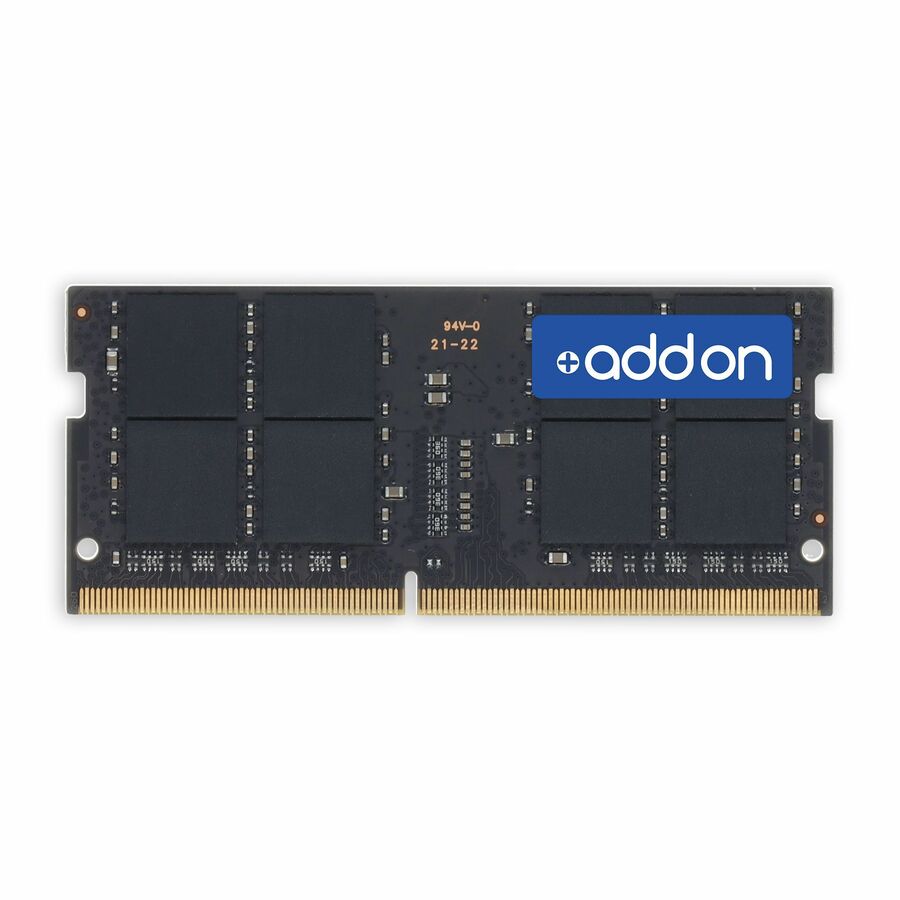
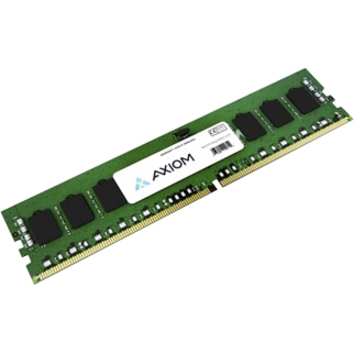
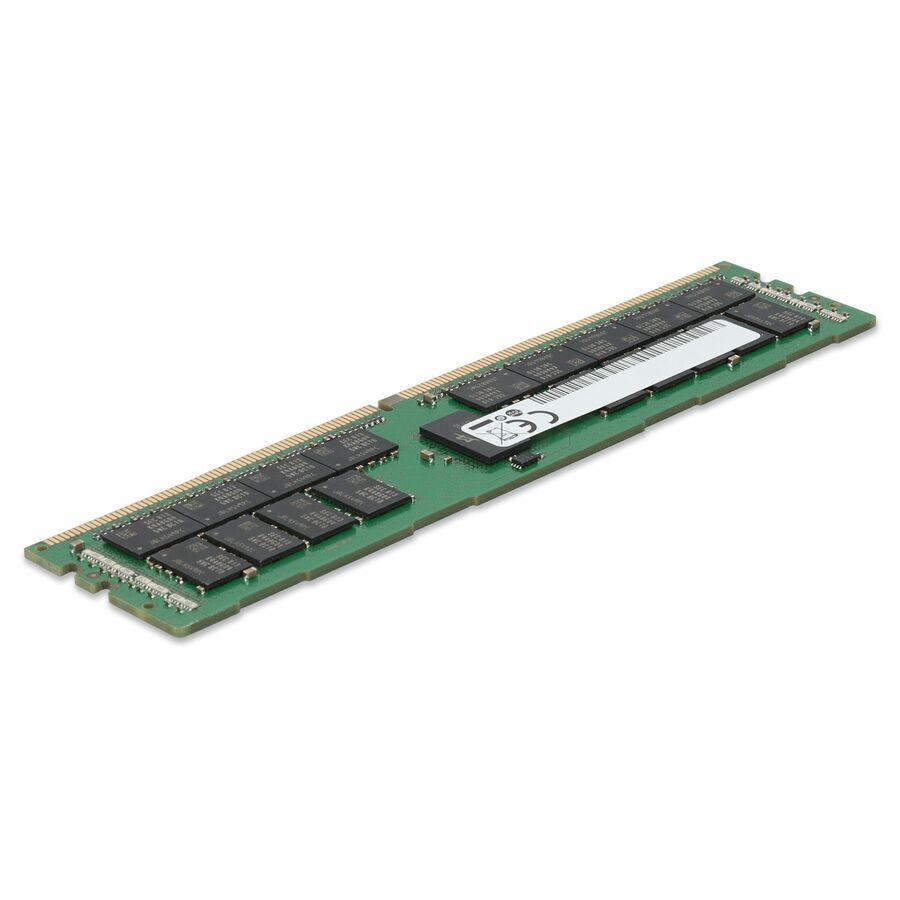
Both halves of the cost story above, in the form the hub sells them: two registered ECC server RDIMMs and one unbuffered SO-DIMM of the kind a business notebook takes. None of the three is an HPE- or HP-branded part — they are third-party DDR4 modules from AddOn and Axiom, each coded against a named OEM part number, which is what the card titles say and why they carry an HP reference at all. Whether a given module is the right one for a specific ProLiant or EliteBook configuration is a fitment question we confirm on the quote, never a claim a catalog title makes; an OEM HPE- or HP-branded build is quoted through our HP and HPE storefronts. Prices and availability are read from the catalog when this page renders.
Order-by logic: how to lock current HPE and HP pricing before it moves
There is no single market-wide 'order by X' date. The right date is a function of your own paperwork — the vendor's effective date for the specific SKU, the distributor cutoff to get your PO in ahead of it, and your quote's own expiration and ship-by terms. Because HPE has reserved a reprice-before-ship right, 'order by' alone may not be enough on config-to-order compute; work the list below in order.
- Lock the configuration first. Pin memory-heavy line items — ProLiant/Alletra nodes, high-RAM Z workstations — in the BOM Builder so the most exposed parts are fixed before pricing revises.
- Request a firm quote, TAA verified on request, and get the quote's validity window in writing — HPE's is reportedly as short as 14 days.
- On HPE ProLiant, Alletra, Nimble, and GreenLake orders, ask explicitly for the reprice-before-ship and ship-by language in writing; treat the quoted price as provisional until shipment unless terms say otherwise.
- Confirm the specific SKU's vendor price-increase effective date and any distributor order-cutoff date with your reseller account team — the practical cutoff is earlier than the vendor's effective date.
- Prioritize large-memory config-to-order compute and storage earliest; these are the items most likely to move and hardest to re-source at the old price.
- Budget a contingency for memory-dense configs rather than assuming one flat percentage across the refresh, and place the PO with buffer before both the distributor cutoff and the quote expiration — not on the last day.
2026 IT hardware price increase tracker
Every confirmed 2026 increase and effective date in one running list, updated as vendors move.
RAM price increase 2026
The server DRAM surge doing most of the work behind these numbers, with the Q3 guidance in full.
August 2026 price increase deadlines
The order-by calendar for the August cluster, re-marked after the window closed.
Lock current pricing before the effective date
Send a bill of materials and we return a firm quote across every brand on one PO, TAA verified on request. Quoted orders never require payment up front, and every line is NDAA 889-screened.
Buyer questions
Is there one confirmed HPE or HP price increase percentage and date for 2026?
No. Neither HPE nor HP Inc. has published a single universal percentage or one fixed effective date across its full portfolio. Reporting describes a repricing mechanism plus rolling, product-by-product actions. Directionally: server and infrastructure hardware has been reported in the roughly 10-15%+ range on list and quoted pricing, and client PCs lower — around 5% broadly — with higher-memory configs seeing larger effective increases. HPE's DRAM-linked actions reportedly began November 2025 and were formalized around its March 2026 earnings call; HP guided cost pressure to the second half of its fiscal year, with margins troughing in fiscal Q4 2026 (roughly August-October). Confirm your specific quote's window in writing rather than relying on a market date.
Why is HPE the brand where the price on my quote can change after I order?
Because HPE amended its quoting terms. On its Q1 FY2026 earnings call (reported by The Register, Network World, and CIO Dive in March 2026), HPE disclosed it added the right to reprice existing orders for commodity cost increases between quoting and shipment, and shortened its quote-validity windows. HPE says this is reserved for material commodity moves, but it means that on ProLiant, Alletra, Nimble, and GreenLake orders the quoted price is provisional until the hardware ships. Get the reprice-before-ship and ship-by terms in writing before you place the PO.
Why do my high-memory Z workstations and servers cost so much more than the headline increase?
Because the driver is a DRAM and NAND shortage, and price tracks how much memory is in the box. HP has said memory is now roughly 35% of a PC's bill-of-materials cost, and DRAM plus NAND is reported at more than half a traditional server's. So a large-memory Z workstation or a memory-dense ProLiant node is buying a bigger slice of the component that is actually inflating — which is why its effective increase runs well above the broad PC or server average. Lock those configurations earliest.
Can Uniqcli lock pricing across both HPE and HP brands on one order?
Yes. A single purchase order can lock pricing across HPE ProLiant, Alletra, GreenLake, and Aruba and HP EliteBook, ProBook, and Z workstations at once, with every line TAA-screened and NDAA Section 889-screened. A quoted order never requires payment up front, so requesting the quote is a no-cost way to fix your configuration and start the clock in your favor. Build the BOM in the BOM Builder, request a firm quote, and check current part numbers in the IT hardware catalog.
September 2026 update
Neither HPE nor HP Inc. has published a new price notice since the actions described above, and as of September 4, 2026 the reprice-before-ship term is still the operative mechanic on config-to-order compute and storage. What changed over the summer is the size of the cost being passed through. TrendForce forecast conventional DRAM contract prices up 13–18% quarter over quarter in 3Q26 and NAND Flash up 10–15% (July 3, 2026), a slower pace than the first half of the year; then on August 25, 2026 it put server DRAM contract prices up a cumulative 64% in the second half of 2025 with a further rise of roughly 270% expected across 2026, and enterprise SSD prices up a cumulative 235% across 2026 after roughly 35% in 2H25.
The same August 25 outlook explains why relief is not near: TrendForce expects DRAM and NAND Flash together to take 47% of major cloud providers’ capital expenditure in 2026 and 68% in 2027, with HBM contract prices rising a further 70–140% in 2027. Memory is not competing with servers for supply at the margin — it is where the capital is going.
For a ProLiant, Alletra or Nimble order that is quoted but not shipped, that is the whole planning problem in one sentence: the component behind the reprice right is still climbing. Get the ship-by and repricing language in writing, and reprice memory-dense configurations before the approval date rather than after it. Vendor developments as they land, with the source behind each figure, are on the 2026 IT hardware price tracker.
Tools and catalog
Go deeper on the components
Related buyer guides