
RAM Price Increase 2026: What Enterprise Buyers Can Verify
DRAM contract prices faced exceptional upward pressure in 2026. TrendForce forecast conventional DRAM up 58–63% quarter over quarter in Q2 and up 13–18% in Q3. Those figures are upstream market forecasts—not a universal markup for every DIMM, server, or laptop.
By Uniqcli Team · · 10 min read · Updated
Key takeaways
- Cite memory-market percentages as forecasts with dates and scope. Do not present them as completed retail or OEM price changes.
- AI server demand and supplier capacity priorities can tighten conventional and server DRAM, but pass-through varies by OEM, channel inventory, configuration, and contract.
- Requote the exact memory SKU or configured system. Compare manufacturer, generation, capacity, speed, rank, ECC type, and platform qualification.
- Cutting memory to fit the old budget can create workload, support, and future-upgrade costs. Right-size with measured demand and expansion rules.
- Confirm quote expiration, order acceptance, allocation, lead time, and substitution separately.
- Treat DDR4 wind-down and platform lifecycle as compatibility work, not an invitation to force DDR5 into a system that does not support it.
On this page
Market Watch
What is confirmed—and what is not
TrendForce's March 31, 2026 forecast said conventional DRAM contract prices could rise 58–63% quarter over quarter in Q2 2026. It attributed the exceptional increase to supply constraints, supplier focus on high-bandwidth memory and server demand, and buyers seeking inventory.
TrendForce later forecast server DRAM contract prices up 13–18% quarter over quarter for Q3. A smaller percentage after a steep prior quarter still compounds from a higher base; it does not mean prices returned to where they began.
These numbers describe contract-price expectations in the component market. They do not prove that:
- a particular OEM increased a server price by the same rate;
- every DIMM generation or density moved together;
- a distributor's inventory was repriced on the forecast date;
- a buyer's negotiated discount changed; or
- a valid accepted order can be repriced.
For transaction-level truth, use a current quote, the applicable price list, and the seller's written terms.
Both halves of the shortage: DRAM and NAND
Axiom Memory Solutions
Axiom Cisco 16GB DDR5 SDRAM Memory Module
$1,754.65*In stockAxiom Memory Solutions
32GB DDR4-2133 ECC RDIMM for Cisco
$983.78In stockAxiom Memory Solutions
Axiom UX10 1.92 TB Solid State Drive
$2,770.29In stock
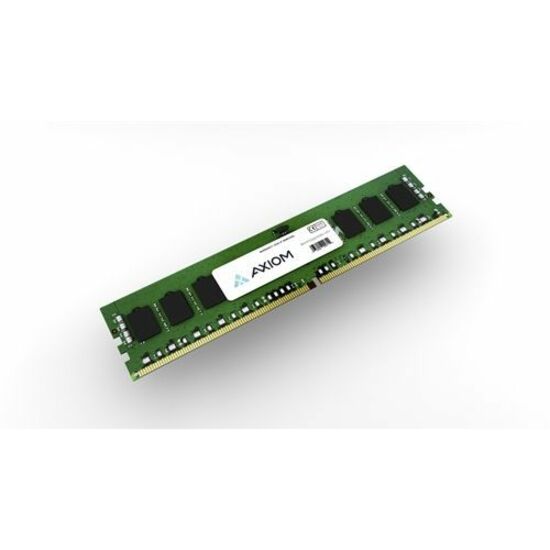
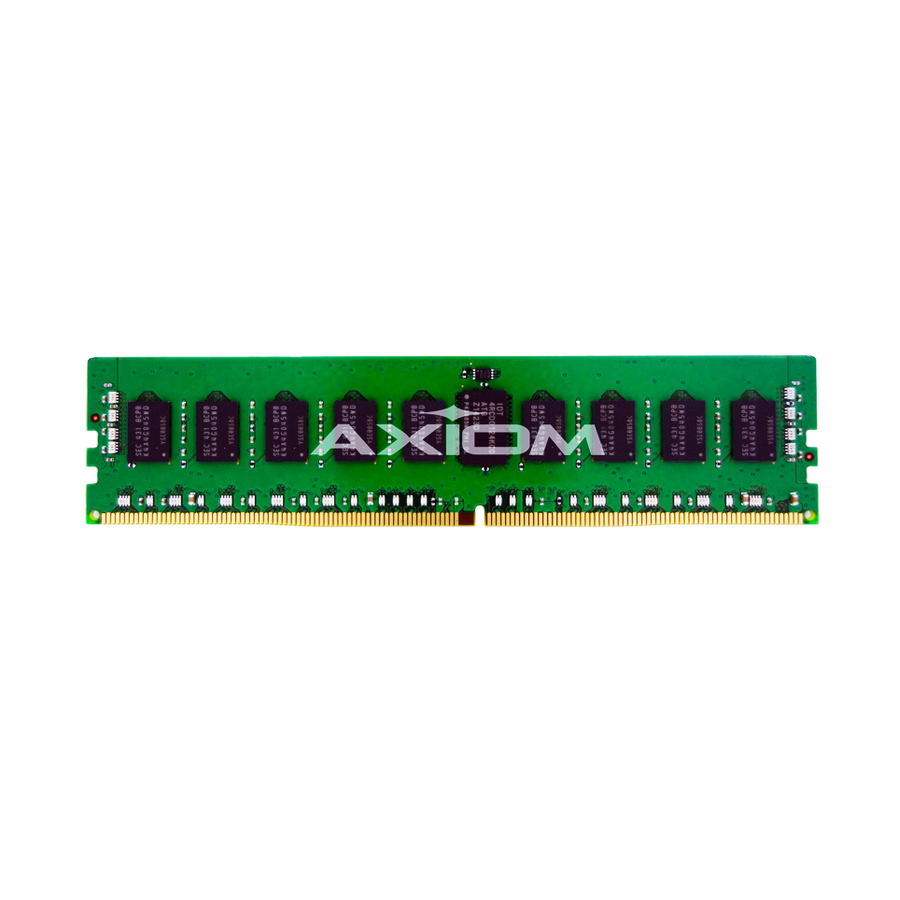
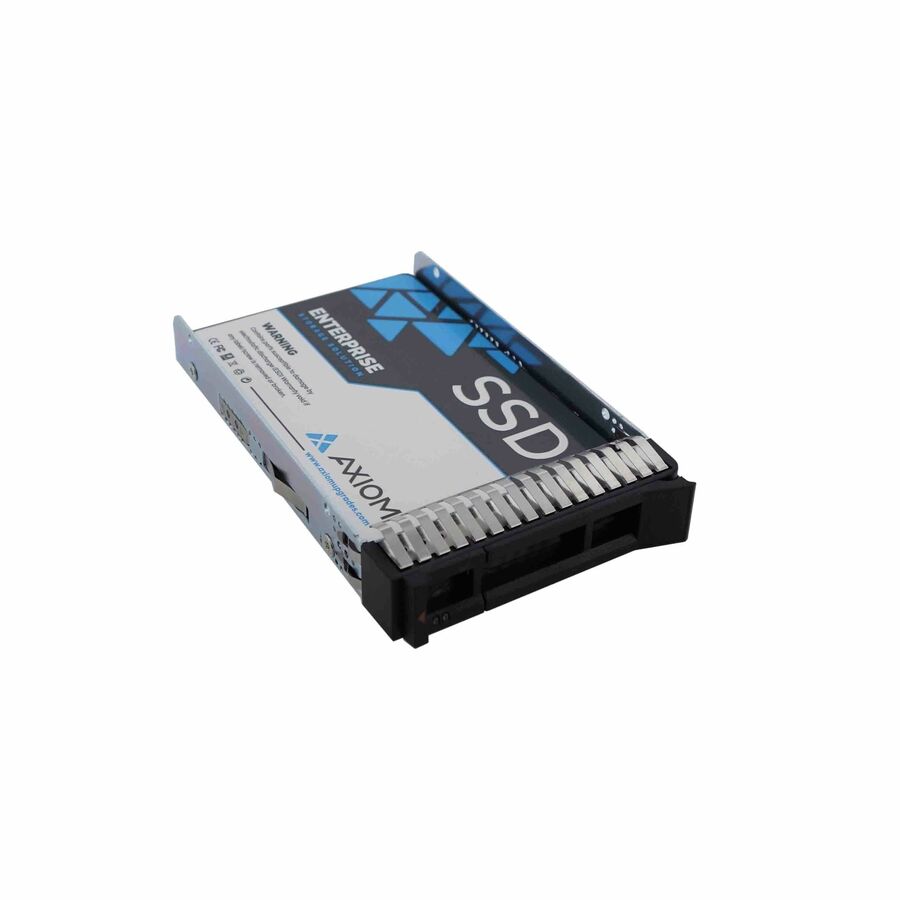
A DDR5 registered module, a DDR4 module for a platform still in production service, and an NVMe solid-state drive — the two contract markets this page tracks, on the two sides they are actually bought from. The figures above are quarter-over-quarter guidance on contract pricing between manufacturers and their large buyers; these cards are the retail end of the same story, read from the catalog when the page renders. The two do not move on the same day or by the same amount, and the gap between them is the window the checklist below is about.
Why memory pressure reaches enterprise buyers unevenly
Capacity is not perfectly fungible
Memory fabrication and packaging capacity can shift toward products with stronger demand or margin, including high-bandwidth memory used in AI accelerators. Conventional server DRAM does not instantly replace HBM, nor can every production line change product without qualification and yield consequences. The shared constraint is capacity allocation, not simple interchangeability.
OEMs carry different inventory and agreements
An OEM with inventory or longer supply agreements may delay pass-through. Another may adjust discounts or configurations quickly. A distributor can quote pre-increase stock until it is gone. This produces a patchwork, not a synchronized retail event.
Finished-system prices contain much more than DRAM
A server includes CPUs, storage, networking, power, chassis, licenses, services, and support. The memory share grows with capacity and module count. A memory-rich database node is likely more exposed than a lightly configured branch server, but that is a prioritization inference until the quotes are compared.
Qualification narrows the alternate pool
Enterprise platforms specify supported generations, speeds, ranks, ECC modes, population patterns, and sometimes OEM-qualified part numbers. A cheaper module that fits mechanically can still reduce speed, disable a supported configuration, create boot errors, or affect warranty/support.
Freeze the memory requirement before shopping
Capture:
- server, workstation, or endpoint manufacturer and exact model;
- processor model and number of sockets populated;
- DDR generation;
- RDIMM, LRDIMM, ECC UDIMM, or other module class;
- module capacity, count, speed, rank, and organization;
- total installed memory;
- channel and slot population rules;
- current firmware and OEM support matrix;
- workload utilization and expected growth;
- spare, failure, and maintenance strategy; and
- future expansion target.
Without that snapshot, a lower quote may simply contain slower modules, fewer channels populated, a different support position, or no viable expansion path.
Capacity planning that survives a price spike
Start with observed utilization
Use representative workload windows, not a quiet-day screenshot. Review active memory, committed memory, paging or swapping, cache behavior, NUMA locality, application limits, and virtualization overcommit. Include peak, maintenance, failover, and growth conditions.
Separate required headroom from comfort
Document the headroom needed for failover, workload spikes, patching, and growth. A blanket percentage is less useful than a workload-based threshold. For clustered systems, model a host failure rather than average utilization.
Model the expansion path
Populating every slot with small DIMMs can make today's configuration cheaper and tomorrow's upgrade wasteful. Fewer larger modules may cost more now but preserve slots. On the other hand, unbalanced population can reduce bandwidth. Follow the platform's rules and price both current and planned states.
Decide where standardization matters
Standard module configurations simplify sparing, imaging, and support. But forcing every server to the largest tier can waste budget. Define a small catalog of workload tiers and exception process.
DDR4 versus DDR5 is a platform decision
DDR5 offers architectural and bandwidth improvements, but it is not a drop-in DDR4 replacement. The CPU and motherboard decide the generation. A buyer facing tight DDR4 supply cannot solve it by ordering DDR5 for an existing DDR4 platform.
For a fleet decision, compare:
- remaining supported life of the current platform;
- available DDR4 module densities and qualified suppliers;
- cost of extending the installed base;
- migration cost to a DDR5-capable server or endpoint;
- application certification and operating-system requirements;
- power, rack, licensing, and operational changes; and
- expected life of the new platform.
If an existing server needs only a modest supported expansion, extending it may be rational. If the expansion consumes scarce high-priced DDR4 and the platform is near support end, a replacement analysis may win. Do the math; do not treat a memory headline as the answer.
Requoting DIMMs and configured systems
Request two quote formats:
Like-for-like
Exact part numbers, quantities, configuration, warranty, and support. This isolates price movement.
Alternate design
An approved lower-cost or more available option with every technical and commercial difference identified.
For each quote, record issue date, expiration, seller, currency, source/authorization, lead time, stock or allocation status, return restrictions, and price-protection condition. Ask whether the product is physically available or merely orderable.
If an OEM configures memory at the factory, compare the complete server price and discount. If memory is field-added, verify the effect on warranty, support, firmware, and on-site service. A third-party module can be technically capable and still change the support experience.
A line-level comparison
Manufacturer part number
Baseline: Requote: Why it matters: Prevents family-level comparison.
Capacity and count
Baseline: Requote: Why it matters: Distinguishes price from scope.
Generation/type
Baseline: Requote: Why it matters: Ensures platform compatibility.
Speed/rank
Baseline: Requote: Why it matters: Can change performance/population.
OEM qualification
Baseline: Requote: Why it matters: Affects support posture.
Unit/extended price
Baseline: Requote: Why it matters: Shows identical-row change.
Lead time/allocation
Baseline: Requote: Why it matters: Price without supply may be unusable.
Quote protection
Baseline: Requote: Why it matters: Defines when price can change.
Do not summarize until these rows match. A requote that swaps four 64 GB DIMMs for eight 32 GB modules is a design change, even if total capacity is equal.
Approval strategies that do not cut corners
Preapprove technical alternates
Have architecture and operations approve two or three module configurations before a quote expires. Define exact tradeoffs and conditions. Procurement can then react without restarting technical review.
Use configuration tiers
Price minimum, target, and growth configurations. Make the target the award baseline and identify the conditions that justify moving down or up. This is better than an arbitrary across-the-board capacity cut.
Split delivery only when supportable
Partial delivery can help availability, but mixed modules or later field upgrades add labor and configuration risk. Price installation, downtime, and spares. Confirm whether the seller protects the later quantity.
Negotiate evidence, not reassurance
Ask for a dated stock status, allocation confirmation, manufacturer notice, or price-list revision. “The market is crazy” may be true and is not evidence for a specific change.
Escalate quote dates early
If technical or funding approval will cross expiration, request a refresh before final review. Do not urge approvers to sign an incomplete package solely to chase a market forecast.
How to communicate the budget impact
Avoid: “RAM went up 63%, so servers will cost 63% more.”
Use: “TrendForce forecast Q2 conventional DRAM contract prices up 58–63% quarter over quarter. Our like-for-like OEM quote dated [date] shows identical memory-bearing system rows up [percentage], while added capacity accounts for [amount]. The quote expires [date] and price protection is conditioned on [triggering event].”
That sentence distinguishes market context, observed transaction evidence, scope change, and action date.
Platform-specific questions to answer
Servers
Check processor memory-channel rules, sockets populated, supported DIMM types, maximum capacity by module class, and performance when channels are unbalanced. For virtualization, validate failover capacity and the relationship between physical RAM and licensed hosts. Confirm whether a field upgrade requires a maintenance window or OEM technician.
Workstations
Engineering and content workloads can have sharp working-set requirements. Record application certification, ECC need, GPU memory versus system-memory behavior, and the cost of users waiting on disk or rerunning failed jobs. Two configurations with the same total RAM may differ in expansion flexibility.
Laptops and desktops
Identify soldered versus socketed memory before purchase. A low-memory device with no upgrade path commits the organization for the device's life. For a socketed model, confirm available slots and supported modules. Do not assume a model-family specification applies to every submodel.
Appliances
Network, security, storage, and other appliances may use memory internally but prohibit user upgrades. Compare the entire appliance SKU and licensed performance tier. Opening the chassis or changing memory can void support.
Total-cost scenarios
Build at least three configurations:
Minimum
Memory design: Meets present measured requirement. Costs to include: Hardware, installation, likely near-term expansion. Risk question: What happens at peak or failover?
Target
Memory design: Meets requirement plus justified headroom. Costs to include: Hardware and normal support. Risk question: Is headroom tied to evidence?
Growth
Memory design: Preserves capacity and slot strategy. Costs to include: Larger modules, carrying cost, longer useful life. Risk question: Will platform/workload remain long enough?
Add labor, outage, shipping, support, and displaced-module value to later upgrades. A $4,000 saving today can be false if an upgrade requires discarding modules and scheduling a second outage. Conversely, unused memory has opportunity and power cost. The decision is workload economics, not “maximum is safer.”
Supplier and manufacturer evidence request
Ask for:
- exact manufacturer and part number;
- new, refurbished, or other condition;
- OEM platform-qualification status;
- manufacturing or date-code information when relevant and available;
- stock versus estimated availability;
- allocation status and quantity reserved;
- lead time and last confirmation date;
- warranty provider and process;
- return rights and restocking restrictions;
- quote expiration and price-protection condition; and
- change notification before substitution.
For higher-risk supply, require chain-of-custody and authenticity controls appropriate to the organization. A low price from an unknown source is not an alternate until provenance and support are understood.
Receiving and burn-in
At receipt, reconcile part number, capacity, speed, rank, labels, quantity, and condition. Follow organizational procedures for authenticity inspection. Install only after confirming the target system and supported population. Record before-and-after configuration and firmware.
Run the OEM-recommended diagnostics or a workload-appropriate memory test. Monitor corrected and uncorrected errors. For a fleet change, pilot a small group before mass deployment. Save failures by supplier lot or module identity so procurement can spot a pattern.
Receiving is also the moment to update spares and asset records. Loose DIMMs without a recorded platform, warranty, and custodian tend to vanish into drawers and cannot support a later audit.
When to wait, buy, or redesign
Buy when the requirement is validated, the platform remains supported, the quote and supply are real, and delay creates a larger operational cost.
Wait when the purchase is speculative, the workload is not ready, the platform decision is unresolved, or the only justification is a forecast. Waiting is a decision with risk, not a prediction that prices fall.
Redesign when the needed DDR4 capacity is difficult to support, the server is near lifecycle end, the current module plan wastes most existing memory, or a platform refresh improves the whole workload economics. Model migration, licensing, downtime, and support—not only hardware.
Document the decision trigger and next review date. Market conditions will change; a good file explains why the choice was reasonable with the evidence available.
A confidence label for every memory claim
Use four labels in internal and published updates:
Market forecast
Original research predicts a segment and period. Preserve the forecast date and range.
Manufacturer statement
An OEM or component supplier describes cost, supply, or pricing action, with exact scope.
Transaction observation
A like-for-like quote comparison shows a change for named SKUs, geography, channel, and dates.
Buyer inference
The BOM suggests greater exposure because of capacity, module count, or platform constraint.
Do not average these into a single percentage. A forecast can explain why a quote moved but cannot prove the amount. A quote can prove a buyer's current offer but cannot measure the whole market.
When publishing a follow-up, retain prior forecast wording and add the actual or later estimate as a new dated statement. That makes the article auditable and prevents a reader from mistaking a revised forecast for what was known when an earlier purchase was approved.
For every number, store the original URL and a dated capture where policy permits. Record whether the publisher later revised it. A chart without its units, segment, geography, and comparison period should not enter the approval brief, even if its direction appears plausible.
Frequently asked questions
How much did RAM prices increase in 2026?
It depends on segment and period. TrendForce forecast conventional DRAM contract prices up 58–63% quarter over quarter in Q2 (TrendForce, March 31, 2026) and 13–18% in Q3 (TrendForce, July 3, 2026). Those forecasts do not equal a universal DIMM or system price change.
Will DRAM prices fall later in 2026?
This guide does not predict a reversal. Market forecasts can change. Buyers should monitor primary research and current quotes rather than time a purchase on an unverified future price claim.
Should we buy extra memory now?
Buy for measured workload, planned growth, platform population rules, support life, and a rational spare level. Speculative stock can consume warranty and become obsolete.
Can we use third-party memory in an OEM server?
Sometimes, but verify technical qualification, firmware, warranty, and support implications with the OEM and organization. Compare outage and service risk, not only module price.
Does a quote expiration date lock memory pricing?
Not by itself. Read the quote and terms. Confirm whether protection begins at acceptance, allocation, or shipment and whether substitutions or delays permit repricing.
What buyers are asking in September 2026
Why is RAM price so high?
Because AI data-centre buyers are absorbing the output. TrendForce reported on August 25, 2026 that DRAM and NAND Flash together account for 47% of major cloud providers’ total capital expenditure in 2026, rising to a projected 68% in 2027, with that capital expenditure itself up 98% year over year in 2026. Server DRAM contract prices rose a cumulative 64% in the second half of 2025, and TrendForce expects a further rise of roughly 270% across 2026. Suppliers reallocated capacity toward AI and server products rather than the open market (TrendForce, July 3, 2026), so the cost sits in the component rather than in a vendor’s margin.
Will RAM ever be cheap again?
No supplier has published a date. TrendForce’s August 25, 2026 outlook forecasts HBM contract prices rising a further 70–140% in 2027 and describes no price moderation for that year, which is the opposite of a return to pre-shortage levels. Plan the next two budget cycles at current prices, and attribute any forecast of relief to the firm that issued it and the date it issued it.
How long will RAM prices stay up?
Longer than one quarter. Growth is slowing rather than reversing: TrendForce forecast conventional DRAM contract prices up 13–18% quarter over quarter in 3Q26 and NAND Flash up 10–15% (July 3, 2026), down from the much steeper increases earlier in the year, while its August 25, 2026 outlook still shows memory taking a growing share of cloud capital spending into 2027. A smaller increase is still an increase.
Should I buy RAM now or wait?
Settle the requirement first, then the window. If the configuration, funding and receiving plan are already approved, buy — every published forecast for the rest of 2026 points up rather than down. If they are not approved, do not compress the review to beat a date: get the quote’s expiration and whether price is protected at acceptance, allocation or shipment in writing, and reprice rather than accept an unreviewed substitution.
Go deeper on the components