
Short answer
The main difference is that SAS is a dual-port, full-duplex enterprise interface at 12 Gb/s while SATA III is a single-port, half-duplex link at 6 Gb/s. Choose SAS when a drive has to stay reachable through two controllers or serve heavy concurrent I/O; choose SATA when capacity per dollar leads. They are not symmetric: a SAS controller runs SATA drives, a SATA controller cannot run SAS.
Key facts
- SATA III links at 6 Gb/s and SAS-3 at 12 Gb/s: on one Ultrastar DC HC580, WD rates the SATA model 600 MB/s maximum interface transfer and the SAS model 1,200.
- SAS drives are dual-port, which creates two fault domains — the drive stays reachable through the second port when a path fails. SATA drives have one port.
- The SAS fabric lets multiple hosts reach the same device, so a host failure and a path failure are both survivable at the drive.
- SAS carries end-to-end CRC from the host buffer through the transfer to the media, the protection-information checkpoint SATA has no equivalent of.
- Interface is not media class: WD publishes the same 24x7 availability and the same 2.5 M-hour MTBF on both the SATA and SAS versions of that drive.
- A SAS controller runs both SAS and SATA drives; a SATA controller cannot address a SAS drive, so the backplane usually settles this before performance does.
Buyers rarely choose between SAS and SATA in a vacuum — the decision is usually forced by the controller, backplane, and availability target of a specific server or array. SATA descends from desktop storage and optimizes for capacity per dollar; SAS grew out of enterprise SCSI and optimizes for concurrency, dual-path redundancy, and predictable behavior under heavy multi-user load. Both connect spinning disks and SATA/SAS SSDs, and the connectors are physically similar, but the protocols and the guarantees behind them are not the same.
What actually drives the choice is workload concurrency and fault tolerance, not raw sequential speed. A single-user backup target streaming large files sees little benefit from SAS; a shared array fielding thousands of small random I/Os from many hosts benefits from SAS's deeper queuing, full-duplex links, and dual ports that let a drive stay reachable through two independent controllers. The compatibility question — can a SATA drive even sit in this bay — is often settled before performance ever enters the conversation, because SAS backplanes accept SATA drives but SATA controllers cannot talk to SAS drives.
At a glance
Side by side
| Factor | SAS | SATA |
|---|---|---|
| Ports per drive | Dual-port — two independent paths for controller failover | Single-port — one path, one point of connection |
| Duplex | Full-duplex: simultaneous read and write on the link | Half-duplex: one direction at a time |
| Command queue depth | Deep queuing — commonly 128–256 commands via native SCSI tagged queuing | NCQ up to 32 commands per drive |
| Link speed (current gen) | SAS-3 at 12 Gb/s, SAS-4 at 22.5 Gb/s per lane | SATA III at 6 Gb/s |
| Topology / expansion | Expanders scale to hundreds/thousands of devices | Point-to-point or port multipliers; limited fan-out |
| Interoperability | SAS controller runs both SAS and SATA drives | SATA controller runs SATA drives only |
| Typical endurance / rating | Higher duty-cycle rating (24x7), lower unrecoverable-error rate on enterprise units | Often rated for lighter duty cycles; higher URE rate on nearline units |
| Cost per GB | Higher per drive and per controller | Lower — best capacity per dollar |
Choose SAS when
- You need dual-port redundancy so a drive survives a controller or path failure in a high-availability array
- The workload is heavy, concurrent, random I/O from many hosts or VMs where deep queuing and full-duplex links matter
- You are populating an enterprise array with expanders that must scale to hundreds of drives
- The bays are 24x7 duty-cycle and you want the lower unrecoverable-error rate and higher endurance rating of enterprise SAS units
Choose SATA when
- The workload is capacity-driven — backups, archives, media, bulk nearline storage — where cost per GB dominates
- I/O is largely sequential or single-threaded and a 32-deep NCQ queue is more than enough
- You want maximum usable terabytes within a fixed budget
- A SAS backplane is present but you want to mix in high-capacity SATA drives for the cold tier
Bottom line
Put SAS in the tier that has to stay reachable and SATA in the tier that has to be cheap. SAS wins where availability and concurrency are the priority — dual ports, deep queuing, full-duplex links, and large-fabric expansion make it the default for enterprise arrays and the tiers that cannot go offline. SATA wins where capacity per dollar is the priority and the workload is lighter or more sequential. A common, cost-effective pattern is a SAS backplane populated with SAS drives for the hot tier and SATA drives for bulk cold storage, since SAS controllers speak both.
Products for this decision
The SAS half of the pair
Western Digital
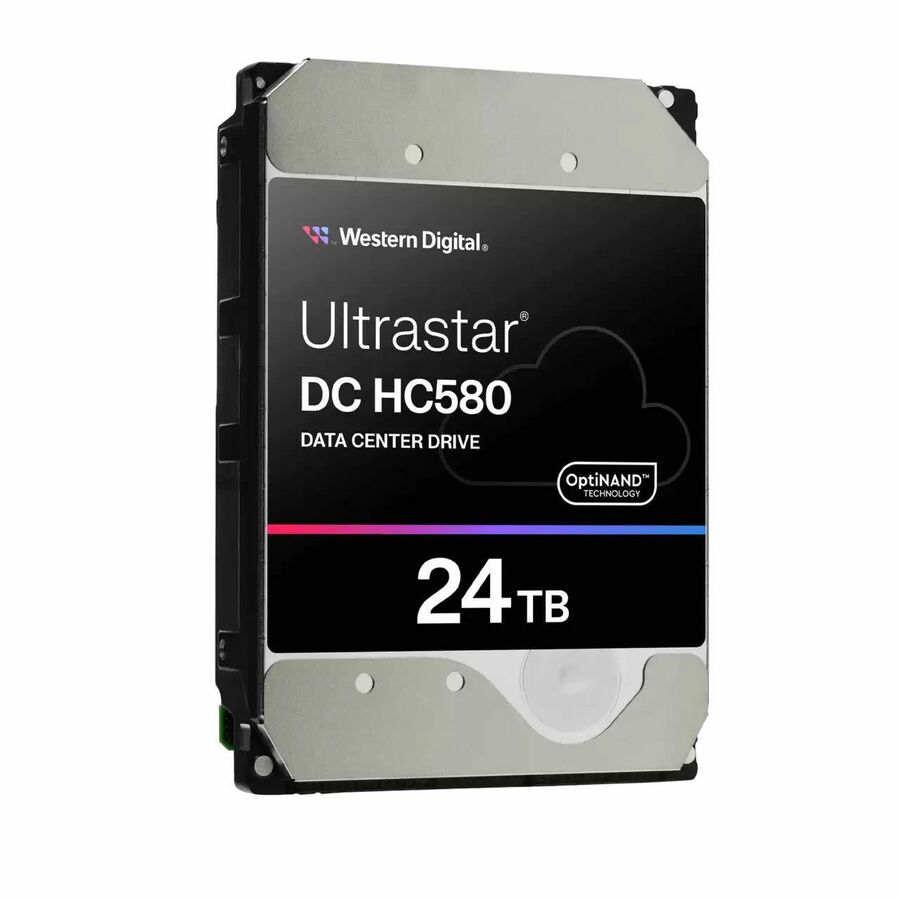
WD Ultrastar DC HC580 WUH722424AL5204 24 TB Hard Drive
0F62802
A 24 TB Ultrastar DC HC580 on a 12 Gb/s SAS interface — dual-port, and rated by WD at 1,200 MB/s maximum interface transfer.
Needs a SAS controller or backplane; a SATA-only port cannot address it.
$1,882.48Back-orderedThe SATA half of the pair
Western Digital
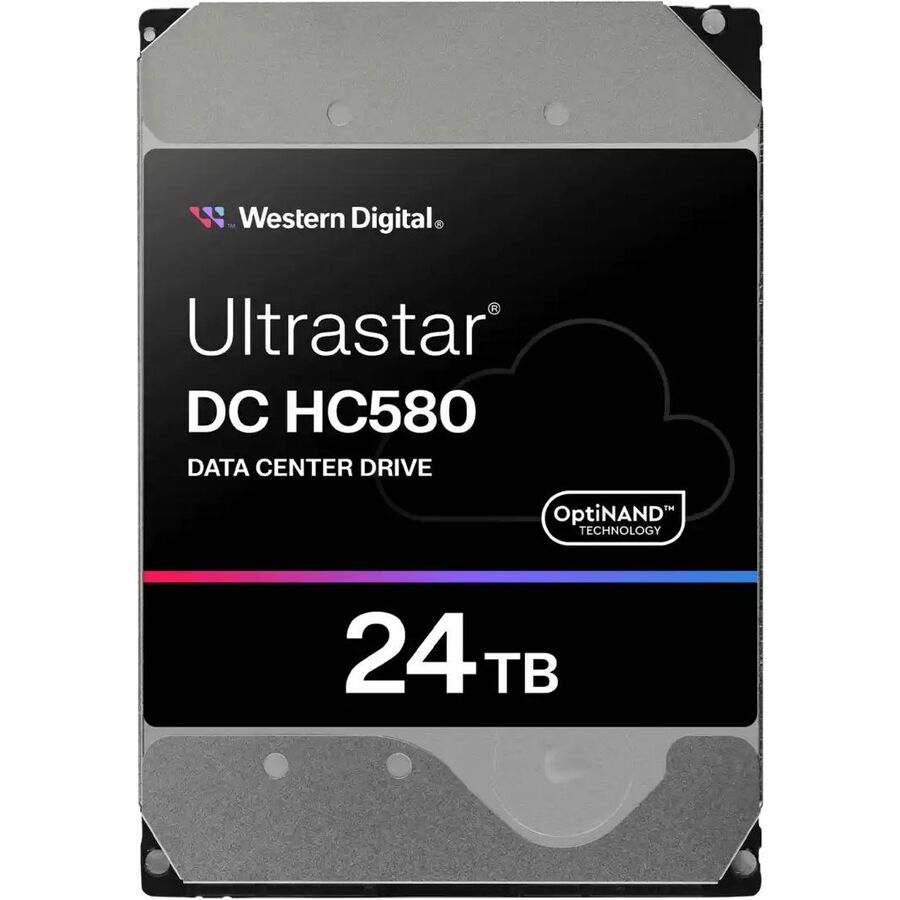
WD Ultrastar DC HC580 WUH722424ALE6L1 24 TB Hard Drive
0F62795
The same 24 TB HC580 platters behind a 6 Gb/s SATA interface, rated 600 MB/s maximum interface transfer — the capacity tier in a SAS backplane, or a SATA-only server.
$1,859.14Back-orderedSAS SSD
Western Digital
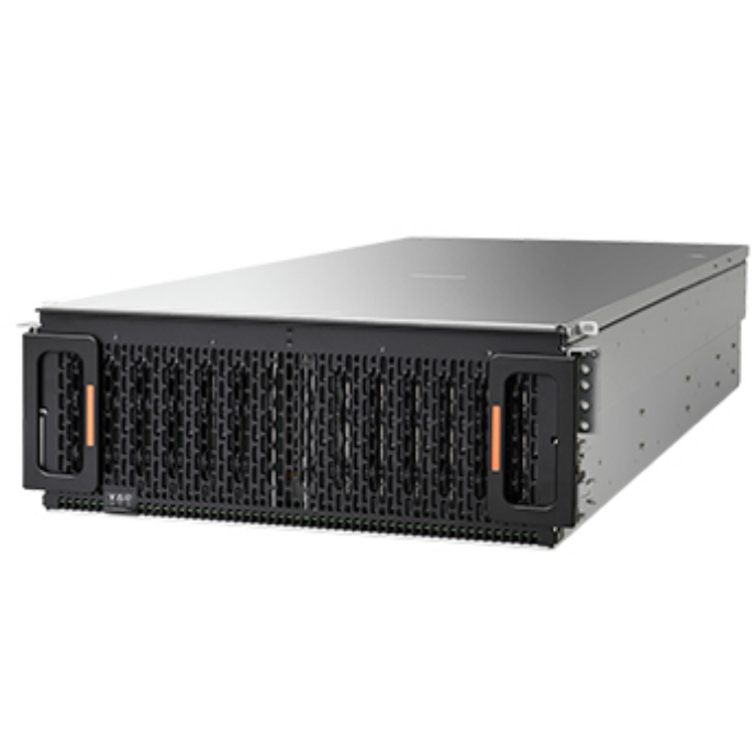
WD Ultrastar DC SS530 800 GB Solid State Drive
1EX2003
An 800 GB Ultrastar DC SS530 on 12 Gb/s SAS, for the hot tier of a dual-controller array where the drive has to answer both paths.
On a single-controller server, an NVMe drive is usually the better spend than a SAS SSD.
$846.74Back-orderedFAQ
Common questions
- Can I put SATA drives in a SAS backplane?
- Yes. SAS controllers and backplanes are designed to accept SATA drives, so you can mix SAS and SATA in the same enclosure. The reverse is not true: a SATA-only controller cannot communicate with a SAS drive, because the SAS protocol is a superset — SAS hosts reach SATA drives through a tunneling mechanism that SATA hosts do not implement in reverse.
- Is SAS always faster than SATA?
- Not for every workload. Per-lane SAS link speeds (12 Gb/s for SAS-3, 22.5 Gb/s for SAS-4) exceed SATA III's 6 Gb/s, and SAS's full-duplex link and deep command queue help under heavy concurrent random I/O. But for single-threaded sequential transfers, a SATA drive of the same media class performs comparably — the interface advantage mainly shows up under many simultaneous requests.
- What does dual-port on SAS actually buy me?
- Redundancy. A dual-port SAS drive presents two independent connection paths, so it can be wired to two separate controllers or fabrics. If one controller, cable, or expander path fails, the drive stays reachable through the other. That is central to high-availability arrays and is something single-port SATA drives cannot provide.
- For SSDs, does the SAS-vs-SATA choice still matter?
- It still matters within the SAS/SATA family — SAS SSDs offer dual-port paths and deeper queuing than SATA SSDs, which are capped at 6 Gb/s and a 32-deep NCQ. But if raw SSD performance is the goal, NVMe over PCIe bypasses both interfaces entirely and delivers far higher throughput and queue depth. Choose SATA/SAS SSDs for compatibility with existing bays and controllers; choose NVMe for the highest performance tier.
- Can I plug a SAS drive into SATA?
- No. A SAS drive will not connect to a SATA-only port: the SAS device connector has a bridged section a SATA cable cannot mate with, and even physically past that, a SATA host controller does not speak the SAS protocol. The relationship only runs one way — a SAS controller or backplane accepts SATA drives, and that is the mix you can build.
- Can I mix SATA and SAS drives?
- Yes, in a SAS backplane. SAS controllers address both, so the common enterprise pattern is SAS drives on the hot tier and high-capacity SATA drives for bulk storage in the same enclosure. Keep them in separate RAID sets rather than one mixed array: the two have different queueing behaviour and different link rates, and a mixed set performs to the slower member.
- Can I use SAS Drive in desktop?
- Only with a SAS host bus adapter. A desktop motherboard's storage ports are SATA, and no adapter converts a SATA port into a SAS one. Add a SAS HBA on a PCIe slot and the drive works; most desktop cases also lack the airflow and the hot-swap bays these drives are designed around, so the practical answer is usually a SATA or NVMe drive instead.
- Why is SAS faster than SATA?
- Two links and twice the rate. SAS-3 runs at 12 Gb/s against SATA III's 6 Gb/s — on Western Digital's Ultrastar DC HC580 that is 1,200 MB/s maximum interface transfer against 600 MB/s on the same platters — and SAS is full duplex with two ports, so it reads and writes at once and can be served by two controllers. Under a single sequential stream the media, not the interface, sets the pace, and the two perform much the same.