
Federal AI Infrastructure in 2026: Cloud Adoption vs. On-Premises Deployment Timelines
Agencies can license Claude or Gemini in a week, but standing that same capability up in an IL6 enclave or on owned GPUs still runs on 2023-era timelines. The gating constraint has moved from chips to power, cooling, and classified authorization.
By Uniqcli Team · · 6 min read · Updated
Key takeaways
- SaaS AI access via GSA OneGov or USAi.gov can be onboarded in weeks, but agency-owned GPUs or an IL6 enclave still take 18 months or more.
- FedRAMP High/IL5 authorization doesn't carry over to IL6; model weights, inference stack, and monitoring must be rebuilt and separately authorized.
- By mid-2026, power and grid interconnection — not GPU allocation — is the tighter constraint on federal AI buildouts.
- DoD excluded Anthropic from its IL6/IL7 classified AI expansion after designating it a supply-chain risk; Anthropic has sued the Pentagon.
- GPU lead times ran roughly three to seven months in early-to-mid 2026, with the bottleneck shifted from chip fabrication to HBM memory supply.
On this page
Industry Trends
Two federal AI clocks are running, and they are not running at the same speed
Through GSA's OneGov and USAi.gov programs, an agency can now be onboarded to a hosted frontier model in a matter of weeks. Getting that same capability onto agency-owned GPUs, or into an IL6 classified enclave, still routinely takes eighteen months or more. Buyers who assume the second clock moves like the first are about to discover their AI roadmap is hostage to a grid interconnection queue and an authorization process that has nothing to do with software.
The paper trail, translated for buyers rather than lawyers
The policy scaffolding arrived fast. On July 23, 2025 the White House released "Winning the Race: America's AI Action Plan" alongside three executive orders, organized around three pillars: accelerating AI innovation, building American AI infrastructure, and leading in international AI diplomacy and security. The plan enumerates more than 90 federal policy actions. Four months later, on November 24, 2025, the administration issued an executive order launching the DOE-led 'Genesis Mission,' mobilizing all 17 National Laboratories to build an integrated AI, supercomputing, and quantum discovery platform, with milestones to identify federal computing resources by February 22, 2026 and demonstrate initial operating capability by August 21, 2026.
For most buyers, the operative document is neither of those. It is OMB Memorandum M-25-21, issued April 3, 2025, which required CFO Act agencies to designate Chief AI Officers within 60 days and convene Agency AI Governance Boards within 90 days. The harder deadline is now behind many teams: agencies had until April 15, 2026 to bring every 'high-impact' AI system into compliance or shut it down, and must begin publicly reporting annual AI use-case inventories in 2026.
The through-line is that the mandates set direction and deadlines, but they do not resolve the physical and authorization work underneath. A governance board can be stood up in ninety days. A classified enclave cannot.
What is actually quick right now
The software layer has genuinely accelerated. Buying access to a model is no longer the hard part.
GSA OneGov
Launched April 2025, OneGov has produced deals with more than a dozen vendors and, per GSA, identified over $1.15 billion in savings, with more than 120 orders placed and roughly 3.4 million federal users given access to AI tools government-wide as of May 2026.
USAi.gov
GSA's governmentwide shared-services testing and evaluation platform launched in August 2025, covering chat, code generation, and document summarization so agencies do not duplicate infrastructure buys. GSA struck model-access agreements with OpenAI, Anthropic, and Google the same month.
FedRAMP 20x
FedRAMP's 2025 AI Prioritization Initiative fast-tracked conversational-AI authorizations from August 2025 through April 2026. The 20x automation approach is designed to cut Low and Moderate authorization time from 18-plus months to roughly three, with 13 Phase 2 Moderate pilot participants named January 13, 2026.
What is still slow, and how fragile 'fast' gets once classification enters
The fast track is real but narrow. GAO's own audit, GAO-26-107859, published April 13, 2026, reviewed 13 AI acquisitions across 44 contracts at DOD, DHS, GSA, and VA and found that none of the four agencies' policies require systematically collecting and sharing lessons learned through the OMB-directed repository. GAO issued four recommendations; all four agencies concurred. The same report notes federal agencies more than doubled AI use from 2023 to 2024, and that Congress appropriated roughly $1.7 billion for AI efforts government-wide.
Where classification enters, the ground shifts under the vendor list itself. As of May 2026, DoD is expanding classified and frontier-model work to eight companies for IL6 and IL7 environments, explicitly excluding Anthropic after DoD designated the company a supply-chain risk amid a dispute over Claude's use in military operations. Anthropic has sued the Pentagon. The original 'frontier AI' contracts awarded in summer 2025, to OpenAI, Anthropic, Google, and xAI, were each worth up to $200 million. On the unclassified side, DoD's GenAI.mil platform launched December 2025 at Impact Level 5 for CUI and had roughly 1.3 million users as of early May 2026.
The lesson for buyers is that a model on today's approved list is not necessarily on tomorrow's once the environment classification rises. The software-layer speed does not transfer.
Why FedRAMP High and IL5 do not simply 'upgrade' into IL6
The single biggest reason defense and IC generative-AI projects stall after a successful unclassified pilot is the enclave-replication problem. Plan for it as a distinct funded phase, not a configuration change.
- FedRAMP High (sufficient for IL4/IL5 CUI workloads) does not carry over to IL6+. The gap between the two is where most defense and agency generative-AI projects stall.
- Model weights, inference infrastructure, the API layer, and monitoring must be fully replicated inside a classified enclave rather than reused from a cloud CUI environment.
- Microsoft's Azure OpenAI Service (FedRAMP High/IL5) remained the most widely used AI cloud offering as of early 2026, but that authorization level is exactly where the lift-and-shift assumption breaks.
- The market is beginning to answer this at the platform level: AWS launched 'Secret Cloud for Industry' (ASCI) in June 2026 for contractor-owned classified workloads up to Secret, holding provisional IL6 authorization, with Northrop Grumman the first defense contractor to deploy on it.
- AWS paired that with a $20M ASCI Accelerator, a $50B commitment to AI and supercomputing infrastructure across GovCloud and classified regions, and up to $1B in cloud credits for the 18 intelligence-community agencies (available through October 2030).
The real bottleneck is power and cooling, not chips
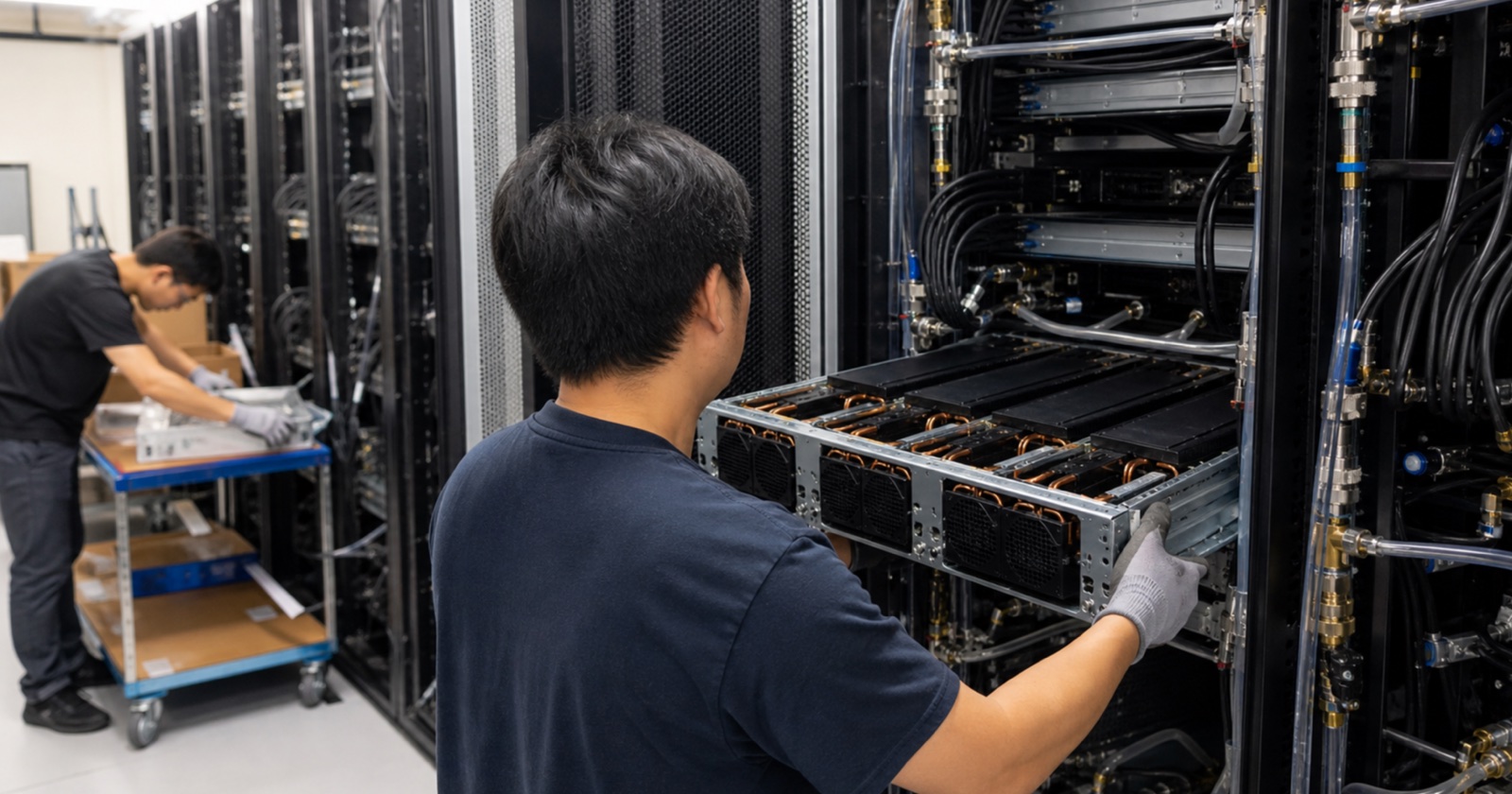
For agencies, the longer pole is no longer GPU allocation. It is electricity. DOE's push to open federal land for gigawatt-scale data centers made this explicit: after an April 2025 RFI identified 16 candidate sites, DOE selected four for developer partnerships, Idaho National Laboratory, Oak Ridge Reservation, Paducah Gaseous Diffusion Plant, and Savannah River Site, with Argonne cited as able to host a future 1,000 MW 'data park' targeting operations by 2028. DOE wants construction starting by the end of 2026 and operations by the end of 2027.
The grid itself is now the object of federal intervention. On June 18, 2026 FERC issued 'show cause' orders under Federal Power Act Section 206 to all six regional grid operators, directing them to justify or reform interconnection rules for 'large loads,' single-site customers with peak load of 50 MW or more, a definition that squarely covers AI data centers. Operators have 60 days to justify current tariffs or file reforms. A DOE directive from October 2025 separately proposed asserting federal jurisdiction over new large electric loads above 20 megawatts, in exchange for operational flexibility such as occasional curtailment during grid stress.
Hardware still matters, but it has slipped down the critical path. Blackwell-generation GPU lead times ran roughly three to seven months in early-to-mid 2026, with the binding constraint shifting from chip fabrication (TSMC CoWoS packaging allocated through mid-2027) to High Bandwidth Memory supply. For most agencies, substation capacity and the power-usage effectiveness of 1990s-era buildings will govern the schedule long before a memory order does.
The SLED posture is different, and tighter
State and local buyers are arriving at the same technology from a very different budget position. NASCIO's 2026 State CIO Top 10 Priorities report, drawn from 51 state and territory CIO respondents, ranked AI, including generative and agentic AI, as the number one state IT priority for 2026 for the first time, displacing cybersecurity to number two. Budget, cost control, and fiscal management ranked third.
That third-place entry is the tell. The ranking reflects the depletion of the ARPA stimulus funds that drove 2021-2024 SLED technology spending. State agencies are being asked to prioritize AI precisely as the money that funded the last wave of modernization runs out, which argues for shared services and evaluation-first pilots over capital-heavy infrastructure commitments.
How to sequence this without stalling
Buyers should not confuse a software pilot's speed for infrastructure readiness. The practical guidance:
- Sequence software pilots (fast) separately from infrastructure and authorization roadmaps (slow); treat them as two programs with two timelines, not one.
- Treat FedRAMP 20x and OneGov as accelerants for evaluation, not proof that the hard infrastructure problem is solved.
- Budget grid interconnection and classified-enclave lead times now, at the roadmap stage, rather than after a pilot succeeds.
- Make power, cooling, and ATO/IL6 authorization explicit procurement line items today; the agencies moving fastest in 2027 will be the ones that did.
- Confirm that any workload requiring agency-owned inference, fine-tuning on sensitive data, or a classified enclave is scoped as its own 12-18-month project, independent of how quickly the SaaS tool was onboarded.
Common questions from federal and SLED buyers
We already have Copilot, Gemini, or Claude access through a GSA OneGov or USAi.gov deal. Do we still need to plan compute and GPU procurement separately?
Yes. OneGov and USAi.gov give you licensed access to hosted models running on the vendor's cloud infrastructure; they do not put GPUs or dedicated compute inside your agency's boundary. If your roadmap includes agency-owned inference, fine-tuning on sensitive data, or workloads that must move into a classified enclave, that is a separate infrastructure and authorization project with its own timeline, often 12 to 18 months or more, independent of how quickly you onboarded the SaaS tool.
Can we run our CUI-approved AI workload (FedRAMP High / IL5) in a classified IL6 environment once we get an ATO?
Not as a simple lift-and-shift. FedRAMP High and IL5 authorization does not carry over to IL6. The model weights, inference stack, API layer, and monitoring and logging systems generally have to be replicated inside a physically and logically separate classified enclave, then separately authorized. This is currently the single biggest reason defense and IC generative-AI projects stall after a successful unclassified pilot; plan for it as a distinct funded phase rather than a configuration change.
Is the GPU shortage going to delay our AI infrastructure build-out?
Possibly, but as of mid-2026 the tighter constraint for most agencies is power and grid interconnection, not chip availability. FERC's June 2026 show-cause orders to grid operators and DOE's push to open federal land for gigawatt-scale data centers exist precisely because power delivery, not GPU allocation, is the longer pole. That said, current-generation GPU lead times of roughly three to seven months, now driven more by HBM memory supply than chip fabrication, should still be built into any hardware-based procurement timeline rather than assumed away.
Spec the power and cooling before the GPUs land
The long pole in an AI buildout is rarely the accelerator — it's the power, cooling, and rack infrastructure around it. Send your target density and we'll quote PDUs, UPS, and rack hardware with real lead times.
Related buyer guides